
Hyundai is entering the PHEV/EREV segment, promising Li-ion cells with 40 percent faster charging (~11 minutes?)
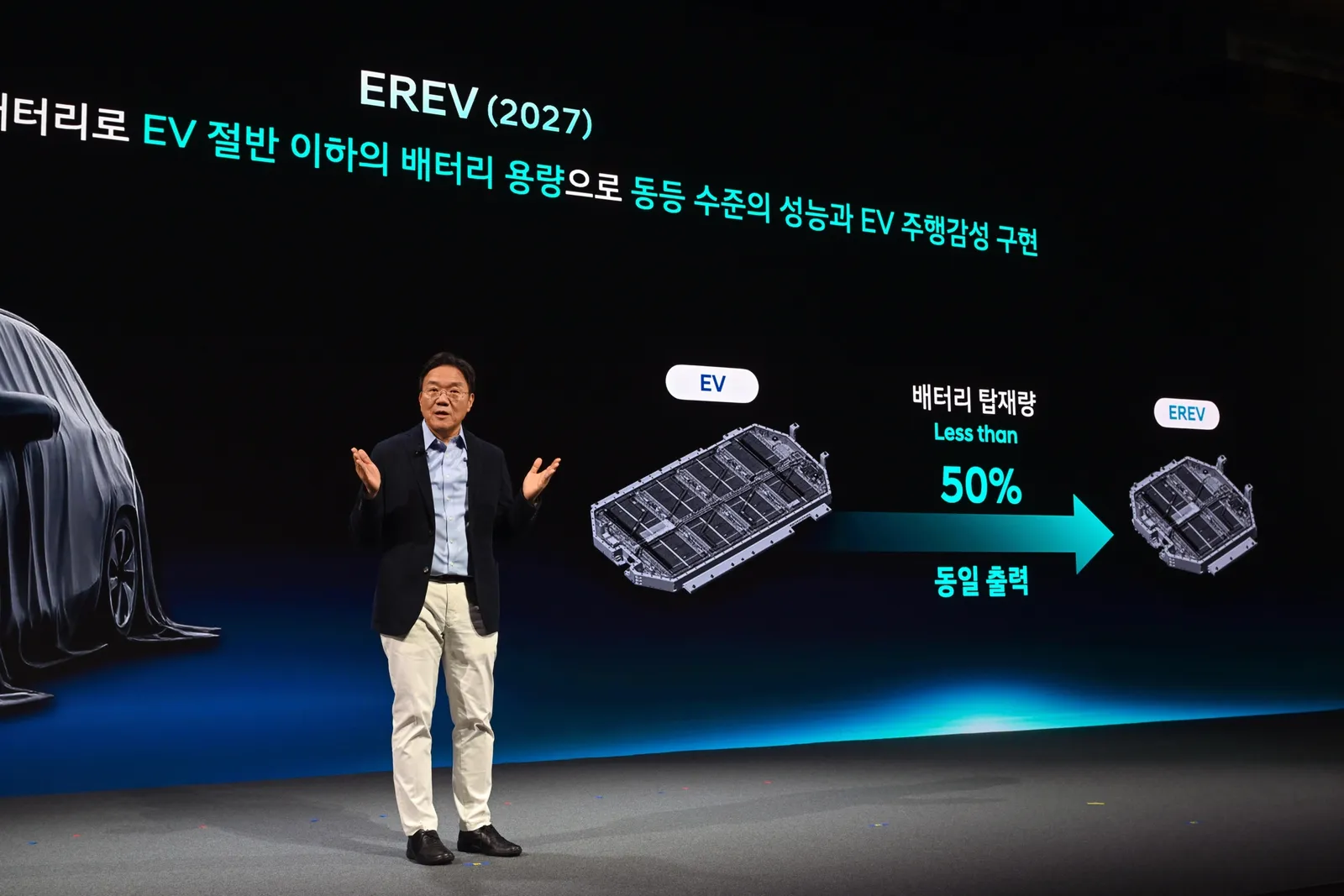
Hyundai Motor Group (Hyundai, Kia, Genesis) announced a revised strategy for the company until 2030 during the CEO Investor Day 2026. The firm announced its entry into the data center sector for autonomous driving, expressed interest in launching a range of plug-in hybrids where the engine does not power the wheels (known as Extended Range Electric Vehicle, or EREV), and planned to produce its own lithium-ion cells that charge 40 percent faster. A true Chinese strategy.
Hyundai like Chinese manufacturers: large SUVs, long ranges, data processing, and own battery cells.
Table of Contents
Hyundai like Chinese manufacturers: large SUVs, long ranges, data processing, and own battery cells.
Genesis GV90 and EREV models
New electric vehicles
Own lithium-ion cells
Autonomous driving
Genesis GV90 and EREV models
In China, large SUVs (5+ meters in length) are currently extremely popular, so Hyundai is following the same path. The company’s luxury brand, Genesis, has just unveiled the Genesis GV90 in the United States—a symbol of “timeless Korean luxury” with a length of 5.285 meters and a wheelbase of 3.245 meters (read more HERE). The GV90’s battery capacity is around 130 (123.5) kWh, which is expected to provide a real-world range of 500 kilometers. It features all-wheel drive, with the total engine power reaching 490 kW/666 horsepower.
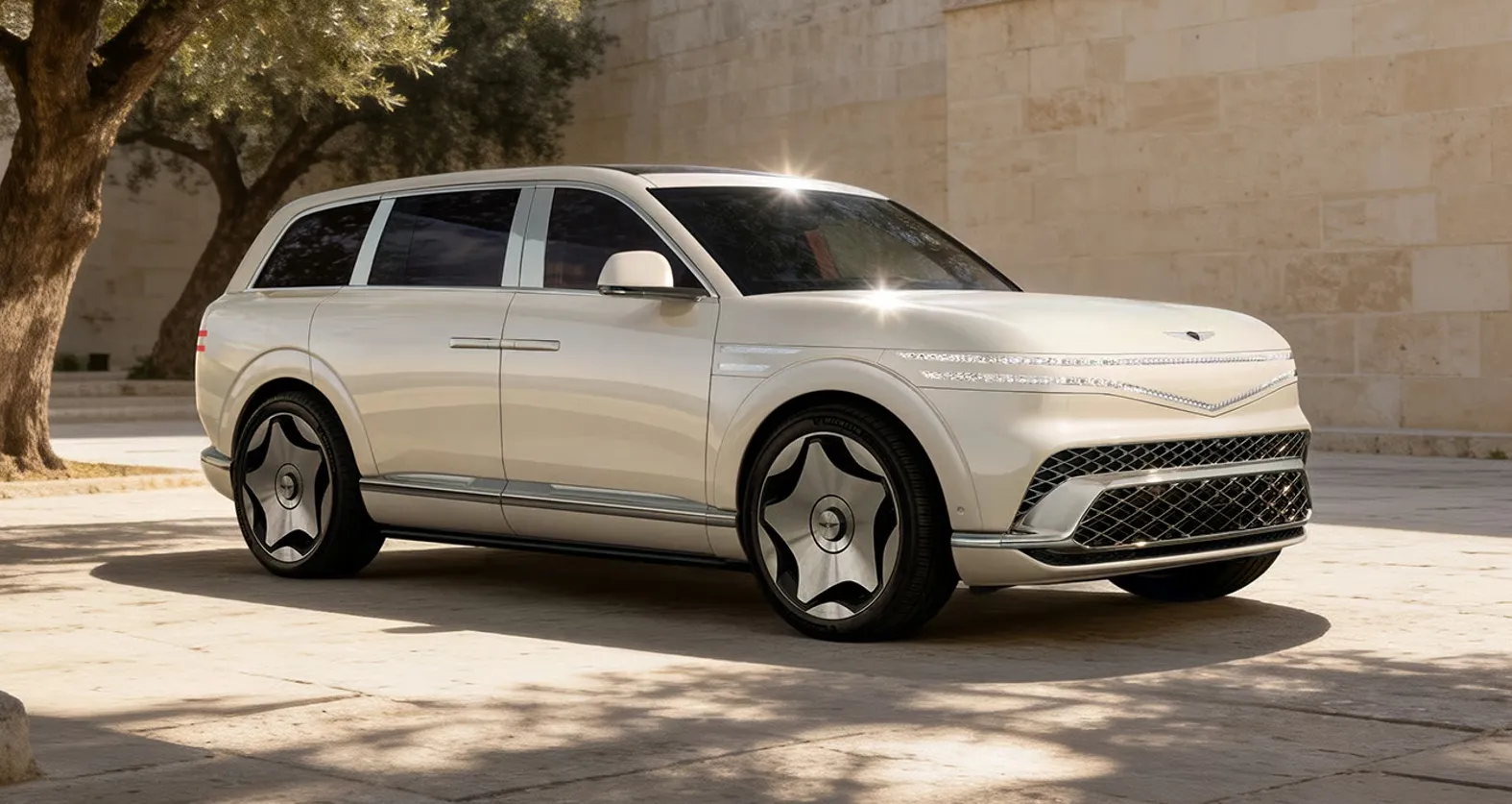
New Genesis GV90 (c) Genesis
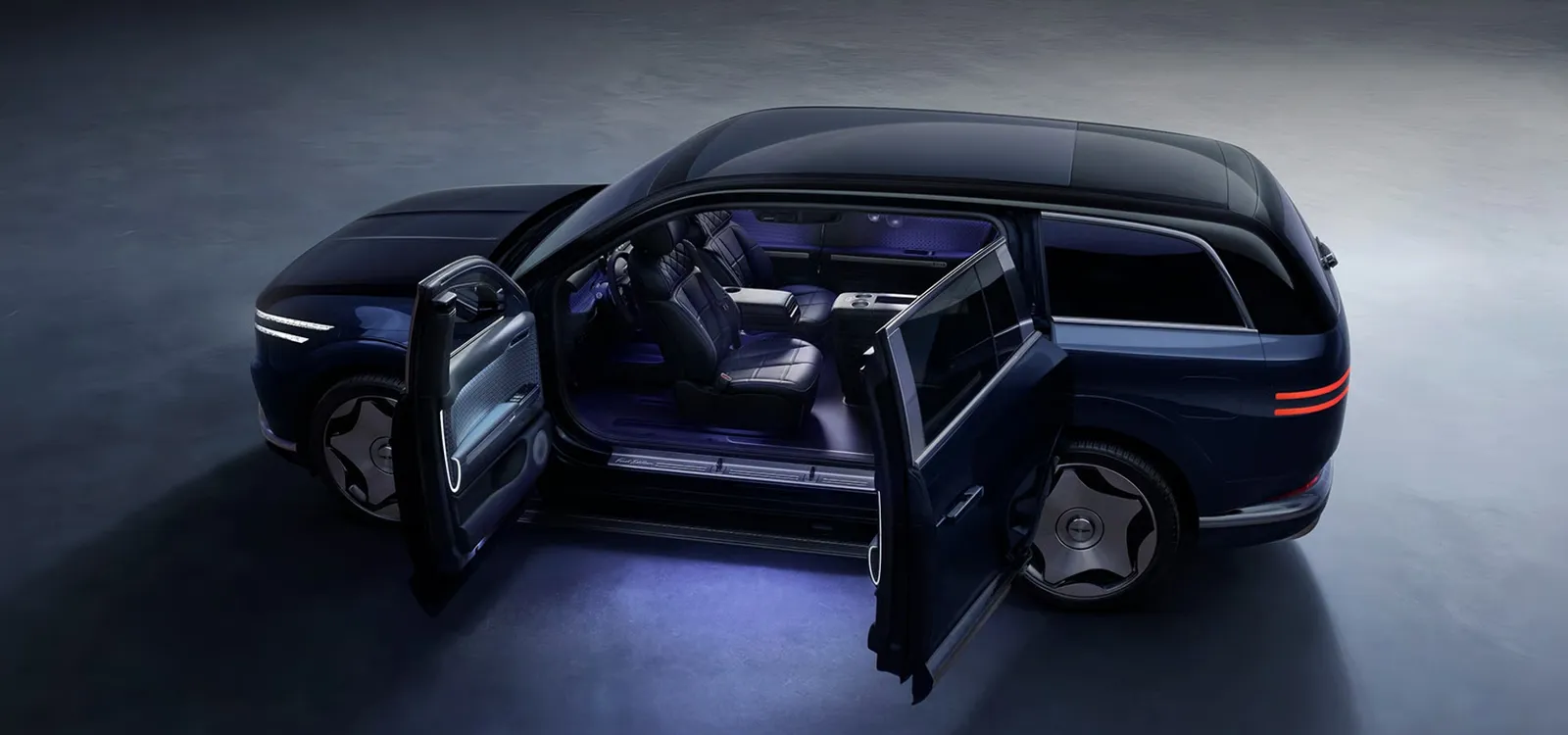
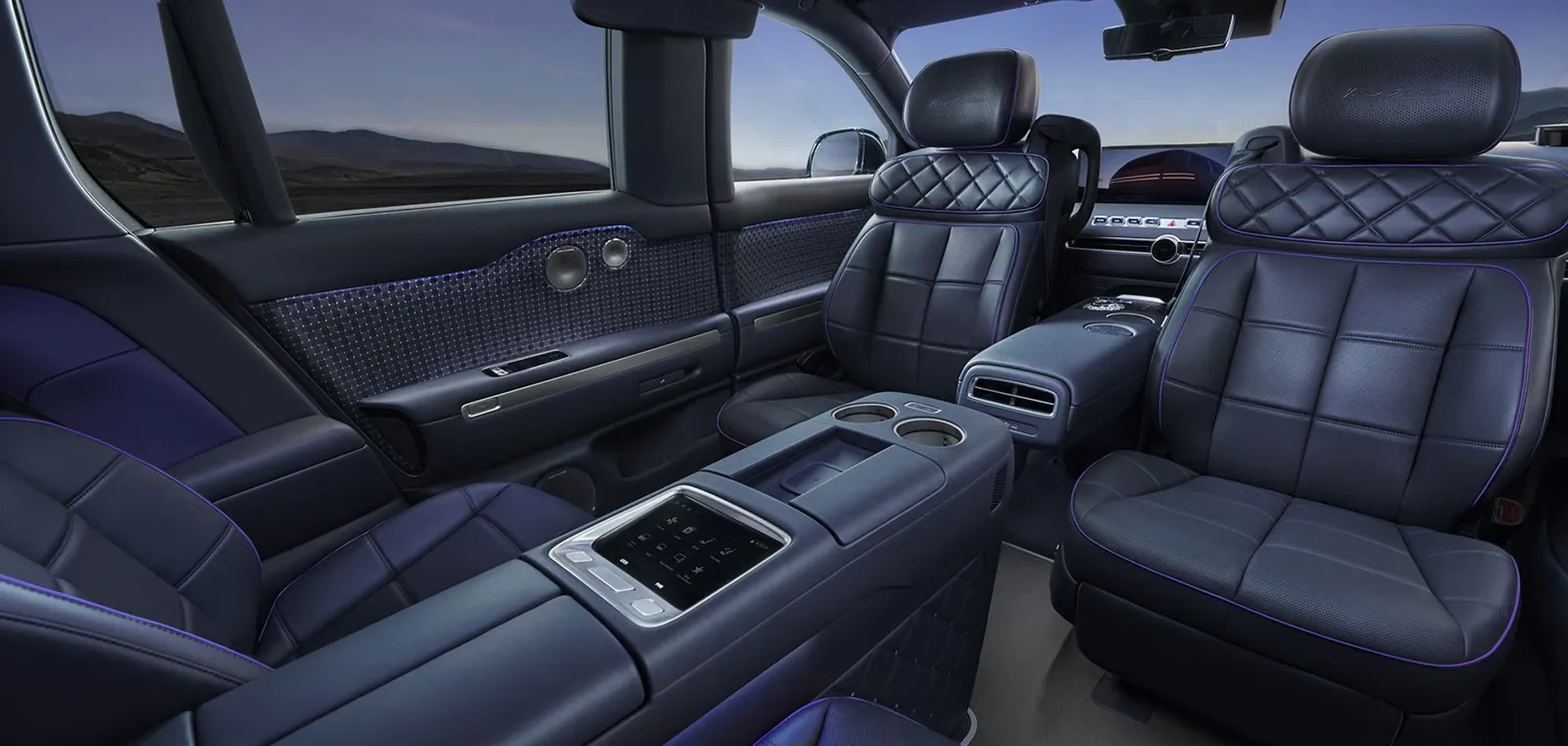
Alongside this vehicle, there will also be a slightly smaller Genesis GV80 Hybrid (the older hybrid model) and an EREV vehicle expected to have a total range of over 1,030 kilometers on both battery and fuel. By 2030, the brand aims to be present in 40 markets worldwide; it will enter Spain by the end of 2026, having already arrived in France, the Netherlands, Tunisia, and Morocco. Poland is set to join these countries in 2027.
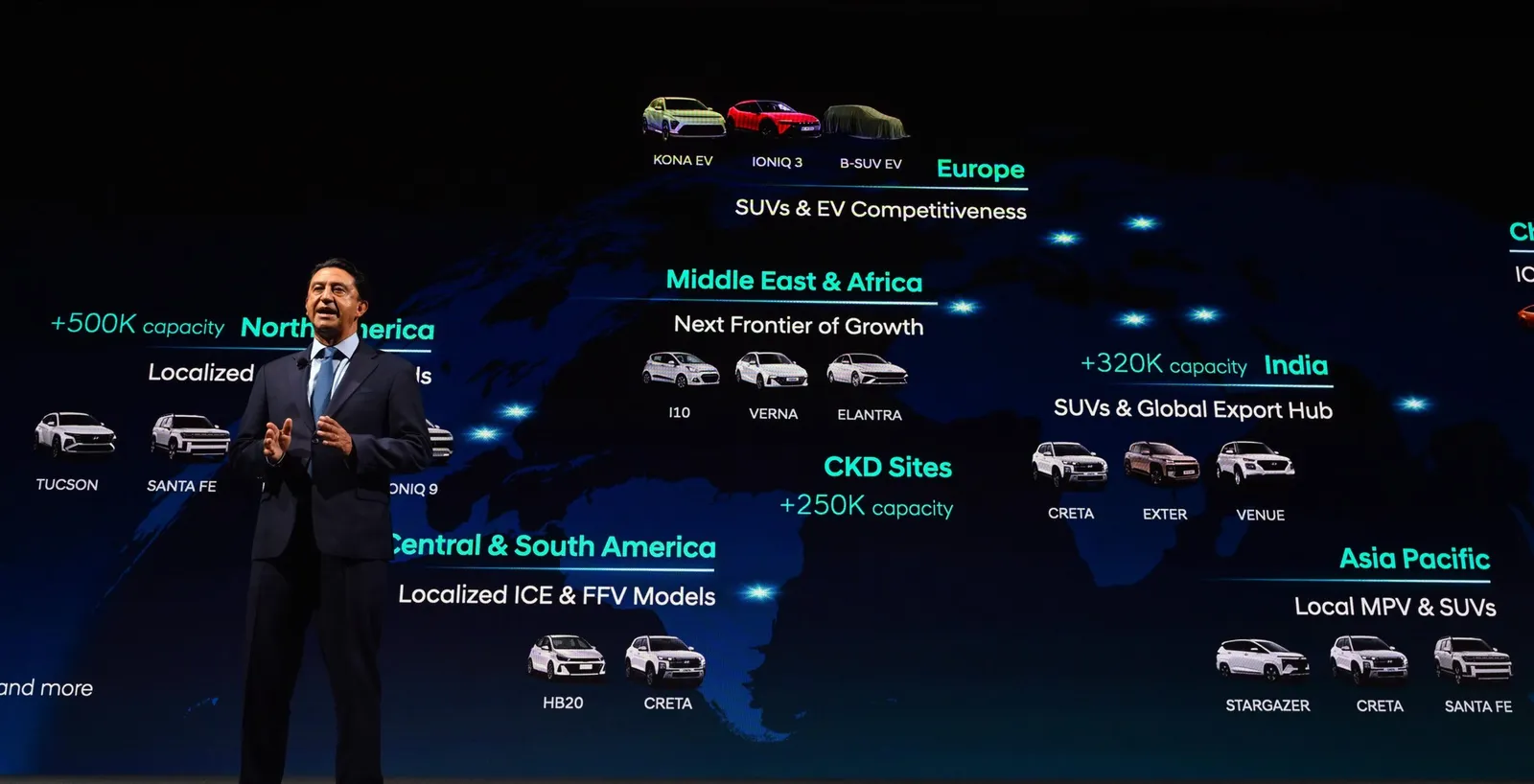
Among lower-priced brands, the Hyundai Santa Fe EREV is expected to be a new addition. The new Hyundai Tucson will come in gasoline-powered versions (the standard model and the older hybrid).
New Electric Vehicles
In addition to EREV models, electric vehicles will also hit the market. Sales of the Hyundai Ioniq V have already begun in China, a new compact car in segment A will arrive in India, and we’ll see a B-segment crossover in Europe. It is likely to be called the Hyundai Ioniq 2 and will feature a powertrain from the Ioniq 3/Kia EV2:
Own Li-ion cells
While developing the E-GMP platform, Hyundai opted for high-end cells with relatively high energy density and a 10 to 80 percent charge time of 18 minutes (3.3 C for the range, 2.3 C for the entire battery). At the same time, it began collaborating with external suppliers on its own Li-ion cells. Now the company has announced that the battery in the Genesis GV90 uses cells with a new technology for preventing ignition in case of physical damage.
The company also claims to have Li-ion cells with twice the power of previous high-nickel cells, which can be charged 40 percent faster as well. It’s easy to calculate that this means a 10 to 80 percent charge in just under 11 minutes (source). The new cells will hit the market in the first half of 2027, initially appearing in the EREV model — with a battery that is half the size — indicating that we can expect 40-60 kWh battery packs in EREVs that offer the same power output to the wheels.
The electric vehicles will use Li-NCM cells with a mid-nickel content, which should reduce battery costs by 30 percent while maintaining performance. Meanwhile, the company plans to improve the analysis of data collected by vehicle BMS systems to increase the average battery lifespan by 20 percent by 2028. Interestingly, these plans may also apply to already sold cars, as they have long been collecting information about their condition and sending it to headquarters for analysis.
Autonomous driving
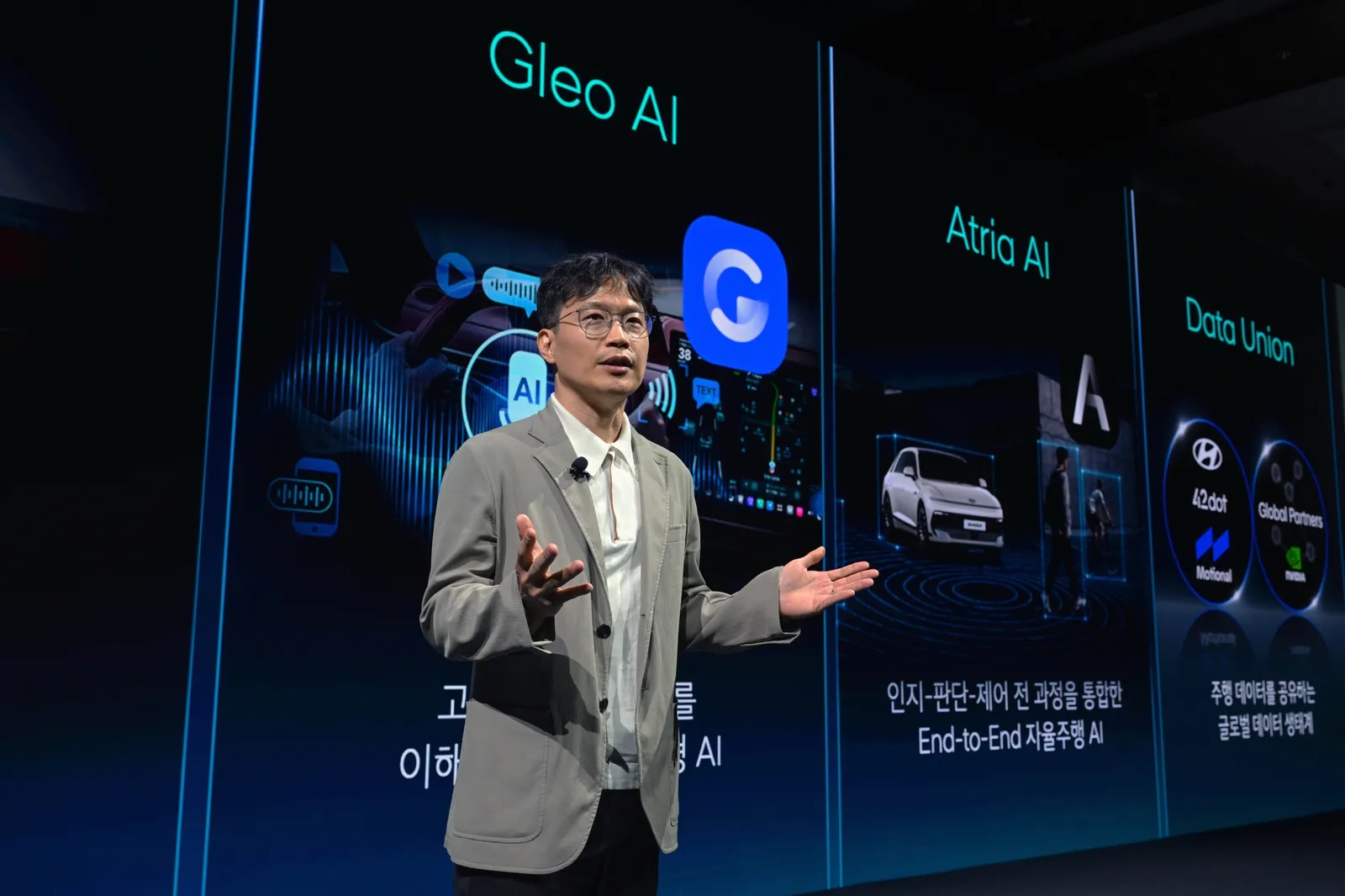
Hyundai is not as ambitious as Tesla or Chinese manufacturers; it does not plan to develop its own chipsets and will rely solely on NVIDIA’s solutions. This year, the company is starting to train its Atria AI system in South Korea, with plans to introduce its own level 2+ semi-autonomous driving system in a mass-produced vehicle by 2028. To train this system, it plans to launch an AI computing center in 2029 equipped with over 50,000 graphics processors and requiring 100 MW of power.
Article Rating
Reader Ratings
[Total: 4 votes Average: 5]
Don’t miss new content—CLICK and FOLLOW Elektrowoz.pl on Google News. You may also be interested in the following ads: