
The Hyundai Staria Electric is now available for purchase in Europe. It has an 84 kWh battery, a WLTP range of 430 km, and a starting price of 57,450 euros.
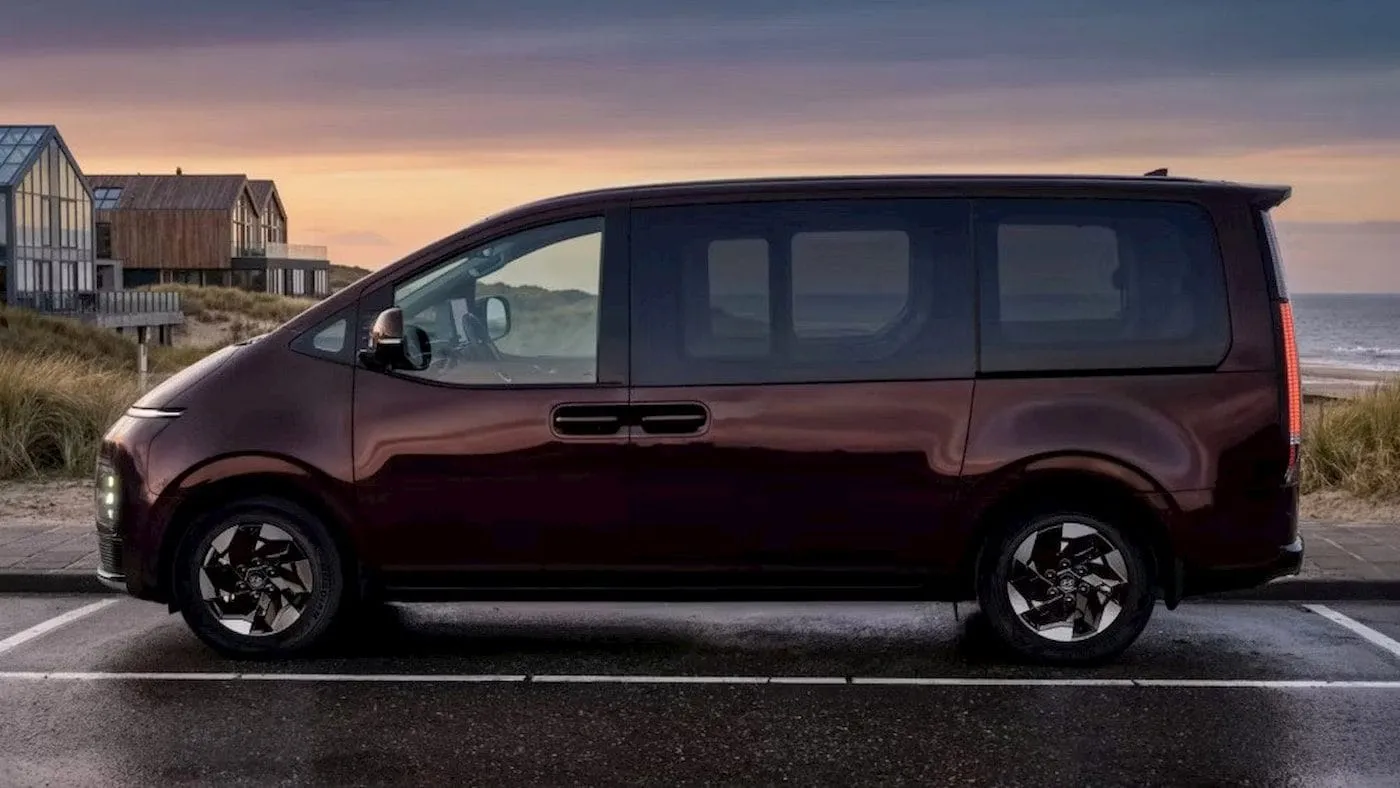
Hyundai has opened orders for the Staria Electric in Europe, a few months after showcasing the model at the Brussels Motor Show and following its initial sale launch in Korea. In Germany, the electric van starts at 57,450 euros, features an 84 kWh battery, a 160 kW engine, and promises up to 430 km of WLTP range. The price in Poland has not been announced yet.
The Staria Electric targets a higher market segment than the Kia PV5 and is also significantly larger than the Volkswagen ID. It’s quite impressive. On paper, it’s a family bus with fast charging capabilities, not just a city gadget.
Hyundai Staria Electric: Dimensions, Battery, Charging
The vehicle measures 5,253 mm in length, 1,997 mm in width, 1,990 mm in height, and has a wheelbase of 3,273 mm. This is about 200 mm longer than the three-row Hyundai IONIQ 9. It certainly has plenty of space.
Stylistically, the Staria Electric closely resembles the gasoline-powered Staria, but it features a closed front end and a light bar running across its entire width. Inside, there are 7-seater and 9-seater versions, a flat floor, and a more open cabin layout. The 9-seater model offers up to 1,303 liters of cargo space plus a 24-liter front trunk.
The powertrain is straightforward: an 84 kWh battery and a front-mounted engine with 160 kW of power, equivalent to 218 horsepower. Range according to WLTP standards is 430 kilometers. This is a reasonable figure for an large vehicle, but it will naturally be lower in real-world driving conditions with all passengers aboard.
The strongest aspect of its specifications is the 800 V architecture. Hyundai claims that charging from 10% to 80% takes about 20 minutes at a 350 kW DC charging station. If the charging curve remains efficient, this could make it one of the most interesting electric vans for long trips. It also has V2L functionality, allowing the vehicle to power equipment at a campsite, tools, or a coffee maker.
The cabin features a new “Inside-Out” system, ccNC, and two 12.3-inch screens. It also includes wireless Apple CarPlay and Android Auto.
Prices in Germany and another topic: IONIQ 3 and the commercial version
The base Staria Electric Trend 9-seater costs 57,450 euros in Germany. Leasing starts at 489 euros per month.
The Prime 9-seater is priced higher at 63,350 euros. It comes with electric sliding doors on both sides, an electric tailgate, sliding windows and blinds in the second and third rows, Highway Assistant 1.5, a blind spot monitor, and a 230 V outlet.
At the top is the Calligraphy 7-seater at 66,950 euros. Here, Hyundai adds its own styling details, full LED Projection headlights, ambient lighting, Bose audio, Passenger View and Talk Mode, Nappa upholstery, and two individual seats in the second row with relaxation, heating, and ventilation functions. A luxury bus. Just very large.
Meanwhile, Hyundai has also opened orders for the IONIQ 3, the smallest and first compact model in the IONIQ family. The price starts at 28,950 euros, with leasing costs at 209 euros per month.
There’s another update, this time from Australia. Orders have begun for the Staria Load Electric, its commercial variant. The vehicle is available in just one version and costs 70,990 Australian dollars before road taxes. This is less than the Ford E-Transit Custom, which starts at 77,890 AUD plus road taxes.
As of now, there’s no confirmation that the Staria Electric will enter the Polish market. If Hyundai does bring it in, we’ll have something between a family van and a premium shuttle, and there aren’t many such electric vehicles available yet. Would you wait for this model in the Polish price list, or at that price would you prefer the ID. Buzz or something smaller?
LovEV Newsletter
Want more content like this?
Sign up — we’ll send you a weekly summary once the newsletter starts.