
Hyundai Staria Cargo Electrified arriving: the van version of the electric minivan
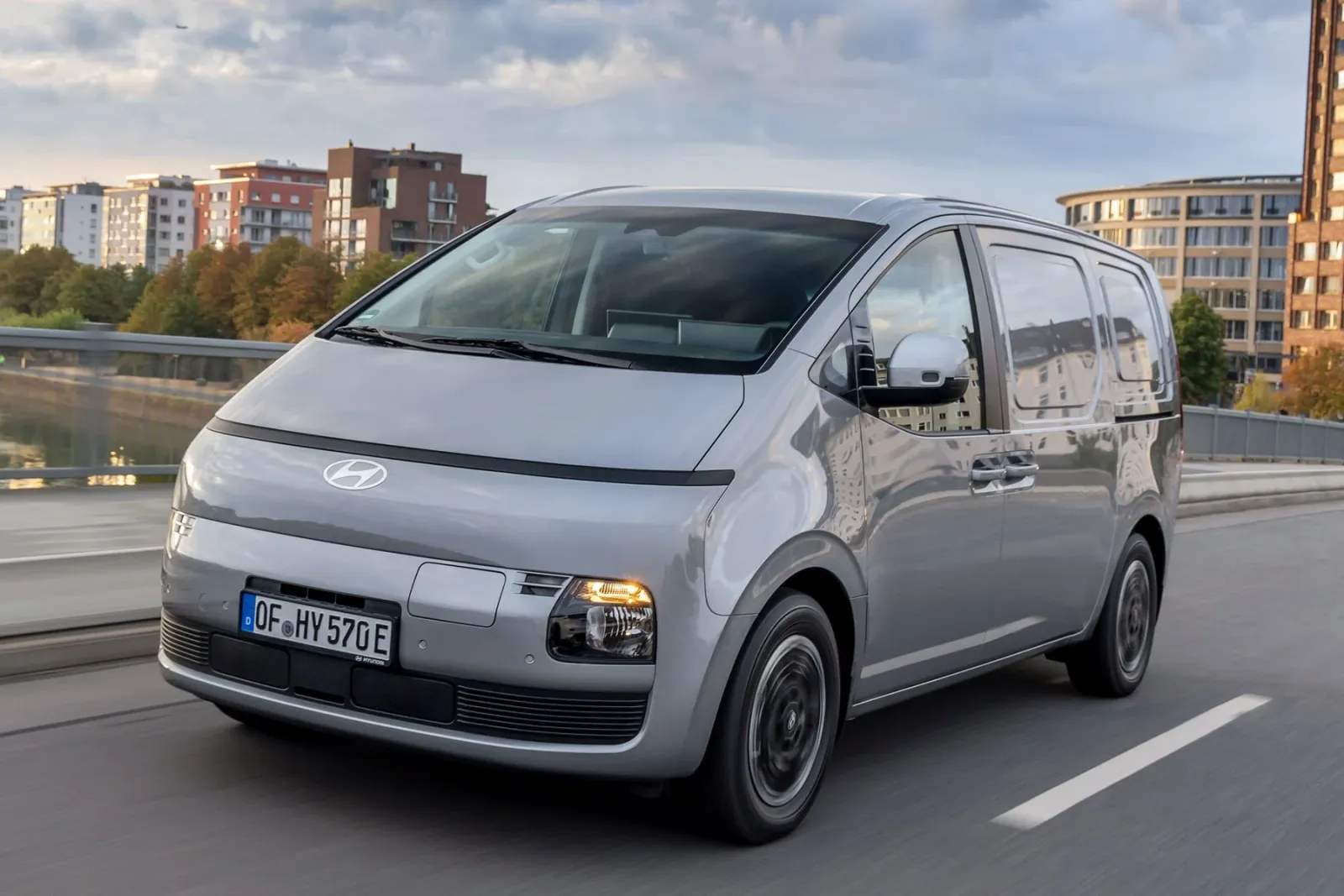
Shortly after the launch of pre-orders for the Hyundai Staria Elektro family van, the model has received a cargo variant: the Hyundai Staria Cargo Elektro. With this new electric truck, Hyundai is also returning to the commercial vehicle segment in Germany.
Image: Hyundai
Hyundai introduced the passenger version of its all-electric Staria at the auto show in Brussels in January, with pre-orders opening in Germany at the beginning of September at prices starting from 57,450 euros. The Hyundai Staria Cargo Elektro is priced in a very similar manner: it starts at 57,494.85 euros including VAT—or, more relevant for target business customers, at 48,315 euros net.
Let’s take a look at what the Hyundai Staria Cargo Elektro as a van has to offer – there is no pure chassis version like those from other manufacturers, at least for now. The performance specs are already known from the passenger version of the Staria Electric: it features an 800-volt architecture, a battery with 84 kWh of storage capacity, and front-wheel drive delivering 160 kW. Hyundai claims a range of 450 km – that’s 20 km more than the passenger version.
The Hyundai Staria Cargo Elektro can reach 80 percent battery charge in 20 minutes from 10 percent
Using a 350-kW fast charger, the Hyundai Staria Cargo Elektro can go from 10 percent to 80 percent battery charge in 20 minutes. According to the manufacturer, it can also achieve up to 280 km of range after just 15 minutes of charging.
In the van segment, size, cargo volume, and payload are of course also important. The N1-approved Hyundai Staria Cargo Electric is 5.25 meters long, 2 meters wide, and 2 meters high. The wheelbase measures 3.27 meters. The electric van offers seating for three people in the front and a cargo area at the back that can accommodate up to three Euro pallets.
With a cargo volume of around 4.9 cubic meters, a payload of about 1.1 tons, and a towing capacity of 2 tons (with brakes) or 750 kg (without brakes), the model is suitable for a variety of professional applications, according to Hyundai.
E-van with sliding doors on both sides
The dual sliding doors are designed to facilitate access to the cargo area, while the low loading edge is intended to aid daily loading and unloading. A non-slip cargo floor helps ensure the safe transport of tools, materials, and goods, according to Hyundai. With the optional Vehicle-to-Load function (V2L) available for 460 euros, electric tools can be charged directly from the vehicle’s battery. This feature is meant to provide extra flexibility for trade businesses and mobile service teams, especially when working in locations without a fixed power supply.
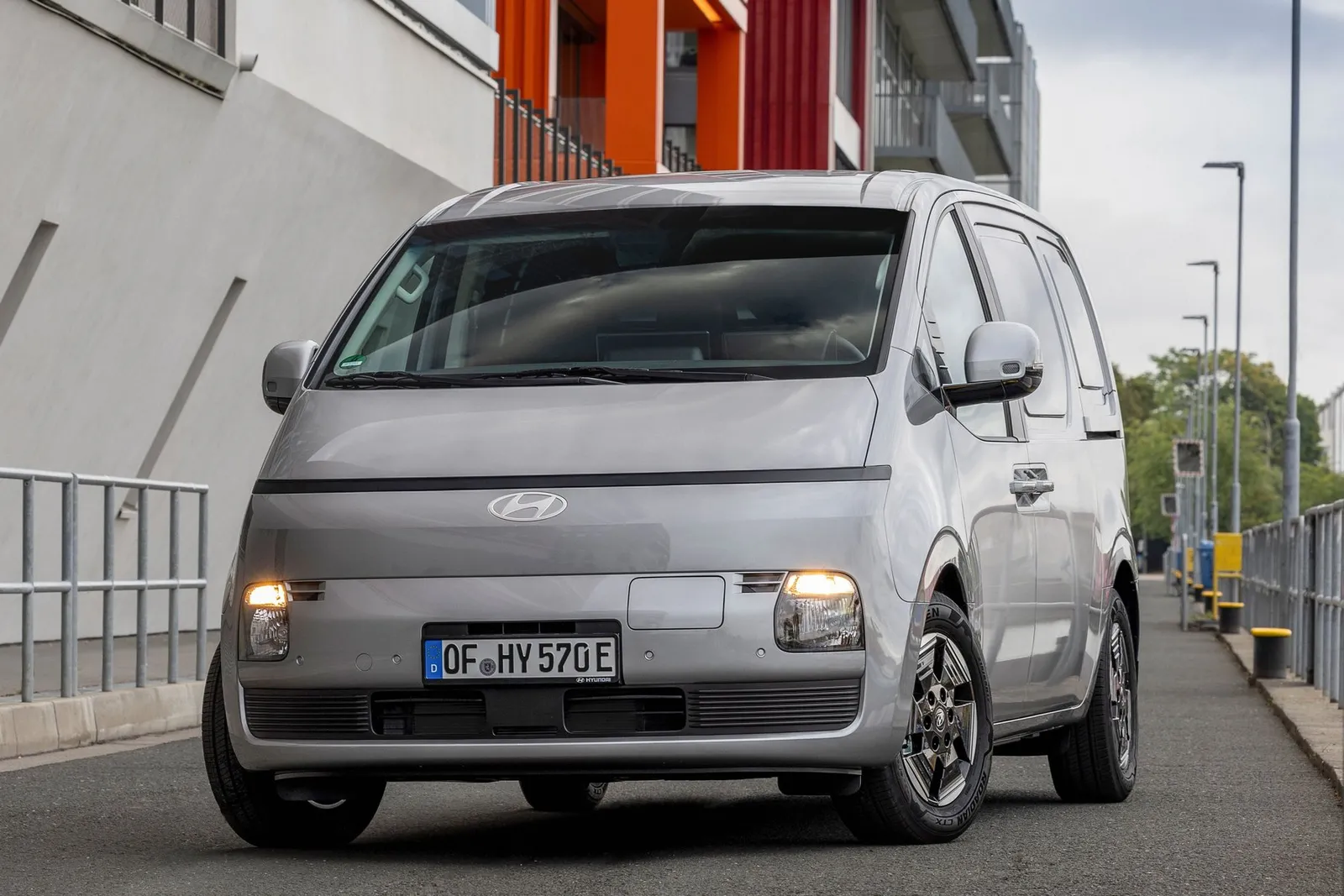
Hyundai Staria Cargo Elektro
- 1/4
- 2/4
- 3/4
- 4/4
With the Hyundai Staria Cargo Elektro, the South Korean manufacturer is returning to the German light commercial vehicle segment after several years of absence: the H-1 Cargo, which is similar in size to the Staria, as well as the Transporter H350 in Sprinter format, were removed from the lineup in Germany back in 2019/20. Both models were still powered by internal combustion engines, while Hyundai is now making its comeback in this segment with an electric transporter.
The competition for such mid-size electric vans is growing increasingly fierce: relevant competitors include the Ford E-Transit Custom, VW e-Transporter, and Mercedes-Benz eVito, which offer loading capacities of up to around 5.8 or 6.6 cubic meters depending on the variant. Additionally, Hyundai’s sister brand Kia has the slightly more compact PV5 Cargo with loading spaces of 4.0 or 4.4 cubic meters, as well as the Maxus eDeliver 7, which falls into a similar size category with loading capacities of up to 6.7 cubic meters and batteries ranging from 77 to 88 kWh in capacity.