
Hyundai delays its autonomous driving to 2029, but challenges Tesla: it aims to surpass it in data volume
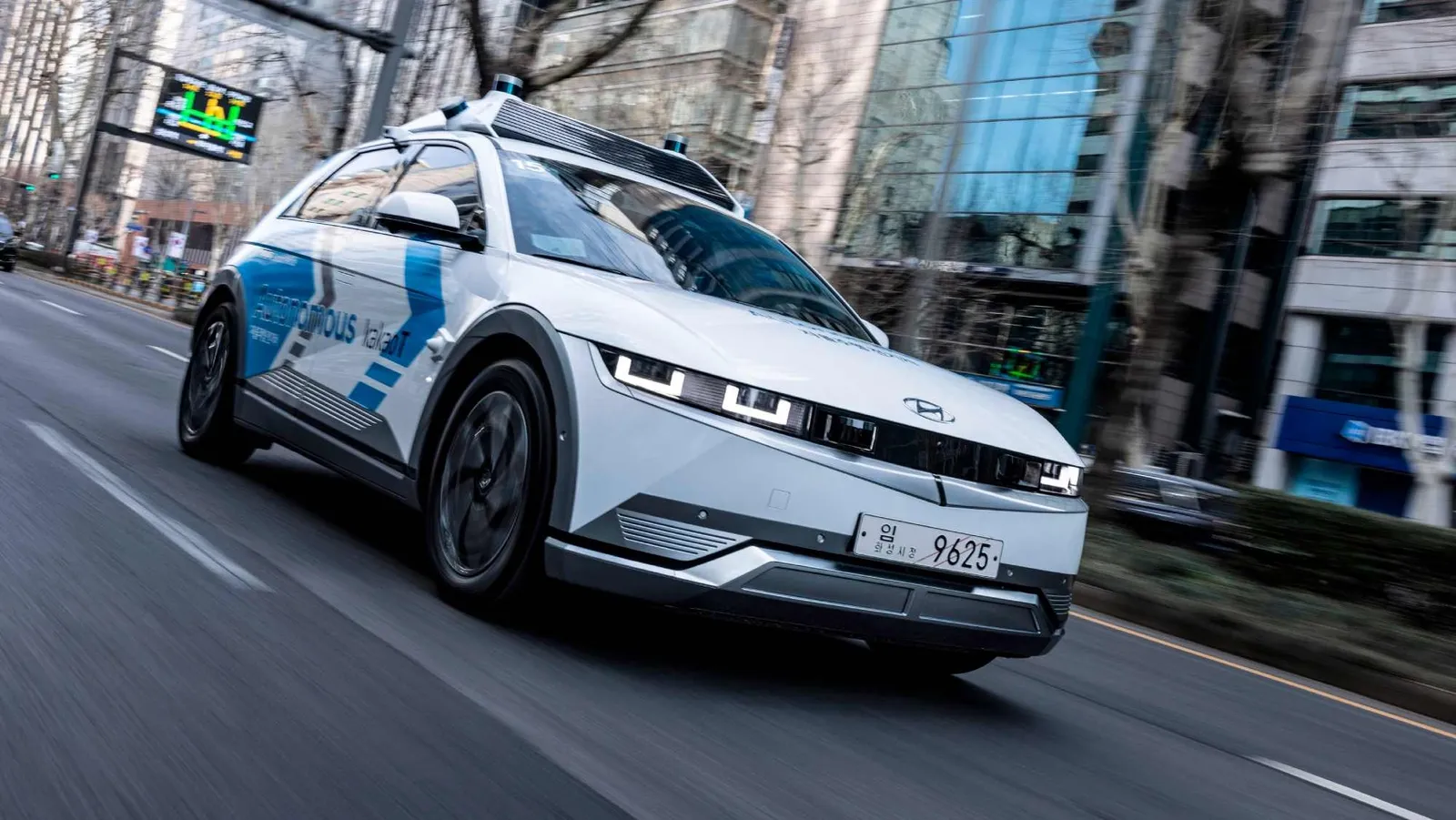
Hyundai Motor Group has set a new goal: to surpass Tesla and its other competitors in terms of the volume of data for autonomous driving within 5 years from when its own system goes into mass production. The South Korean group set this target while also announcing a 2-year delay to the originally planned timeline for bringing its autonomous driving technology to market.
The Atria AI system, developed by Hyundai in collaboration with 42dot — the group’s subsidiary specializing in autonomous driving — is now expected in the second half of 2029, whereas production was initially scheduled for late 2027. Until then, Hyundai will rely on Nvidia’s software, offering vehicles at level 2+ in the first half of 2028 and at level 2++ in the second half of the same year.
A Redefined Timeline
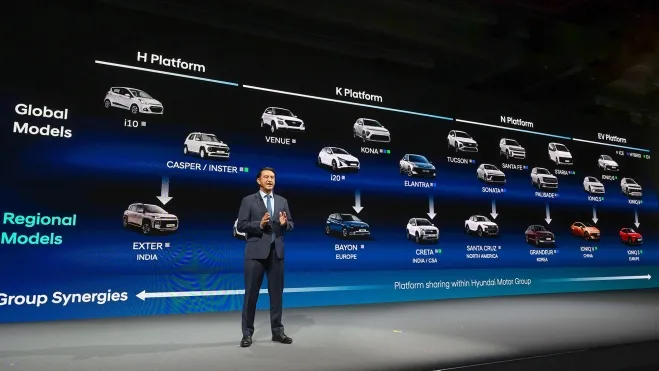
Park Min-woo, president of Hyundai’s Advanced Vehicle Platform division and CEO of 42dot, explained the basis for this forecast during a presentation in Pangyo, south of Seoul: “Hyundai sells 7 million vehicles per year in 190 markets, which means we can gather data on a large scale, and at this pace, we can surpass what our competitors have built in five years.”
Park defended the delay of Atria AI as a strategic decision: “We believe Atria AI could progress faster if we pushed it with everything we have. But we made the strategic choice to slow it down. Launching mass production too hastily risks delivering a mediocre level 2++ system, far below our actual goals.”
The executive also summarized Hyundai’s approach to competition in autonomous driving, as reported by Electric Vehicles: “The competition in autonomous driving is no longer about speed. It comes down to how much data you can collect, how quickly you can learn from it, and how fast that translates into real products and services.”
As a result of this decision, the schedule now follows a different path, which Kwon Jung-hyun, head of 42dot’s autonomous driving division, summarizes as follows: “Through 2027, we will focus on bringing driving, parking, and active safety functions to a high level of product maturity. 2028 will be dedicated to collecting large amounts of data from extreme scenarios to develop a truly safe product. And 2029 will be when we prepare for safety certification, not only in Korea but also in North America and Europe.”
Hyundai’s approach
The Korean manufacturer’s strategy relies on utilizing data generated by a massive fleet that is not currently active. As of now, Hyundai has around 40 vehicles dedicated specifically to collecting data for its autonomous driving systems. It aims to surpass its competitors in terms of data volume, but this goal pertains to the size of the datasets rather than necessarily the capabilities of the products.
Hyundai calls this strategy Data Flywheel, a system based on the idea that more vehicles generate more data, which in turn allows for improvements to the software and eventually the vehicles themselves. Among the tools included is Hard Example Mining, which automatically identifies driving situations where the model faces difficulties, such as construction zones, adverse weather conditions, sudden lane changes, or irregular parking spots.
The group will also use a Special Event Recorder to log information in situations such as sudden accelerations or braking, irregular following distances, or moments when the driver or the system disables assistance features. Hyundai, Kia, 42dot, and Motional are also standardizing sensors on the Nvidia DRIVE Hyperion 10 platform, so that data collected by any of these companies can be used to train the same models.