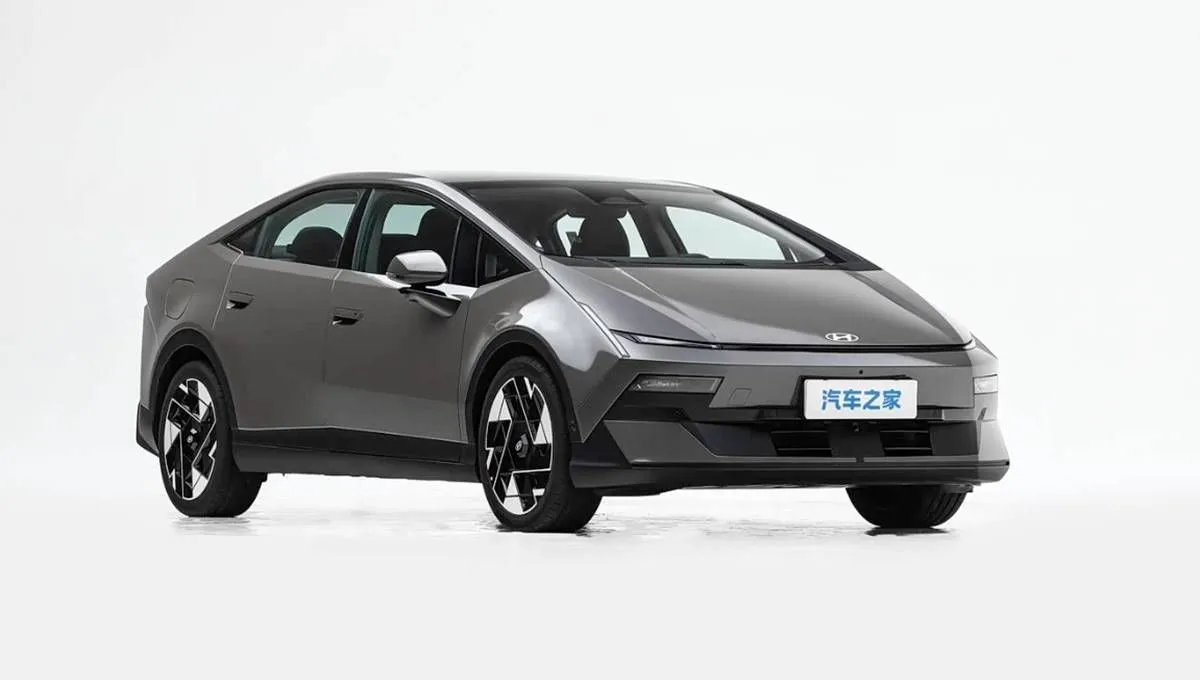
Hyundai launches in China an electric car 4.90 meters long with a range of 650 km, cheaper than a Dacia Spring in Europe
Hyundai has just begun delivering in China one of those cars that make you take a second look at the specs and photos to figure out if something is off. It’s not so much due to its size or design, though those play a role too, but rather because of the philosophy behind it. The Korean brand has developed a sedan specifically designed for the Chinese market, relying on local suppliers and technology companies for much of its systems.
The result is the Hyundai Ioniq V, a model that was until recently just a prototype and which now marks the first major step in Hyundai’s new strategy for China. This strategy aims to use the massive Asian market not only as a sales destination but also as a hub for technology development and new models that could later be introduced to other markets.
The move is particularly interesting because Hyundai is not following the traditional approach of developing a car in Korea and then adapting it for China. The Ioniq V was designed under the leadership of Hyundai’s design center in China, from the start focusing on the needs of local buyers. In fact, the company itself introduced it in April as the first production model in the new Ioniq lineup developed specifically for this market.
Now, five months after its launch, the Ioniq V is already available at Chinese dealerships. It comes in five versions, offering a combination of a large-sized body, highly advanced technology, and a relatively simple powertrain. Hyundai uses a single electric motor configuration, but with two power levels and two battery capacities.
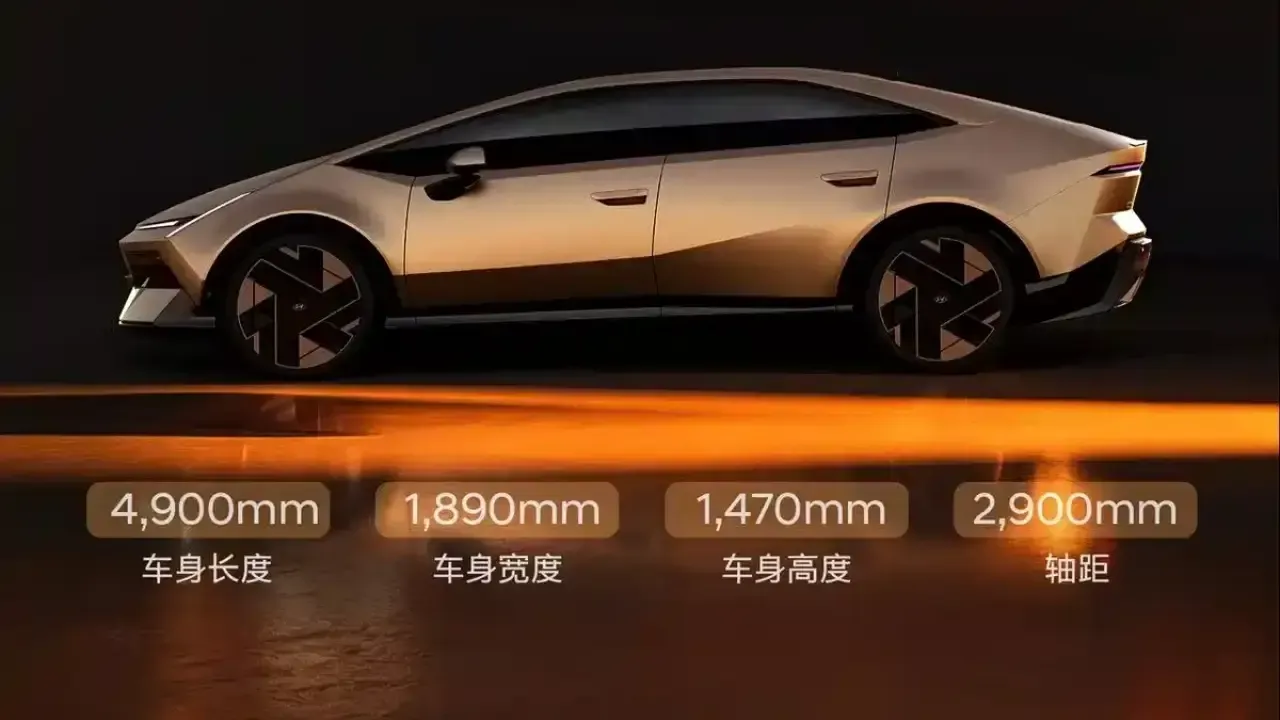
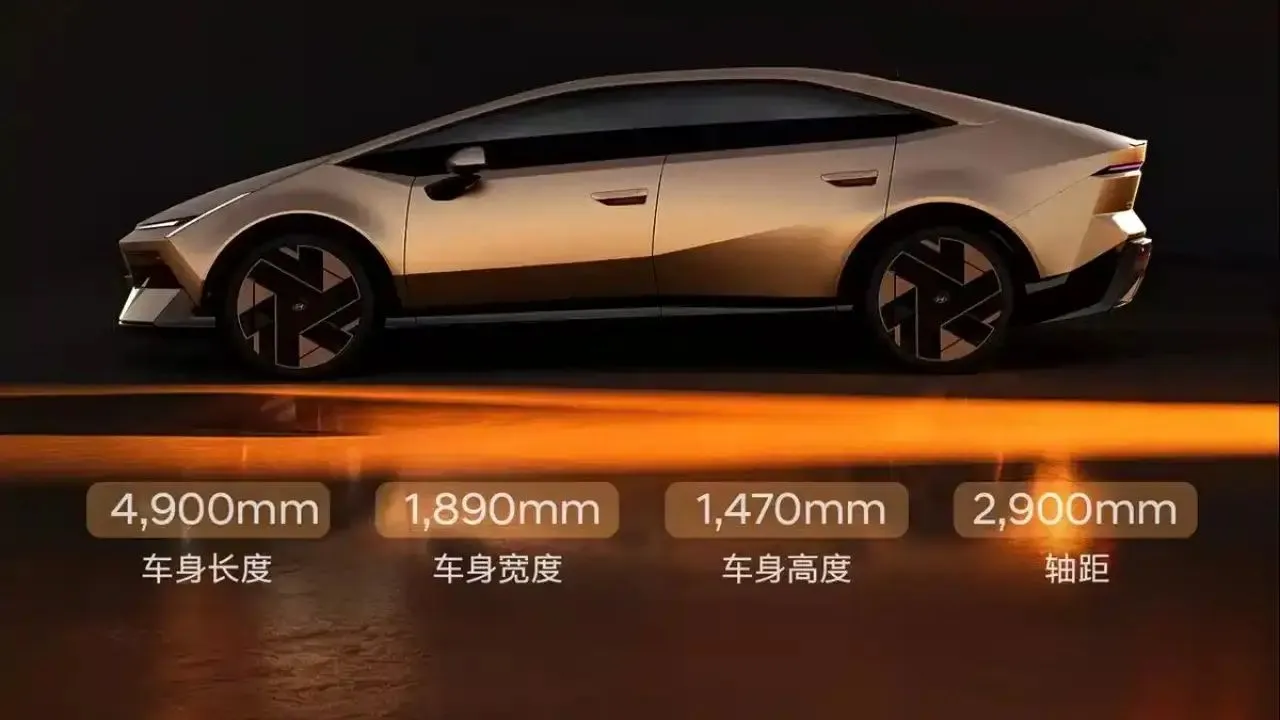
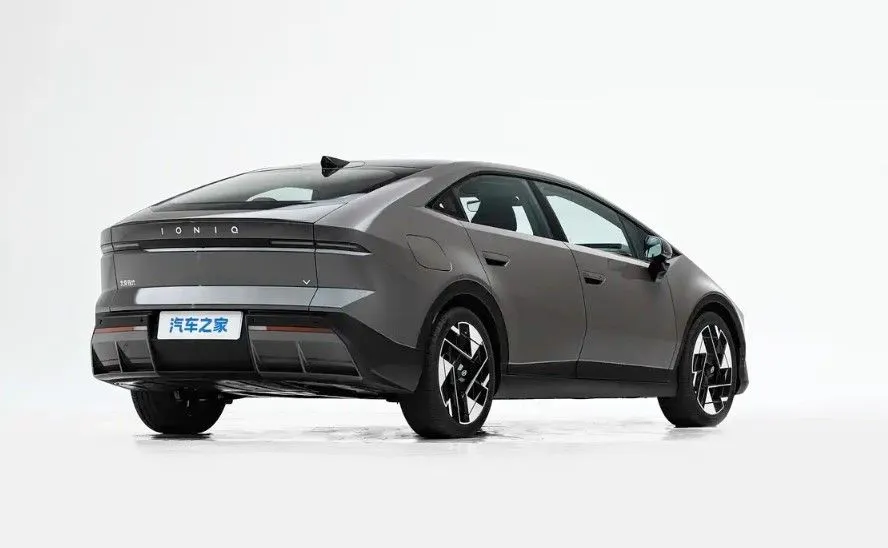
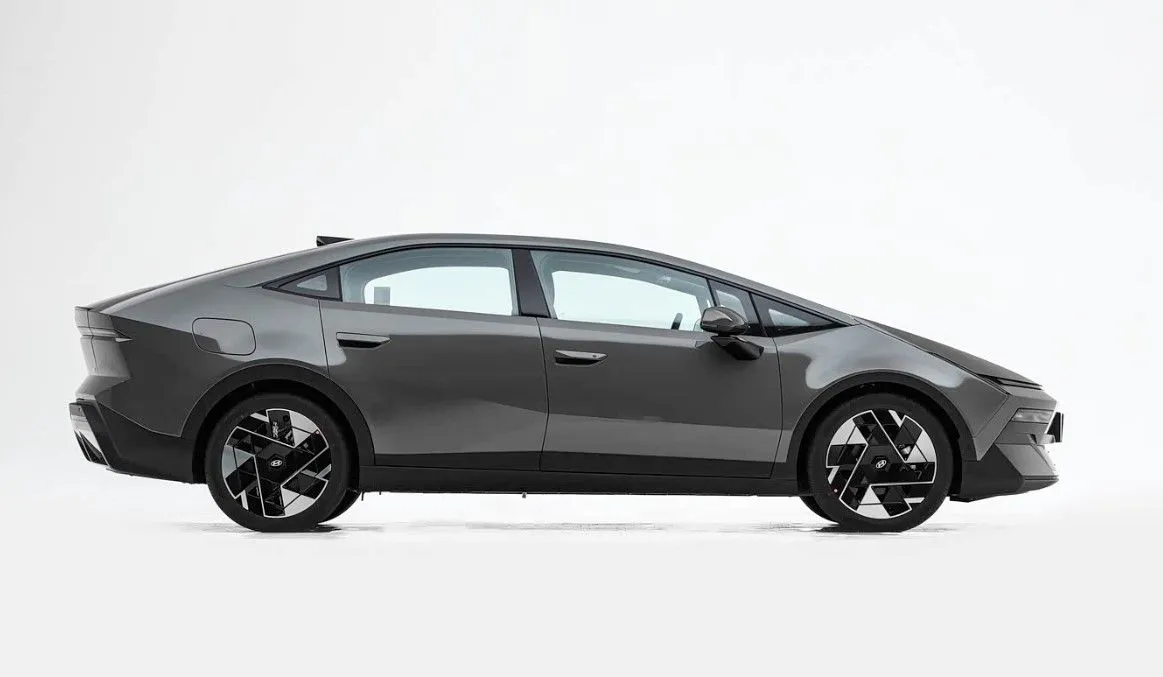
The exterior design of the Hyundai Ioniq V breaks significantly from the brand’s traditional sedan image. It is a fastback-style sedan with a roofline that slopes gradually toward the rear and frameless doors that give it a more sophisticated look. At the front, the traditional grille is gone, with lighting elements taking center stage, while the overall design maintains a very clean appearance.
The Ioniq V is 4.90 meters long, 1.89 meters wide, and 1.47 meters high, with a wheelbase of 2,900 mm. These are substantial dimensions for an electric sedan, yet it features a relatively aerodynamic silhouette. Hyundai claims an aerodynamic drag coefficient of 0.23, a figure that illustrates the emphasis placed on efficiency during its development.
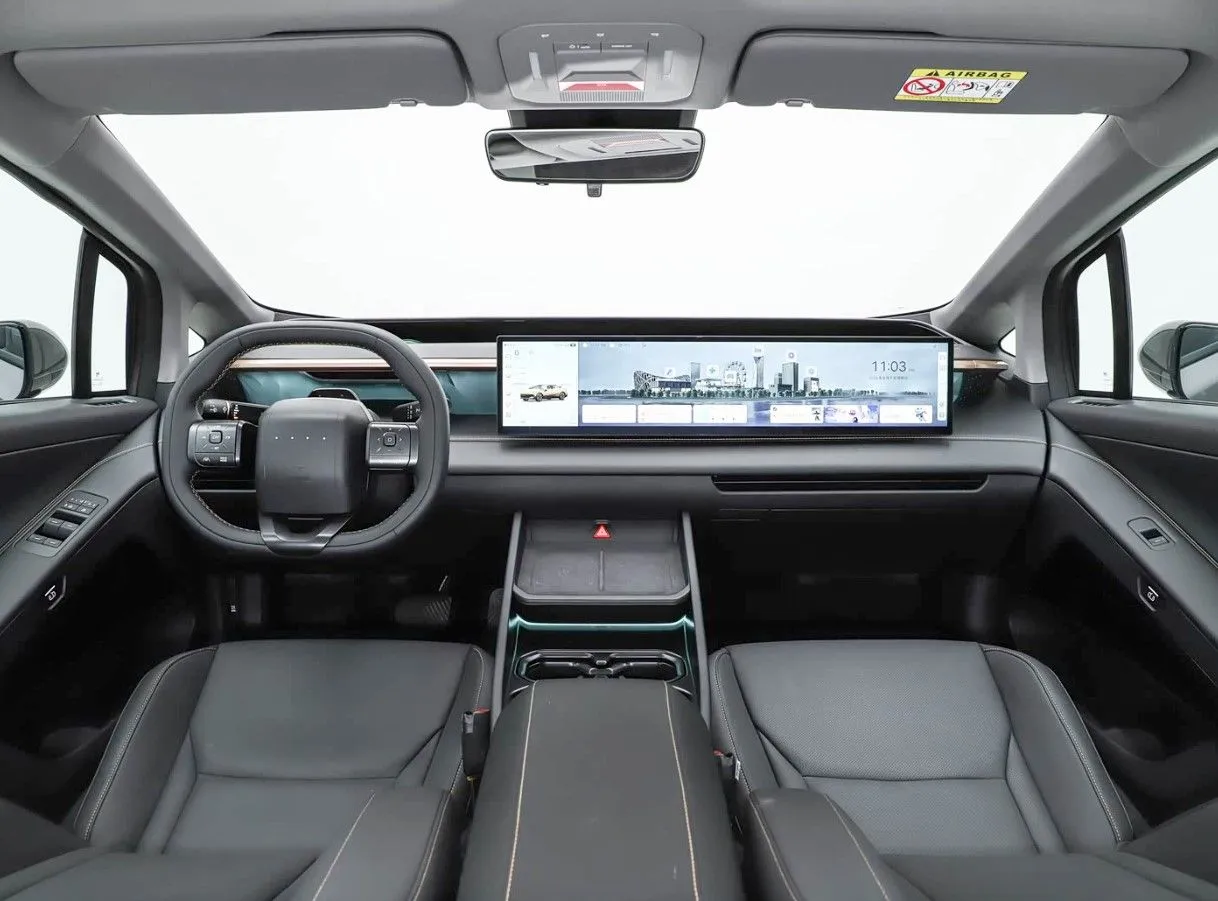
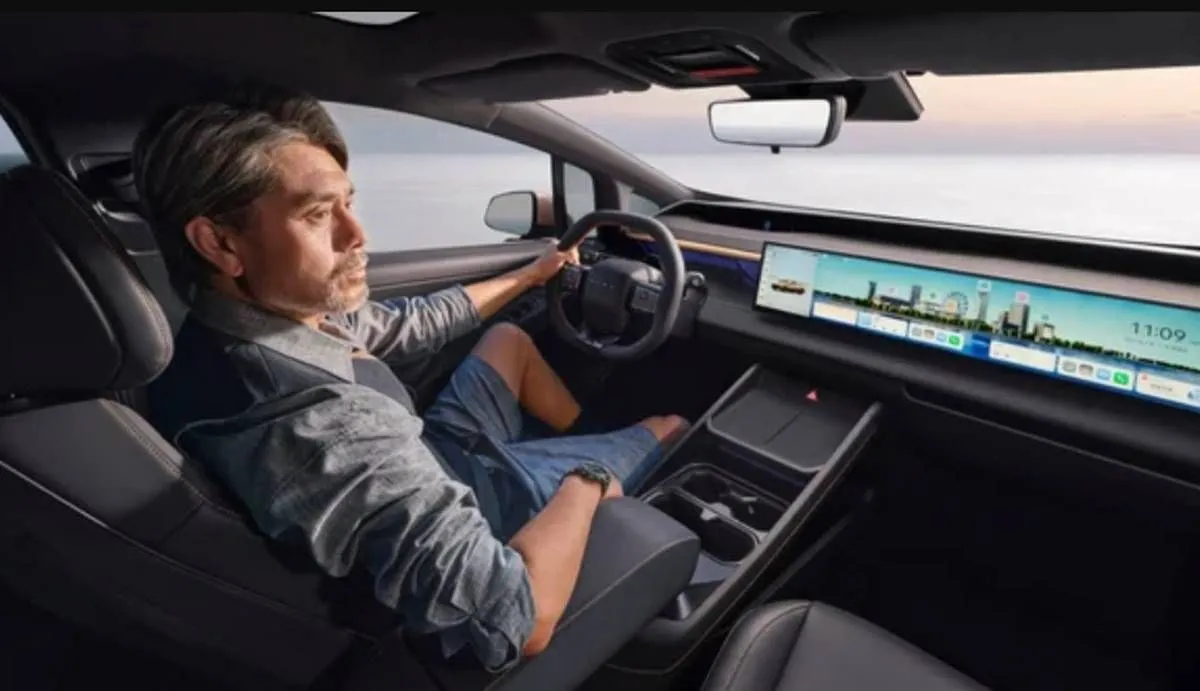
Inside, one of the most eye-catching features is a huge 27-inch panoramic central screen with 4K resolution, along with a front-facing display system. The multimedia system runs on a Qualcomm Snapdragon 8295P processor and utilizes various artificial intelligence models developed by Chinese companies such as Baidu and ByteDance.
This integration goes far beyond simply placing a large screen in the dashboard. The system enables voice interaction and various assistance functions, while Hyundai has also collaborated with local companies to tailor the digital experience to Chinese drivers’ preferences. It is precisely in this area that the brand’s strategic shift is most evident.
For its driving assistance features, Hyundai has turned to Momenta, one of China’s companies specializing in assisted driving technologies. The Ioniq V comes equipped with a level 2+ system featuring highway assist, parking assistance, and navigation aid, though some of the more advanced functions are scheduled to be added through future updates.
Beneath the hood lies Hyundai’s E-GMP platform along with an 800-volt electric architecture, a technology the company already uses in other Ioniq series models. In this case, all initially available versions rely on a single electric motor and front-wheel drive.
The base version uses a 53.5 kWh LFP battery supplied by CATL and a 140 kW motor, equivalent to around 190 horsepower. A higher-tier configuration features a 66.8 kWh battery and a 168 kW motor, delivering about 225 horsepower. In both cases, the batteries are LFP types, a chemistry particularly attractive to Hyundai in China due to its cost and its ability to help keep the vehicle’s final price low.
The certified range reaches up to 650 kilometers according to the Chinese CLTC cycle in the highest-capacity version. The other configurations range from 520 to 650 kilometers under CLTC conditions, depending on the battery and equipment. As is common with the Chinese cycle, these figures cannot be directly applied to the European WLTP standard. Based on our estimates, 650 kilometers under CLTC would correspond to around 566 kilometers under WLTP, a figure that remains quite impressive for a sedan of this size.
The 800-volt architecture also enables charging speeds that meet the expectations for a modern electric vehicle. Hyundai claims the Ioniq V can achieve a 30% to 80% charge in about 20 minutes, though this figure is lower than that of some of the faster models within its own Ioniq lineup.
Beyond the car’s specifications, what truly matters is its significance for Hyundai. The company has invested a total of 8 billion yuan in Beijing Hyundai alongside BAIC and announced an ambitious plan to introduce at least 20 new models in China over the next five years. The strategy will include both electric vehicles and extended-range electric vehicles (EREVs), with the goal of achieving annual sales of 500,000 units.
And this is where the Ioniq V becomes much more interesting for Europe. Hyundai has named its new philosophy “In China, for China, toward the global market.” The idea is to leverage the knowledge gained in the Chinese market to develop more competitive products, with plans to export them to other markets later on.
This does not mean that the Ioniq V’s arrival in Spain or other parts of Europe is confirmed. Hyundai has made it clear that availability in other markets will be considered later. José Muñoz, president and CEO of Hyundai Motor, already mentioned during the model’s launch that the company was conducting feasibility studies to export it to different regions.
So for now, it should be viewed as what it is: a Hyundai designed for China that also serves as a showcase of where the brand aims to go. But the possibility that some of this technology, this development philosophy, and perhaps even some of these models could end up in Europe is on the table.
And that is precisely what makes the Ioniq V a more significant model than its initial sales figures might suggest. Hyundai is using China as a massive testing ground to see how far it can go by combining its expertise in electric platforms with CATL batteries, Momenta’s technology, and digital solutions from Chinese companies.
The price finally explains why this model has attracted so much attention. In China, the Ioniq V starts at 109,900 yuan and goes up to 139,900 yuan officially, although discounts are available during launch periods that temporarily reduce the cost of some versions to 99,900 yuan. At the current exchange rate, this translates to an approximate range of 14,500 to 18,400 euros, with an initial offer around 13,200 euros.
These prices once again highlight the serious issue we face in Europe, where there is pressure to shift to electric vehicles, yet we endure costs that are completely unjustifiable compared to those in China. There, for a lower price than Dacia charges for its Spring, you can get a futuristic sedan like this.