
Hyundai Ioniq V: wedge-shaped sedan for 14,400 euros with a range of 650 kilometers
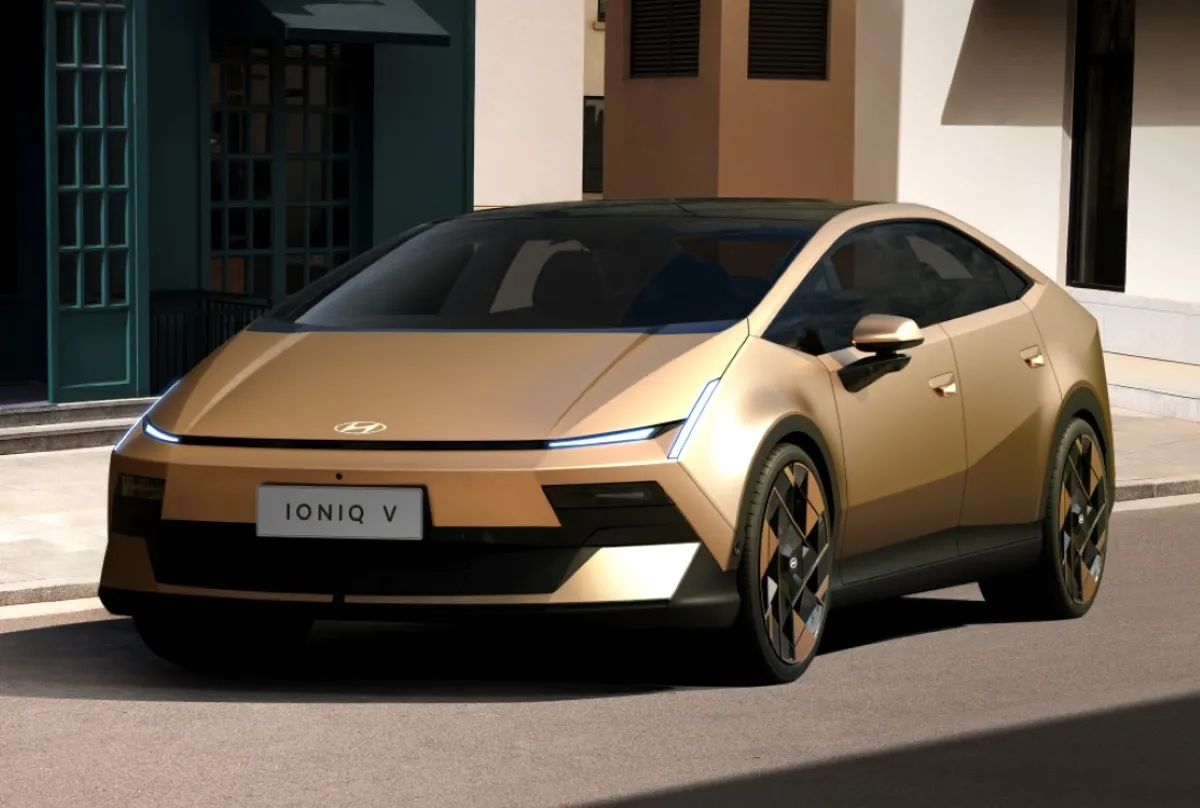
The Hyundai Ioniq V is an extremely wedge-shaped electric sedan designed for the Chinese market. It measures 4.9 meters in length, has a maximum power output of 168 kW, and a maximum range of 650 kilometers. It is not an expensive car, with an entry price as low as 14,400 euros. The slogan for the Hyundai Ioniq V is “AI your every moment.”
Hyundai in China
Hyundai has been operating in China since 2002 through the BAIC-Hyundai joint venture. During the 2000s and 2010s, Hyundai was one of the most popular brands in China, with models such as the Hyundai Sonata and Hyundai Elantra. Its peak came around 2012/2013, when the Korean brand regularly sold over 100,000 cars per month. As a result, it consistently ranked in the Top 5, holding a market share of around 6%.
Things are very different now. In August, Hyundai sold 4,830 cars, ranking 49th out of 101 brands with a market share of 0.31%. The decline is due to increased competition from Chinese manufacturers and a complete lack of new models, especially new electric vehicles. The Ioniq series as we know it in Europe is not sold at all in China. At the end of last year, Hyundai launched the Elexio, developed for the Chinese market. It has not been successful; Hyundai sells fewer than 50 units per month, making it the worst-selling car in the lineup. Will the Ioniq V perform better?
Design of the Hyundai Ioniq V
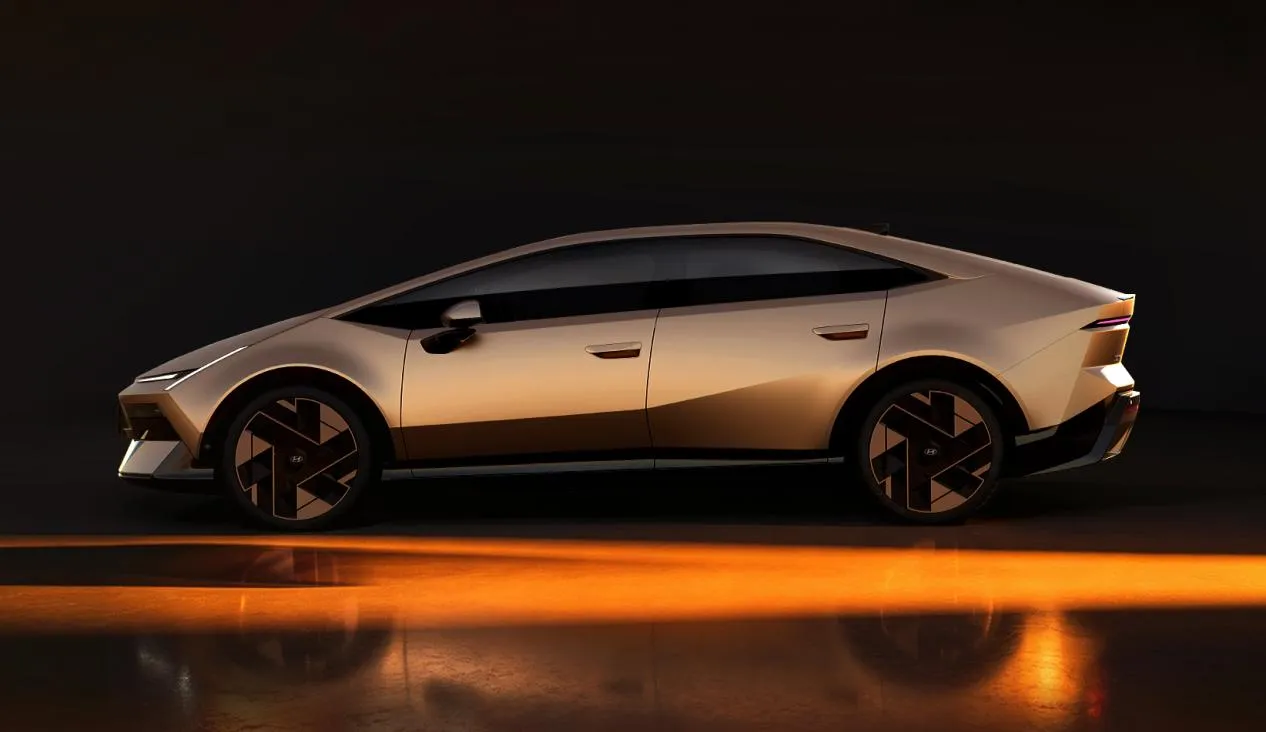
The Hyundai Ioniq V was designed by Hyundai’s China Design Center. The result is truly remarkable. The Ioniq V bears no resemblance to any other Hyundai model or any other car. Chinese media compare its design mainly to the Tesla Cybertruck, the Lamborghini Countach, and the second-generation Toyota Prius.
It is an extremely wedge-shaped car. The line of the hood runs straight from the windshield to the roof. Notably, the boundary between the hood and the window is quite high; drivers must look over it. It appears to be a fastback, but the Hyundai Ioniq V has a regular trunk.
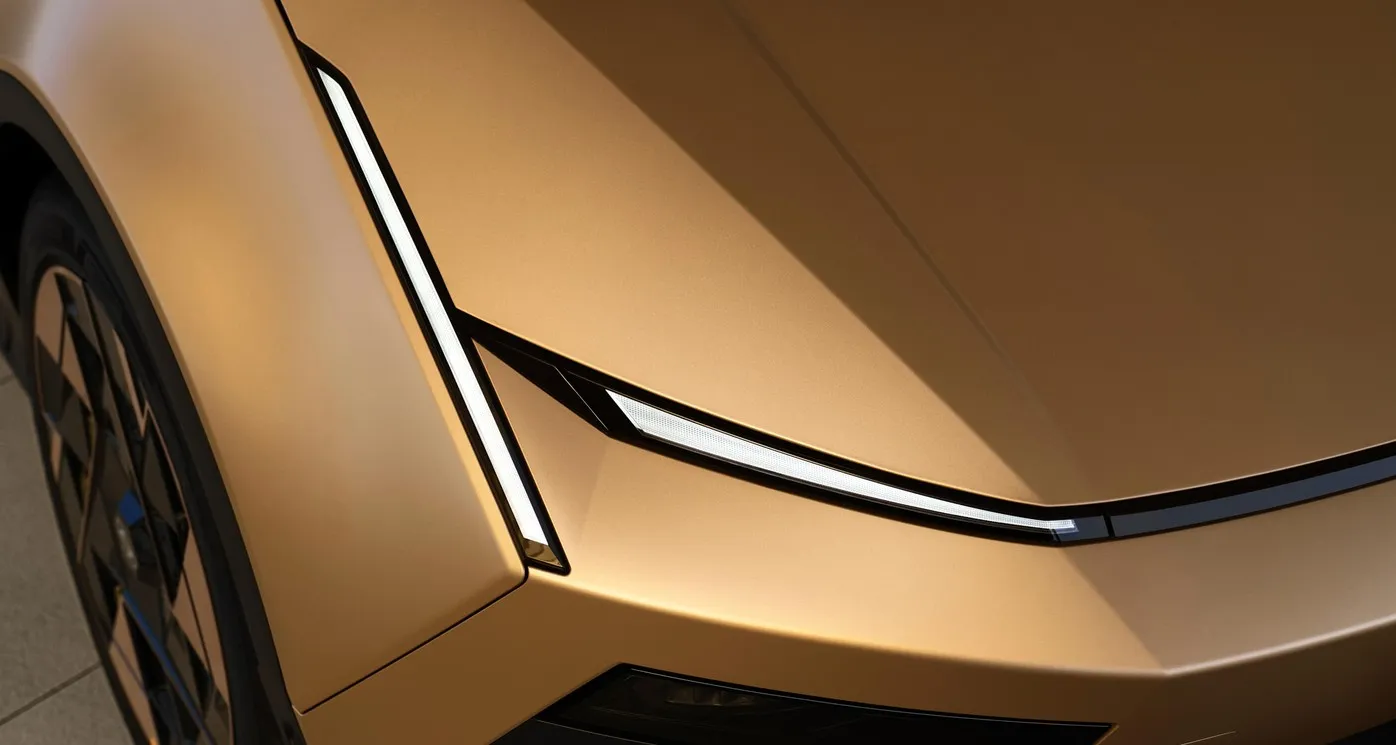
The daytime running lights are positioned partially on and partially directly next to the hood. The headlamps are located in the bumper area, which protrudes significantly at the bottom and is equipped with active air panels.
The mirror is mounted on a wide support attached to the door. Such constructions are common in China, but here the support is particularly large. The roof line is low and drops quite steeply at the rear.
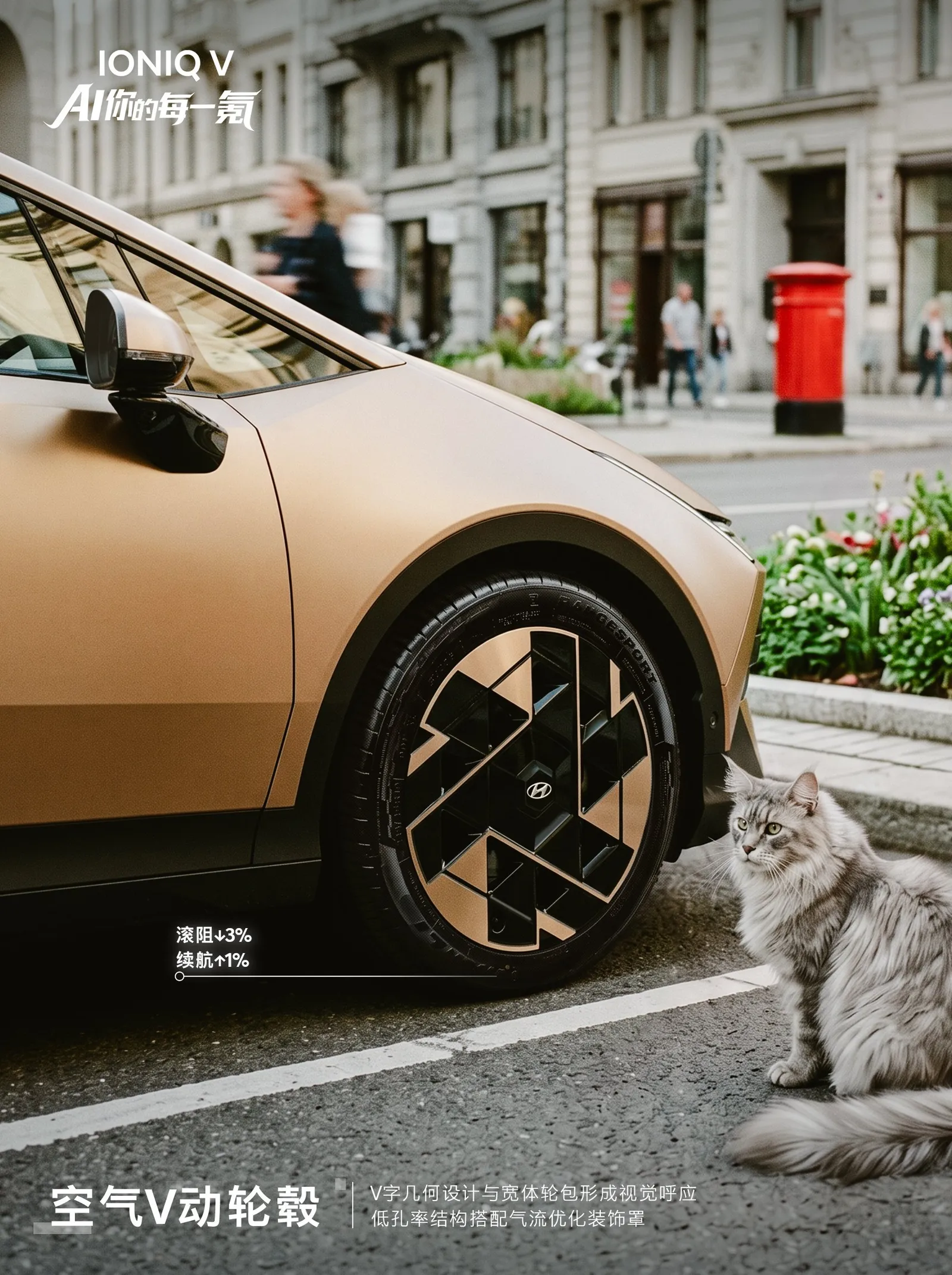
The specially designed “Aerodynamic V-motion” wheel hubs, according to Hyundai, offer 3% lower rolling resistance compared to regular hubs, resulting in an additional 1% range extension.
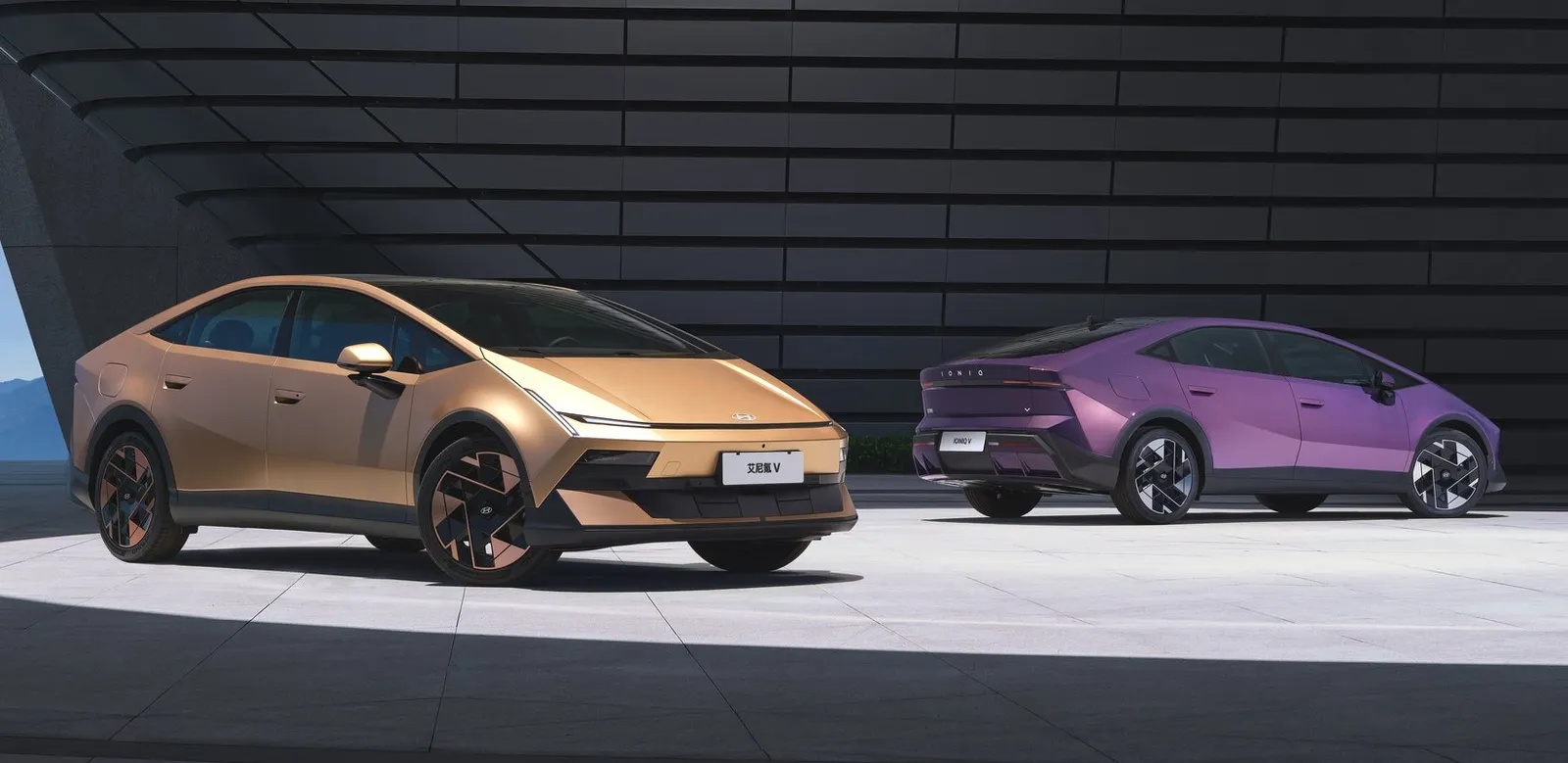
The rear side is even more unconventional than the front, featuring another massive window area. There is no windshield wiper, despite the window being almost completely flat. This will require frequent cleaning due to all the Chinese dust, especially in winter. The hood bears the large letters IONIQ in bold letters, with a wide black light bar beneath it. The bumper also protrudes significantly here, and Hyundai has designed diffuser-like panels for the lower finish.
Overall, it’s a bold design. Perhaps a bit too bold. Chinese consumers appreciate new designs but not extreme ones. Think also of Hiphi, a brand that failed because of its overly unconventional creations.
The Interior of the Hyundai Ioniq V
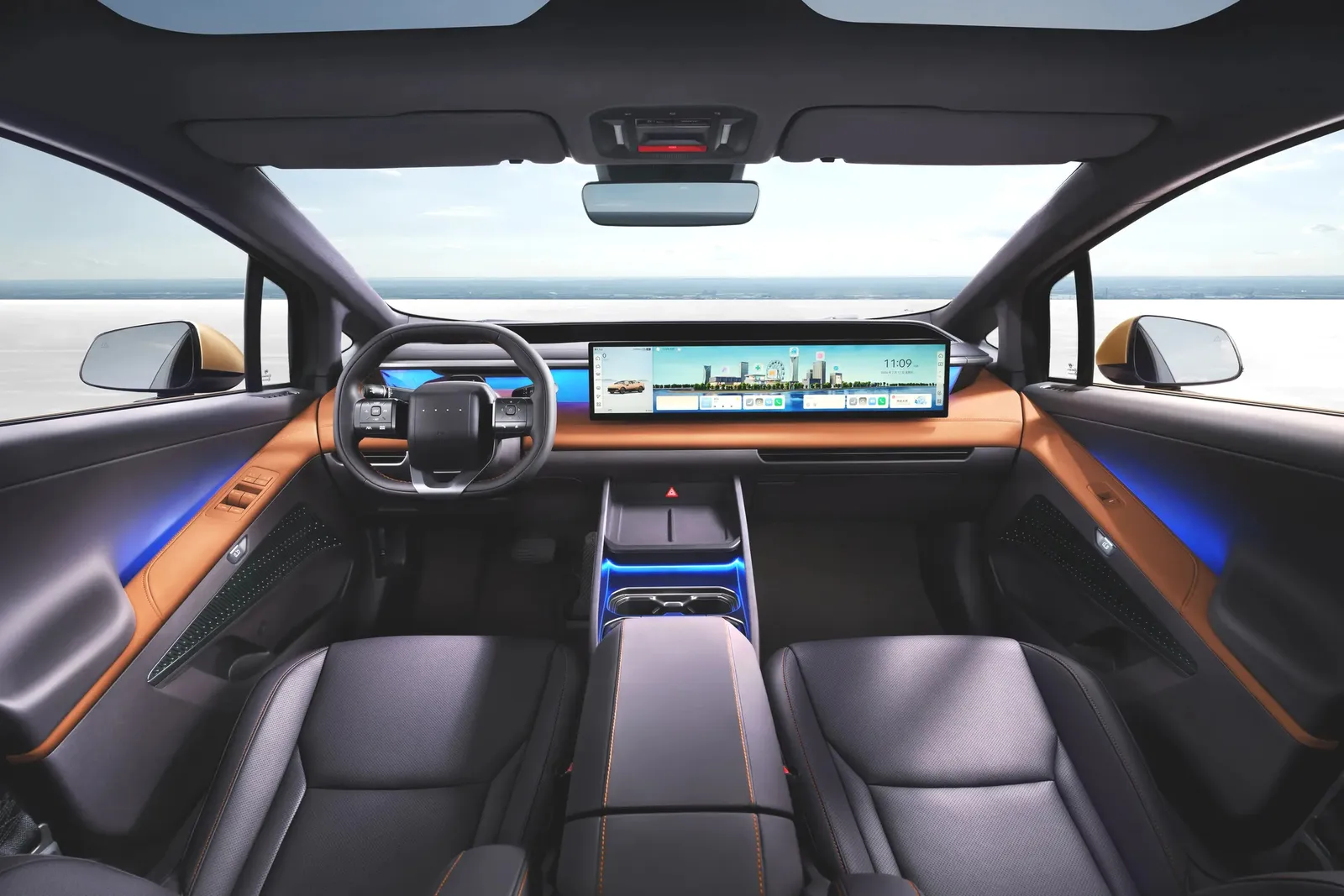
Hyundai has gone completely minimalist with the dashboard, featuring no buttons aside from those on the steering wheel. The dashboard photo shows how high the windshield’s edge is; it is certainly 20 centimeters higher than the edges of the side windows. Hyundai has added a tiny window in the A-pillar as well, but it seems to offer little benefit.
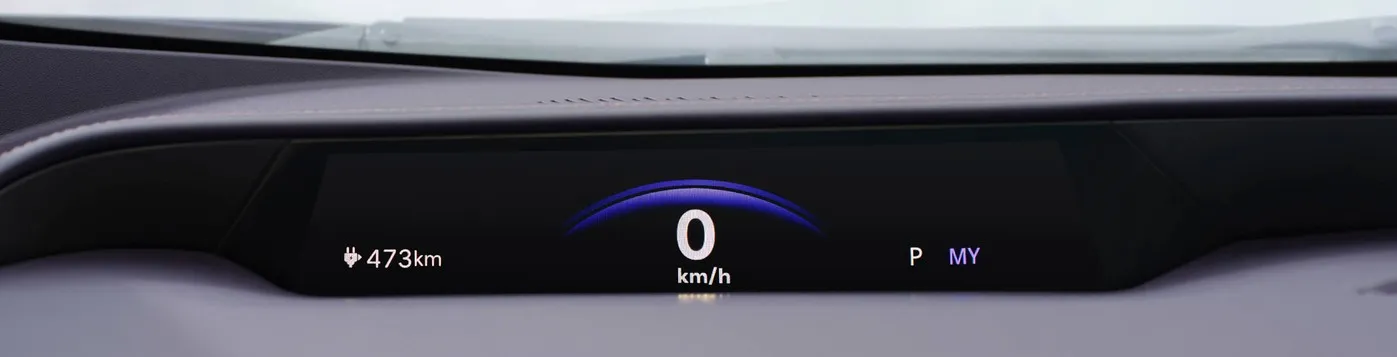
The driver can also view a “Cyber Eye HUD,” an 11.98-inch projection screen placed just below the window. Interestingly, it isn’t visible in the top press photo because it’s hidden behind the steering wheel. So, check out this image from a Chinese website to get an idea of its placement. The blue area behind the steering wheel is ambient lighting, not an additional screen.
The square steering wheel is small, which goes against the current trend in China where steering wheels are getting larger and larger.
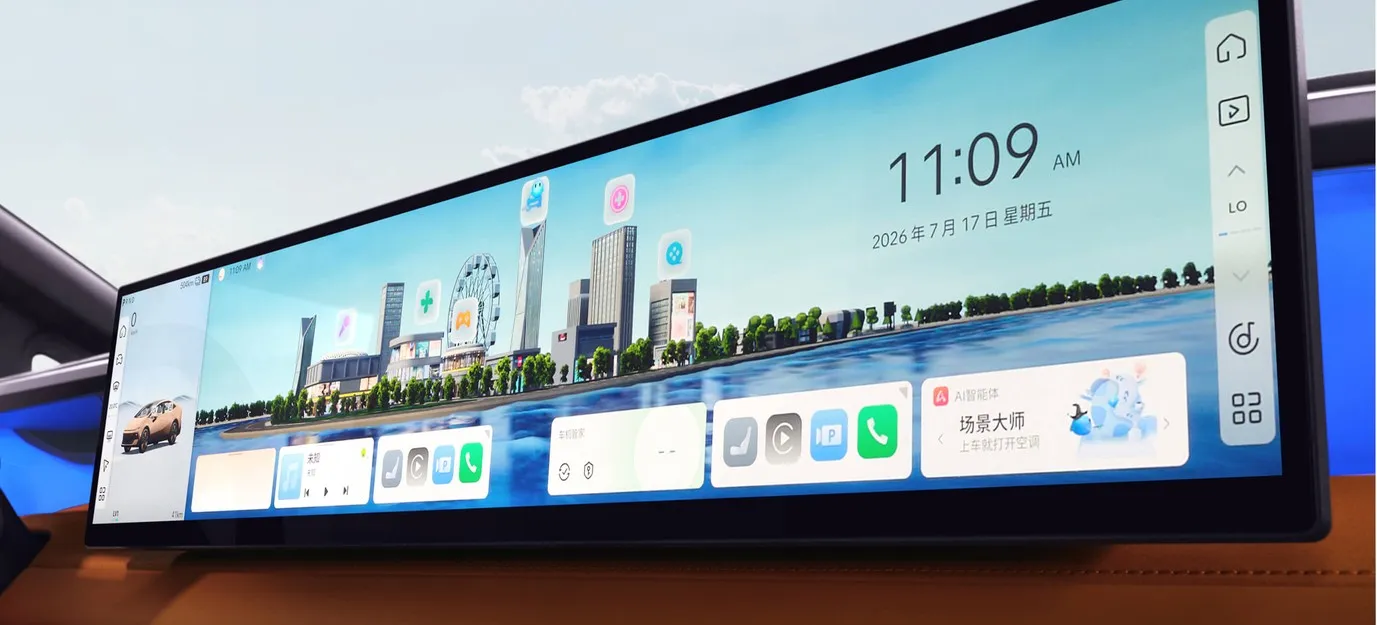
The highlight of the dashboard is the 27-inch 4K infotainment screen that runs from the center to the passenger side. This is the largest one-piece screen in a Hyundai electric vehicle to date. The infotainment system features two Chinese AI chatbots: ERNIE Bot and Doubao AI. These bots can engage in conversations with four people, remember preferences, and perform various tasks such as placing orders and making reservations.
The system also supports wireless Apple CarPlay, Huawei HiCar, and ICCOA Carlink.
The long wheelbase and huge panoramic roof provide plenty of space in the back, but it still looks a bit gloomy, mainly due to the dull dark interior trim. Additionally, the Hyundai Ioniq V lacks many conveniences in the back: no fridge and no screens at all. The audio system with 8 speakers isn’t great either – and Hyundai hasn’t even disclosed its power output.
The trunk capacity is a decent 465 liters. There’s no frunk.
Technical specifications of the Hyundai Ioniq V
The front-wheel-drive Hyundai Ioniq V is built on Hyundai’s E-GMP platform with a 400 V architecture. It’s not based on a borrowed Chinese platform. Its dimensions are 4900/1890/1470, with a wheelbase of 2900. Two versions are available:
Power
0-100
Battery
Fuel consumption
Range
30-80%
Pro, Max, Max +
140 kW/250 nm
7.9
53.48
11.1
540
20m
Max Long Range, Max + Long Range
168 kW/250 Nm
7.7
66.85
11.6
650
20m
The power difference is purely software-related, as they are the same engines with the same code (CF4B). The supplier is the Chinese company Beijing Haihao Power System, a subsidiary of Beijing Hainachuan Automotive Parts (BHAP), which is in turn a subsidiary of BAIC, Hyundai’s partner. The LFP batteries are purchased from CATL.
Momenta’s ADAS
Hyundai clearly states in its marketing that the Ioniq V is equipped with ADAS from the Chinese company Momenta, implying it should be better than Hyundai’s own system. However, it is a very basic system compared to competitors. The Pro, Max, and Max+ trims come with 2 cameras, 8 ultrasonic sensors, and 1 millimeter-wave radar.
You really can’t rely on that in China by the end of 2026. It has adaptive cruise control, but that’s about it. The Max Long Range and Max+ Long Range models come with a slightly better system, featuring 7 cameras, 12 ultrasonic sensors, and still a millimeter-wave radar. With this version, the Hyundai Ioniq V can drive autonomously on highways, but not in cities.
Purchasing the Hyundai Ioniq V
Chinese consumers can now buy the Hyundai Ioniq V at BAIC-Hyundai dealerships in China. There are five trim levels, three interior color combinations, and eight exterior colors: Cyber Gold, Flowing Silver, Magnetic Gray, Olive Green, Photon White, Photon White (Matte), Quantum Purple, and Nightblade Black.
The Hyundai Ioniq V is very cheap: ranging from 109,900 to 139,900 yuan, which is equivalent to between 14,400 and 18,500 euros. The direct rivals of the Hyundai Ioniq 9 are cars such as the ArcFox Alpa S5, BYD Qin Max, Chery Fulwin A9, and MG07. The chances of the Ioniq V ever coming to the Netherlands seem low.
