
Every year, several thousand electric vehicle owners get stressed trying to forget this
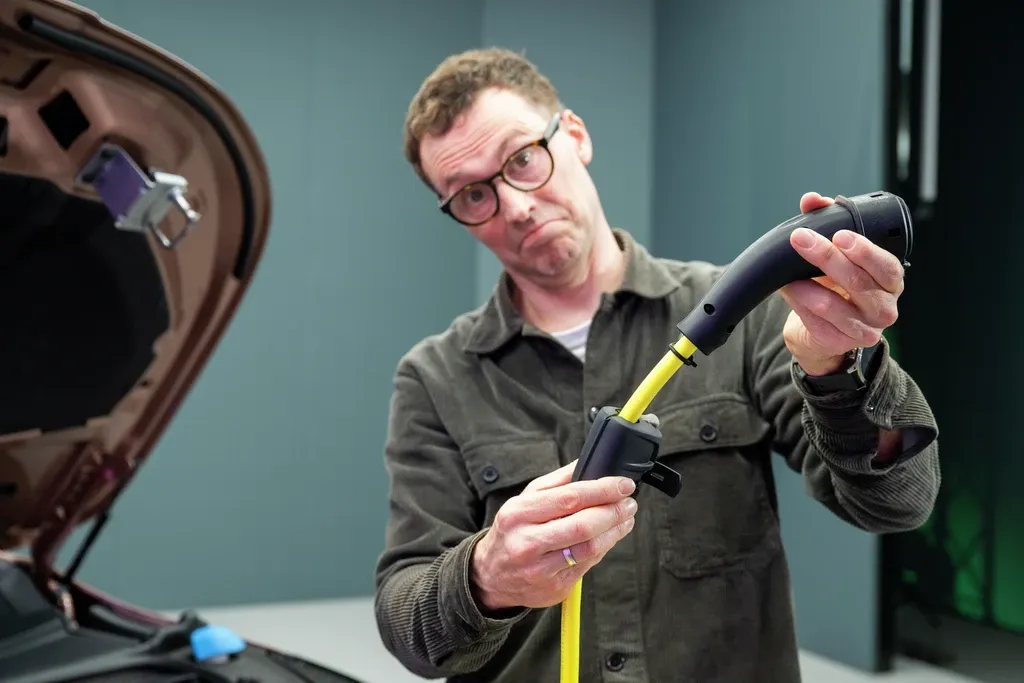
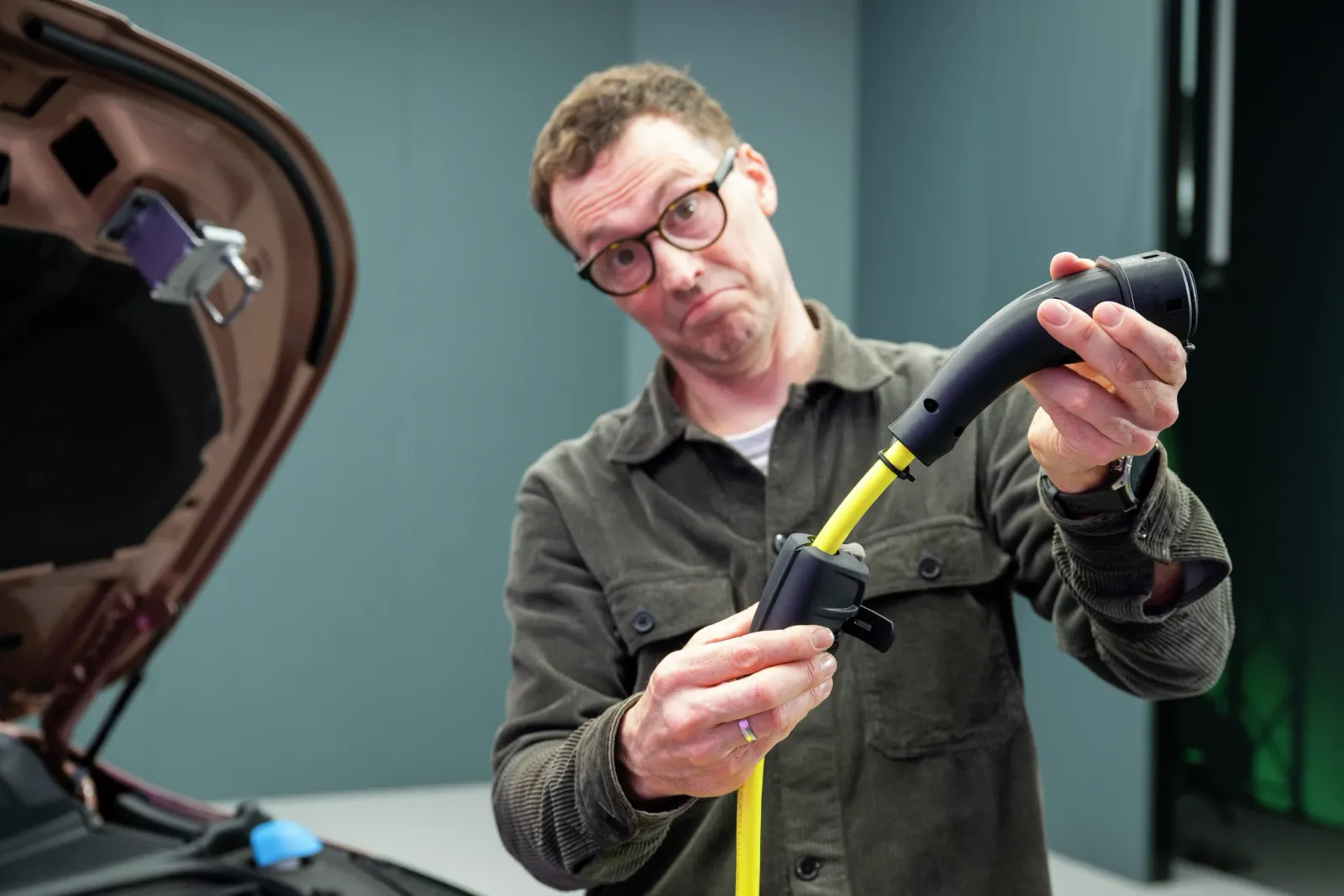
If you want to avoid multiple rounds of EU inspection, it’s wise to take a look at the checklist in this article – and remember to bring your charging cable.
23.10.2026 09:06 | Updated 10:48
When your electric car turns four years old, it must undergo a periodic vehicle inspection (PKK), commonly known as EU inspection.
After that, the car needs to be inspected every other year.
47 percent failed last year
During this inspection, various aspects of the car are checked, mainly focusing on safety, but the inspection points also include noise and emissions.
Fortunately, the latter two issues aren’t a big concern for us electric vehicle drivers.
You can find out what is checked here.
And the faults are widespread: Last year, a total of 1.5 million light vehicles were inspected under EU standards, and 47 percent of them were not approved on the first try—requiring another inspection.
Finnmark had the lowest proportion of unapproved cars, at 39 percent. At the other end were Agder and Buskerud, where over 50 percent of EU inspections were not approved.
Earlier this year, we could provide an updated overview of how different brands performed in the EU inspections:
Nearly 3,300 vehicles received “repeat fault” ratings last year due to forgotten charging cables.
Many of the inspection points during EU checks are things that car owners have little chance to check themselves, such as brake fluid quality or whether there is rust in the brake lines, etc.
But some of the EU defect labels that are especially frustrating to get resolved are so-called two-time errors, meaning mistakes that require the car to be shown once again.
And perhaps the most annoying one: receiving such a notice because the charging cable was left at home in the charger box.
Every year, thousands of electric vehicle owners still forget this cable at home, and last year, 3,289 electric vehicle owners received a “code 2” error for not bringing it along during the EU check, according to Motor.
Then you have to go home to get the charging cable, schedule another workshop appointment, and pay for a follow-up inspection.
The reason the cable must be included is not some misguided sense of duty — inspectors discover a few hundred charging cables with frays, connector damage, and deformations each year.
A trick to avoid detection
But it’s still possible to get around this requirement — surprisingly, by claiming you don’t have a charging cable.
In fact, it’s not mandatory for electric vehicle owners to have a charging cable, although it usually comes included when purchasing an electric car.
“This part of the inspection is based on trust. If someone chooses to lie to avoid having the cable they normally use, which would otherwise be inspected, then the inspection won’t take place,” says Leif Magne Halvorsen from Statens vegvesen til Motor.
Checklist before the EU inspection:
Don’t forget to bring your charging cable: If you’ve already forgotten it, you probably shouldn’t drive at all, but we’re reminding you one more time anyway.
Wiper system: Visibility is one of the inspection points. The windshield wipers must function properly. They cannot be checked without the wiper system in place.
Windows: There must be no damage with a diameter of more than 10 mm within the field of vision. Large damages outside the field of vision are also illegal – good visibility must be maintained even on the outer sides. Dark film causes errors on the outer sides. If the edges are scratched, this can also result in a failure.
Window adhesives: The vehicle will not pass EU inspections if the window adhesives are of poor quality. This makes it unlikely that it will be approved immediately.
Mirrors: There must be no damage to the mirrors themselves. Note that the electric mirror adjustment does not necessarily need to work if it is still possible to adjust the mirrors manually from the outside, so no issues should arise in this case.
Lights: Make sure all light bulbs are in good condition. Also check the hazard lights. The car’s reflectors should also be intact. Unless you have LED lights, most people should be able to replace them or call a friend for help.
Tires: You only need to show the car with the tires it is equipped with. Check for any damage or abnormal bulges, at least on the outside. Ensure they have sufficient tread depth. Also verify that they are installed with the correct rotation direction (arrows are marked on the tire side). Check further to see if they are evenly worn. If they are unevenly worn, there is a high chance something is wrong with the suspension—either misaligned wheel angles or worn bearings. This needs to be fixed.
Wheel Rims: Are there any issues with your wheels? It could be as simple as a nail that came loose on the rim or snow or ice during winter. But if it’s due to damage to the tires or rims, the car will not be approved.
Brakes: Many vehicles suffer from faulty brake pads due to rust, not just cars. The reason is heavy salt use, and for drivers of motorbikes: less brake usage. Motorbike riders are particularly vulnerable to this because of the nature of motorcycle braking, meaning most of them use their brakes far less than drivers of gasoline cars. If you see that the pads are severely rusted, there’s a high chance they need to be replaced, even if the vehicle isn’t especially old.
Your responsibility to get the vehicle approved
Previously, you received a reminder from Statens vegvesen in the form of a letter in your mailbox.
Now, Vegvesenet sends you an email about the approaching EU inspection, urging you to log in to their somewhat complicated digital mailbox email account so you can actually know when the deadline is.
Fortunately, it’s easier to check this directly on Vegvesenet’s website, where you just need to enter the vehicle’s registration number.
Wondering when your car needs inspection? Check it here.
Many repair shop chains also register you in their system and remind you about the EU inspection if you wish.
In any case, it is your responsibility to ensure it gets done when due—and to make sure the deadline is met.
These are the EU inspection error codes
Error Code 1: Note for minor defects and omissions. A requirement to make improvements. However, no follow-up inspection is needed, and the car is approved.
Error Code 2: Serious defect that prevents the car from being approved. You must repair it and have it re-approved during a follow-up inspection. But you can use the car in the meantime, and it is not banned from use.
Error Code 3: Safety-related defect. Results in an immediate ban on use, and it is illegal to drive the car until it is repaired and approved in a follow-up inspection.
Source: State Road Administration

More like this?
Sign up for our newsletter
– get electric vehicle news straight to your inbox!
Also read
The post Hvert år får flere tusen elbilister stress for å glemme denne appeared first on Norsk elbilforening.