
Humax targets growing EV fleets with MX PRO 22kW charger
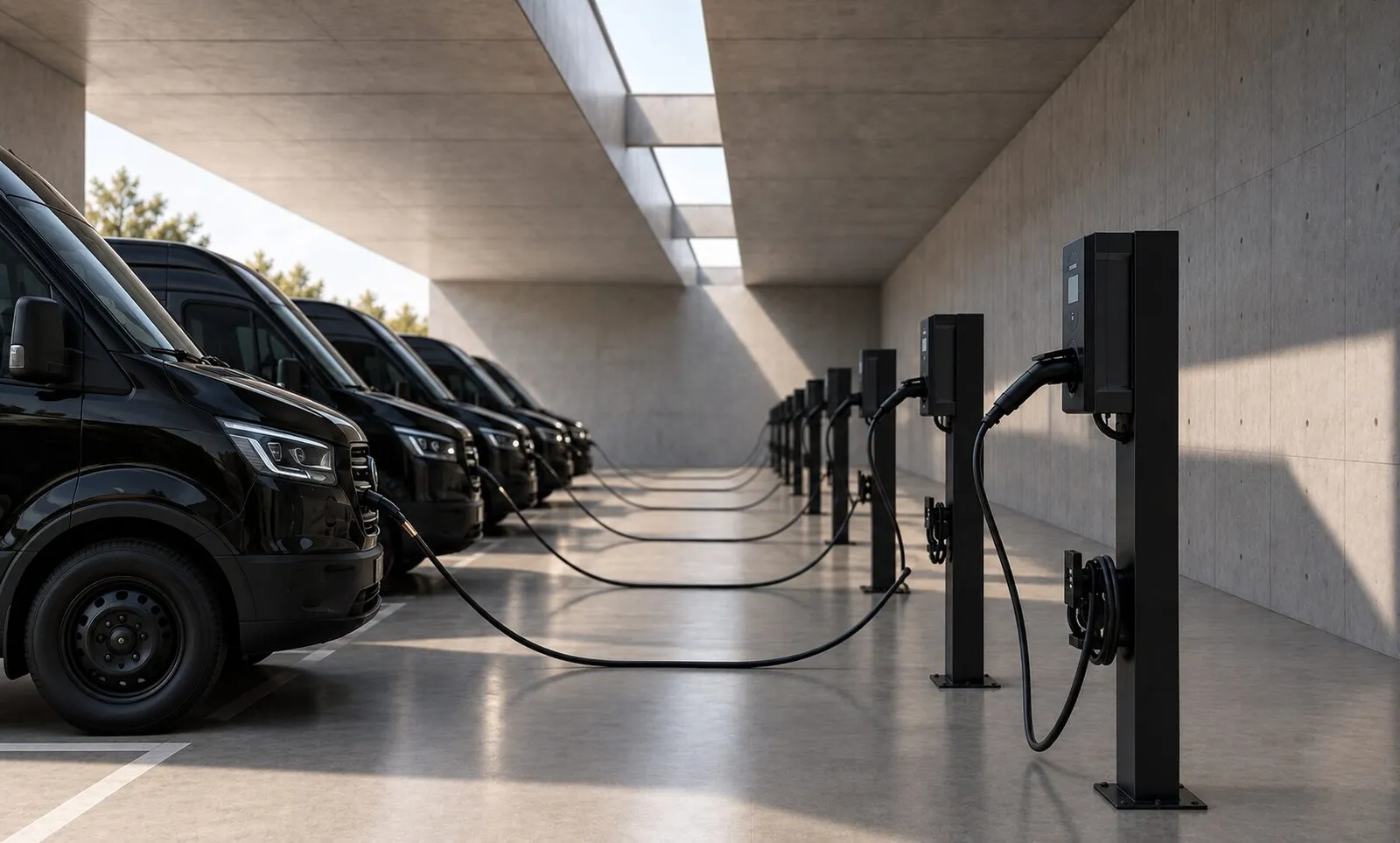
Humax EV Charging is introducing a commercial electric vehicle charger designed to let businesses prepare parking spaces for charging before they need to install the equipment, reducing disruption as their electric fleets expand.
The MX PRO delivers up to 22kW AC charging and combines pre-wired mounting plates, shared power management and automatic vehicle authentication. Aimed at fleet depots, workplaces, commercial buildings and apartments, it is scheduled to reach UK mainland wholesalers and distributors from the end of November.
Its suggested retail price includes VAT but excludes installation and is subject to change. Humax will launch the charger at Fleet & Mobility Live, taking place at Birmingham’s NEC on 6–7 October 2026.
The company’s central pitch concerns a practical problem for organisations moving to EVs: how to install enough charging infrastructure for today without repeatedly revisiting the electrical work as more vehicles arrive.
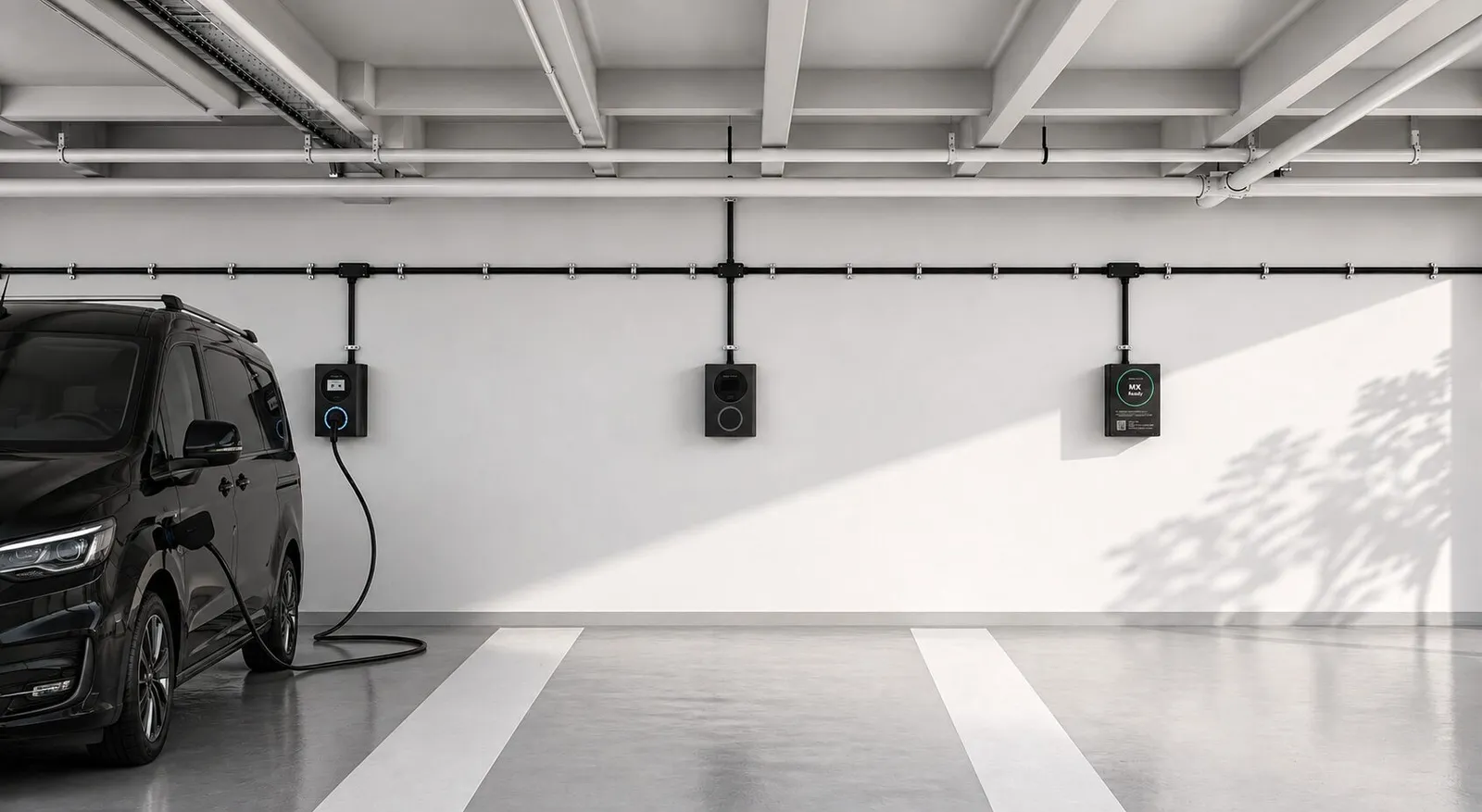
Under its MX Ready approach, installers can fit the MX PRO backplate, complete the wiring and protect the unused position with a dummy cover. When another charger is needed, the cover is replaced with an MX PRO unit. Humax says this requires no further wiring work at the prepared position.
That separates the initial electrical preparation from the purchase and installation of every charger, giving operators a way to plan parking provision ahead of vehicle deliveries. The launch material does not specify separate pricing for the backplates, covers or optional mounting equipment.
Matthew McMullan, director, Automotive and Energy at Humax EV Charging, said: “Fleet electrification is not simply about installing more charge points. Operators require infrastructure that is straightforward to deploy today but does not restrict what they can do tomorrow. The Humax MX PRO has been designed to address the challenge of future-proofing installations and minimising infrastructure disruption.”
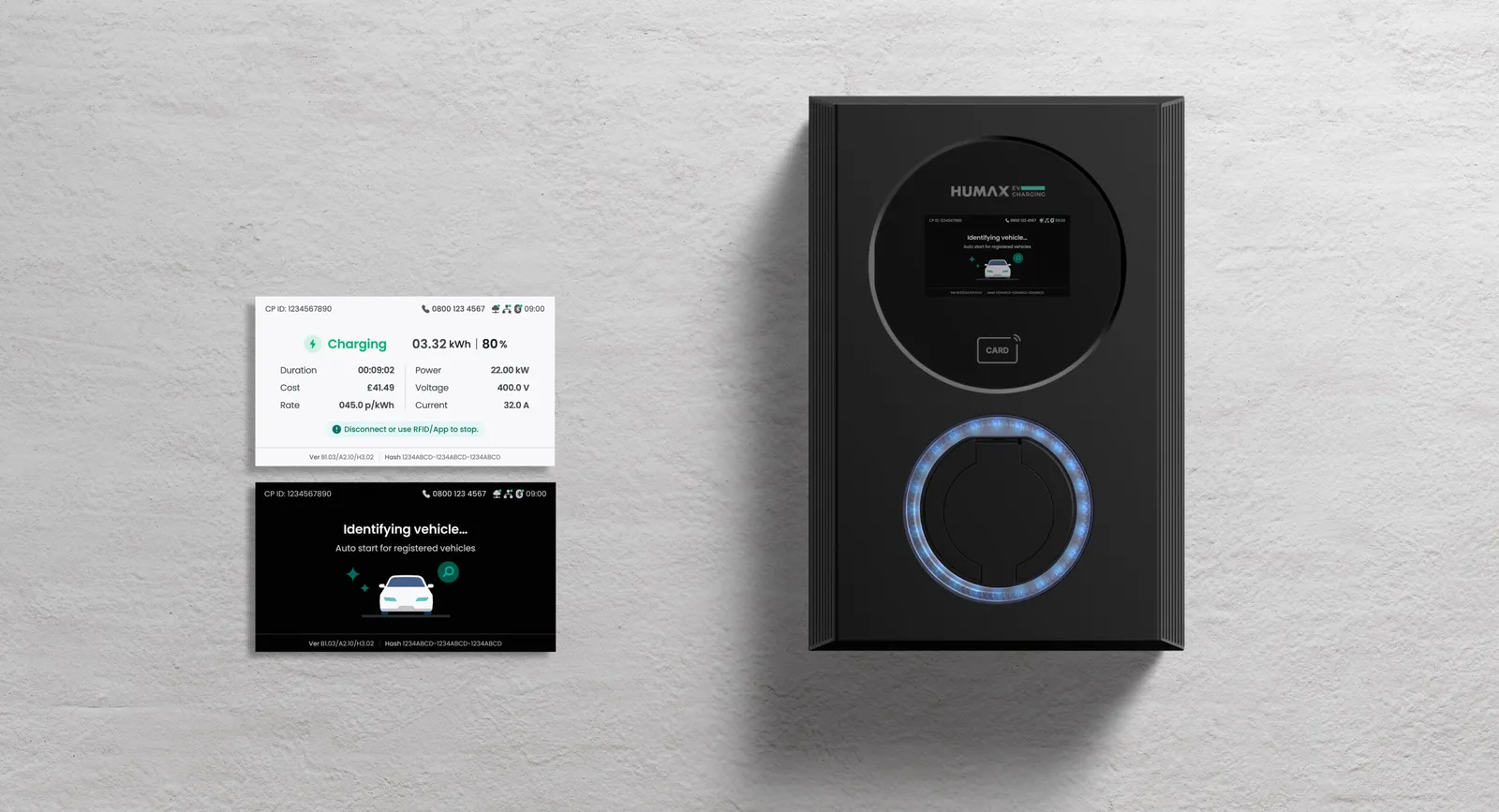
For larger installations, the MX PRO uses a power bus architecture intended to reduce the need for individual cable runs back to the main distribution point. Daisy-chain wiring allows multiple units to be connected sequentially, which Humax says reduces cabling requirements and simplifies deployment.
Dynamic load balancing distributes the available electrical supply across connected chargers. The technical specification also lists support for phase balancing and phase switching, providing additional options for managing how charging demand is spread across the installation.
This is relevant where a business wants to increase the number of charging bays within an existing site’s electrical capacity. Sharing available power can accommodate more connected vehicles, although it does not mean every outlet will necessarily deliver its maximum rated output simultaneously.
The charger supports both single-phase and three-phase supplies. Listed single-phase outputs are 3.7kW at 16A and 7.4kW at 32A, while three-phase configurations provide 11kW at 16A or 22kW at 32A. A Type 2 socket provides the vehicle connection.
The 22kW headline figure therefore depends on the installation and the vehicle’s AC charging capability. Buyers should distinguish that maximum rating from the speed an individual car or van will accept, particularly when planning how many vehicles can be replenished during a working day or overnight.
Humax is also emphasising freedom to choose the software used to run a charging network. The MX PRO supports OCPP 1.6J and is described as upgradeable to OCPP 2.0.1, allowing integration with charge point management systems, or CPMS platforms.
McMullan said: “Furthermore, the Humax MX PRO brings a range of fleet-focused technologies into a single platform. One of the most important aspects is our agnostic approach to CPMS. We are already integrated with Monta, Fuuse and Ta, and are open to integrating with other CPMS providers.”
A split-data architecture is intended to preserve Humax’s connection to the hardware for diagnostics and maintenance even when an operator selects a third-party management platform. That should allow businesses to retain their preferred charging software while maintaining access to the manufacturer’s technical support.
“Fleet operators increasingly look for the freedom to choose the software ecosystem that works for their business, without losing access to specialist hardware support,” McMullan added.
For drivers, the MX PRO offers AutoCharge, which Humax says starts a session automatically when a recognised vehicle is connected. The release also lists Plug & Charge using ISO 15118-2, providing secure vehicle identification without requiring an app or RFID card.
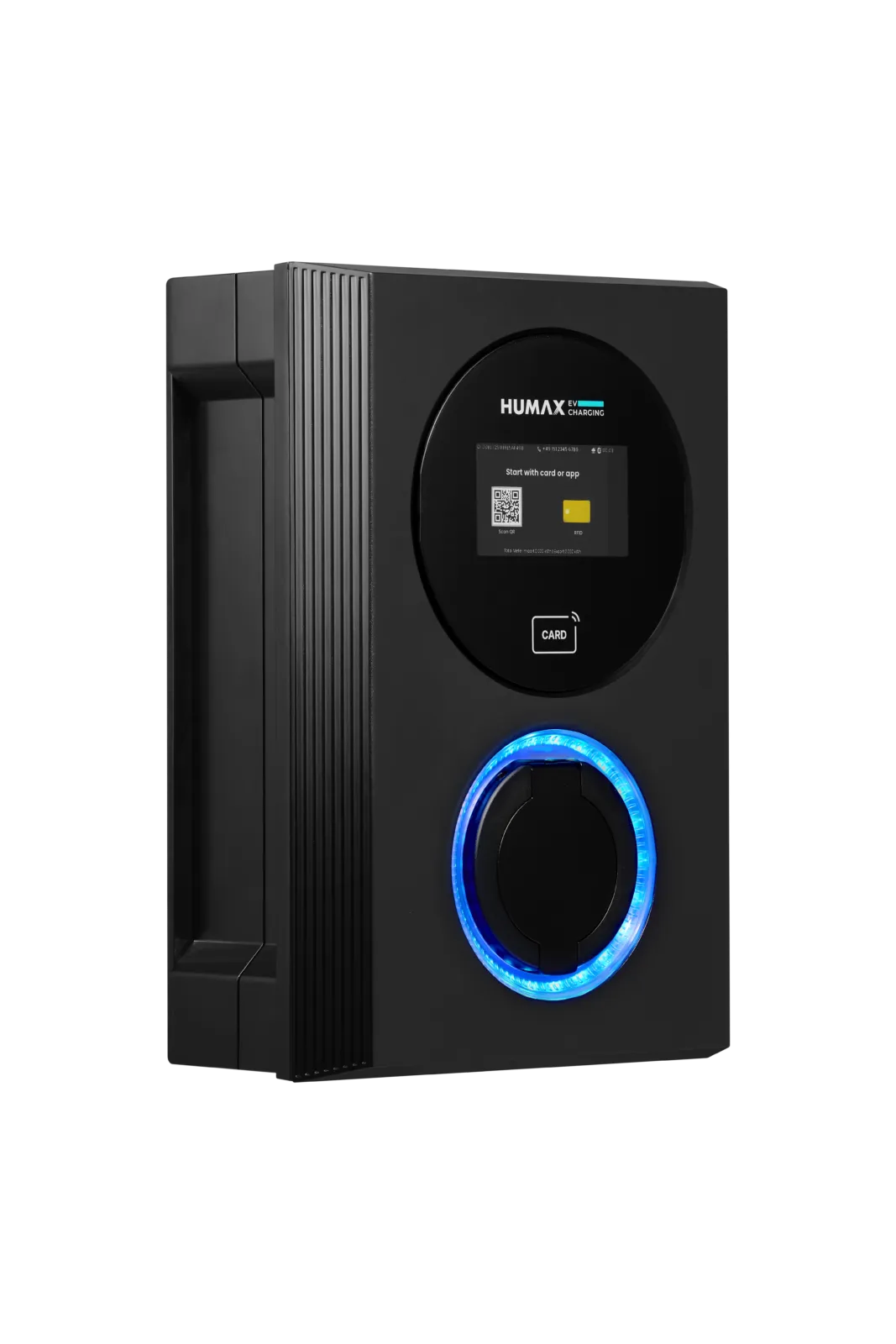
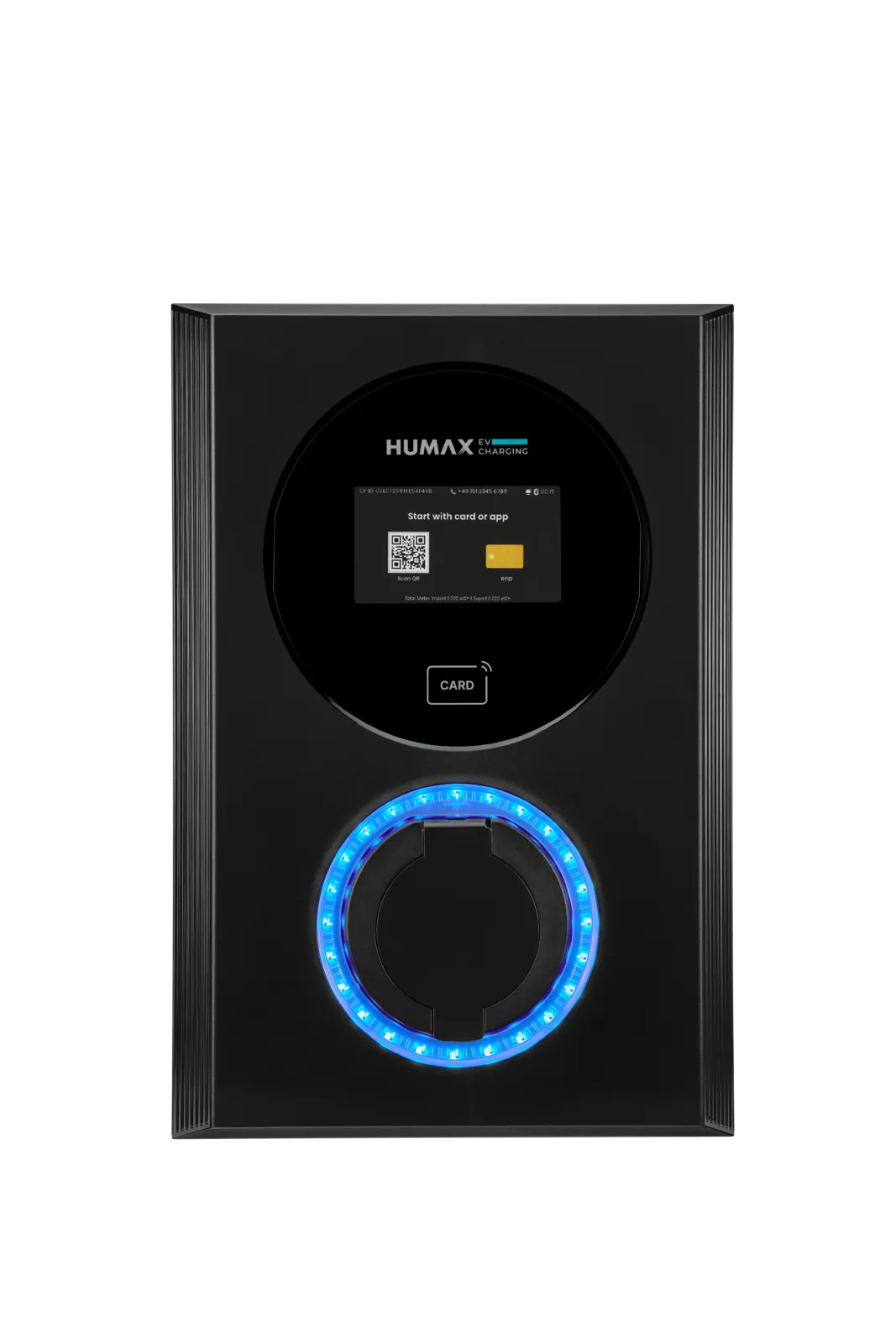
RFID and NFC are nevertheless included in the specification, giving operators other authentication options. A MID-certified electricity meter supports billing and cost recovery, while a 4.3-inch LCD shows charging information and a digital QR code. The display is not a touchscreen.
For apartment managers and employers, the combination of metering and authentication is intended to support shared charging where electricity costs need to be recovered from users.
Network connections include Ethernet, Wi-Fi, Bluetooth and Zigbee, alongside 4G LTE with a built-in eSIM. Humax says the eSIM enables network providers to be changed without physically replacing SIM cards across individual chargers, potentially reducing maintenance visits across larger installations.
Cellular connectivity also allows commissioning and ongoing operation without relying on a workplace’s Wi-Fi network. The specification lists EEBUS and Modbus TCP/RTU alongside OCPP, adding further communication options for installations that need to connect charging equipment with other systems.
Humax describes the MX PRO as “V2G ready”, with built-in powerline communication and ISO 15118 readiness. However, the supplied documents do not set out a live vehicle-to-grid service, compatible vehicles or an activation timetable. That description should therefore be treated as a statement of readiness rather than confirmation that buyers can export energy from a vehicle at launch.
The hardware can be wall mounted or installed on an optional pole stand, with the brochure also showing pedestal and tower installation options. Each charger measures 370 × 250 × 144mm and weighs 5kg.
Its enclosure carries IP54 ingress and IK10 impact protection ratings, and the specified operating temperature range is minus 30°C to plus 50°C. Electrical protection includes Type A residual-current protection with 6mA DC detection, alongside protection against over-current, surges, voltage and frequency variations, overheating, PEN faults and tampering.
The brochure lists a three-year warranty, while the launch release describes the MX range as coming with up to three years of manufacturer’s warranty and support through Humax’s approved installation and customer service network. Purchasers should confirm the applicable terms when ordering.
Humax EV Charging is part of the South Korean technology and connectivity business founded in 1989. The company says it has built and deployed more than 18,000 EV chargers in South Korea, covering residential and commercial applications.
At Fleet & Mobility Live, Humax will exhibit its commercial charging range, including the MX PRO, in Hall 6 on stand H3. The event will provide fleet operators with an opportunity to examine the hardware ahead of its planned November availability.
