
Horse Powertrain: We have developed internal combustion engines for electric vehicles, and we support the hybridization of BEVs
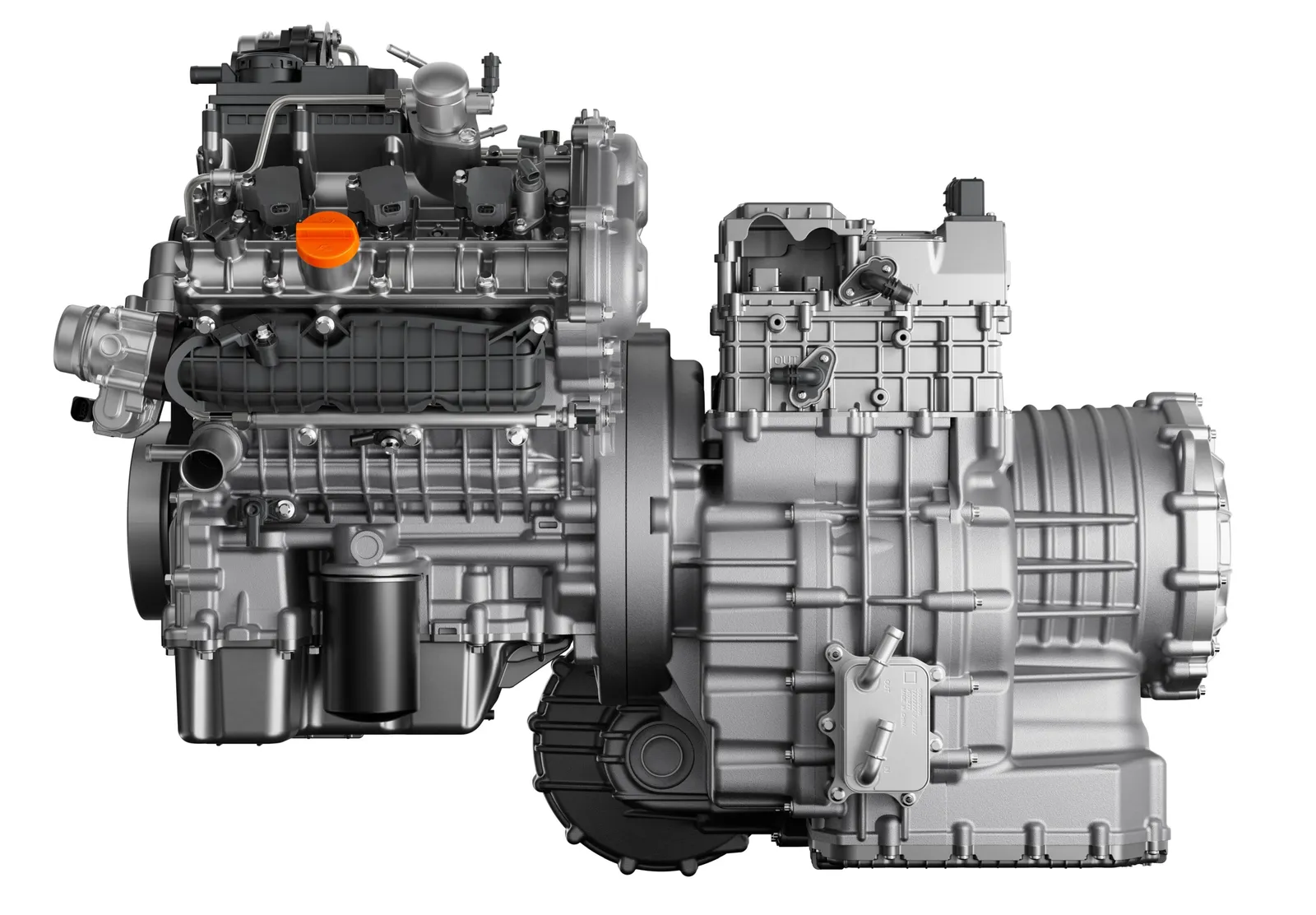
Horse Powertrain is a company founded by Chinese Geely and Renault in 2025. The company markets itself in a rather surprising way, claiming to have created internal combustion engines designed specifically for installation in electric vehicles. Manufacturers who purchase them will be able to modernize (?) their BEVs into hybrids at an affordable price — and this without any major modifications to the vehicle body.
Horse Powertrain, thinking upside down
The company aims to relieve other automakers of the need to worry about internal combustion engines. This applies especially to those groups that have focused on developing electric vehicle models. According to the statement, brands can concentrate on designing BEVs, and if necessary, Horse Powertrain will provide them with alternative internal combustion engines that can serve as either a drive system or a generator to replenish battery energy. By 2040, indeed, half of all cars are expected to have purely electric drives, but the other half will still rely on internal combustion engines.
Renault and Geely’s subsidiary, the French startup Horse Powertrain, has developed a solution that allows any electric car to be converted into a hybrid. This way, a manufacturer with a 100% electric platform can also sell hybrids. https://t.co/zKAHljPdZk pic.twitter.com/cU7K1P0aso
— Aymeric Pontier (@aympontier) June 4, 2026
The base model is the X-Range C15 Direct Drive, which is a hybrid powertrain designed to be installed in place of the rear electric motor. It consists of a 1.5-liter four-cylinder gasoline engine, two electric motors (one for generating power and one to drive the wheels), as well as a transmission. The gasoline engine can produce 70 kW/95 hp in the naturally aspirated version or 120 kW/163 hp in the turbocharged variant. The axles come from the transmission, driven by the second electric motor, but the torque transmitted to them can also be generated by the gasoline engine.
The maximum power delivered to the wheels can exceed 200 kW/299 HP, with the generator operating at a speed similar to that of a slow charger, namely up to 56 kW in the base version and up to 110 kW in the turbo variant. The entire system is compatible with the 800 V architecture, which appears to be a forward-thinking decision, though somewhat surprising given who might need such a solution:
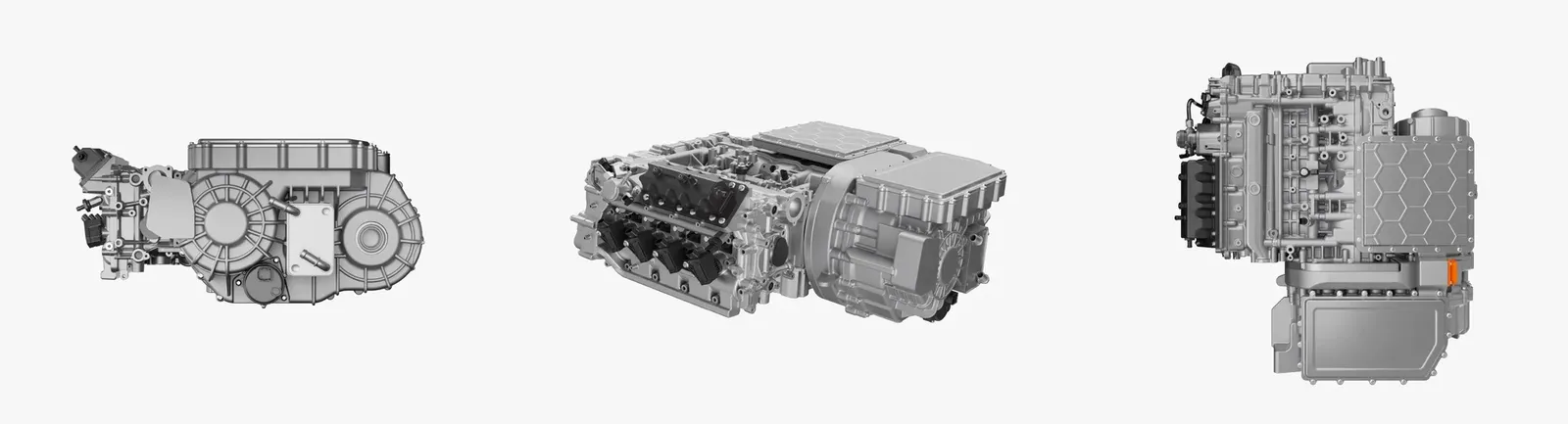
For those lacking power, Horse Powertrain promises a 3-liter V6 combustion engine (Horse W30; shown on the left) that weighs 160 kilograms, delivering up to 350-400 kW of power and 700 Nm of torque. It is intended to be the lightest and smallest V6 on the market compliant with current emission regulations, but it will not arrive until late 2028, suggesting Horse Powertrain is unsure whether the market will be interested in such a solution. The W30 pairs with a four-speed transmission (4LDHT; shown on the right), bringing the total weight to 199 kilograms.
Editor’s note from Elektrowozu: Both solutions were unveiled at the Beijing Auto Show (China) in April. So far, the company has not named any interested manufacturers. The drives theoretically seem designed for Western companies, but Geely’s involvement in the joint venture suggests it may be more aimed at Chinese firms that want to “modify” their electric vehicles into those “preferred by Europeans.”
Article rating
Readers’ ratings
[Total: 2 votes Average: 5]
Don’t miss new content — CLICK and FOLLOW Elektrowoz.pl on Google News. You might also be interested in the following ads: