
Honeywell and a European consortium are bringing aviation closer to future propulsion
In short:
Air transportation is entering another stage of development aimed at achieving emission-free air travel
The Newborn consortium announced the successful integration of a hydrogen fuel source capable of supplying electricity to an airship
This is one of the most crucial steps toward creating megawatt-class hydrogen-electric propulsion systems
This solution could potentially be used in regional aircraft in the future
Honeywell with its megawatt propulsion system
For years, hydrogen has been presented as one of the most promising technologies for decarbonizing aviation. However, most projects remained at the conceptual, simulation, or individual component testing stage. Now, the European Newborn project has made a breakthrough that brings this technology closer to practical applications. What has changed?
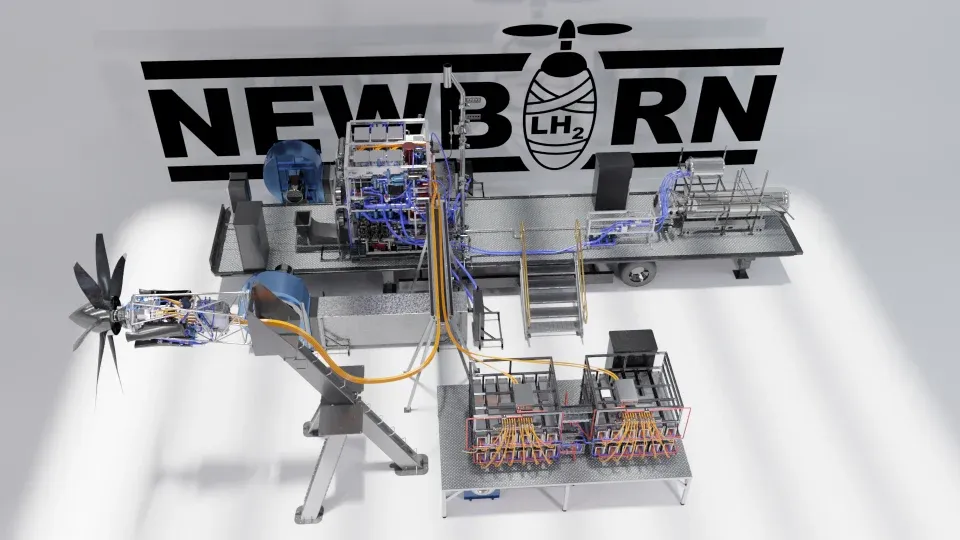
Honeywell Aerospace has just announced the successful integration of various subsystems into a fully functional hydrogen power source capable of generating electricity for aircraft.
The project has been underway since 2023 as part of the EU’s Clean Aviation initiative and brings together 18 companies and research institutions from 10 European countries. The goal of this effort is to develop a megawatt-class aviation propulsion system using hydrogen-powered fuel cells, according to the press release.
Many partners
The tests were conducted on a specially prepared research platform at the ÚJV Řež facility near Prague. The infrastructure is capable of replicating a range of functions found in an actual aircraft, allowing engineers to test not only the performance of the fuel cells themselves but also the coordination of all system components, from media flow management to power electronics and safety systems.
As Miroslav Matoušek, coordinator of the Newborn project at Honeywell Aerospace, emphasized, “the project (…) is not only a demonstration of new technology but also proof that Europe’s industry, universities, and research organizations can work together to realize ambitious technological visions and turn them into functional systems.”
Companies and institutions responsible for various components of the system are involved in this project. PowerCell is developing fuel cell technology, Fraunhofer and Test-Fuchs have contributed to the work on energy source components, while Siemens Industry Software, KU Leuven, Friedrich-Alexander-Universität Erlangen-Nürnberg, and the Italian CIRA are in charge of modeling, simulations, and integration analyses.
Time for assembly
The next step will be transporting the system to Gorycia in Italy, where tests of the complete propulsion system will take place. The hydrogen energy source will be connected to batteries developed by Pipistrel and a megawatt-class electric drive being developed jointly by the University of Nottingham, Honeywell Aerospace, and Pipistrel.
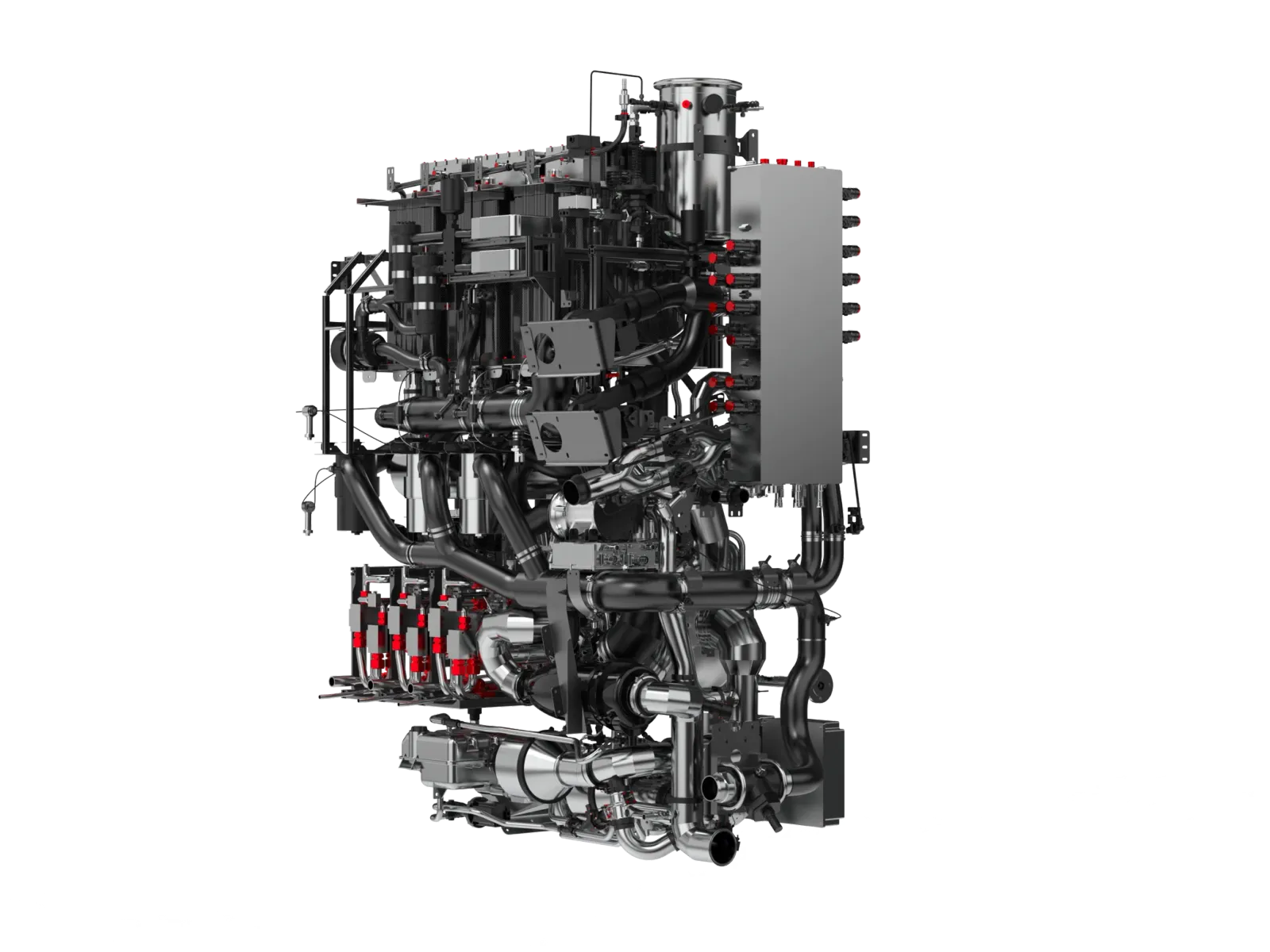
According to Ondřej Kotaba, the project’s chief technical expert and technical leader, Newborn has involved the parallel development of an entire technology ecosystem, including air supply and conditioning, hydrogen and heat management, as well as electrical power distribution, power electronics, control systems, communication, and safety monitoring. “Integrating all these subsystems into a single functional system will be the culmination of this project,” he emphasized.
More than just this project
Importantly, Newborn is not alone today. More and more airlines are investing in both hydrogen propulsion and technologies related to its production, storage, and utilization. One of the most promising programs is the collaboration between Rolls-Royce and easyJet. In May 2026, the partners announced the completion of the industry’s first ground test program for a jet engine powered entirely by hydrogen.
The modified Rolls-Royce Pearl 15 engine achieved full takeoff power during tests at NASA’s Stennis Center. According to the companies, the tests confirmed that a modern aviation turbine can operate safely on hydrogen throughout the entire flight cycle, including startup, takeoff, flight, and landing — reports GreenAir News.
"This program has given us the most comprehensive understanding in the industry of how hydrogen behaves in modern gas turbine engines," said Adam Newman, lead engineer for Rolls-Royce’s hydrogen demonstration program. He added that the experience gained will also be applied to the development of future designs, including the UltraFan program.
Meanwhile, ZeroAvia, recognized as a leader in hydrogen-electric propulsion, is working on the HyPRIME project, supported by the UK Department for Transport. The goal of this initiative is to create and demonstrate liquid hydrogen refueling infrastructure for future commercial aircraft and zero-emission airport operations. The program aims to address one of the biggest challenges in hydrogen aviation—not the propulsion system itself, but the logistics for its daily use at airports.
The market for synthetic aviation fuels is also developing in the background. An example is the DEZiR project carried out by Verso Energy in Normandy. The facility is set to produce 80,000 tons of e-SAF annually starting in 2030 using renewable hydrogen and biogenic CO₂. Q8 Aviation has already signed a long-term fuel purchase agreement, aiming to use it to meet the requirements of the EU’s RefuelEU Aviation regulation, notes FullCellWorks.
A challenging niche
Hydrogen remains a niche sector facing challenges related to costs, storage, and certification, but the number of projects underway simultaneously in Europe and North America shows that the aviation industry does not view this technology merely as an experiment. We are waiting to see tangible results.
Oskar Włostowski