
Honda unveils an affordable electric motorcycle with two removable batteries and drum brakes
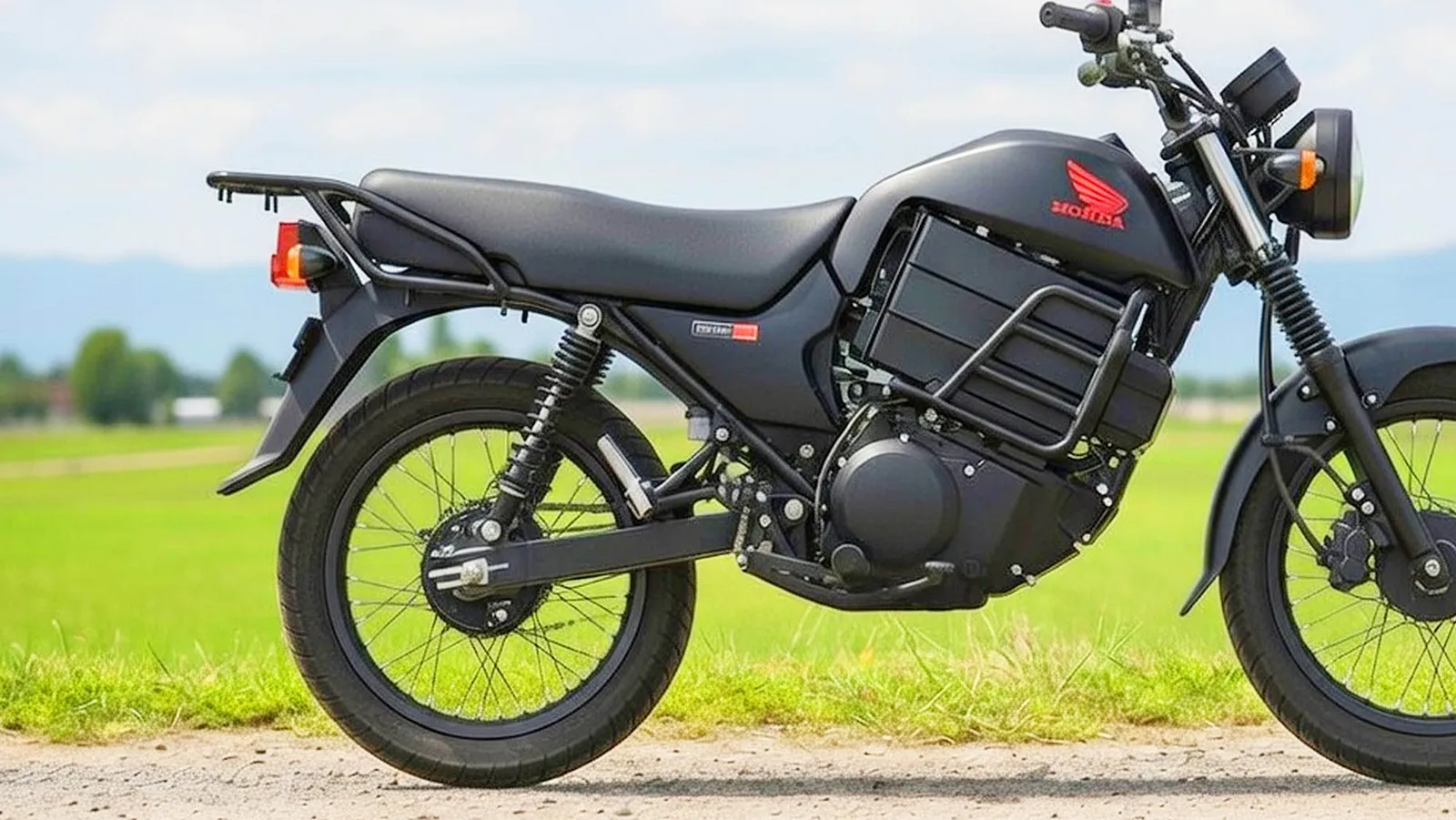
Honda is moving forward, albeit cautiously, with its strategy to electrify two-wheeled vehicles. The Japanese brand has filed a patent revealing the development of a simple electric motorcycle designed to be affordable and functional.
The design, still in the conceptual stage, aims for a product without advanced technological features, focused on meeting basic urban mobility needs at a reduced cost.
Currently intended for emerging markets
The transition to electric mobility in the motorcycle sector is progressing more slowly than expected, especially in Europe. Unlike cars, where electrification is advancing rapidly, sales of electric motorcycles and scooters have yet to take off significantly.
Reasons include high purchase prices, heavy battery weight, limited range, and a shortage of charging infrastructure. Despite these challenges, electric two-wheeled vehicles are still seen as an efficient and sustainable solution for urban commuting.
In this context, Japan’s major manufacturers find themselves in a complex position. On one hand, the market shows still limited demand; on the other hand, environmental regulations push for reduced emissions and increasingly penalize internal combustion engines.
Honda, which has reiterated its commitment to climate neutrality in recent years, is taking gradual steps toward developing electric solutions tailored for different markets.
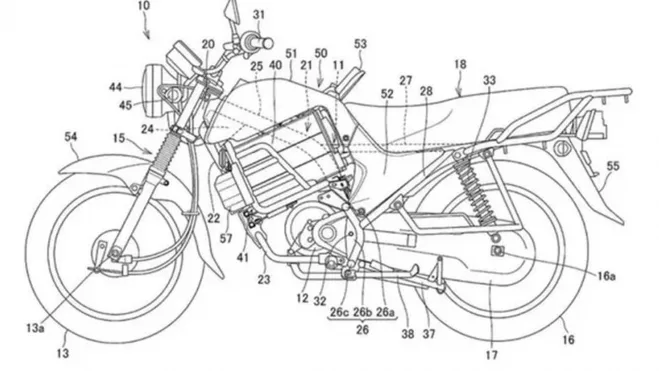
Patent documents identified by specialized media reveal a motorcycle with an extremely simple design. The frame is based on a conventional steel chassis, and it uses a basic mechanical architecture: a small electric motor, a single-speed transmission, and dual rear shock absorbers.
The choice of components reflects a clear priority on cost reduction and ease of maintenance. One of the details that best defines the project’s economical approach is the braking system.
The design features a front drum brake, a solution that is uncommon in current models but cheaper and simpler than disc systems. Such technical decisions reinforce the idea that this model is intended for price-sensitive markets with basic mobility needs.
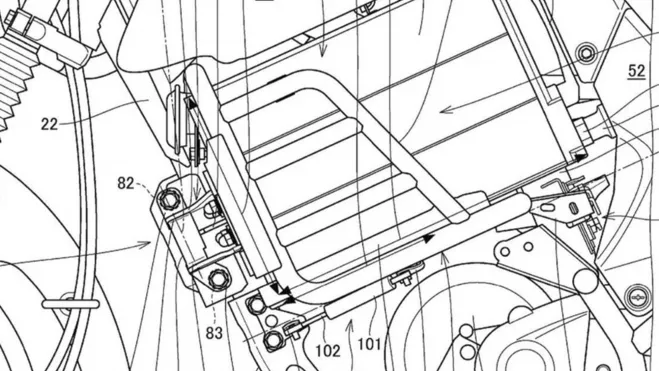
The most significant element of the entire setup is its power system. The motorcycle would use two removable batteries housed in a cage-like structure located where the fuel tank normally sits.
This compartment opens sideways to allow the modules to be removed. Once installed, the batteries are locked and can only be taken out with a key, adding a basic layer of security against theft or tampering.
The swapable battery solution addresses one of the main challenges in light electric mobility: charging time. Allowing users to remove the modules facilitates charging at home or at specific locations, while also opening the door to potential fast-swapping systems in markets where this usage model is already established.
For now, Honda has not revealed any key technical details. The type of batteries, their capacity, charging time, or estimated range are unknown. There is also no confirmation regarding the final price or the markets where it might be sold.
However, the product’s design suggests a focus on developing countries, where growth in electric two-wheeled transportation is more rapid than in Europe.
In fact, regions such as Southeast Asia, with markets like Indonesia or Vietnam, exhibit a significantly higher demand for light electric vehicles, driven by the widespread use of motorcycles as the primary mode of transportation. In these environments, what matters most is not advanced technology but rather the balance between price, range, and reliability.
That is where the real uncertainty of this project lies. Beyond design or technical solutions, the future of this motorcycle will depend on two critical factors: the cost of acquisition and its actual range.