
Honda wants to turn the road into a giant charger: electric vehicles will recharge while moving, and it will support 20-ton trucks
05/10/2026 19:30
Updated to
05/10/2026 19:30
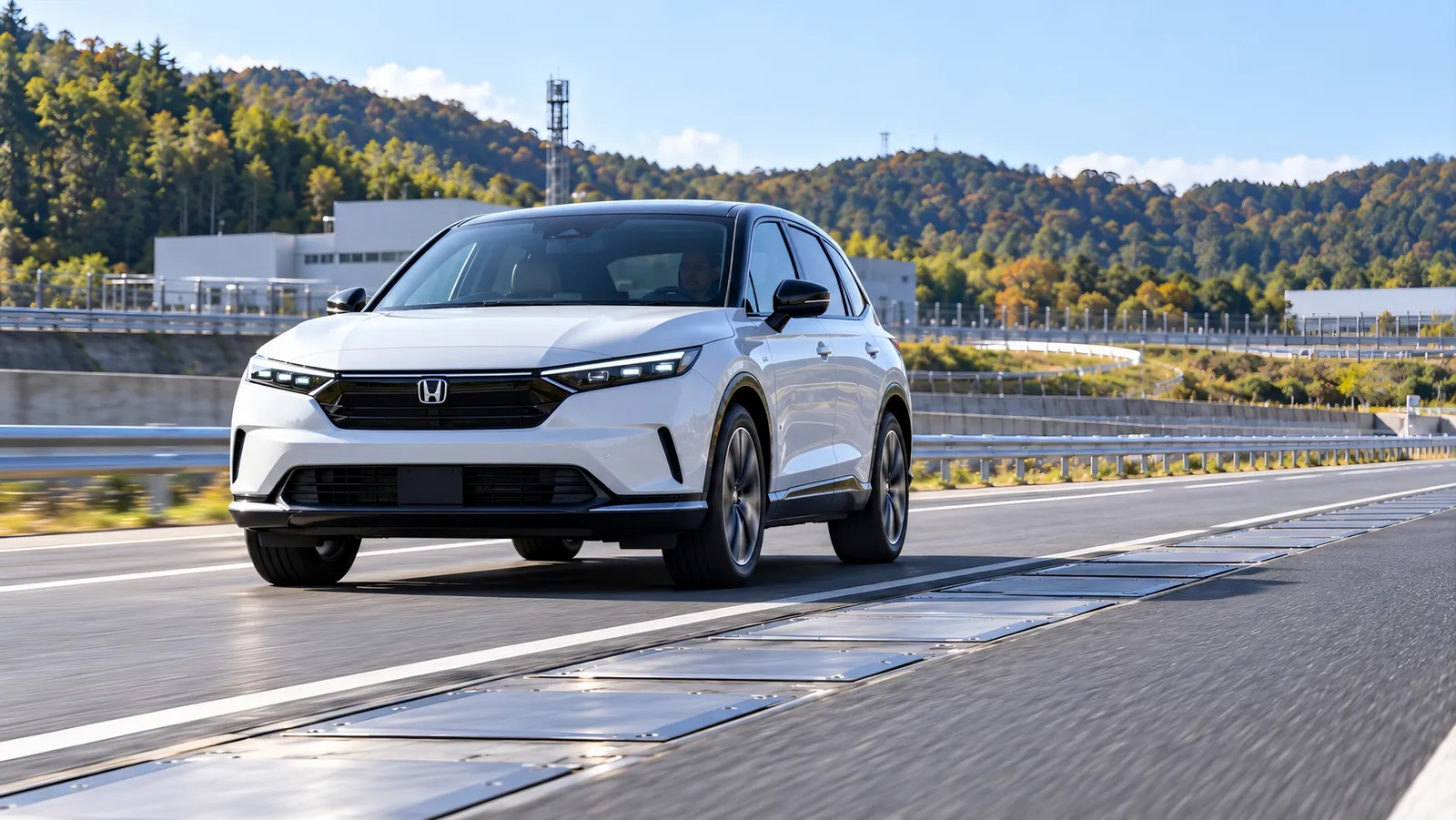
Honda aims to bring electric vehicle charging directly to the roads. The Japanese company has developed, together with Taisei Corporation and Taisei Rotec, a dynamic wireless charging technology capable of supplying energy to cars and trucks while they are in motion, without the need to stop at a charging station.
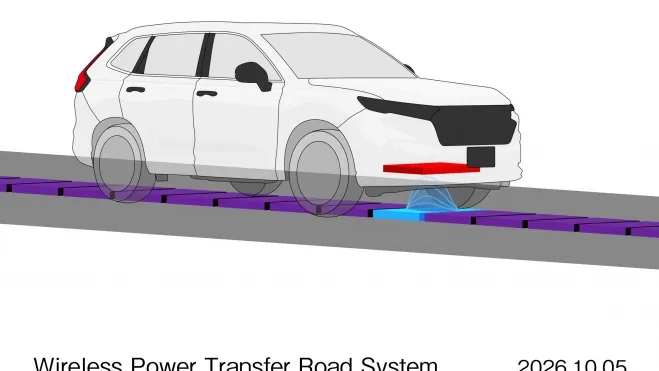
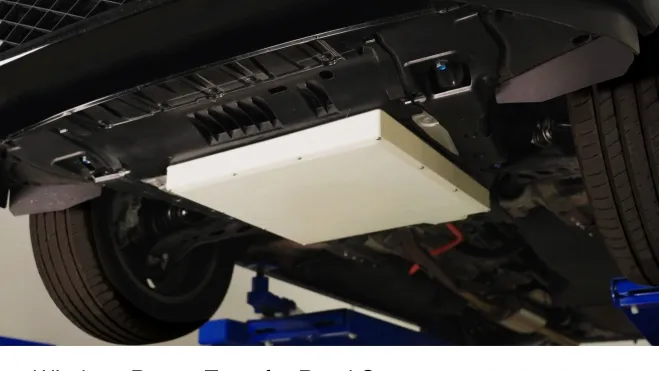
The system uses transmitter units installed beneath the pavement and a receiver built into the vehicle. Energy is transferred through magnetic coupling, and Honda claims the solution is designed for both passenger cars and large electric commercial vehicles.
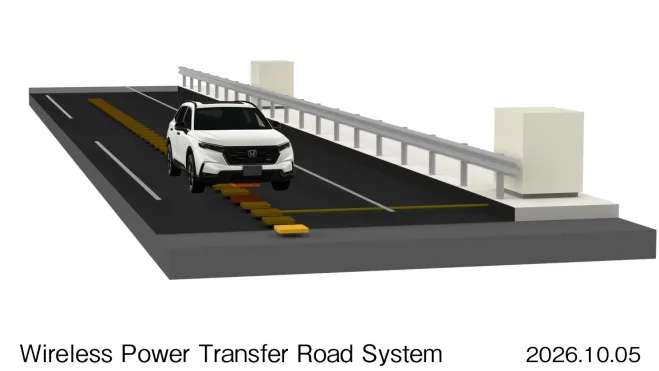
The company has been working on this technology since 2021 and is now preparing a new phase of testing with its real-world road application in mind. The goal is to test not only the charging capacity but also the durability of the infrastructure under heavy traffic and continuous use.
Up to 150 kW of power while moving
One of the most striking figures in this project is the power output. Honda plans to conduct charging tests at up to 150 kW while the vehicle is in motion, a figure designed specifically to meet the needs of large electric commercial vehicles.
The idea is that these vehicles can recover energy while in motion, thereby reducing the time they spend stopped charging. On long-distance logistics routes, this solution could also allow for smaller batteries in certain cases, reducing weight and costs.
The challenge, however, is not just about transmitting high-power electricity. Honda also must prove that the units buried under the asphalt can withstand years of constant traffic from heavy vehicles without compromising their functionality.
To verify this, the infrastructure will be subjected to a test equivalent to 1 million wheel loads, using commercial vehicles with a gross weight of around 20 tons as a reference. The goal is to replicate the demands that an actual road under heavy traffic would face.
The first road tests will arrive in 2027
Initial tests will begin at the end of 2026 at Taisei’s T-FIELD/TAMURA facilities. There, the durability of the pavement, the performance under different speeds, and potential electromagnetic field leaks will be analyzed.
The next step will come during Japan’s fiscal year 2027. Honda will participate in the so-called Tateyama Project, led by NEXCO East on the Tateyama highway in Chiba Prefecture, where a demonstration on public roads will take place.
The planned section will be approximately 300 meters long and will be used to test how the technology performs outside a controlled testing environment. The demonstration will allow for evaluating energy supply while in motion and the durability of components installed beneath the pavement.
Although the system can be used with electric cars, Honda believes heavy transportation is one of the areas where this technology makes the most sense. Trucks travel long distances, require high-capacity batteries, and losing time on conventional charging has a direct impact on productivity.
So far, Honda has not disclosed how much money it will invest in the project. It has confirmed, however, that it will continue developing the technology alongside Taisei and Taisei Rotec with the goal of proving that wireless charging while in motion can become a viable solution for long-distance electric transportation.
