
High Revolution Drive: ZF develops electric drive system capable of up to 30,000 RPM
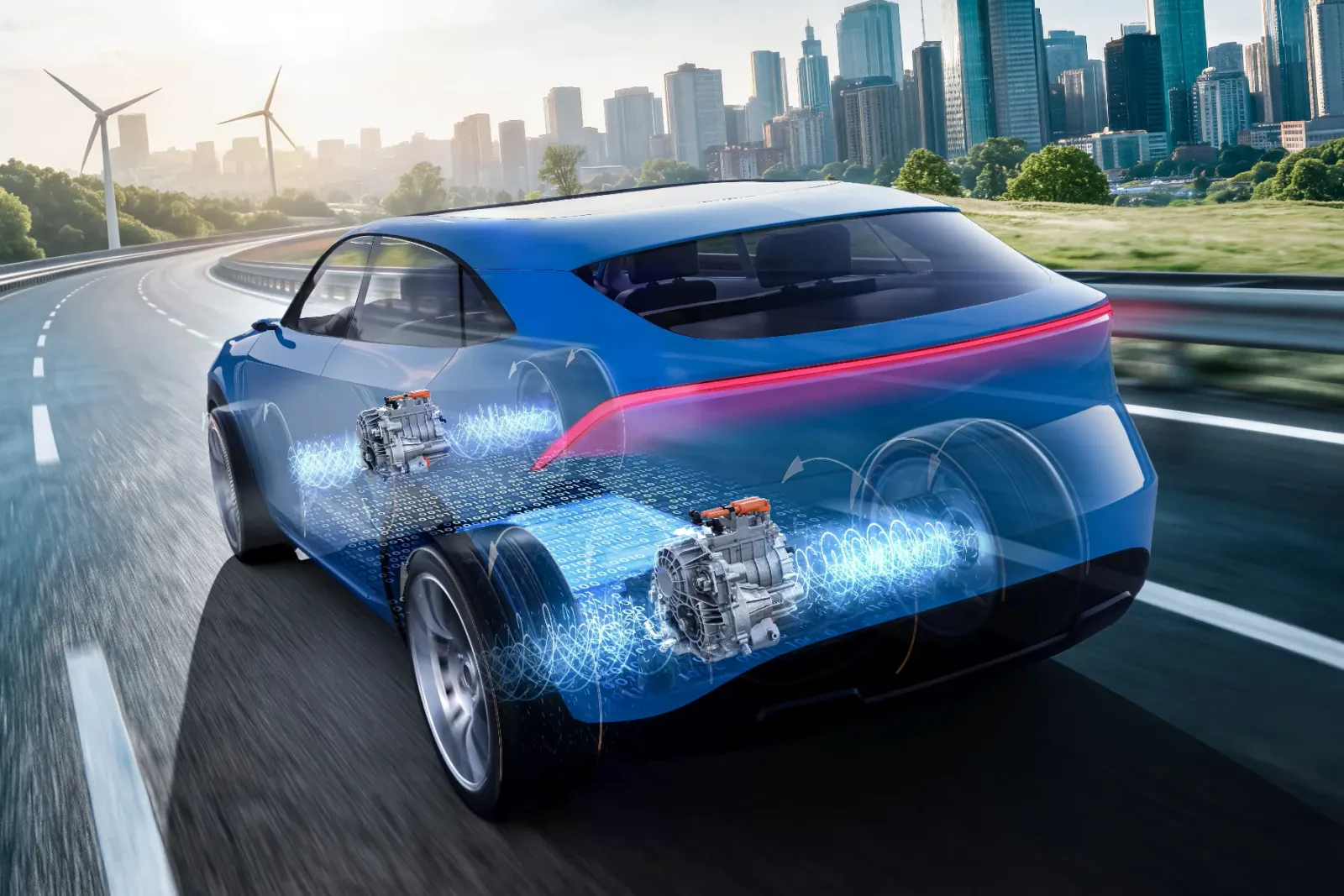
ZF has developed the High Revolution Drive, a particularly compact electric drive capable of reaching up to 30,000 revolutions per minute. The supplier claims this reduces the required space and weight, as well as significantly lowering the need for magnets.
The architecture is designed for 400-volt and 800-volt systems.
Image: ZF
At the same performance level, increasing the rotational speed should reduce the torque required of the electric motor. According to ZF, this allows the motor to be designed to be smaller and lighter. To ensure that the necessary torque is still delivered to the wheels, the Swabian supplier combines the motor with a two-stage spur gearset having a gear ratio of around 18:1.
The electric motor, inverter, and gearbox are integrated into a 3-in-1 system. The design presented here achieves a peak power of 200 kW and a peak torque of 3,500 Nm at the wheels, according to ZF. Compared to a SELECT drive system that also has 200 kW of power but a maximum speed of 18,000 revolutions per minute, the High Revolution Drive is expected to require nearly 25 percent less space and be about 25 percent lighter. ZF aims to reduce the magnet requirement by 50 percent as well.
It is the latter aspect that is likely to be of interest to vehicle manufacturers, as using less magnetic material can reduce both costs and dependence on certain raw materials and supply chains. Despite higher rotational speeds and greater gear reduction, ZF claims the efficiency will remain at the level of the conventional drive system. However, the supplier does not provide specific efficiency figures.
ZF aims to cut magnetic material usage in half
A particular challenge with high rotational speeds is noise and vibration. ZF cites its experience in gear and tooth design in addressing this issue. For the new drive system, elements such as the electric motor, gears, bearings, and tooth geometry were designed together. The company defines 30,000 revolutions per minute as the technical and economic “sweet spot” for the presented configuration.
The focus is initially on the power range of around 150 to 200 kW. However, the architecture is designed to be scalable for other power levels and to support both 400-volt and 800-volt systems.
The High Revolution Drive is based on ZF’s modular SELECT platform. This allows the supplier to avoid developing a completely new system for this new power variant and instead reuse existing components and technologies.
Nevertheless, the High Revolution Drive is still in the pre-production stage. According to ZF, they are already discussing the concept with several automakers and aim for series production by 2030. The company has not yet named any specific customers or vehicle projects.
ZF has restructured its electric mobility business this year. After evaluating the option of either manufacturing or purchasing, the supplier decided in spring to continue developing and producing electric motors and inverters on its own. At the same time, the electric drive division is under cost pressure due to lower utilization than initially expected. With the High Revolution Drive, ZF now demonstrates the technical differentiation it plans to pursue in its future electric drives.