
Here we are on Tesla Live with JusterveNet
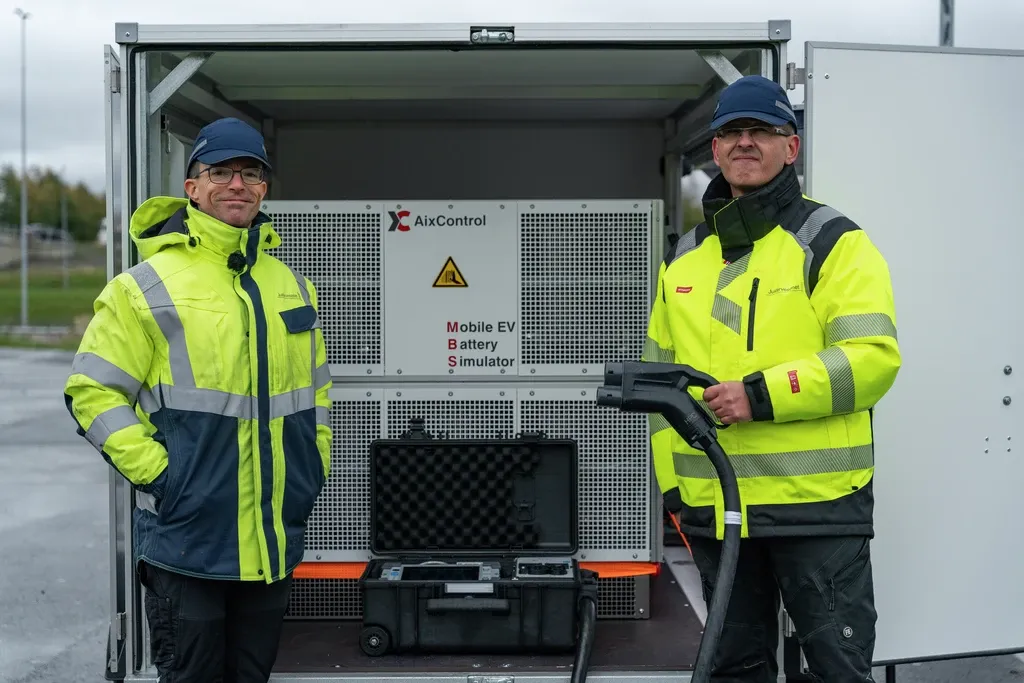
Do you get the electricity you pay for when charging? We visited Tesla’s charger at Kløfta with Justervesenet for an unannounced inspection.
24.10.2026 10:51 | Updated 20:03
Justervesenet has begun inspecting fast chargers across the country over the past few months.
Justervesenet is a state agency for metrology responsible for ensuring accurate measurements – and it acts as a technical oversight body that certifies various measuring instruments while verifying they deliver the expected results.
In terms of fast chargers, they have so far inspected around 60 of them in Southern Norway.
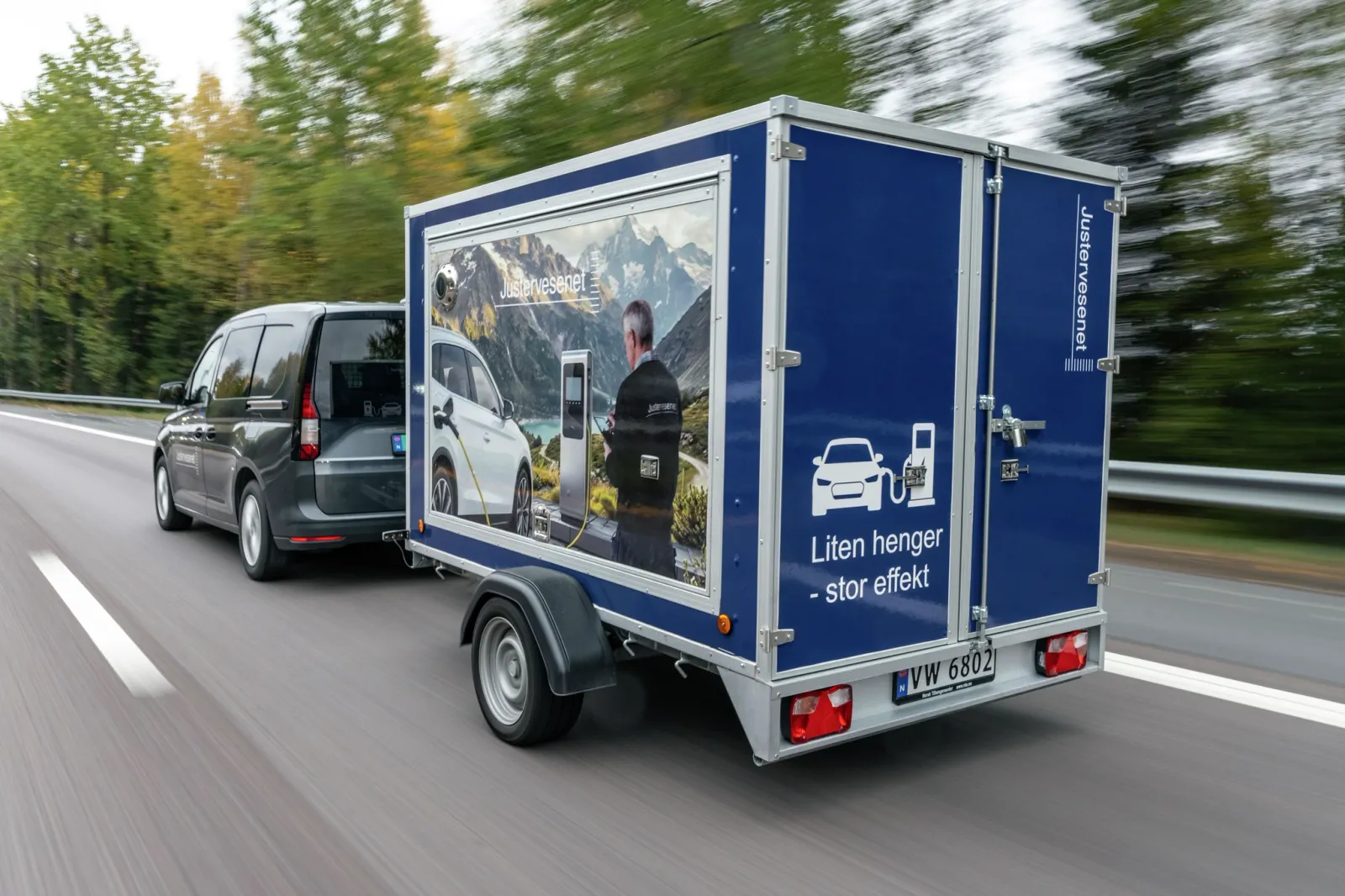
– We’ve covered about 2000 kilometers so far with this attachment on the trailer. So far, the results have been very positive. The biggest deviation we found was five percent, but it was in favor of the customer, says Lars Holhjem from Justervesenet with a smile.
The magic of everyday life happens within the contents of this new add-on. To gain an in-depth understanding of how this technology works, we accompanied Holhjem and his colleague, inspector Stig Stende, on site.
From gasoline and diesel to electricity
We are talking about metrology—unlike meteorology, it is the science of measurement, including units of measurement, methods of measurement, and systems that ensure accurate and reliable measurements.
Stig Stende has many years of experience in the Justervesenet network and has inspected numerous gasoline and diesel pumps to ensure precise volume delivery.
But in recent months, there has been an increasing shift toward electronics.
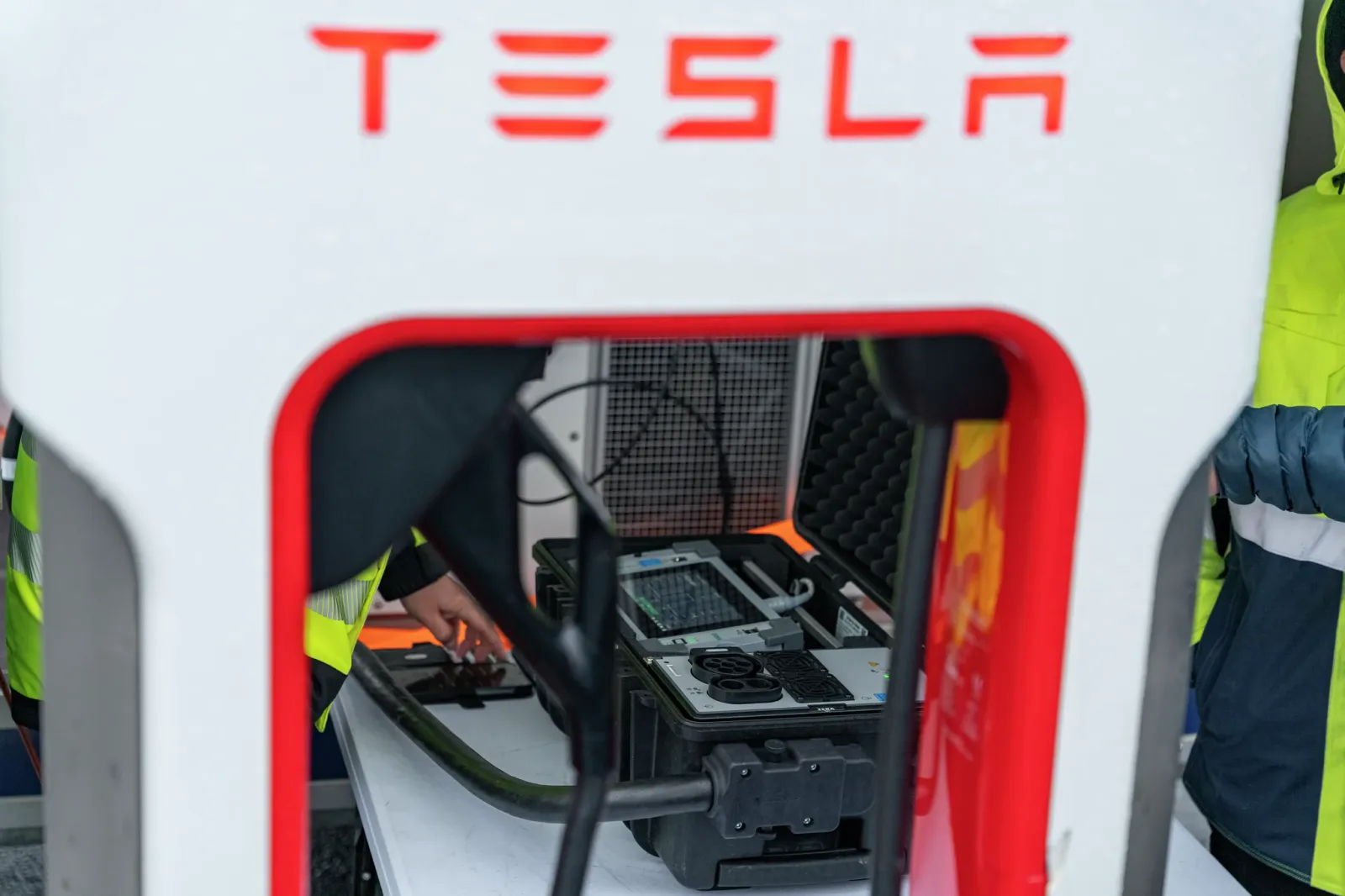
Today’s choice is Tesla’s well-established V3 supercharging station in Kløfta.
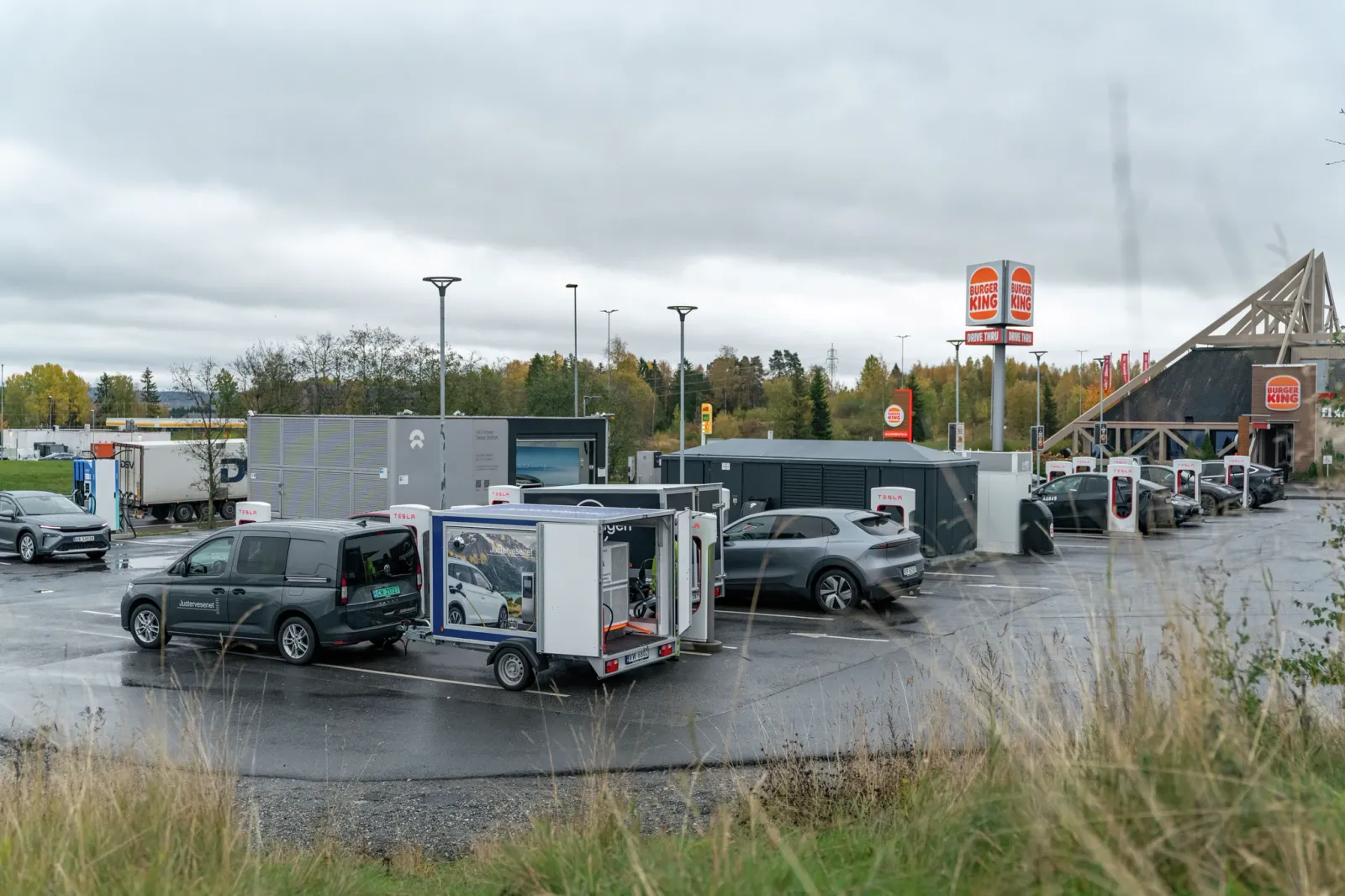
Theoretical maximum power here is 250 kilowatts (kW), but Holhjem and Stende aren’t focusing much on charging efficiency for now.
“The effectiveness is often limited by external factors, so we let others handle that. We concentrate on ensuring the right price for the energy you purchase,” says Holhjem.
Facts about Justervesenet and the fast charger deployment
A directorate under the Ministry of Business and Fisheries responsible for measurement standards in Norway.
Its task is to ensure that measurements in commerce, industry, and society are accurate and have national and international credibility.
Justervesenet oversees, among other things, measuring instruments such as fuel pumps and scales, and since this year, electric vehicle fast chargers as well.
As the world’s most advanced electric vehicle market, with over a million passenger cars and well over 10,000 fast chargers along Norway’s roads, Justervesenet wanted to be at the forefront.
With new reference meters and simulators in place, Justervesenet can be hired to carry out measurement tasks on-site for companies that want to ensure control over their measurements.

More like this?
Sign up for our newsletter
– get electric vehicle news straight to your inbox!
Using mobile apps as references
Among the equipment, we find a battery simulator named MBS 500, manufactured by German company Aix Control, which functions like an electric vehicle when connected.
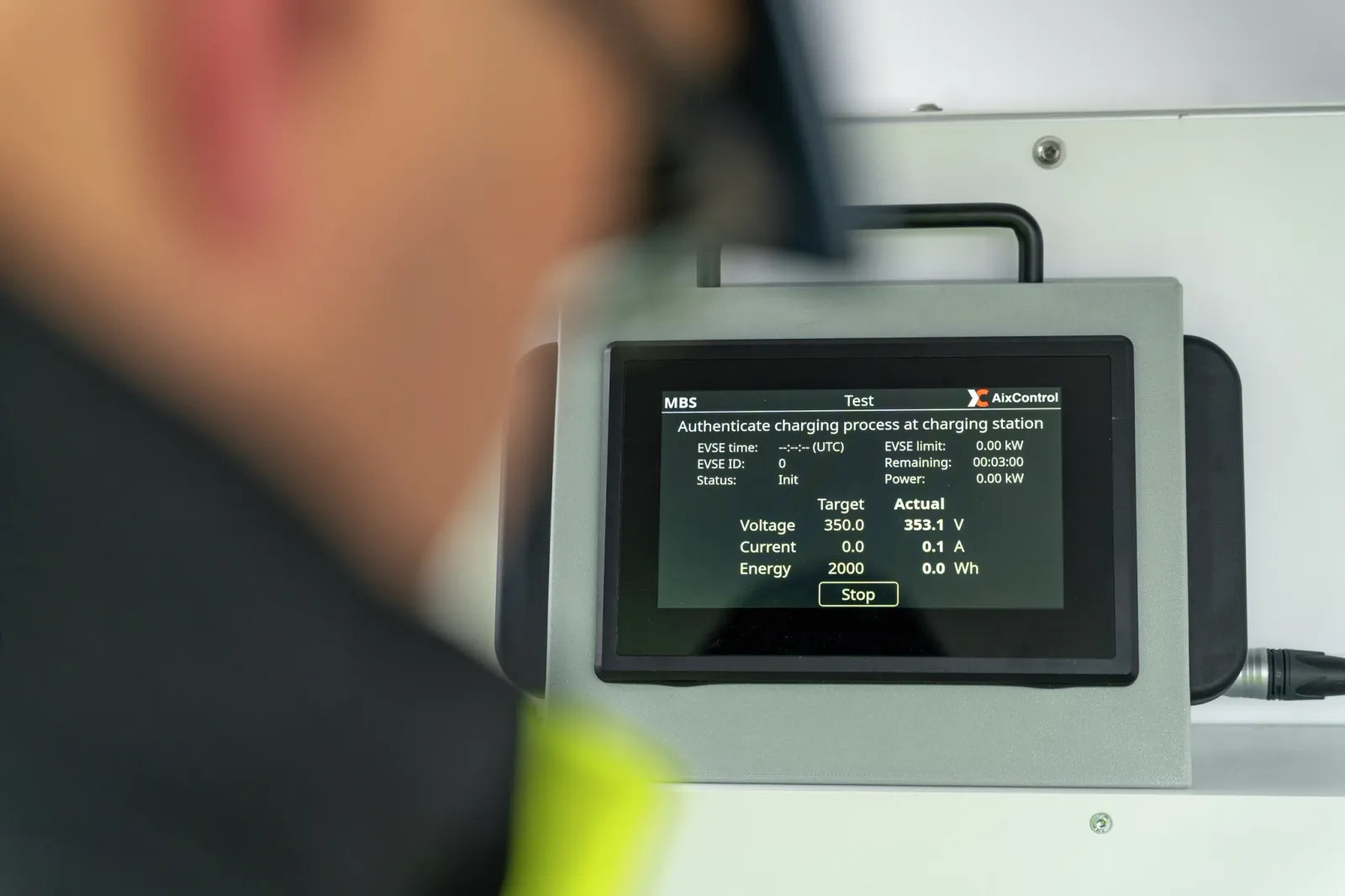
Between the supercharger and the simulator, there is a reference meter from manufacturer Zera (EMOB 500) that has been calibrated by Justervesenet and collects the essential data.
"Now we need to directly test whether the amount of energy this Tesla charger delivers is exactly what we pay for," says Holhjem as his colleague monitors the instruments.
In his hand on the side, he holds his smartphone with the Tesla app in his right hand.
Based on years of charging tests, we observe that the actual output is about 70 kW lower during simulator tests due to environmental factors.
But that’s not the main issue here. The simulator isn’t fully loaded and must continuously manage energy usage.
This is accomplished through transistors and capacitors, assisted by a powerful fan to dissipate heat.
Temporary workaround
The testing setup doesn’t draw power from the fast charger but relies on a battery bank of around four kilowatt-hours (kWt). The charging current is converted into heat loss.
- Or hair dryers, as we call them. One can warm up behind the unit on cold days, says Holhjem, but notes that the lowest approved temperature level for testing is currently 10 degrees below zero.
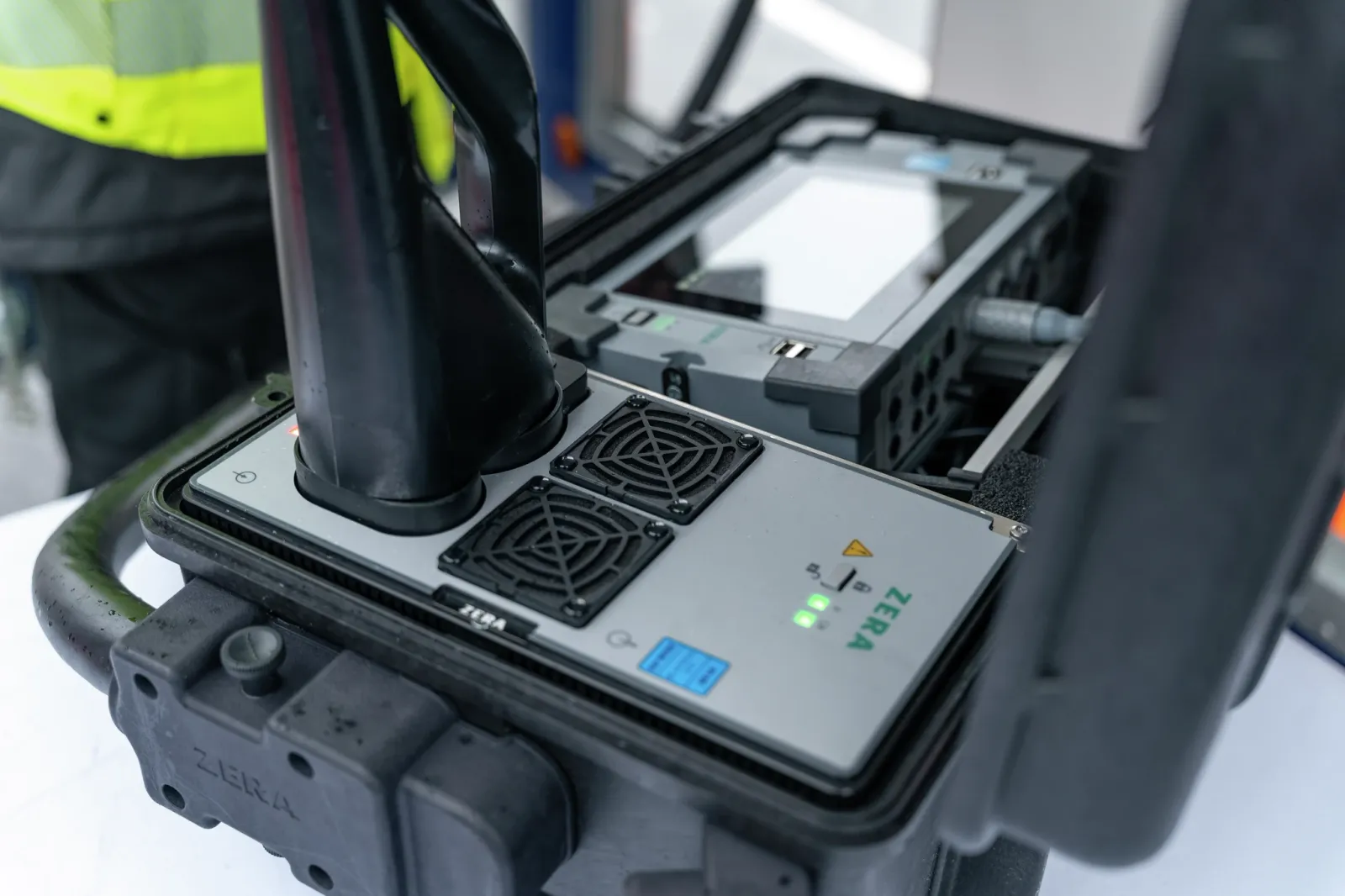
- The simulator can absorb electricity on a daily basis. In the long term, we hope to be able to store the energy harvested during tests, says Holhjem.
He says the manufacturer, Aix Control, is working on solutions that might allow storing electricity via a battery bank. The challenge is that the unit becomes very heavy as a result. With today’s equipment, it weighs about one ton.
Another limitation, though it is microscopic in today’s charging market, is that the maximum power output from fast chargers to simulators is 500 kW – or half a megawatt (MW).
The formula is 1,000 volts (V) x 500 amperes (A). When these values are multiplied, we get a power output of 500 kW.
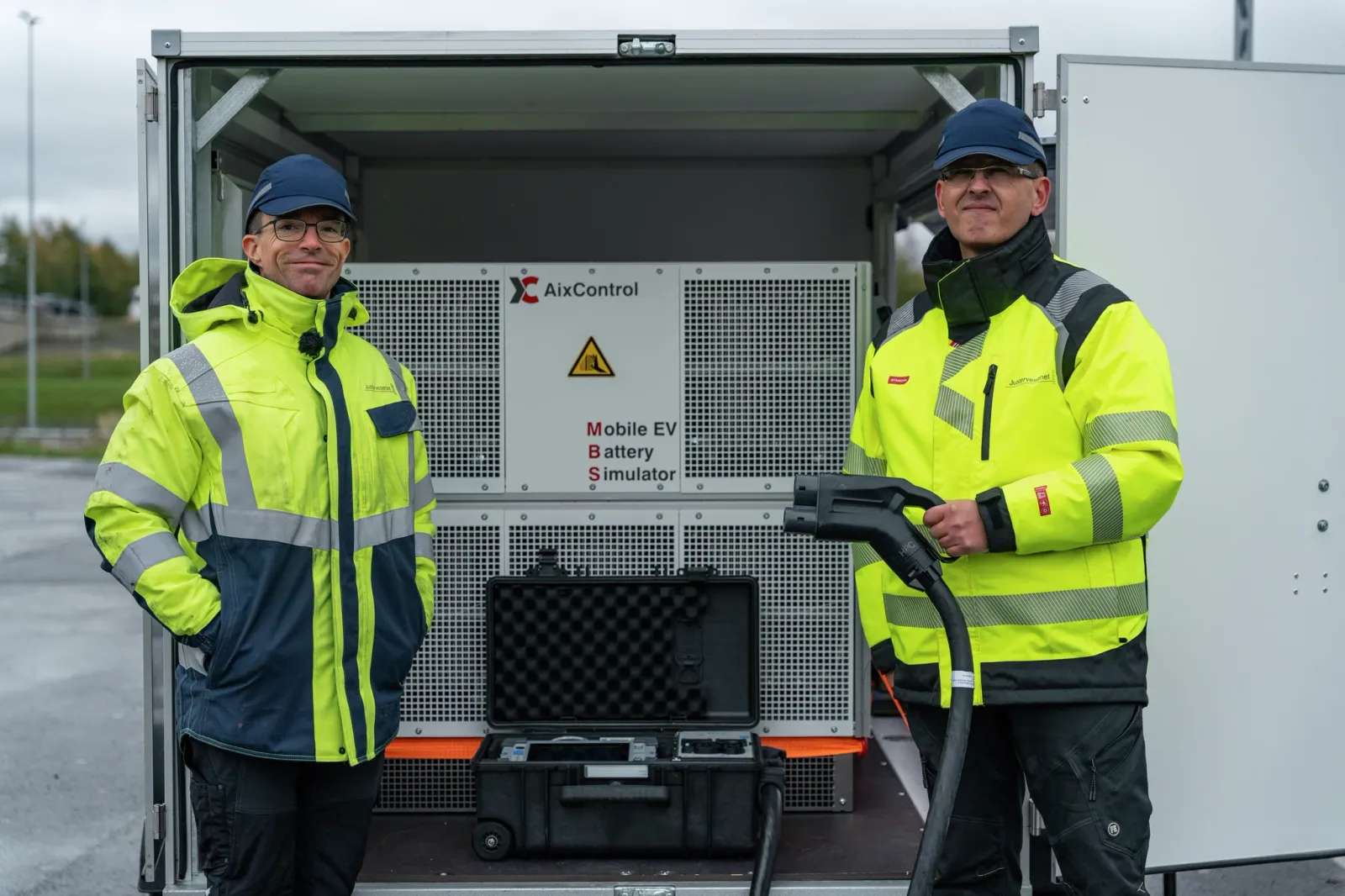
“The simulator consists of modules, so it’s possible to easily increase the power output to 750 kW in the future,” says Holhjem.
This will likely become necessary if we want to test what is known as megawatt charging, which heavy transport will increasingly rely on in the future:
“Yes, we probably need to adapt to this development to some extent. So we are certainly interested in keeping an eye on what happens next.”
The Eichrecht Standard Takes Effect First
Holhjem states that all measurements are carried out in accordance with the protocols and procedures of the Justice Network. These are based on existing EU regulations, although they have not yet been implemented in Norway.
- The cost of the testing equipment, including procedures, protocols, staff training, and the full package totaled over two million kroner. This is a significant investment that not all stakeholders, especially smaller ones, can afford, says Holhjem.
- The manufacturer initially supplies to a relatively small market today. We are probably among the first, at least in Norway, to purchase this equipment. But the German manufacturer conducts tests in Germany, and they follow the Eichrecht standard during those tests, says Holhjem.
- Given the trend toward standardization, we’re used to EU directives being incorporated into Norwegian law. Do you think the same will happen in this area?
- Justervesenet is involved in setting these requirements and determining how strict they should be. Regardless, we follow the EU’s Measurement Instruments Directive (MID). So we have the option of deciding whether to require only approval for the reference meter in the charging station, or requiring approval for the entire charging station including its payment system, software, and so on, responds Holhjem.
He emphasizes that the goal is always to be accommodating in the Norwegian market, for consumers, producers, and those operating charging stations alike.
Making calibration great!
The reference meter is calibrated by the manufacturer Zera. It can also be calibrated by Justervesenet.
It’s hard to deny that the term “calibration” carries a slight hint of gold standard in Justervesenet’s facilities in Kjeller near Lillestrøm.
- We need to perform internal calibration of the equipment at least once a year to ensure its complete accuracy.
- It’s somewhat similar to how the meter standard is continuously managed and verified, right?
- Yes. Justervesenet is Norway’s metrological hub, so we pay attention to energy, time, and meters,” replies Holhjem, adding:
Voluntary or random oversight
So how should oversight of chargers work in practice? Well, charging companies can choose to order technical measurement checks and pay for them to be sure everything is in order.
– We want to be a partner to businesses by enabling them to test and verify that their equipment delivers accurate results. This way, users of chargers can be confident they aren’t paying more than the service should cost. It’s about trust in measurements, says Holhjem.
Or Justervesenet can take initiative on its own. Like with today’s test.
And it will show to confirm that Tesla delivers what they are paid for. On the first attempt, it turns out the charge rate is 0.22 percent. This is well within the tolerance range set by Justervesenet of +/- 3.5 percent.
The data is drawn from the reference meter in the plastic box and compared with the information the controller Stende receives from the Tesla app.
The app shows 2.016 kWt, while the figure from the reference meter is 2.0114 on the first attempt.
- Many people have no idea who you are and what you do?
- We think it’s fun to draw attention to what we are measuring, to reassure the public even more that we are there and watching, even though they rarely see us, says Holhjem.
Meanwhile, colleague Stende attaches stickers to the measured charging outlets—or what Tesla calls them, stalls.
It simply means they have passed inspection.
– The result here was absolutely within limits. It’s hard to improve further. But the target is definitely zero. Zero point zero. That way no one pays too much, concludes Holhjem.
Or too little; in that case we almost have to add more. If anyone were to worry about that...
Also read
The post Here we are at Tesla inspection with Justervesenet appeared first on Norsk elbilforening.