
I have driven the new Volkswagen ID. Polo, and there’s something about it that makes it much more interesting than a regular urban electric car.
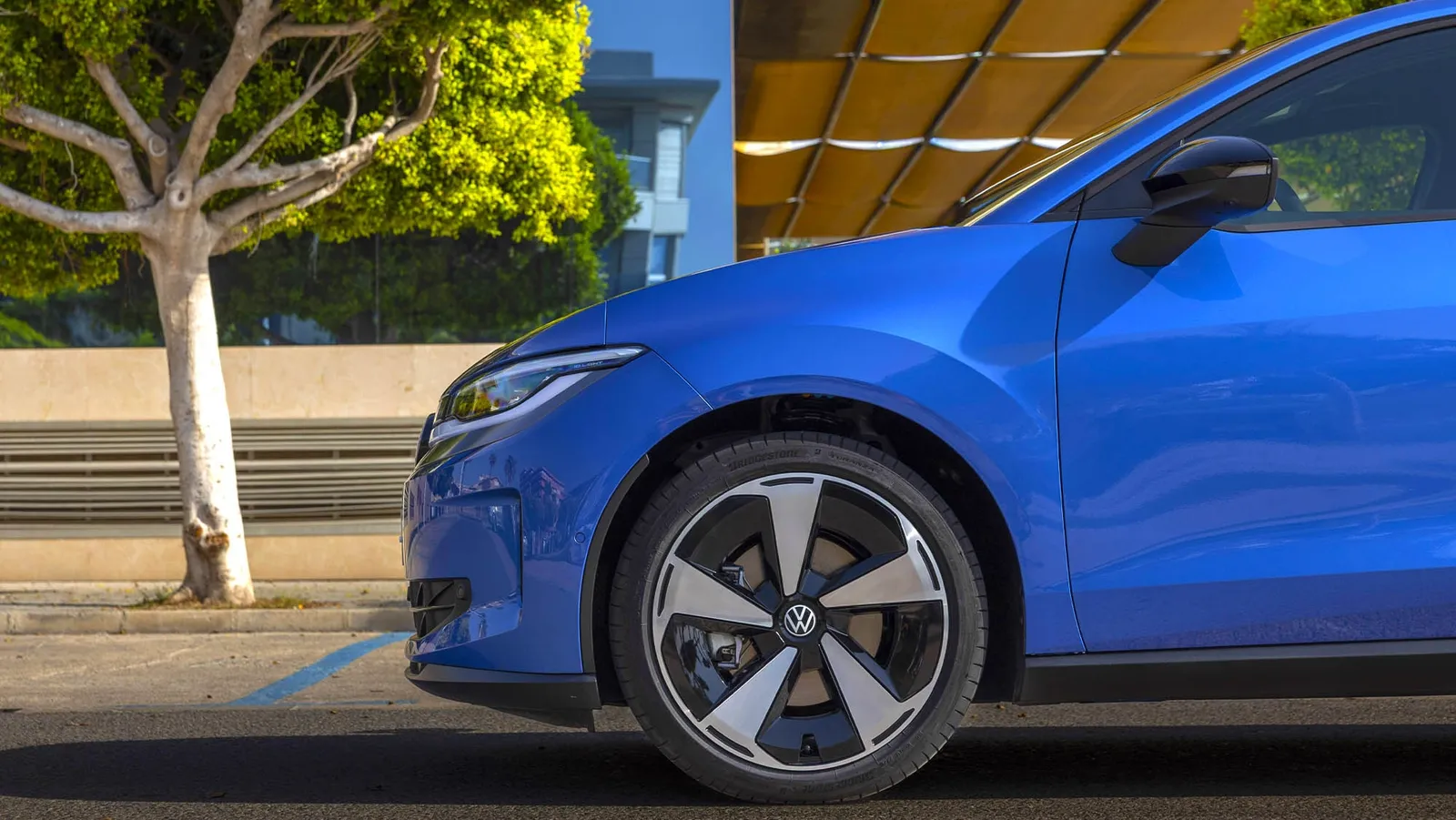
The Volkswagen Polo was introduced in 1975 as a compact, economical, and practical vehicle, originally based on the Audi 50. Its size, efficiency, and ease of driving made it one of the most popular hatchbacks in Europe. Over its various generations, it has seen improvements in safety, technology, and comfort without losing its functional character.
In 1987 the Polo G40 arrived, demonstrating the model’s sporting potential, and in 1998 the first Polo GTI was released. The sixth generation, introduced in 2017 on the MQB platform, represented a significant technological advancement. With over 20 million units sold, the Polo is now entering a new phase with the ID. Polo electric vehicle, which carries forward its philosophy of practicality and efficiency to zero-emission mobility.
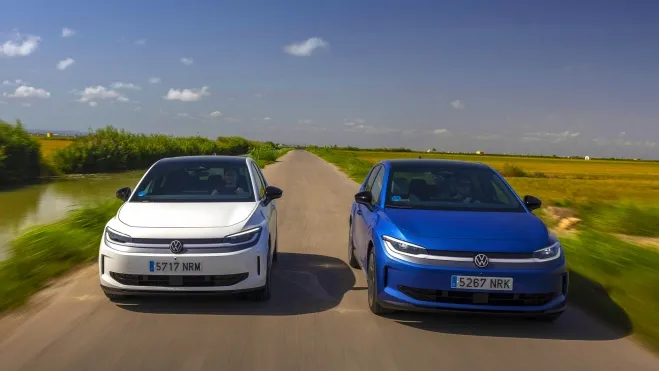
The Polo is now an ID, meaning an electric car
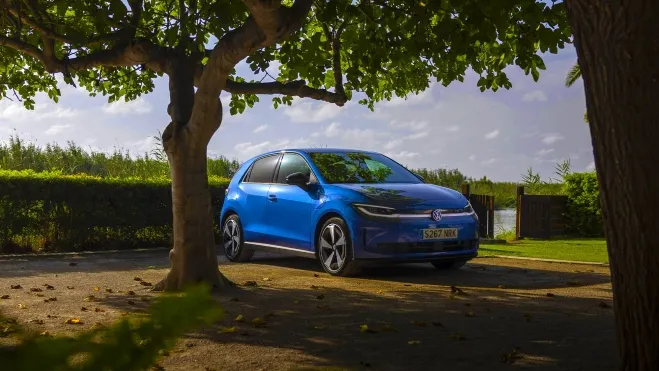
Volkswagen has taken a significant step forward in its electrification strategy with the new ID. Polo. This German utility vehicle retains the practical philosophy of the model we’re all familiar with, but replaces its internal combustion engines with a range of electric motors and a more modern platform.
Manufactured in Martorell, Barcelona, the ID. Polo is 4.05 meters long. It is thus a compact car that maintains dimensions suitable for city driving, although its capabilities go far beyond urban use.
The range offers three power levels: 116, 135, and 211 horsepower. The first two versions use a 37 kWh net LFP battery, while the most powerful variant features a 52 kWh NMC battery.
The certified range reaches 449 kilometers for the 211 horsepower version, a figure that makes intercity trips feasible without limiting the car to urban use only.
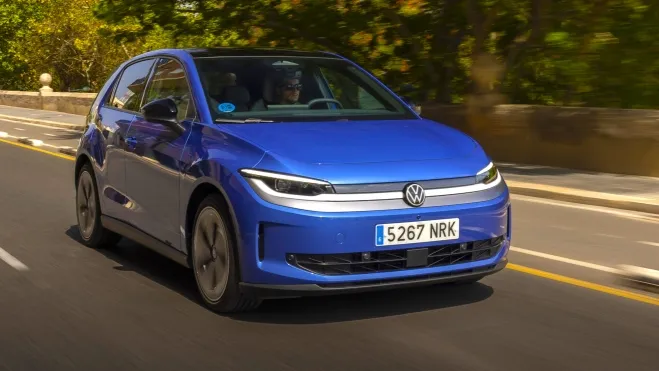
At the wheel of the Volkswagen ID. Polo: more car than expected
My first encounter with the Volkswagen ID. Polo leaves one clear conclusion: this is not an electric vehicle designed solely for city driving. Although its size is that of a utility vehicle, the driving experience feels more like that of a higher-class compact car.
The driving position is natural, and the interior gives off an impression of quality and order. Volkswagen has opted for a more intuitive layout of controls, with physical buttons for certain functions and a 13-inch central screen.
When in motion, one of the most notable aspects is comfort. The sound insulation and lack of vibrations typical of a combustion engine make the ID. Polo particularly pleasant for urban driving as well as on secondary roads.
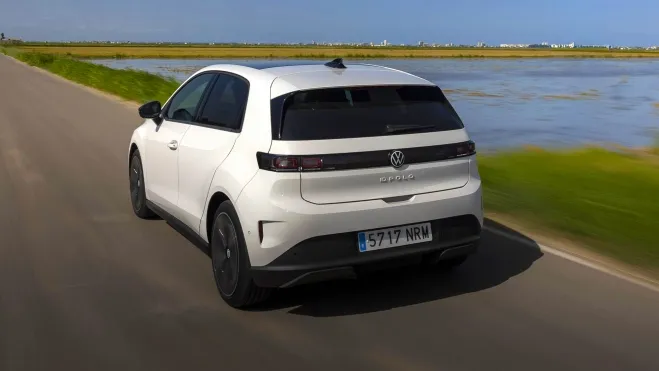
The suspension effectively filters out road imperfections, giving the car a sense of stability that isn’t always present in electric SUVs. It’s not a vehicle designed to offer sporty driving in all its versions, but rather a balance between comfort, precision, and ease of use.
The most powerful version of the Volkswagen ID. Polo features an electric motor with 155 kW / 211 HP. This is a significant figure for a car of this size, allowing for immediate response to the accelerator.
While driving, this instant torque delivery is particularly noticeable when merging onto an expressway or overtaking. The ID. Polo responds quickly, without the need to wait for a gear shift or a traditional engine to reach higher RPMs.
The 0 to 100 km/h acceleration time for this version is 7.1 seconds, with a top speed limited to 160 km/h. These performance figures are sufficient to ensure the model performs well outside of urban areas.
The braking system also contributes to making driving easier. The ability to use electric motor regeneration to recover energy allows for reduced use of the brake pedal in certain situations, especially in urban traffic.
Here, the significant difference between Mode B, which effectively holds the car in place until it stops, and Mode D, which provides very little holding power, becomes evident. Thus, Mode B is ideal for cities and areas with slow traffic, while Mode D is suitable for use on highways and fast roads.
Range and charging: the ID. Polo doesn’t compromise on travel
The 52 kWh net battery in the 211 CV version allows for a WLTP range of up to 449 kilometers. In real-world conditions, this figure will depend on speed, temperature, type of driving, and air conditioning use, so it should not be considered a guaranteed road distance.
In the 116 and 135 CV versions, the 37 kWh battery provides an approved range of up to 329 kilometers, depending on the configuration. This capacity is more suited for daily use, though it still allows for intercity trips with proper planning.
Fast DC charging reaches 105 kW. Volkswagen claims an approximate time of 24 minutes to go from 10% to 80% battery charge in the 52 kWh version. For the 37 kWh versions, the claimed time is around 23 minutes.
These figures place the ID. Polo in a competitive position among electric utilities, especially for those who don’t have a home charger and need to rely on public charging infrastructure.
A practical interior with premium-level technology
The cabin is one of the strengths of the new Volkswagen ID. Polo. The brand has focused on providing ample space for five passengers, with a second row that still offers reasonable comfort for a car just over four meters long.
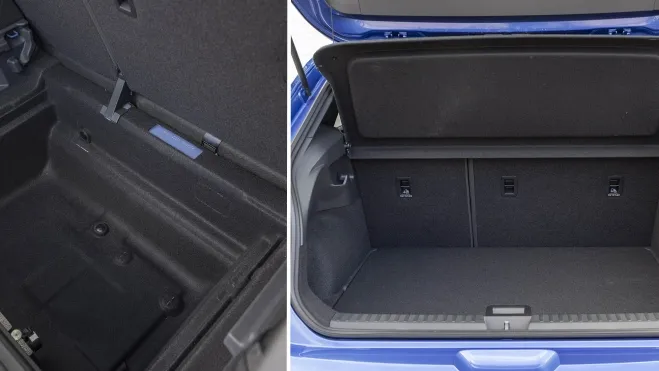
The trunk capacity reaches 441 liters, a notable amount for a vehicle of this size and sufficient to meet most of a family’s daily needs.
In terms of technology, the ID. Polo features a 10-inch digital dashboard and a 13-inch multimedia screen. It can also be equipped with driving assistance systems such as Connected Travel Assist, which adds advanced functions to make road trips easier.
Its most notable features include a 480-watt Harman Kardon sound system, front seats with massage functions, and a panoramic glass roof, though these depend on the chosen trim level.
Is the Volkswagen ID. Polo a real alternative to the conventional Polo?
After driving it, the answer is yes, though with some nuances. The ID. Polo retains the qualities that have made the traditional model popular: compact size, easy handling, and practicality. Electric propulsion adds smoothness, silence, and immediate responsiveness.
Its main advantage is that it doesn’t require sacrificing the comfort of an SUV to get an electric car. The main limitation remains the need for a proper charging solution, especially for those who frequently travel long distances.
Volkswagen’s announced starting price is 17,900 euros for the ID. Polo Match with 116 HP and a 37 kWh battery, subject to promotional offers, financing, and the terms of Auto+ Plan. Without these incentives, the cost is higher.
The new Volkswagen ID. Polo does not aim to revolutionize the concept of a utility vehicle, but rather to adapt it to electric mobility. And that is precisely where its appeal lies: it offers a fairly seamless transition to an electric car, with comfortable handling, up-to-date technology, and range that allows it to be used well beyond the city limits.