
Up to 30,000 revolutions per minute: ZF’s bet on producing smaller and cheaper electric motors
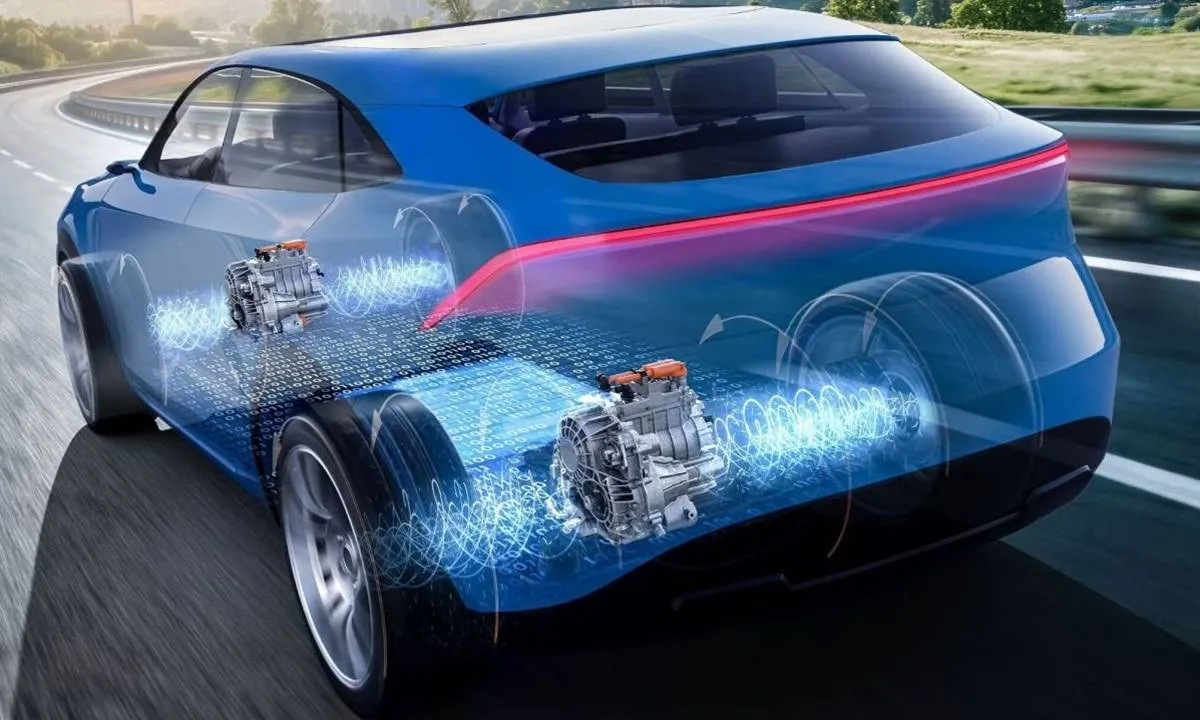
The race to reduce the cost of electric cars isn’t just fought in the battery sector; it also takes place under the chassis. Motors still have room to cut materials, weight, and especially costs. ZF is working on a solution aimed at mid-range models, where any savings in manufacturing can help create a more competitive product.
The German supplier has developed the High Revolution Drive, a system that integrates an electric motor, inverter, and reduction gearbox. Its main feature is its high rotation speed: it reaches 30,000 revolutions per minute. The idea is to use this high speed to achieve the same power with a smaller motor.
The version presented delivers 200 kW (272 hp) and uses a two-stage reducer with an approximate gear ratio of 18:1. This allows the high rotational speed of the engine to be converted into useful force to move the car, with a maximum torque of 3,500 Nm at the wheels. It’s important to note this last detail: it is the torque after passing through the transmission, not the torque delivered directly by the engine.
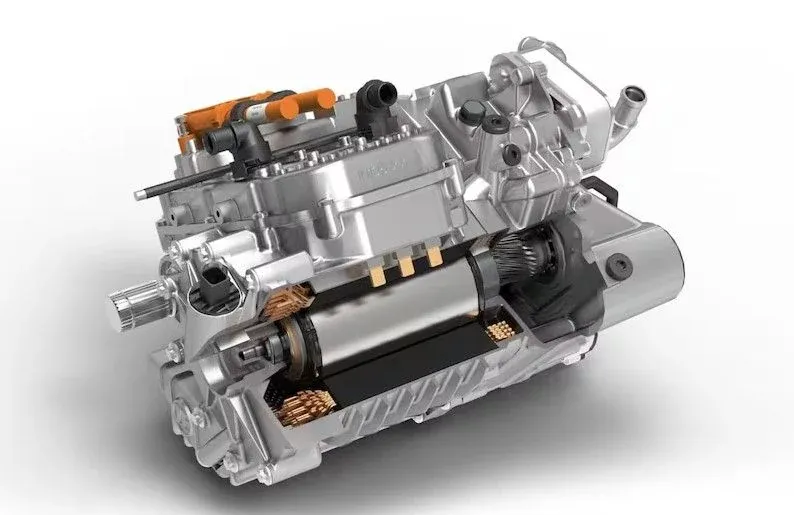
According to ZF, this assembly occupies about 25% less space and weighs 25% less than a comparable system in its SELECT modular platform, whose motor can reach 18,000 revolutions per minute. For manufacturers, having a more compact unit facilitates its integration and gives more flexibility in car design.
Another significant change lies in the materials. The mass of magnets required is reduced by 50%, which provides room to cut production costs. However, ZF has not yet provided a specific figure for the cost savings, so it will take time to determine exactly how much the system can reduce costs and what portion of that reduction reaches the consumer.
The performance remains at the level of the conventional set used as a reference. Therefore, there is no announced improvement in engine efficiency, although the reduced weight may help lower the car’s fuel consumption. For now, there are no figures to convert this advantage into additional kilometers of range.
ZF targets this technology at sedans with power outputs between 150 kW (204 HP) and 200 kW (272 HP), a range that fits many mid-range electric cars. Additionally, the architecture can be adapted to both 400 and 800 volt systems, expanding its application possibilities across different platforms.
Production is scheduled for 2030. An interesting proposal focused on a very necessary goal: creating smaller, lighter, and more affordable propulsion systems without compromising performance. The question will be how far alternative solutions have progressed by the time this development is ready for real-world use.