
Large and affordable: Volvo announces new mass-market model for Europe
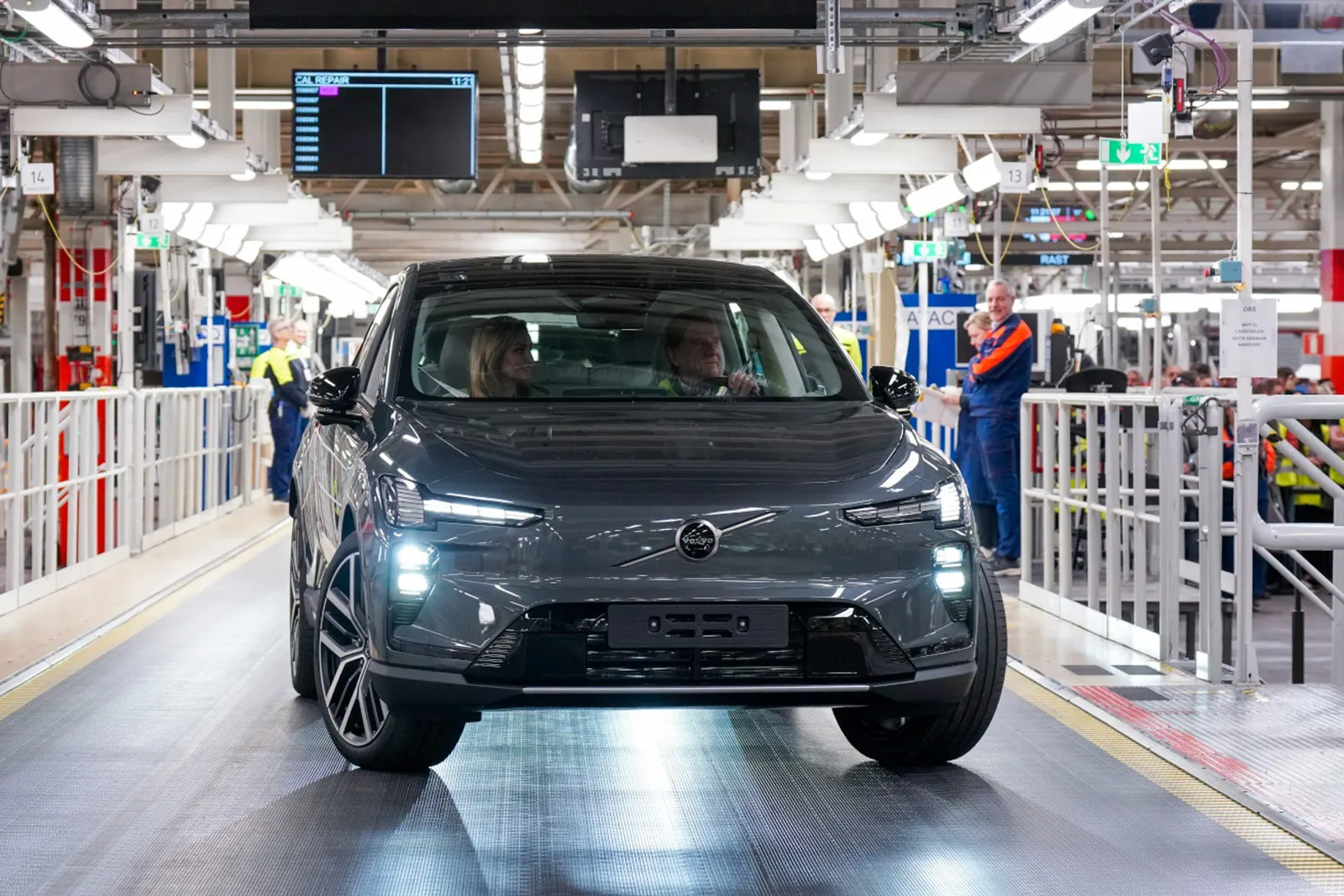
For 2027, Volvo is announcing a new affordable electric volume model for Europe and two new models for China. Yet despite its product push and full order books for the new EX60, a significant loss in the third quarter of 2026 has forced a tough cost-cutting measures, including layoffs.
Volvo already has over 50,000 European orders for the EX60.
Image: Volvo
Volvo plans to unveil a new global electric volume model by 2027, designed to meet the needs of the European market. It is expected to be large and affordable, with deliveries starting after summer 2027. This model marks the beginning of the company’s largest product rollout in its history, featuring a total of 13 new vehicles by the end of 2030, with three unveilings scheduled for 2027 alone — including the new model for Europe as well as two specific models for China.
The new model could be the EX50 based on the SPA3 platform
Media reports already refer to the model for Europe as the EX50, which could replace the recently updated EX40 in the medium term, as the latter is still based on the older CMA platform with a 400-volt architecture. The new electric vehicle factory near the Slovakian city of Košice is set to become the future production site for the SPA3 volume models, designed with an annual capacity of up to 250,000 units.
Technically, the new model is expected to be built on the newly developed SPA3 platform, which made its debut with the EX60 in early 2026 and features an 800-volt system. This enables extremely short charging times and long driving ranges.
SPA3 is also based on the cell-to-body principle, where the battery is integrated into the vehicle’s structural framework. Volvo assembles the battery packs itself from purchased, uniform prismatic NMC cells. To safeguard the supply chain against disruptions, the manufacturer relies flexibly on various suppliers. This ensures no differences in energy density or product specifications for customers. Although individual cells cannot be replaced in case of failure due to their fixed attachment to the chassis, Volvo compensates for this with a ten-year battery warranty.
Production Delays and High Demand for EX60
Volvo reports that the cell-to-body construction method delays the EX60’s full production rollout. Meanwhile, demand remains strong: Volvo has already received over 50,000 European orders for the EX60. The model is considered a key driver for future profit margins and helped account for 45 percent of total European electric vehicle sales in the third quarter of 2026.
Savings program costs 2,500 jobs
Nevertheless, the company faces enormous economic challenges. A sharp decline in sales of nearly 50 percent in China due to intense competition and tariffs, along with the disappearance of purchase incentives and special benefits for CAFE emission credits in the U.S., resulted in an operating loss of 3.7 billion SEK (approximately 332.2 million euros; EBIT margin: -5.6 percent) in the third quarter. As a result, management is implementing an additional cost-saving program worth 5 billion SEK (approximately 449 million euros) in indirect and variable costs.
This results in the elimination of around 2,500 jobs worldwide — 2,000 of them in Sweden — due to the expiration of consulting contracts, staff turnover, and severance packages. To lower the break-even point and ensure stable cash flows, Volvo is reducing its investments by about 30 percent compared to 2024. Additionally, the automaker will focus its production on five core plants globally, explore joint multi-brand assembly at the Chengdu and Gent sites with its parent company Geely, and further advance region-specific product adaptations in the U.S. and China.