
GreenWay Polska: It’s not just about infrastructure. We need more electric cars!
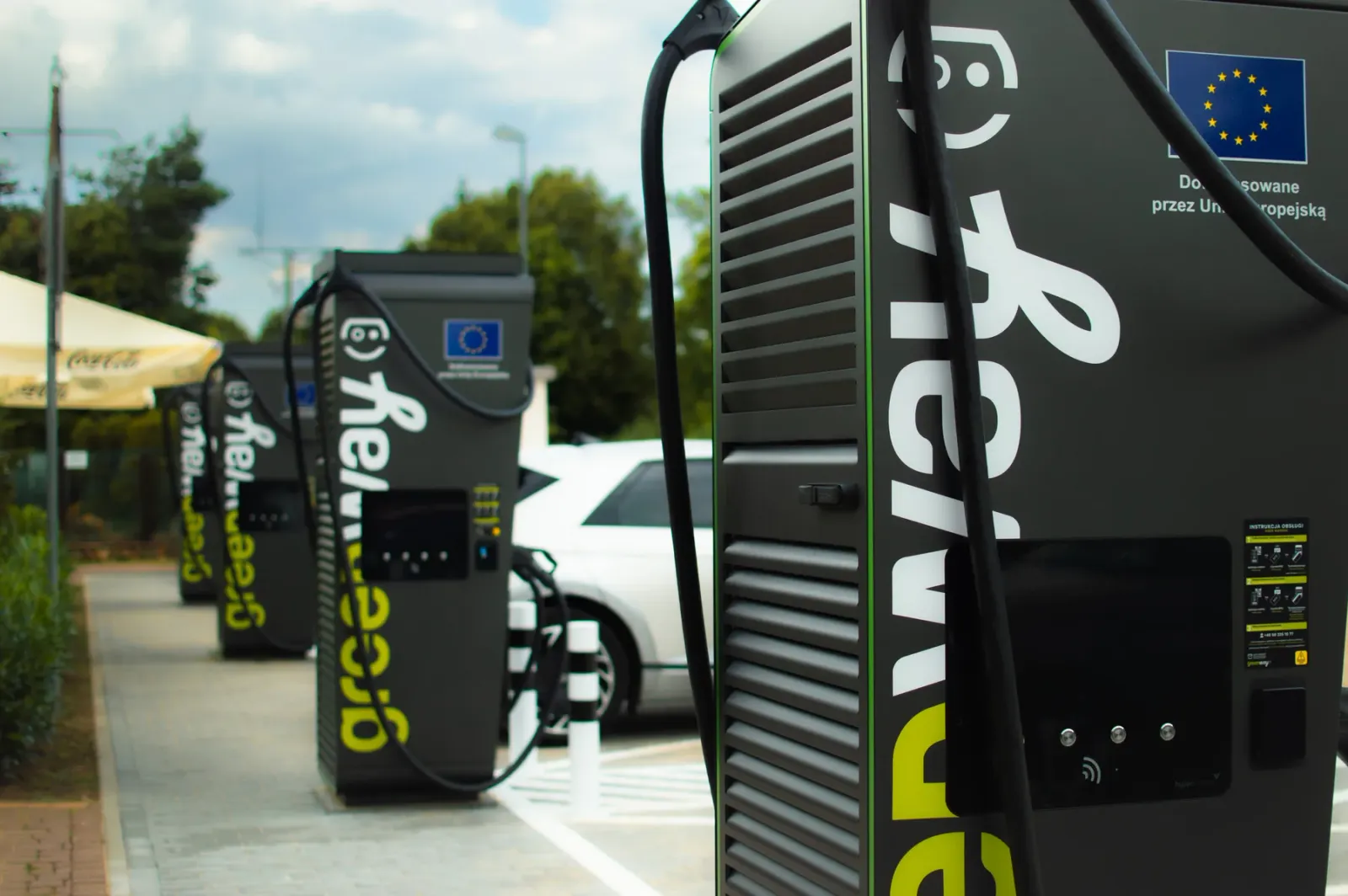
GreenWay is heavily investing in the expansion of charging infrastructure. What sources does the company use to fund these investments today, and what is the significance of equity capital, external financing, and public funds?
The development of charging infrastructure requires multiple funding sources today. GreenWay invests its own capital, utilizes external financing, and where appropriate public programs are available, it also relies on government subsidies.
A very important step this year was GreenWay’s acquisition of 138 million euros in green debt financing from a consortium of European financial institutions, including EBOR, Crédit Mutuel Arkéa, ING Bank Śląski, and mBank, with support from InvestEU. The total amount of financing GreenWay has obtained for the development of electromobility has thus risen to 258 million euros. These funds are intended, among other things, for further expanding the network and investments related to developing our services and customer support.
At the same time, we utilize public funds. Good examples are projects carried out earlier with support from the EU’s CEF program, and currently the NFOŚiGW program for building charging infrastructure for heavy transport. GreenWay’s project, which includes dozens of charging hubs, was recommended for funding under this program.
We do not consider subsidies to be the foundation of our investment model. Public programs can accelerate infrastructure development in areas where it is most needed, but in the long term, the market must be able to operate on commercial principles.
And here lies one of the biggest challenges for our industry. Charging infrastructure is extremely capital-intensive, yet its current utilization rate remains relatively low. This means it takes time to achieve profitability. The slower the growth of electric vehicles, the longer the infrastructure stays underutilized, making it harder for operators to fund further investments and secure new capital. Therefore, the continued development of the electric vehicle market is also crucial from the perspective of financing infrastructure.
How would you summarize GreenWay’s development in Poland over the past few years? What has been achieved, and what are the company’s most important goals for the next three to five years?
GreenWay has been operating in the electric mobility market for 15 years and in Poland since 2016, so this year marks ten years of our presence in the Polish market. During that time, we have evolved from pioneering investments in the first public charging stations to building a large-scale national network that increasingly relies on fast DC infrastructure and multi-station hubs.
A good example of the pace of this change is the year 2025. In Poland, we launched 401 new charging points, of which 320 were DC stations. We also established 35 ultra-fast hubs featuring 253 new DC stations with capacities of up to 400 kW.
We are simultaneously developing another very important area – infrastructure for business and heavy transport. By 2025, we had built 435 charging points for business clients, and our current projects also cover industry, logistics, and eHDV.
Looking ahead three to five years, however, we do not want to measure progress solely by the number of new chargers. The goal is to build infrastructure that is truly needed by the market – properly located, fast, reliable, and increasingly integrated with the energy system.
Therefore, one of the most important focuses will be the further development of multi-station hubs and high-capacity infrastructure, as well as solutions for fleets and heavy transport. At the same time, we will develop digital services and energy management solutions.
The most important condition for the success of these investments remains a sufficiently rapid development of the electric vehicle market itself. In recent years, charging infrastructure in Poland has grown very dynamically, at times even faster than the fleet of vehicles. From drivers’ perspective, this is obviously beneficial as it improves charging availability. However, for operators, it means low utilization rates of the infrastructure and extremely difficult economics in some locations.
If we want to maintain a high level of investment in the coming years, we need parallel growth in the number of electric vehicles. Without this, it will become increasingly difficult to finance further expansion of the network relying solely on market mechanisms. Our goal remains active participation in building electromobility in Poland and the region, but further development requires growth across the entire market, not just the infrastructure.
In which direction will the charging network develop—will more emphasis be placed on fast DC chargers, or will slower AC stations still play an important role? What determines the choice of technology in a specific location?
In GreenWay, we focus primarily on DC infrastructure, which is especially important in transit locations and wherever short downtime and rapid energy replenishment are crucial. That’s why we have been vigorously developing ultra-fast hubs in recent years.
This doesn’t mean AC infrastructure will become unnecessary. It has a very specific use case where the vehicle stays parked for several hours—near offices, hotels, residential areas, shopping centers, or other destinations.
It’s simply two different models of using an electric vehicle. In one case, energy is replenished in the background during long periods of parking, while in the other, the driver wants to continue traveling as quickly as possible.
GreenWay focuses its largest investments primarily on this second segment, namely fast and ultra-fast DC infrastructure. However, the choice of specific technology always depends on location, traffic patterns, expected customer wait times, available connection capacity, and anticipated future demand.
Increasingly, instead of individual chargers, large hubs with multiple stations are being established. Will this model dominate in the coming years, and how many such hubs can we expect in Poland?
In the case of infrastructure along major routes, we clearly see a shift from single stations to multi-station hubs. This is a natural response to the growing number of electric vehicles and the increasing importance of charging availability.
The hub primarily provides greater assurance that drivers will be able to charge. If one station is occupied or temporarily unavailable, they still have additional ones at their disposal. Such a location can also be more easily scaled as traffic and demand increase.
In 2025, multi-station hubs became the standard format for new GreenWay investments along major routes. As part of the Expand-E project, we launched 35 new ultra-fast hubs in Poland, covering a total of 253 DC points with capacities up to 400 kW.
I don’t think there is one universal size for a hub. Urban locations require different setups, highway stations need different ones, and hubs for heavy transport require yet another design. The scale of the infrastructure must be adjusted to current and future demands.
In addition to large hubs, we are also developing individual DC stations in convenient locations where customers stop to shop, use services, or simply want to charge their cars near their homes. This serves as a natural complement to transit infrastructure.
We aim to address the various ways electric cars are used — both the needs of long-distance travelers and drivers who require fast charging in their daily surroundings.
Public charging prices remain one of the most frequently discussed topics among electric vehicle drivers. What factors have the greatest impact on GreenWay’s pricing policy, and can we expect lower costs for fast charging as the market grows?
The charging price is determined by many factors. It’s not just the cost of electricity itself. In the case of fast charging, distribution fees, investment costs for building charging stations, maintenance and servicing of infrastructure, as well as the operating costs of the entire network also account for a significant portion of the expenses.
Therefore, as the market grows, it cannot be assumed automatically that charging prices will decrease in direct proportion to the increase in the number of electric vehicles. The key factor is primarily the level of infrastructure utilization.
Today, the utilization of public charging stations in Poland remains relatively low. In recent years, the number of chargers has grown very rapidly, whereas the fleet of electric vehicles has not expanded at the same pace. This means that the very high fixed costs of infrastructure must be spread across a relatively small number of kilowatt-hours sold.
This is one of the most significant economic challenges for the entire industry. Only a higher level of station utilization will allow operators to better distribute fixed costs, improve the profitability of individual locations, and create more room for price competition.
In GreenWay, we also differentiate our offerings based on how the network is used. Currently, Energia Standard costs 2.99 PLN/kWh for DC and 1.89 PLN/kWh for AC, while subscribers to subscription plans can enjoy lower rates — 2.10 PLN/kWh for DC under the Energia Max plan.
This allows us to better tailor prices to various ways of using the infrastructure — from occasional charging to regular use of our network.
In addition, we offer promotions and price discounts in selected locations. On one hand, we want to better match our offerings to customers’ needs, and on the other hand, increase utilization of existing infrastructure. I believe such an approach will become increasingly common not only in GreenWay but across the entire market in the future.
The energy market is increasingly moving toward dynamic pricing. Could a similar model gain popularity for public vehicle charging—where prices depend on factors such as the time of day, grid load, or current energy costs? What does GreenWay think about this?
Technologically, such a model is entirely feasible, and I believe it will become increasingly important in the future.
Public charging is an excellent example of a service where data on energy demand, available capacity, infrastructure usage, and energy prices can be integrated. We are already developing solutions related to energy management, including dynamic power control, peak load reduction, and cost optimization for energy use.
A dynamic price for drivers is more than just technology. It must also be understandable and predictable to the customer. Drivers should know how much they will pay and what determines the price in effect at any given time.
Therefore, I expect a gradual evolution rather than a sudden shift to completely dynamic prices. There are possible models where prices or promotions become more flexible and depend on factors such as the time of day, usage of a specific station, or market conditions for energy.
Such solutions may have an additional advantage: encouraging customers to use the infrastructure during periods when it is less congested. This could improve both the economics of the stations and the efficiency of energy usage as well as available capacity.
A separate challenge is the electrification of heavy transport. How is GreenWay preparing to develop infrastructure for electric trucks, and is the company utilizing or planning to utilize available funding programs for eHDV infrastructure?
Heavy transport is today one of the most promising areas for the development of electromobility, but it remains a sector with significant risks due to high uncertainty regarding the pace and scale of future demand.
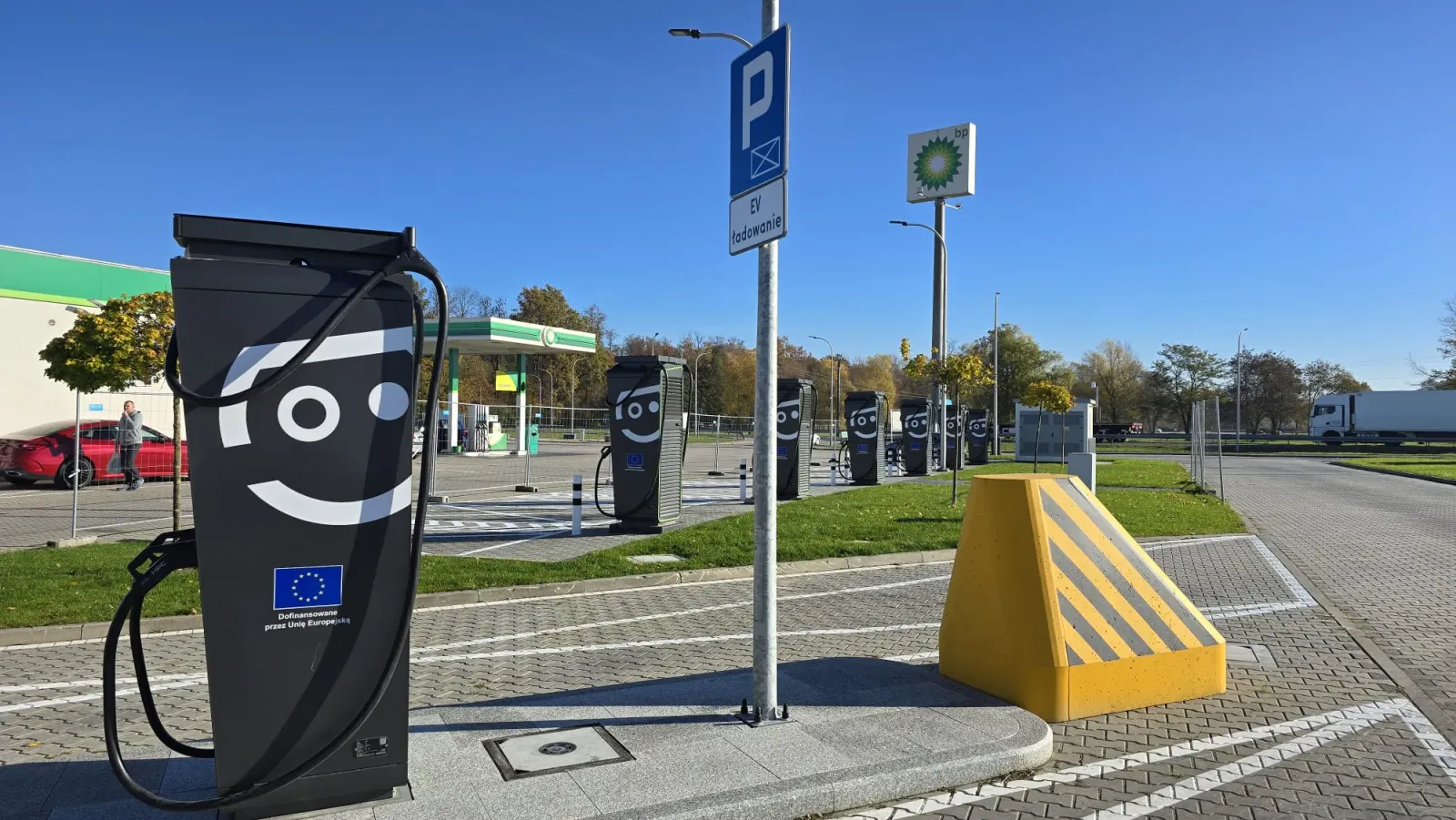
It’s not just about installing a charger with higher power. Infrastructure for trucks must address completely different needs compared to passenger cars: the length of the setup, maneuverability, parking organization, driver working hours, location relative to main transport corridors, and above all, access to very high power levels.
We launched the first public GreenWay station equipped to serve eHDVs in Grodków, along route A4. We are developing additional locations on the most important transport corridors, while simultaneously working on infrastructure projects for industry, logistics, and fleets.
A very important step is the hub project, which has been recommended by NFOŚiGW for funding support. We are currently finalizing the contracts for supporting these investments.
This is an important project not only due to its scale. It also demonstrates a shift in thinking about infrastructure for heavy transport – it is now being designed as part of an overall transportation system, rather than a collection of individual, separate stations.
At the same time, we must approach the scale and pace of investment very carefully. In the case of eHDVs, the costs are particularly high, and the period during which the infrastructure will initially be used to a limited extent could be long. That is why it is so important to simultaneously support the development of fleets of electric heavy vehicles.
What is currently the biggest obstacle to the development of charging networks in Poland: administrative procedures, availability of connection capacity, waiting times for connections, investment costs, or other barriers?
One of the biggest challenges for our industry remains the availability of connections with sufficient capacity, as well as the overall pace of development in electrical infrastructure.
We may have a ready-made design, a secured location, funding, and the technology ordered, but without an appropriate connection, the station cannot begin operating. The problem is even greater for large hubs, as we need power capacities often measured in megawatts.
This is a systemic issue. Three elements must develop simultaneously: the fleet of electric vehicles, charging infrastructure, and the power grid. If each of these areas progresses at a different pace, we will either face a lack of infrastructure or costly investments that remain underutilized.
A positive development is that the issue of power availability has now been recognized at the systemic level as well. Programs to support the development of network infrastructure for high-power stations are highly needed, especially in light of the planned expansion of infrastructure for eHDV.
But I would also like to draw attention to another barrier that is discussed much less frequently. It is today the economics of operators' operations.
Building fast infrastructure requires very high investments made several years in advance of future demand. With low utilization rates at stations, it is very difficult to achieve an adequate rate of return. This directly affects operators' ability to secure additional capital and, consequently, their capacity to finance further network development.
Therefore, when looking at the broader development of electromobility, we cannot focus solely on building infrastructure. We also need consistent actions to support an increase in the number of electric vehicles.
If the growth rate of EV fleets slows down, operators feel this almost immediately — station usage does not increase as expected, the time it takes for investments to become profitable stretches out, and it becomes harder to justify further projects to banks and investors.
That is why it is crucial to maintain stable and predictable market conditions as well as take actions to boost demand for electric vehicles. It is not just about the interests of car manufacturers. An appropriate growth rate for fleets is a prerequisite for the development of charging infrastructure and, ultimately, the entire electromobility ecosystem.
In my opinion, this is precisely the most important challenge today: we must develop cars, charging infrastructure, and the power grid simultaneously. If one of these elements starts to fall significantly behind, it will slow down the development of the entire market.
Thank you for the conversation,
Paweł Mazur