
Granada becomes the key city for nuclear fusion with a technology that will transform the global energy and geopolitical landscape.
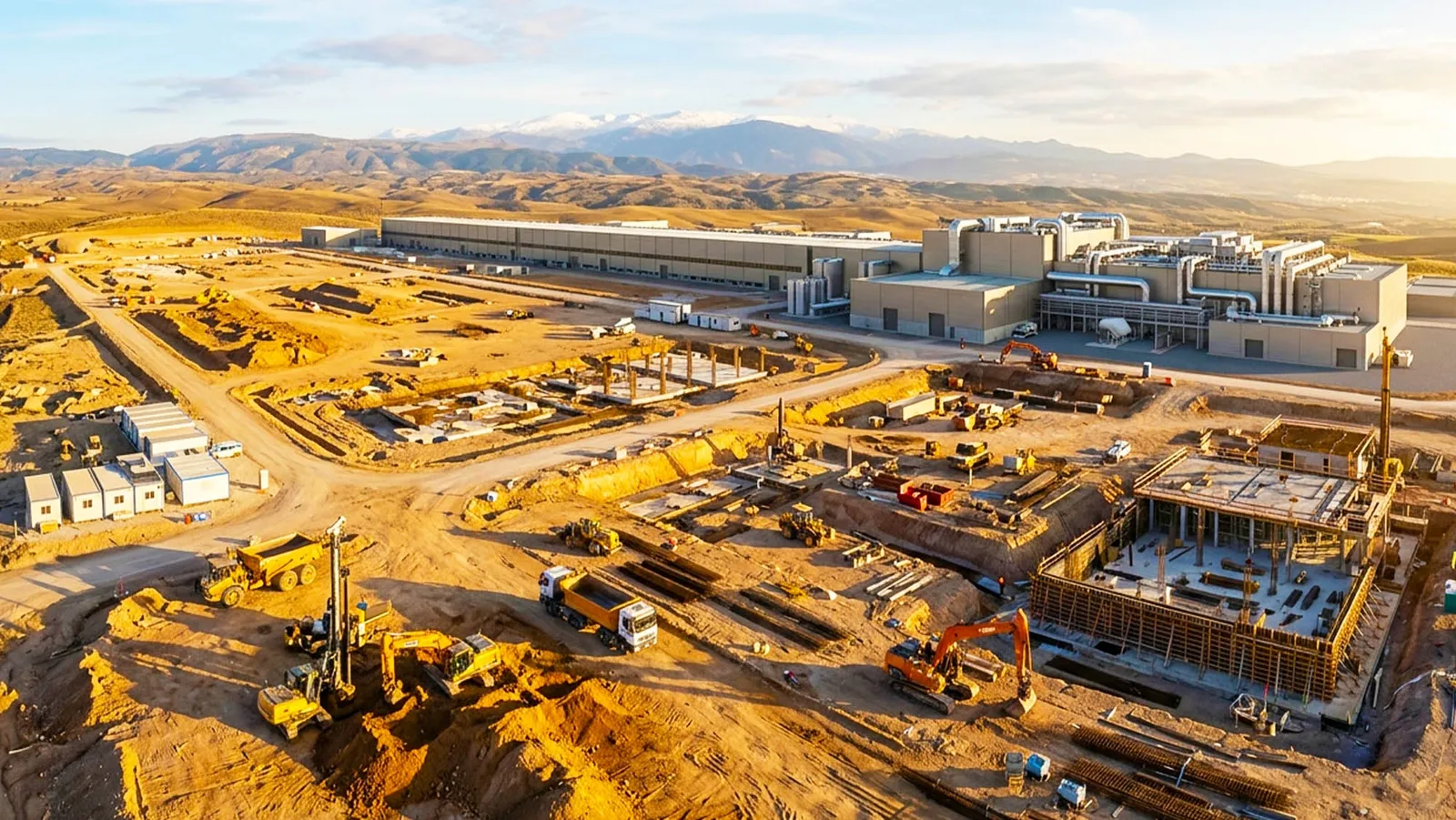
Granada takes a decisive step toward becoming one of Europe’s leading centers for research related to fusion energy. Construction on the main building of IFMIF-DONES has already begun in Escúzar, 24 kilometers from the capital of Granada, following years of planning, international agreements, and preparatory work.
The facility will cover an area of 100,000 square meters and house a particle accelerator designed to create a neutron source capable of simulating the conditions faced by materials in future fusion reactors.
It won’t be exactly a fusion power plant
The installation is part of the DONES program and involves participation from various countries. Spain plays a central role in the project along with Andalusia, while international partners contribute to funding and developing different components.
The construction of the main building now marks the transition from the design and preparation phase to a physical infrastructure that will integrate highly complex scientific and technological systems.
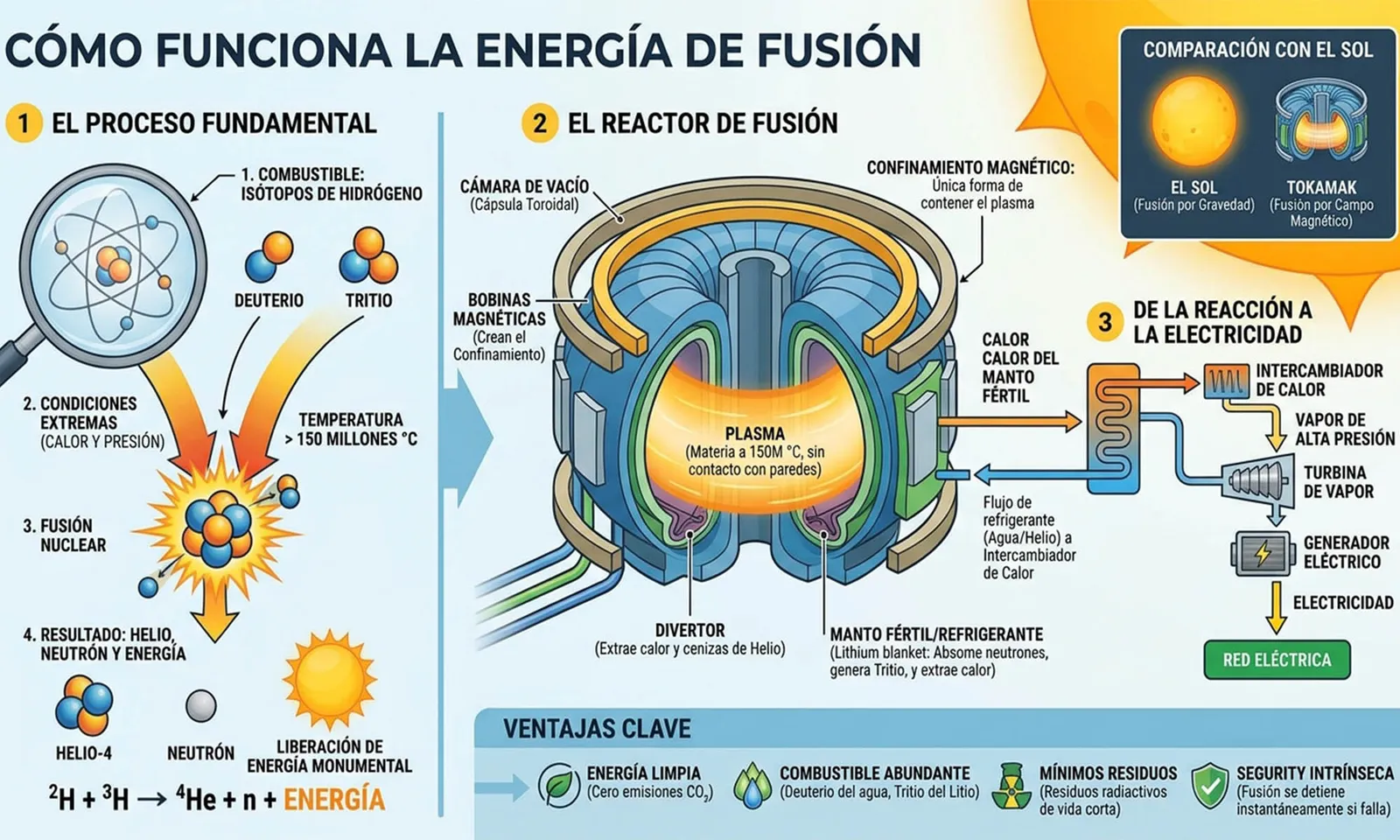
Although its purpose is directly related to the development of this energy technology, IFMIF-DONES will not be a power plant. Its function will be experimental: to study how certain materials respond when exposed to an intense neutron flux under conditions similar to those found in a fusion reactor.
This phase is crucial because the materials currently in use do not allow for direct transfer of results obtained from fission neutron-based irradiation facilities to the conditions of a future fusion plant.
The components of the first wall in these reactors will be exposed to high temperatures and intense bombardment by high-energy neutrons. IFMIF-DONES will enable the analysis of material degradation and the acquisition of data necessary for their development, qualification, and subsequent licensing.
The core component of IFMIF-DONES will be a high-current linear particle accelerator. The system will use a deuteron beam that interacts with a stream of liquid lithium to produce high-energy neutrons.
The facility is designed to create a controlled irradiation environment where various engineering materials can be tested. The results will help determine which solutions can withstand the extreme operating conditions expected in future fusion reactors.
The research also has potential applications beyond energy. The knowledge and technologies developed at the facility can be used in fields such as nuclear physics, medicine, and various industrial applications.

252.78 million euros for 2028-2037
The start of the construction work coincides with the update of the financial framework that will allow continued development of the project over the next decade.
The Council of Ministers has approved the third amendment to the agreement between the Ministry of Science and Innovation and the Junta de Andalucía, which provides funding totaling 252.78 million euros for the period from 2028 to 2037.
Of this amount, 130.11 million euros are allocated to the Ministry of Science and Innovation, while 122.67 million euros go to the Junta de Andalucía.
In addition to this funding, there is a 174 million euro contract for the construction of the main building, awarded to a UTE formed by Ferrovial, FCC, and Añil Servicios, Ingeniería y Obras.
The contract covers the design and construction of the infrastructure and was awarded in January of this year. The planned schedule states that by the end of 2029, the building and its plant systems must be sufficiently developed to begin receiving the technological components for the accelerator, which are being developed by the various participating countries.
The accelerator will need a new power substation
One of the challenges associated with developing IFMIF-DONES is ensuring the necessary power supply for its operation.
In this regard, the Saleres 220 kV Substation is considered an essential infrastructure to meet the energy needs related to the accelerator and other industrial and energy projects planned in the province of Granada.
The government has urged the Junta de Andalucía to accelerate the approval process for this infrastructure so that its development can keep pace with the construction schedule of IFMIF-DONES.
The electrical connection will be particularly important due to the characteristics of the accelerator, which requires a high energy capacity to generate and maintain the particle beam used during experiments.
It is expected that IFMIF-DONES’ workforce will reach approximately 100 people by the end of 2026.
Currently, 34 recruitment processes are underway, and around 700 applications have been received. The expansion of the workforce will enable strengthening of the technical, scientific, and management areas as the infrastructure enters its construction phase.
The arrival of the first machines in Escúzar thus marks a scale shift for IFMIF-DONES. The project moves beyond a phase dominated by planning, agreements, and the technological development of its components to begin constructing the building that will house the accelerator and the systems needed to experiment with materials for future fusion energy.