
Gotion targets 400 Wh/kg solid-state batteries
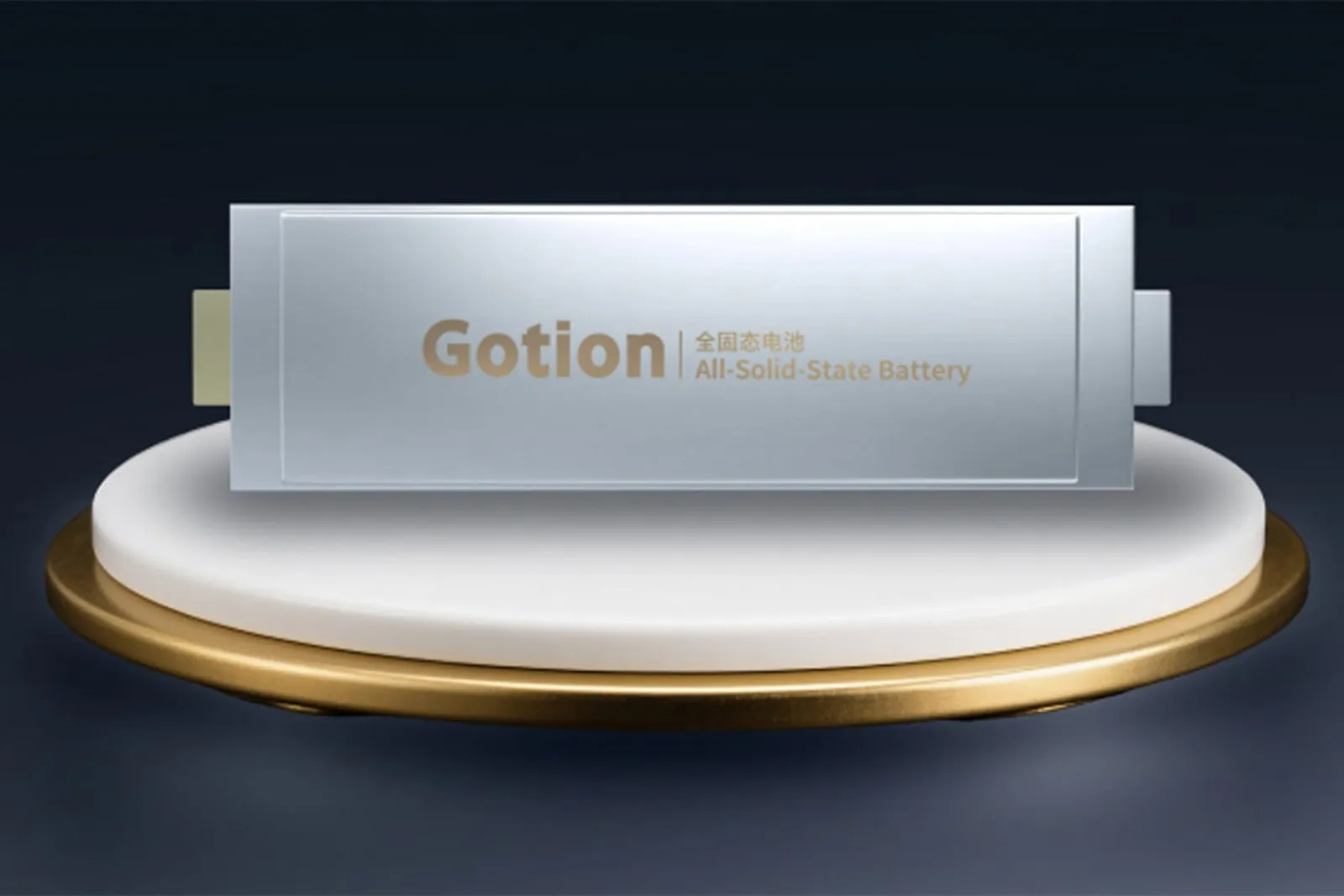
Gotion High-tech has unveiled new targets for its solid-state batteries. The Chinese cell manufacturer, in which Volkswagen has a stake, is aiming for an energy density of 400 Wh/kg for its Jinshi cells and long-term costs of approximately US$150 per kWh.
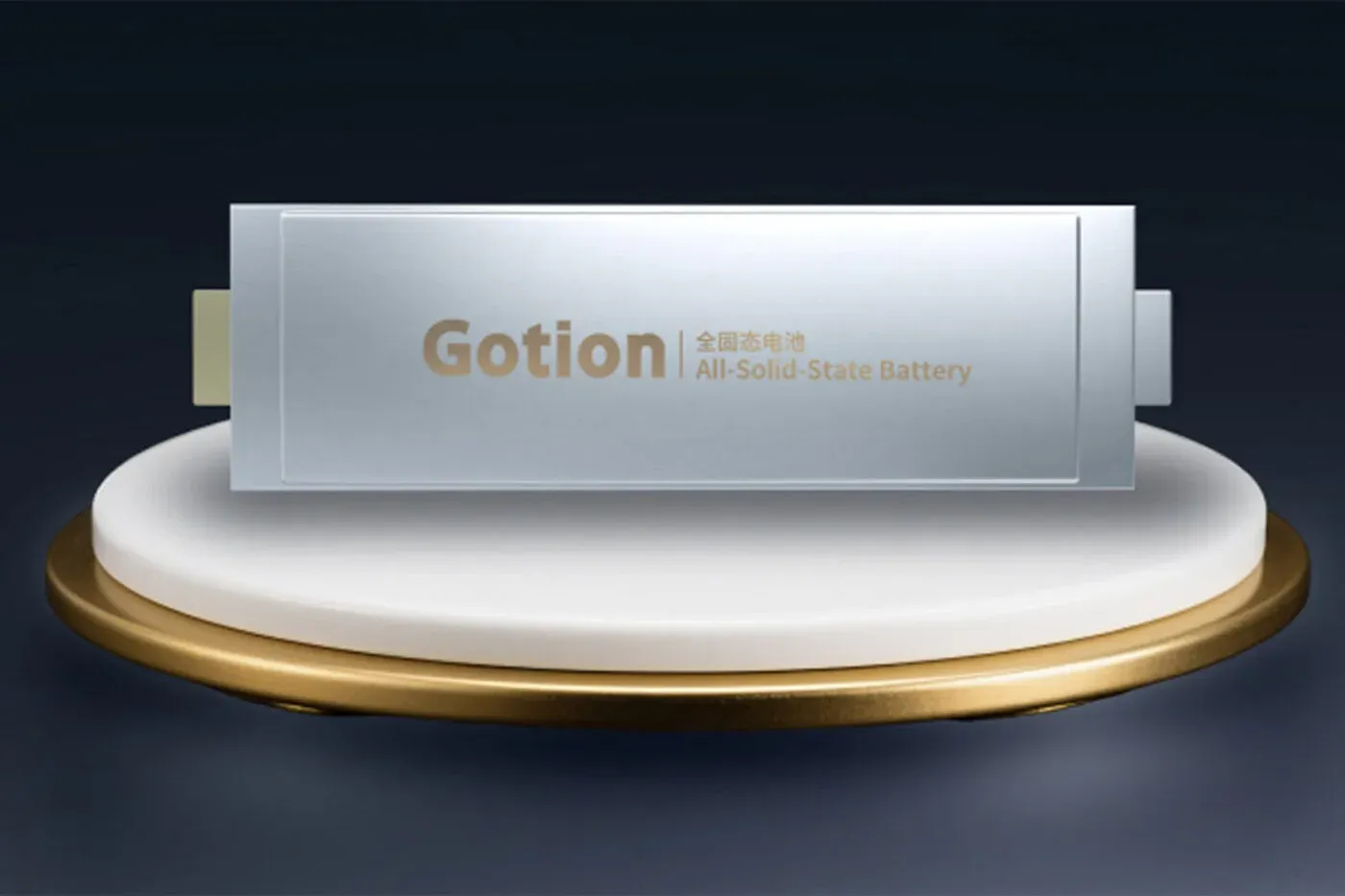
Gotion plans a 2-GWh production line for its solid-state batteries.
Image: Gotion High-Tech
At the World Manufacturing Convention 2026 in Hefei, battery manufacturer Gotion highlighted further progress in the industrialisation of its all-solid-state batteries – and unveiled its latest target values.
According to _CarNewsChina_, the firm has set an energy density target of 400 Wh/kg for its solid-state batteries. Previously, Gotion specified a target of 350 Wh/kg for its sulfide-based solid-state cells. However, it remains unclear when this new benchmark will be achieved in near-series production cells. Gotion has also set a more concrete cost target: in the long term, its solid-state batteries are to enter the so-called “one-yuan era”, meaning around one yuan per watt-hour or approximately US$150 per kWh. According to media reports, this would still be significantly higher than the current average prices of Chinese LFP cells.
The current state of development builds on several previous steps. As early as 2025, Gotion had commissioned a pilot production line with an annual capacity of 0.2 GWh. The all-solid-state cells produced there had already been integrated into vehicles and tested on the road, according to the company. For that cell generation, Gotion cited an energy density of 350 Wh/kg.
Gotion moves closer towards production
In 2024, the company announced plans to start small-scale production in 2027 and aim for mass production by 2030. Since then, the timeline has progressed further: in March 2026, Gotion finalised the design for a solid-state battery production line with an annual capacity of 2 GWh, according to CarNewsChina.
In parallel, Gotion is expanding its materials expertise. At the beginning of 2026, the battery manufacturer agreed on a collaboration with BASF on high-performance materials for solid-state batteries. Both companies explicitly aim to address technical bottlenecks on the path to commercialisation and jointly explore opportunities for a future market launch.
Gotion also points to further safety tests of its cells. In puncture and high-temperature tests, these cells reportedly produced neither smoke nor flames. The Chinese group is one of the country’s major battery manufacturers and operates 20 production sites worldwide. In August 2026, Gotion reached 4.61 GWh of installed battery capacity, ranking fifth in the Chinese market according to _China EV DataTracker_. Volkswagen is the largest shareholder in Gotion and plans to strengthen its ties with the Chinese partner in Europe as well: a mega-deal based on three joint ventures is also envisaged.
