
Gotion aims for 400 Wh/kg and $150/kWh. Volkswagen holds stakes, but production has not yet begun.
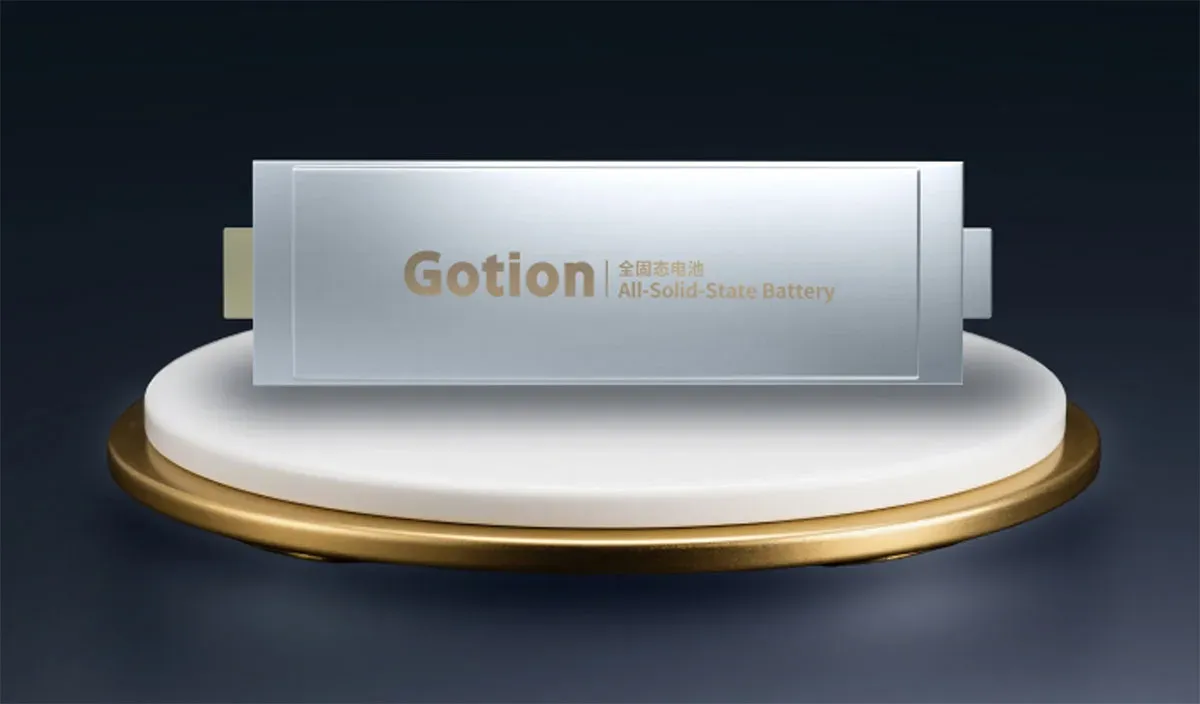
Gotion High-Tech announced at the World Manufacturing Convention 2026 in Hefei its Jinshi solid-state cells, targeting an energy density of 400 Wh/kg. Backed financially by Volkswagen, the manufacturer aims to reduce the cost to 150 USD/kWh, but for now it is discussing specifications and production lines rather than mass-produced batteries for vehicles.
400 Wh/kg and fire-free burst testing
Jinshi uses a solid sulfide electrolyte. Previously, Gotion claimed 350 Wh/kg, now raising the target to 400 Wh/kg. This is the value for a single cell, so a complete battery with casing, cooling systems, and electronics will have a lower energy density.
The manufacturer claims that the cells have passed puncture and high-temperature exposure tests. They were supposed not to catch fire or emit smoke. However, without exact conditions, temperatures, and independent test results, it is difficult to compare these tests with those used by other manufacturers.
In March 2026, Gotion completed the design of a solid-state battery line with an annual production capacity of 2 GWh. The design of the line does not yet mean a factory is operational. It represents rather another stage between the laboratory and pilot production.
Price still more than twice that of LFP
The financial goal is to enter China’s “one-yuan era,” meaning a cost of 1 yuan per Wh. This corresponds to approximately 150 USD/kWh and remains more than twice the current average price of LFP cells in China.
At this level, the cells alone for an 80 kWh battery would cost around $12,000, not including the casing, cooling system, electronics, and installation. Therefore, solid-state technology does not start out aiming to create affordable urban cars. First and foremost, it is suitable for expensive limousines and SUVs, where higher energy density can justify the cost.
Gotion was established in 2006 in Hefei, has 20 production bases, and is the fifth-largest battery manufacturer in China. As of August 2026, it had installed 4.61 GWh of cells, still behind EVE Energy and CALB. Volkswagen is the company’s largest shareholder.
Chinese manufacturers plan to begin pilot production and testing of solid-state battery vehicles in 2027. BYD may deploy such a battery in its flagship Yangwang limousine earlier, so Gotion is no longer competing solely on laboratory demonstrations.
Gotion showed a reasonable cost target, but the real test will be the yield and repeatability at 2 GWh. Would you accept a more expensive solid-state battery in exchange for less weight and higher safety?
LovEV Newsletter
Want more content like this?
Sign up — we’ll send you a weekly summary once the newsletter starts.