
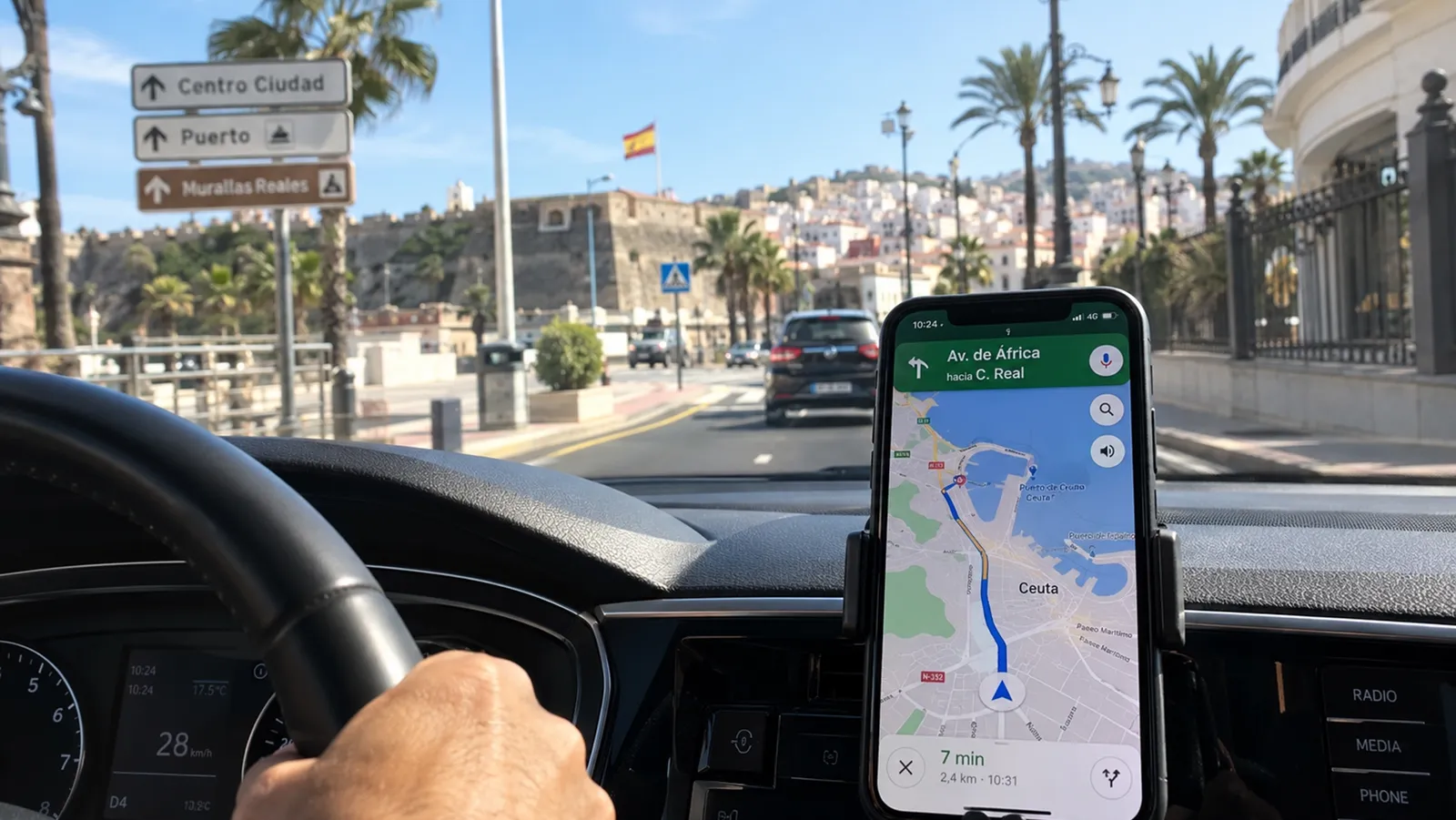
Google Maps considers Ceuta and Melilla to be "disputed territories" between Morocco and Spain: the EU is considering sanctions.
21/10/2026 19:00
Updated to
21/10/2026 19:00
The way Google Maps depicts the borders of Ceuta and Melilla with Morocco has reached the European Parliament. The Petitions Committee has decided to continue processing a petition calling for an investigation into whether Google’s dotted lines might give the impression that these two Spanish cities are disputed territories. The next step will be to examine whether such representation could conflict with the obligations of large platforms under the Digital Services Act. No fines or enforcement actions have yet been imposed on Google regarding this issue.
The matter may seem merely cartographic, but it affects a platform used daily by millions of people for navigation, route planning, and checking roads and borders.
It is Google’s own documentation that explains why this depiction has sparked controversy.
What a dashed line means on Google Maps
Google Maps visually distinguishes between various types of international borders. Borders it considers undisputed are shown with a solid line. Conversely, Google explains that disputed borders are displayed as dashed gray lines, indicating that the involved territories do not agree on where the boundary lies.
The company also uses dashed lines for certain provisional boundaries or those derived from treaties that it does not consider definitively established.
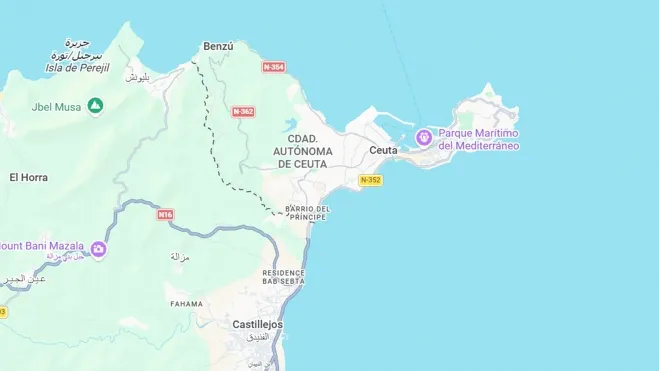
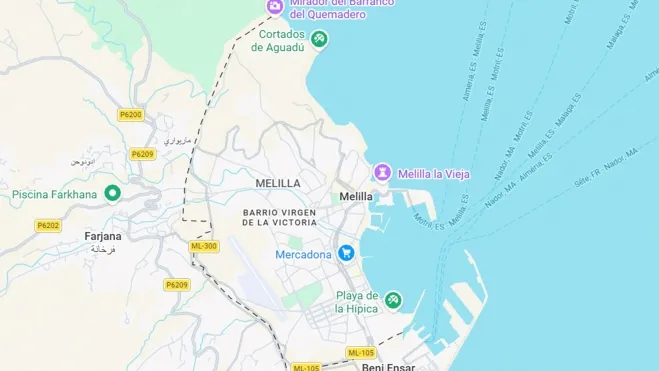
It is this symbolography that appears on the land borders of Ceuta and Melilla with Morocco. The petition submitted to the European Parliament, registered as 2284/2026, argues that such representation could create a misleading perception of the legal status of these two cities and the external borders of the European Union.
It does not mean Google will be fined
This is the most important nuance. The decision taken by the Petitions Committee does not equate to initiating a sanctioning procedure against Google, nor does it mean Brussels has concluded that the platform violates the law.
What was decided is to continue processing the petition to determine whether the issue warrants examination under the Digital Services Act (DSA).
The DSA requires large digital platforms to analyze and reduce certain systemic risks arising from their services.
If the European Commission later determines a violation, the law provides for sanctions of up to 6% of the relevant provider’s annual global turnover. This percentage represents the legal maximum and is not a penalty specifically proposed for this case.

The debate goes far beyond a line on a map
The initiative calls for Google to represent the borders of Ceuta and Melilla using continuous international lines. For Google, however, the borders on its maps are not just a visual element: they reflect its classification of various political and territorial situations around the world.
Therefore, any potential change could be significant beyond this specific case. It would determine to what extent European regulations on digital platforms can also influence how major mapping services represent borders and territorial disputes.
Currently, the news is not that Europe will fine Google Maps, but rather something more specific: the European Parliament has agreed to continue reviewing a petition that could force Brussels to decide whether such representation is compatible with Google’s digital obligations in the EU.