
German electric car subsidies yield 100,000 households with approved applications
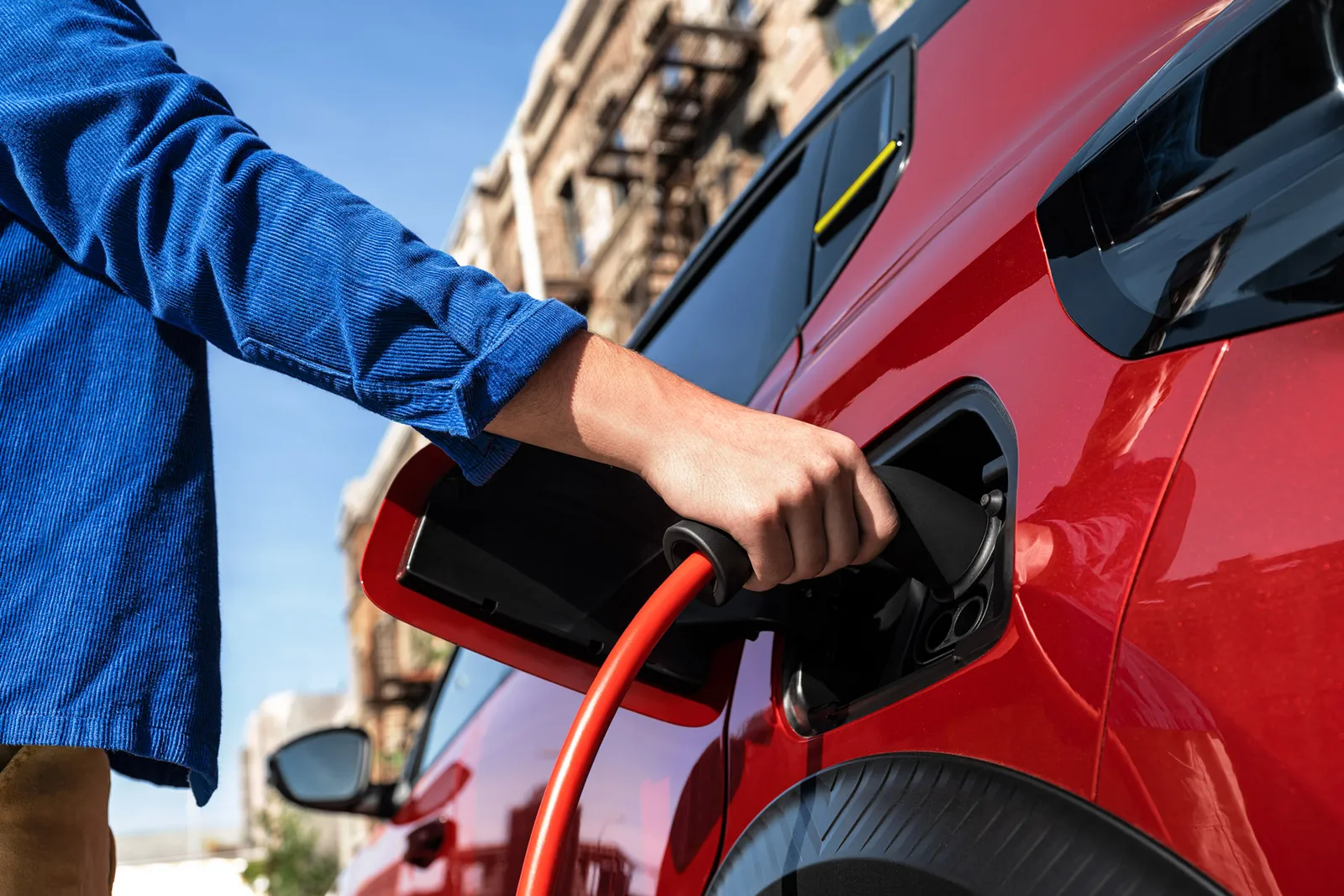
The electric car subsidy has been available for application in Germany since mid-May and has shown high demand. The first 100,000 applications, with a total value of over 430 million euros, have now been approved by the Federal Ministry for the Environment – 90 per cent for purely electric cars, and the remaining ten per cent for plug-in hybrids.
Image: Stellantis
The German Federal Office for Economic Affairs and Export Control (BAFA) has recently begun publishing monthly statistics on electric car incentives, including key details about applicants and funded models. So far, it has released the status of approvals as of 1 August 2026 and as of 1 September 2026. Now, the third evaluation as of 1 October has been published, and the Federal Ministry for the Environment, which leads the incentive programme, has taken the opportunity to highlight the milestone of 100,000 approved applications, which was exceeded in early October.
This figure reflects a significantly accelerated approval process. As recently as 1 September, BAFA reported around 50,000 fully processed applications, but this number doubled by 1 October. Exactly 97,790 applications had been approved by 1 October, meaning the 100,000 mark was technically reached shortly after this cut-off date. Federal Environment Minister Carsten Schneider commented: “This is truly good news. The incentive programme has far exceeded our expectations and has already helped 100,000 households protect themselves from high fuel prices. Every additional electric car makes our country less dependent on expensive oil imports and international conflicts. What is particularly important to me is that the social scaling is working. Finally, households that previously would not have even considered it can now afford an electric car. The leasing option helps with this. Additionally, German manufacturers are finally bringing compact cars to market.”
The EV incentive programme was established on 19 May but applies retroactively from 1 January 2026. The bonus specifically targets private households and supports the purchase or leasing of new vehicles with battery-electric drivetrains, fuel cell drivetrains, as well as certain plug-in hybrids and range extenders.
The new BAFA report now includes, among other things, the number of approvals and the amount of funding disbursed. It also provides breakdowns by drivetrain type, financing method, income, households with children, as well as by manufacturers, brands, and models. With these statistics, BAFA is providing clarity after rumours circulated shortly after the programme’s launch that the German subsidies were primarily benefiting Chinese brands.
The statistics are based on data for applications that have already been approved. As of the 1 October cut-off date, there were 97,790 such applications — compared to 52,473 a month earlier. As processing the applications has sped up, the number of applications received by now, is likely to be significantly higher.
According to BAFA, as of 1 October, €432 million had been disbursed to applicants with approved funding — compared to €230 million as of 1 September and €117 million as of 1 August 2026. In terms of drivetrain types, 91.6 per cent of applications relate to purely electric cars, with only 8.4 per cent for plug-in hybrids. The applications are still almost evenly split between purchase and leasing. Here, the approved applications show great consistency. Changes compared to the previous months’ statistics are minimal.
The typical applicant is also outlined in the BAFA statistics: More than half (52.3 per cent) of all approved applications to date fall into the lowest income bracket (taxable household annual income up to €45,000). The background is that the subsidies are scaled according to income and the number of minor children in the household. The next two income brackets account for roughly another 44,000 applications. The two highest brackets account for less than 3,000. This means the funding is reaching exactly where it is intended, towards people with lower to middle incomes who might not be able to afford a new EV without a subsidy.
Interestingly, the vast majority of applicants did not report having minor children: Around 65,000 applications, or two-thirds of all funding recipients, come from “households without a child relevant for funding,” as BAFA notes. This also means that many do not reach the full funding amount of €6,000. This is also reflected in the total subsidy amount disbursed so far in relation to the approved applications: On average, this amounts to €4,418 per household, a slight increase compared to the previous two months’ statistics of €4,380 and €4,350.
Let’s look at the brands and models that are particularly popular among successful applicants so far. Below is an overview of approvals by brand (Top 10):
| Ranking | Brand | Number |
| --- | --- | --- |
| 1. | Tesla | 12,155 |
| 2. | Skoda | 7,224 |
| 3. | Cupra | 6,229 |
| 4. | Leapmotor | 5,816 |
| 5. | BYD | 5,814 |
| 6. | Renault | 5,721 |
| 7. | VW | 5,464 |
| 8. | Kia | 5,424 |
| 9. | Hyundai | 4,988 |
| 10. | BMW | 4,679 |
The ranking shows consistency in the top three positions: Tesla remains far ahead, followed by the two Volkswagen brands, Skoda and Cupra, as in the previous month. What is interesting is what is happening behind them: The two Chinese brands, Leapmotor and BYD, have climbed the table. Leapmotor has moved from sixth place to fourth, and BYD from seventh to fifth. They have displaced VW and Hyundai, which are now found in the lower part of the Top 10. However, the core VW brand is likely to make a strong showing soon with its new electric compact cars, which have already celebrated their world premiere but are not yet on sale. Renault has also become more popular among funding recipients, jumping from ninth to sixth place. In contrast, Kia and BMW have maintained their positions compared to the previous month. Either way, the field behind the top two brands is relatively close, so further position changes are likely next month.
Let’s also look at the newly published BAFA ranking of the Top 10 funded models. As of 1 October, the order was as follows:
| Ranking | Model | Number |
| --- | --- | --- |
| 1. | Tesla Model Y | 8,297 |
| 2. | Skoda Elroq | 5,478 |
| 3. | Tesla Model 3 | 3,845 |
| 4. | Citroen e-C3 | 3,583 |
| 5. | Leapmotor T03 | 3,561 |
| 6. | VW ID.3 | 3,541 |
| 7. | Hyundai Inster | 3,337 |
| 8. | BMW iX1 | 2,939 |
| 9. | Cupra Born | 2,806 |
| 10. | Dacia Spring | 2,402 |
Compared to the previous month’s statistics, the top three remain unchanged, but the Citroen e-C3 has moved far up the rankings from ninth to fourth place. The Leapmotor T03 has swapped places with the VW ID.3. The other electric models were already in the Top 10 last month, with the exception of the Dacia Spring, which has entered the current ranking in place of the Fiat 500e. Interestingly, while Renault has scored well in the brand ranking, it does not have a Top 10 model. The explanation might be that Renault has four relatively popular models among funding recipients, but none that stand out. The Renault 5 has 1,963 applications, the E-Twingo 1,257, the Renault 4 1,241, and the Scenic 951.
Skoda also has a strong second model with the Enyaq, as does Cupra with the Tavascan and Leapmotor with the B10. BYD offers a special case. Here, too, no single model stands out, but BYD has received at least three-digit application numbers for many of its models. And the BYD Seal U DM-i is the most popular plug-in hybrid with 1,436 applications. Overall, Leapmotor and BYD are performing disproportionately well in the funding programme. However, the flagship models from Tesla, Skoda, and VW remain safe for now.
Premium vehicles are less common in the upper part of the rankings, but they are not excluded from funding (there is no hard price cap, only an income limit). As a result, some electric Porsches also appear in the BAFA statistics.
