
The planned truck fast-charging network at 124 rest stops is now being implemented
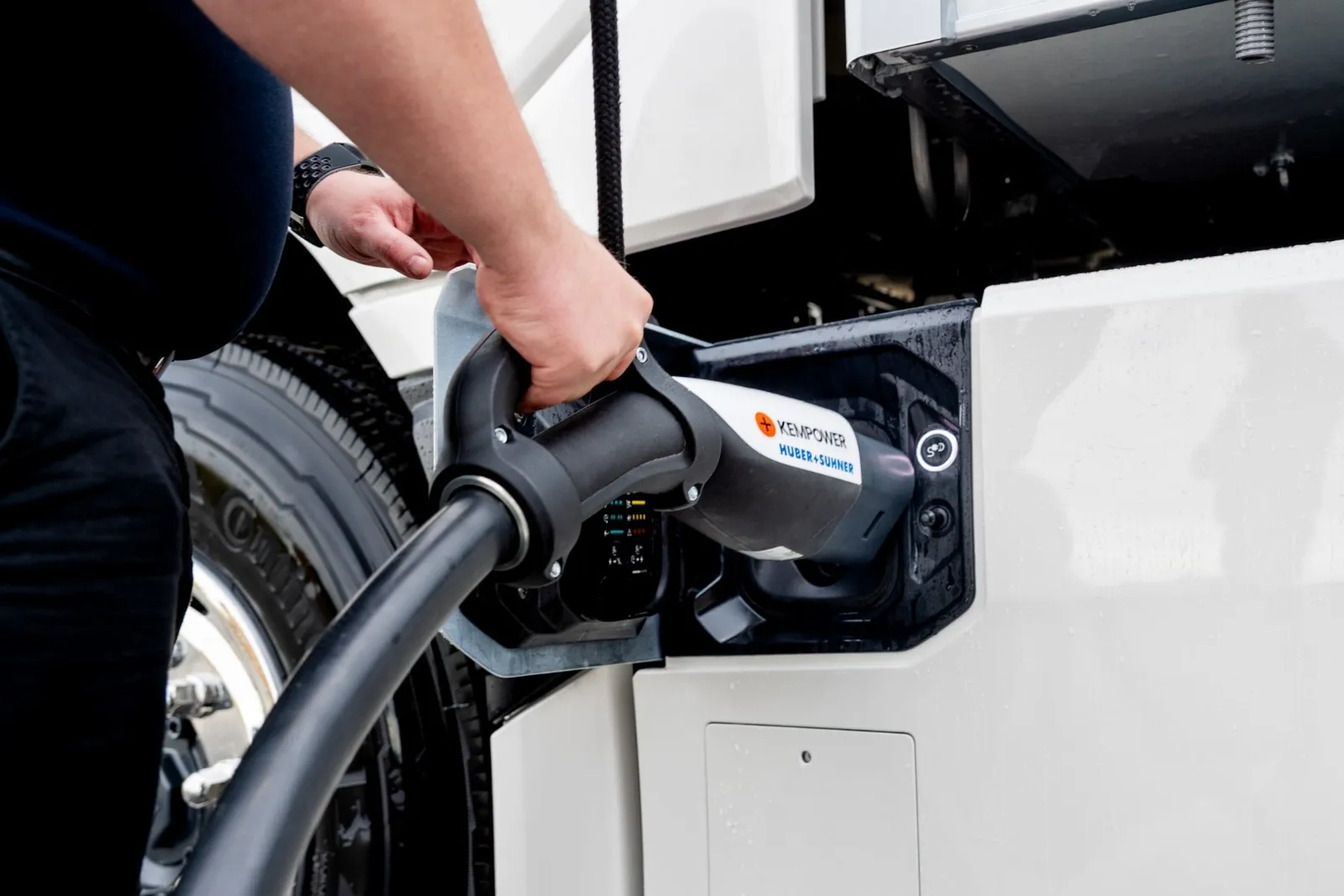
After awarding the five contracts, the federal government begins the implementation phase of its planned electric truck fast-charging network. 836 charging stations are set to be installed at 124 unattended rest areas in Germany, of which 447 will be equipped with MCS. The selected companies are now starting site-specific planning. A second tender for locations at attended rest areas is in preparation.
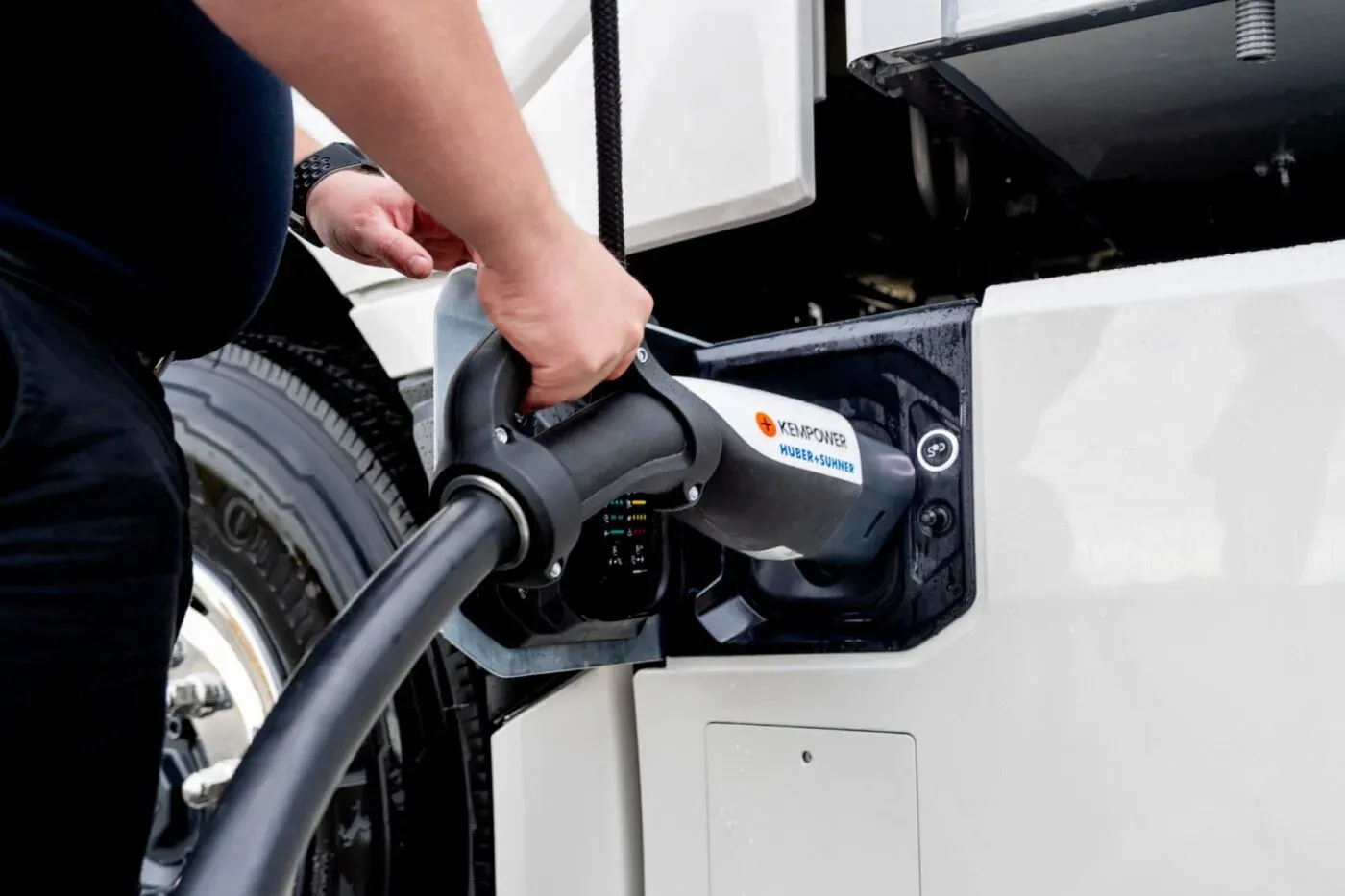
Image: Kempower
Federal Transport Minister Steffen Bilger announced the start of the implementation phase at the IAA Transportation in Hannover, together with VDA President Hildegard Müller and Dirk Engelhardt, spokesperson for the Federal Association of Freight Transport, Logistics, and Waste Management (BGL). The federal government will provide around one billion euros for the entire truck fast-charging network.
This is not a traditional subsidy project. As reported last summer, it is instead an electric truck charging network planned by the Federal Ministry of Transport (BMV) in collaboration with the Autobahn GmbH des Bundes and the National Charging Infrastructure Control Center under NOW GmbH. The construction and operation of this network will be contracted to private companies. In the long term, the network is expected to cover around 350 locations on federal-owned land along highways, with approximately 4,200 charging points. Of these, around 1,800 are planned to be equipped with the Megawatt Charging System (MCS), and around 2,400 with CCS.
The initiative begins with the aforementioned 124 unmanaged rest areas for which the Autobahn GmbH awarded contracts at the end of June. They are distributed across five lots: eliso Voltix Truck Charging will manage 25 locations, Autostrom.plus 24, and Electric Mobility Infrastructure Deutschland, part of Engie Vianeo, will manage 26. The consortium STRA-loaded will handle 25 rest areas, while the consortium E.ON Drive & mblty will manage 24. Following the initial conceptual, planning, and bidding phase, the companies are now beginning site-specific planning and further steps toward establishing the charging infrastructure.
447 MCS Charging Stations for Intermediate Charging
"A total of 836 new charging points are set to be installed at 124 unmanaged rest areas, including 447 for megawatt charging," said Dirk Brandenburger, head of technology at the federal Autobahn GmbH. In addition, there will be 157 CCS charging points with 400 kW, also for mid-trip charging, as well as 232 CCS charging points with 100 kW for longer stays and overnight charging. This charging infrastructure is designed to meet various needs in road freight transport.
To accelerate the technical implementation, Autobahn GmbH began applying for the necessary grid connections in 2024, according to its technology director Dirk Brandenburger. However, the Ministry of Transport does not specify when the first charging parks will become operational in its latest announcement.
Individual operators became more specific about this back in the summer. E.ON Drive and the fuel stop brand mblty plan to install 195 charging points at their 24 locations, of which 101 will have MCS technology. The opening of the first location is scheduled for 2027. Autostrom.plus, on the other hand, has announced 148 charging points for its 24 service stations, with implementation planned between 2026 and 2030.
Industry pushes for faster progress
The VDA and BGL welcome the start of implementation but also urge for rapid expansion. VDA President Müller describes the current lack of public charging facilities as a barrier to the widespread adoption of electric trucks. The slow progress has resulted in manufacturers facing penalty fees, even though they have already developed and brought environmentally friendly solutions to market. It is therefore crucial that charging infrastructure be made available quickly.
Engelhardt, spokesperson for the BGL board, also calls for swift action. Charging stations, high-capacity grid connections, and the actual needs of the logistics industry must be considered together. The charging stations currently planned represent an important start. In addition, the association demands, among other things, continued support for corporate charging infrastructure, practical solutions for compensating for excess weight, and a reliable funding basis.
Second tender in preparation
The BMV is currently preparing a tender for charging stations at the managed service areas. The ministry estimates there are around 225 such locations. During the bidding process in summer, the figure was 220. Together with the 124 unmanaged service areas, this is intended to create a planned network of around 350 sites. The ministry has not yet provided a timeline for the second bidding round.
The managed service areas were excluded from the first bidding round. This was due to a legal dispute that has since been resolved between Fastned and the Autobahn GmbH, which had delayed the development of fast-charging infrastructure for cars and trucks at highway service areas for years.