
General Motors with unexpected success. A side project, LMR cells, will power future models of the brand
To date, General Motors has focused on using high-performance Li-NCM cells supplied by external partners or collaborating on their production. A pilot research project involving other chemistries ended in unexpected success. GM has just announced that it will be the first company in the world to produce LMR cells in the United States, all in partnership with LG Energy Solution. LMR cells offer many advantages over both Li-NCM and LFP cells.
Commercialization of New Types of Lithium Cells at General Motors
All of the battery types mentioned are Li-ion batteries, differing primarily in the cathodes used. LMR features a high manganese content, resulting in a higher energy density compared to LFP at similar production costs. Manganese has long been of interest to researchers and industry manufacturers, as it allows voltages to reach around 5 V; however, its main issue was instability when a large number of lithium ions were incorporated into it. The internal structures were reinforced with cobalt, which in turn increased production costs — thus creating a cycle that led to values similar to Li-NCM but with lower energy densities.
There must have been some breakthrough in production, as in 2025 GM and Ford independently began boasting about significant investments in LMR cells. Now, through Ultium Cells, a joint venture between GM and LG En Sol, commercial production of prismatic cells using this chemistry has been announced. This likely means complete independence from cobalt suppliers, a high degree of independence from nickel suppliers, and, perhaps most importantly, breaking free from the China-controlled circle of companies dependent on LFP.
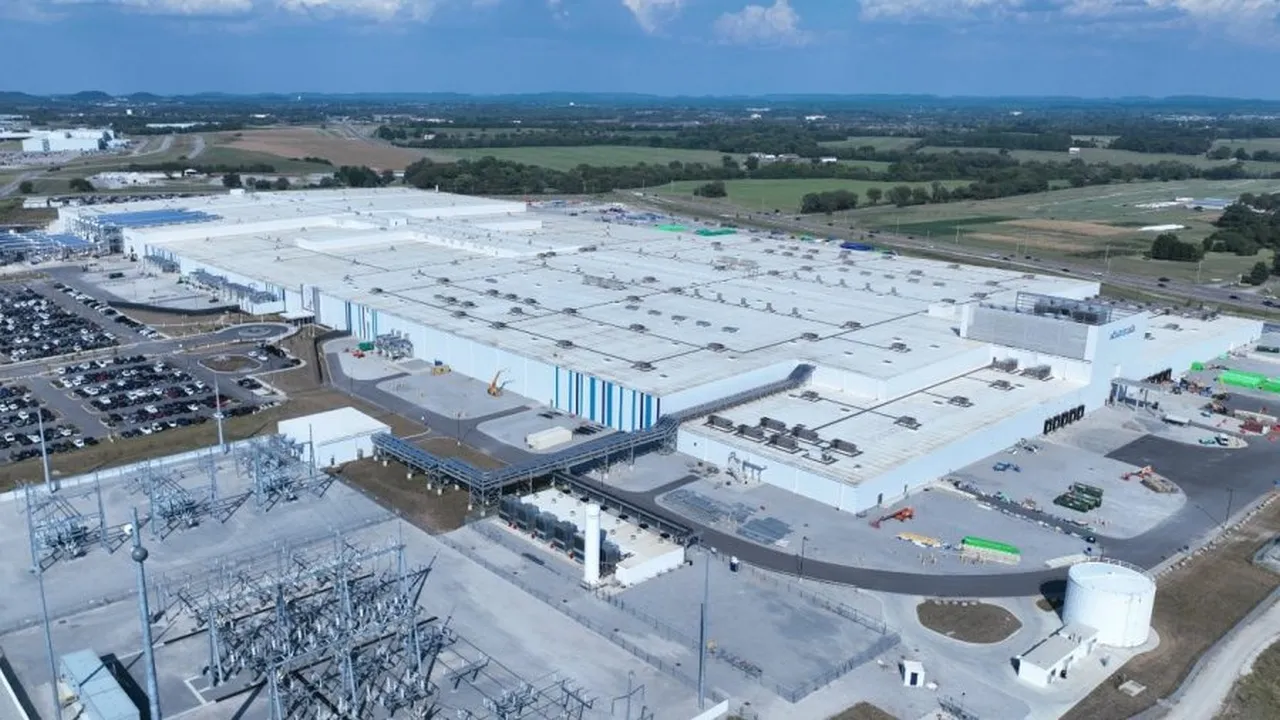
The new LMR cells are set to be manufactured in Tennessee (United States). Their energy density is 33 percent higher than that of competing LFP cells at a similar price, so they will be used in models where performance-to-cost ratio is crucial. Li-NCM cells will remain available in vehicles where maximum range is the top priority. Unlike Volkswagen, which opted for prismatic cells in a standardized format, Ultium Cells aims to use different chemistries and sizes — as well as rigid casings. The expansion and modernization of the plant in Spring Hill (USA) is expected to be completed by 2028.
The plant in Spring Hill, which will begin mass-producing LMR cells starting in 2028 (c) General Motors
Article Rating
Reader Ratings
[Total: 2 votes Average: 5]
Don’t miss new content — CLICK and FOLLOW Elektrowoz.pl on Google News. You might also be interested in the following ads:
