
Geely is developing a 1000 V architecture. Ford will adopt the platform from the Chinese company for a vehicle produced in Spain.
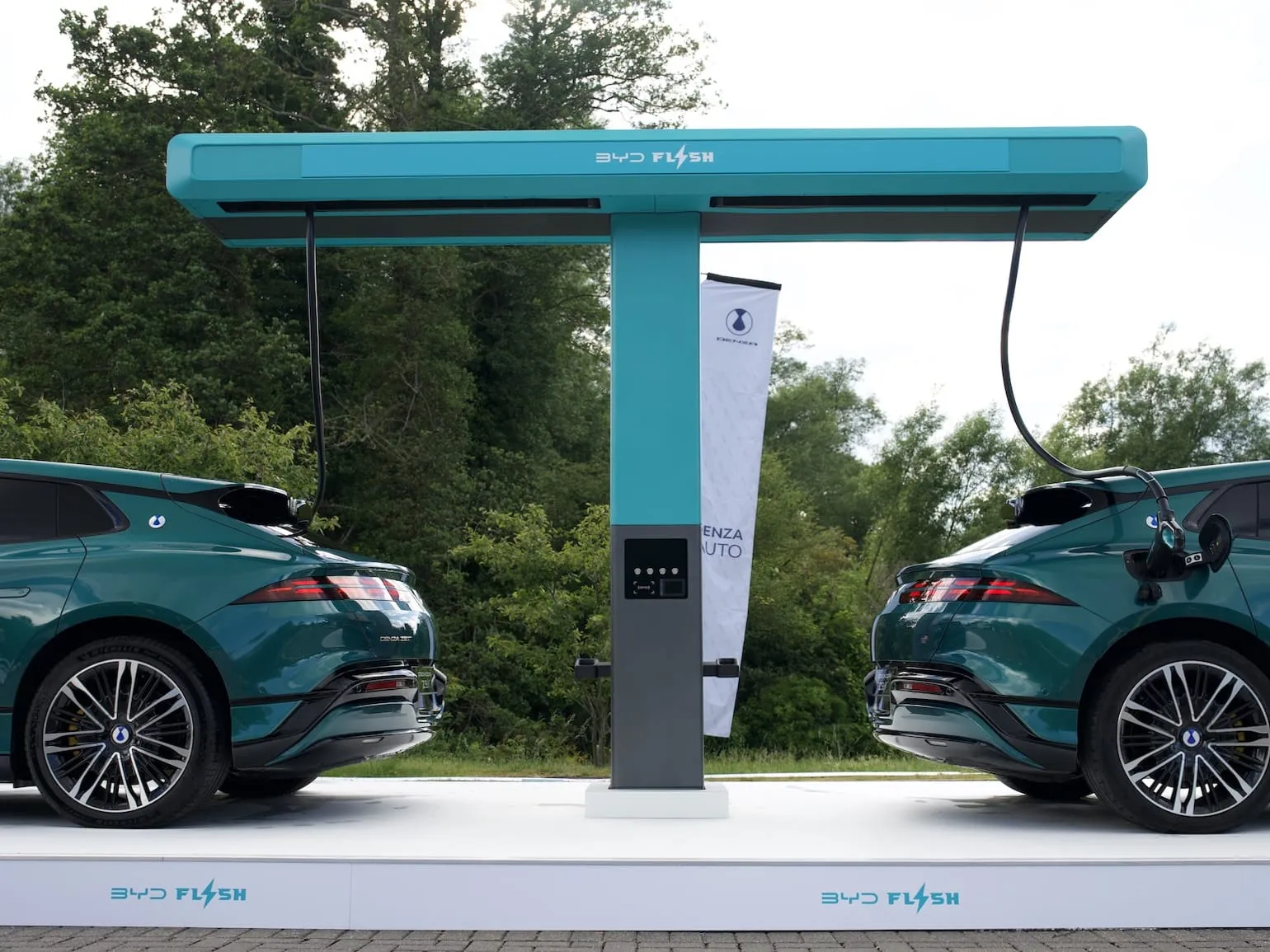
Geely has confirmed work on a 1000 V architecture that aims to reduce charging time from 10% to 80% to under 5.5 minutes. Meanwhile, the company is expanding its partnership with Ford, which will build its own model in Valencia using Geely’s GEA platform, with production set to begin in 2028.
Table of Contents
Show
Hide
These are two separate moves, but together they reflect the same trend. Geely wants to sell not only cars but also ready-made technology in Europe.
1000 V from Geely. This time it’s about more than just a fancy slide
Geely is officially talking today about the widespread adoption of 800 V systems in its vehicles. It’s not just about the battery itself, but the entire set of components: the battery, engine, power electronics, onboard charger, wiring, and other accessories.
This is already standard in the fast-charging segment, but Chinese manufacturers are going further. Geely has confirmed it is developing a 1000 V architecture and motors that operate at even higher voltages. The goal is simple: break through the 5.5-minute barrier for charging from 10% to 80% and bring electric vehicle charging closer to what drivers are used to with gasoline cars. It sounds ambitious. And very marketing-driven, until we see a production car.
In the background is of course BYD and its own narrative around flash charging. Geely has previously tried to show it can be just as fast. There were reports of the Lynk & Co 10 sedan being able to charge from 10% to 97% in 8 minutes and 42 seconds, and from 10% to 80% in 5 minutes and 32 seconds.
The problem is that this car has been described as having a 900 V architecture, though the numbers suggest otherwise. A battery with a capacity of 95 kWh has a nominal voltage of 772.8 V, so in practice it’s a standard 800 V system. It’s the classic Chinese headline war: 900 V in presentations, 772.8 V in specifications.
The chargers already exist; the cars are just catching up to them.
The most interesting part of this entire story is that Geely is building infrastructure ahead of its own cars. As early as March 2026, the company boasted of a network of over 2,100 Zeekr chargers with single cables and a peak power of up to 1,500 kW.
For now, this is more of a reserve for the future than something that Geely’s fleet can actually utilize. The aforementioned Lynk & Co 10 achieved a charging power of 1,100 kW during testing at a Zeekr station. This is a very impressive figure on paper. Meanwhile, at a BYD station, the same model only reached 430 kW.
This shows two things. First, records depend not only on the car but also on the specific charger, its configuration, and the testing conditions. Second, a 1000 V architecture makes sense precisely when a manufacturer wants to actually use chargers like 1.5 MW, rather than just setting them up for photos.
It’s also necessary to keep a cool head. The peak charging power doesn’t tell the whole story. Drivers are interested in the charging curve, stability, and how many minutes it takes to reach 10% to 80%, not whether the car briefly reached one megawatt. The Chinese are excellent at setting short-term records today. Europe still focuses mainly on repeatability and costs.
Ford is using a platform from Geely. And this isn’t some minor affair anymore.
The second topic is perhaps even more important for Europe. Ford and Geely are expanding their cooperation in Spain, with the American brand planning to use the GEA platform, or Global Intelligent Electric Architecture, for its own new model.
We are referring to Ford’s factory in Valencia, which has for years been operating far below its capacity. Under the agreement reached in July, Geely will begin building vehicles there starting in 2028. The first model to be produced will be the electric Geely EX2, followed by additional models.
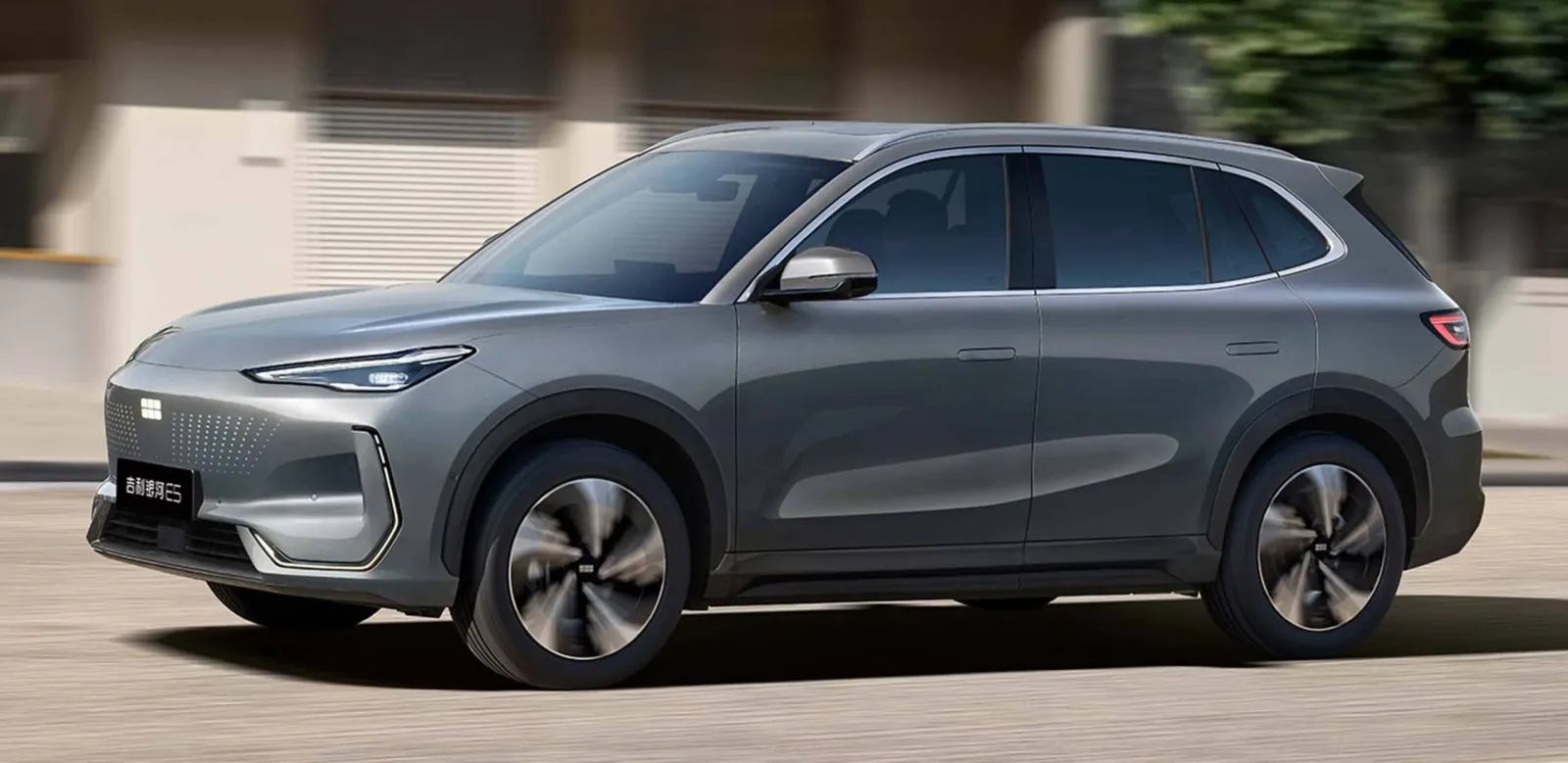
Meanwhile, Ford is developing its own vehicle based on the same technical platform. According to announcements, it will be a compact crossover with multi-energy powertrains, meaning it will be available at least as a hybrid and an electric version. This fits well with the capabilities of the GEA platform, which is already used in models like the Geely EX5 and the hybrid Starray.
Ford promises a styling approach described as “rally-bred.” Put simply, the car is meant to have a more off-road look and a stronger Ford identity so it won’t be confused with Geely after the brand swap. This makes sense, as Europe is already quite sensitive to badge engineering.
According to earlier announcements, the joint venture is intended to produce three Ford-style multi-energy models. No details are available yet, but the direction is clear. Ford is not only opening a factory for its Chinese partner but also adopting their existing vehicle architecture.
What Geely Gains in Europe and What Ford Loses
For Geely, this is a smart move. Instead of entering Europe solely through imports, the company adds local production, partnerships with Western brands, and its own technologies that can be licensed or developed jointly. It’s somewhat similar to the model known in electronics—first components, then a platform, and finally a own brand.
For Ford, the situation is more complicated. On one hand, it gains a faster route to new electric and hybrid vehicles without having to wait for the full development of its own platform from scratch. On the other hand, it admits outright that Chinese partners are now strong in areas where European and American conglomerates considered themselves the leaders just a few years ago.
This is probably the most interesting aspect of this comparison. Geely is developing 1,000 V technology, deploying 1,500 kW chargers, and at the same time selling its own technical platform to Europe. In other words, one company is fighting on two fronts: competing with BYD in technology while entering the EU through doors opened by Ford itself.
For Polish drivers, this doesn’t yet mean they’ll see 1.5 MW charging stations for cars at gas stations by 2027 or 2028. But it does mean something else: Chinese platforms and standards will increasingly be hidden behind well-known European brands.
In two years, the question that might be far more interesting than the logo on the hood could be who is actually behind the car. What do you think? Is Ford doing well by taking Geely’s platform, or is it already a step back in favor of the Chinese?