
Geely is preparing a 2,200 kW charge that promises to restore range in just four minutes

While we are still recovering from the staggering figures in ultra-fast charging offered by companies like BYD and Xpeng, Geely is preparing another leap forward in fast-charging technology. The Chinese manufacturer has announced that on September 23 it will unveil its new AI-powered intelligent charging technology, a solution designed to address one of the main drawbacks of very high-power charging: its impact on battery lifespan.
The company has chosen the Geely Global Omni Safety Center for this presentation and paired the announcement with a very direct message: “4-Minute Smart Charging, Worry-Free Journeys,” which can be translated as “intelligent charging in four minutes, worry-free trips.” The goal is to compete directly in the field of ultra-fast charging, where BYD is also raising the bar with its Flash Charging technology.
The figure that stands out most in Geely’s preview is the maximum power of 2.2 MW, a level that far exceeds the 1,500 kW announced by BYD for its Flash Charging stations. That said, several questions remain unanswered, especially how long an electric vehicle can maintain such high power and how much energy it can actually recover during those four minutes.

And this is where artificial intelligence comes into play. Geely claims its new technology doesn’t merely increase the available power but also employs a battery management system capable of adjusting the charging strategy to each vehicle’s specific conditions. The system can take into account factors such as battery temperature, charge level, and usage conditions to dynamically modify power output and thermal management in real time.
The idea addresses a problem that has been known for years. Very high-power charging generates more heat and can accelerate certain battery degradation processes if not properly controlled. Geely aims to use artificial intelligence algorithms to anticipate such situations and adjust charging before temperatures rise to levels that force a drastic reduction in power.
According to information provided by the company, the system will combine an AI-driven battery management system with an 800-volt electrical architecture and a charging capacity of up to 6C. In other words, Geely isn’t trying to solve the problem merely by increasing the charger’s power, but rather by coordinating the car, battery, and charging system to enable more controlled use of that power.
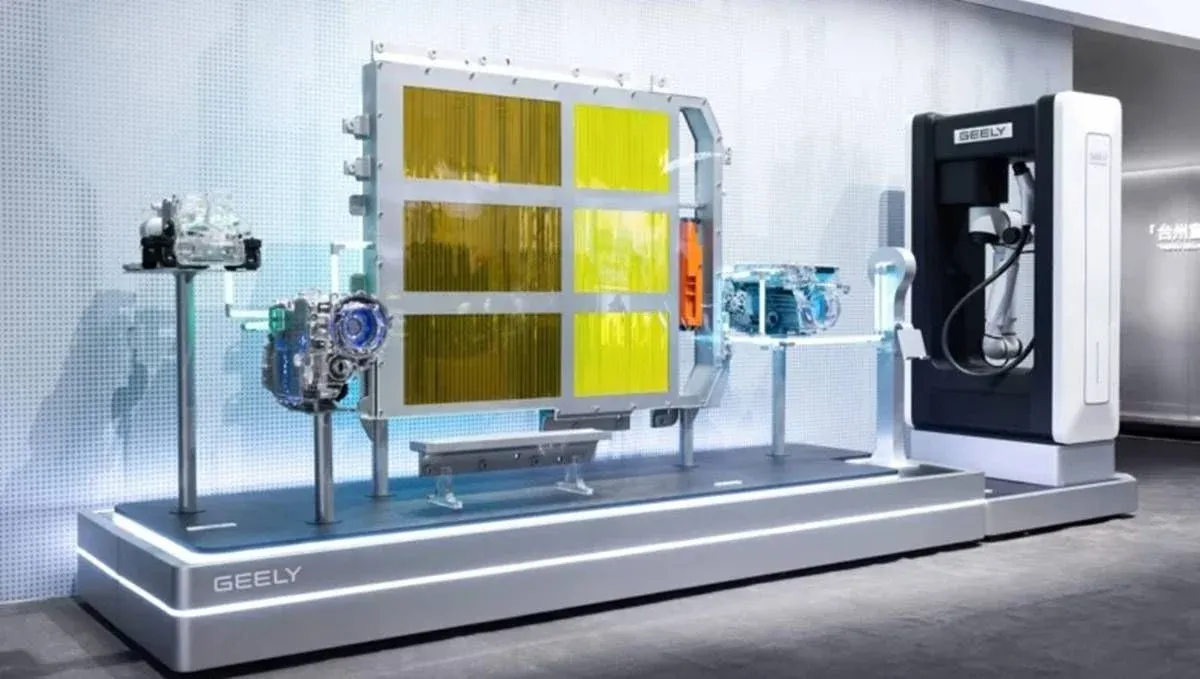
The brand mentions a customized strategy for each vehicle and each charge. The system would analyze the battery conditions and previous usage to determine how to act at any given moment, rather than using a single identical charging schedule for all cases. The goal is to achieve extremely fast charging without experiencing the same level of degradation typically associated with very high-power charges.
Geely has also cited a figure of 3,500 charge and discharge cycles. However, this figure should be interpreted with caution: cycle life depends on specific usage conditions, the depth of charge and discharge, and other factors. Additionally, available references tie these 3,500 cycles to Geely’s Short Blade battery, so the definitive specifications for this new technology will need to be awaited until it is officially introduced.
In fact, Geely already uses Short Blade batteries in some of its models and has previously highlighted their ability to withstand up to 3,500 cycles, along with high resistance to fast charging. The company has also developed thermal control systems capable of adjusting charge and discharge power based on battery conditions.
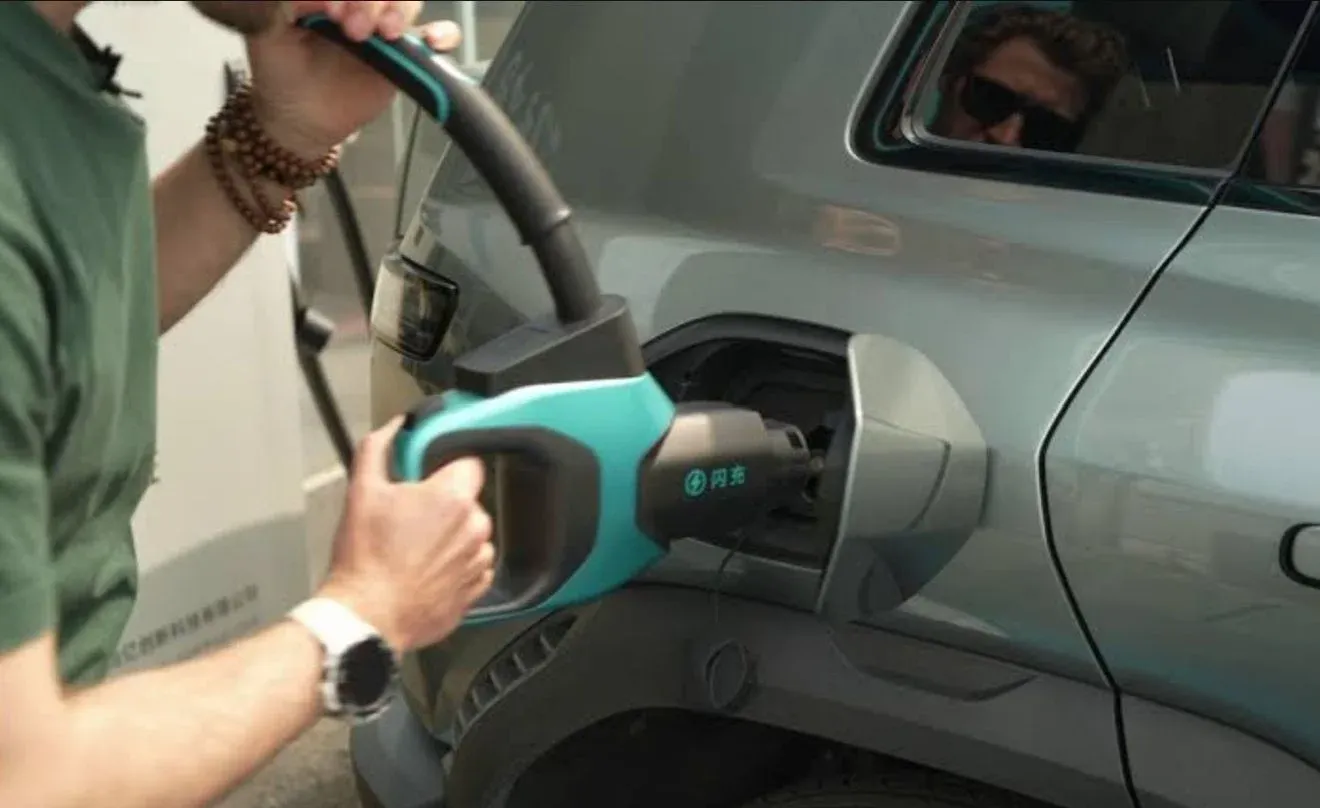
Thus, the announcement on September 23 may be more significant due to what lies behind those 2,200 kW than the power figure itself. A charging station capable of delivering such a large amount of energy requires that the vehicle can absorb it, and most importantly, that the battery can handle it without its temperature rising excessively. The real advancement would be in maintaining a significant portion of that power for long enough to cover hundreds of kilometers in just a few minutes.
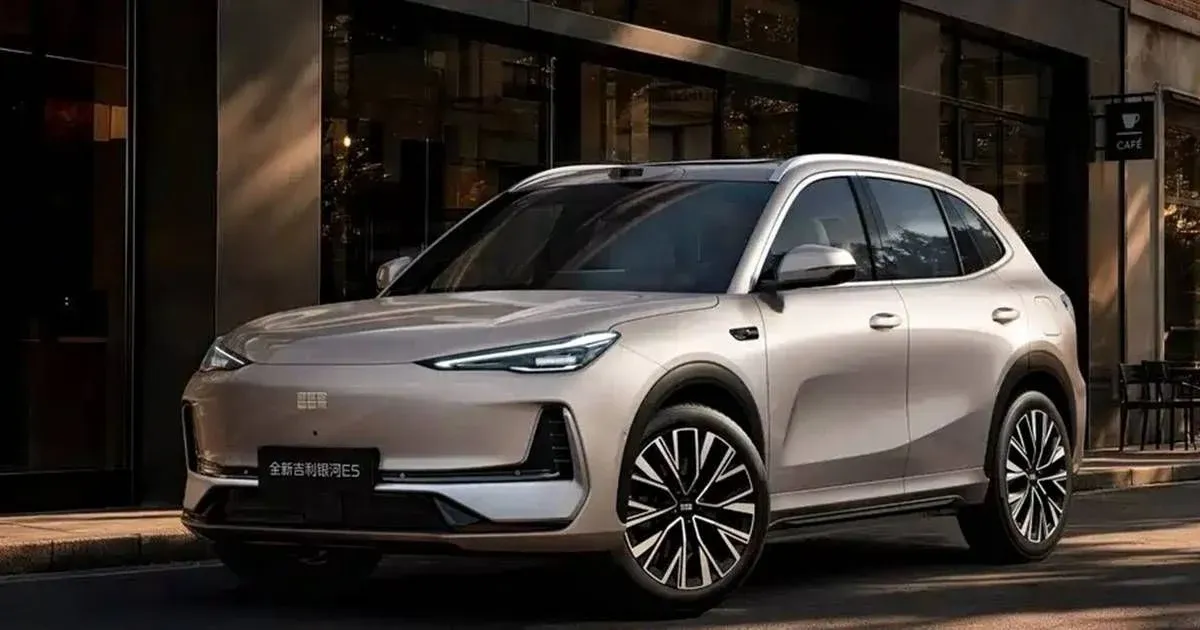
The new technology will debut alongside an upgrade to the Geely Galaxy E5, which we discussed this morning and will be the first model to feature an intelligent charging system. The updated version will also be unveiled on September 23, allowing us to see how well Geely’s claimed specifications can be translated into a production car.
The race to reduce charging times is thus entering a new phase. Until now, the approach seemed straightforward: increase voltage, boost power, and use batteries capable of storing more energy in less time. Geely now aims to add a layer of management through artificial intelligence that determines how and how much to charge at any given moment, based on the battery’s actual condition.
This could be especially important as charging powers approach and exceed one megawatt. Under such conditions, small changes in cell temperature can have a much greater impact on the power the battery can handle. If Geely manages to control this process with sufficient precision, the advertised four minutes might turn out to be more than just a marketing figure.
For now, the company has revealed some details but not all the figures. The 2.2 MW capacity, the four-minute charging time, and the use of artificial intelligence are details announced prior to the official presentation. It remains unknown exactly how much energy can be recovered in those four minutes, which battery will be used, under what conditions, and what average power the system will be able to maintain.
It will be at this point that the true scope of this technology can be evaluated. One thing is to temporarily achieve 2.2 MW, but another entirely different matter is to maintain a high power level for most of the charging process. Geely now has the opportunity to prove that its new technology can combine both: extremely fast charging and minimal battery degradation.