
Geely Farizon expands partner network across Europe
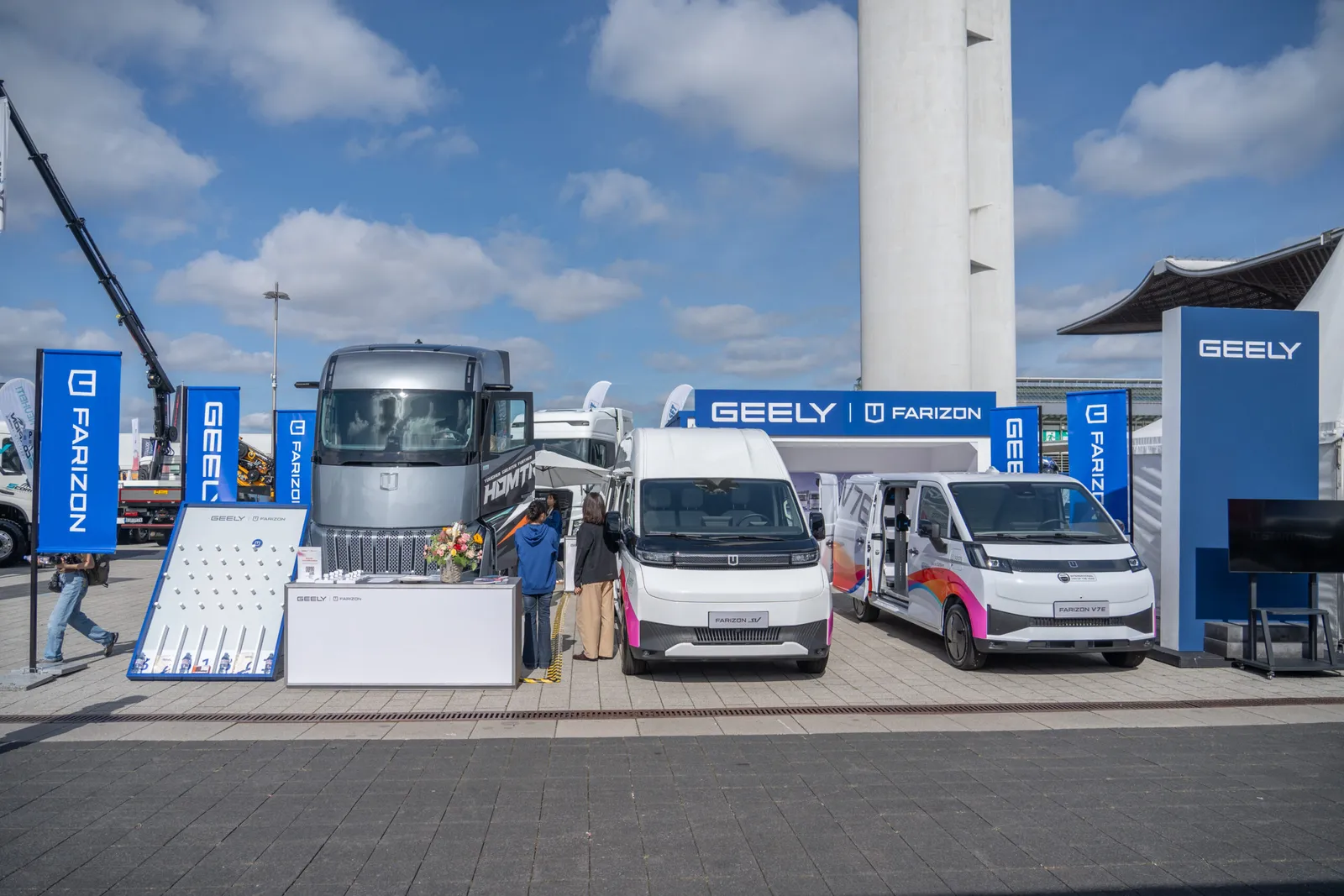
Geely's commercial vehicle brand is further expanding its structures in Europe. At the IAA Transportation in Hanover, the manufacturer presented cooperations with AMF-Bruns, Allianz Partners, BNP Paribas, CATL, Bosch, and ZF. Additionally, Farizon plans to establish its own companies in Germany and France and announces further variants of the electric transporter SV.
Farizon and its partner companies at the IAA Transportation 2026 in Hanover.
Image: Infokontor
With its partner network, Geely aims to cover all aspects of commercial vehicle operations, including technical service and spare parts supply, as well as financing, insurance, and technology and infrastructure solutions. The manufacturer’s goal is to support sales of its electric commercial vehicles with local offerings for operation and service. However, Farizon has not yet provided further details on the scope and specific services of the individual agreements.
Not all of these partnerships are entirely new. During its German launch in May, Farizon had already referenced CATL battery technology and its collaborations with Bosch and ZF. The new aspect is its consolidation and expansion into a broader European partner network, which now includes AMF-Bruns, Allianz Partners, and BNP Paribas to cover vehicle conversions, insurance, and financing services.
Farizon has been officially represented in Germany since May 2026 with its two electric transporters, the SV and V7E. The SV starts at €44,900 net in Germany and is available with 67 or 83 kWh LFP batteries from CATL. Depending on the battery and body variant, it offers a range of up to 376 kilometres (WLTP). The more compact V7E starts at €32,600 net and, with 50 or 67 kWh batteries, achieves a range of up to 328 kilometres.
At the market launch, the Geely subsidiary had already announced a German spare parts warehouse and its aim to establish nationwide service coverage. Farizon now states that the warehouse is operational and that a European engineering team was also established in 2026. The next steps include setting up a European headquarters and establishing Farizon subsidiaries in Germany and France. The company is also exploring further localisation, though no specific projects have been named yet. In addition to Germany, Farizon is already active in the UK, Serbia, Spain, and the Benelux countries.
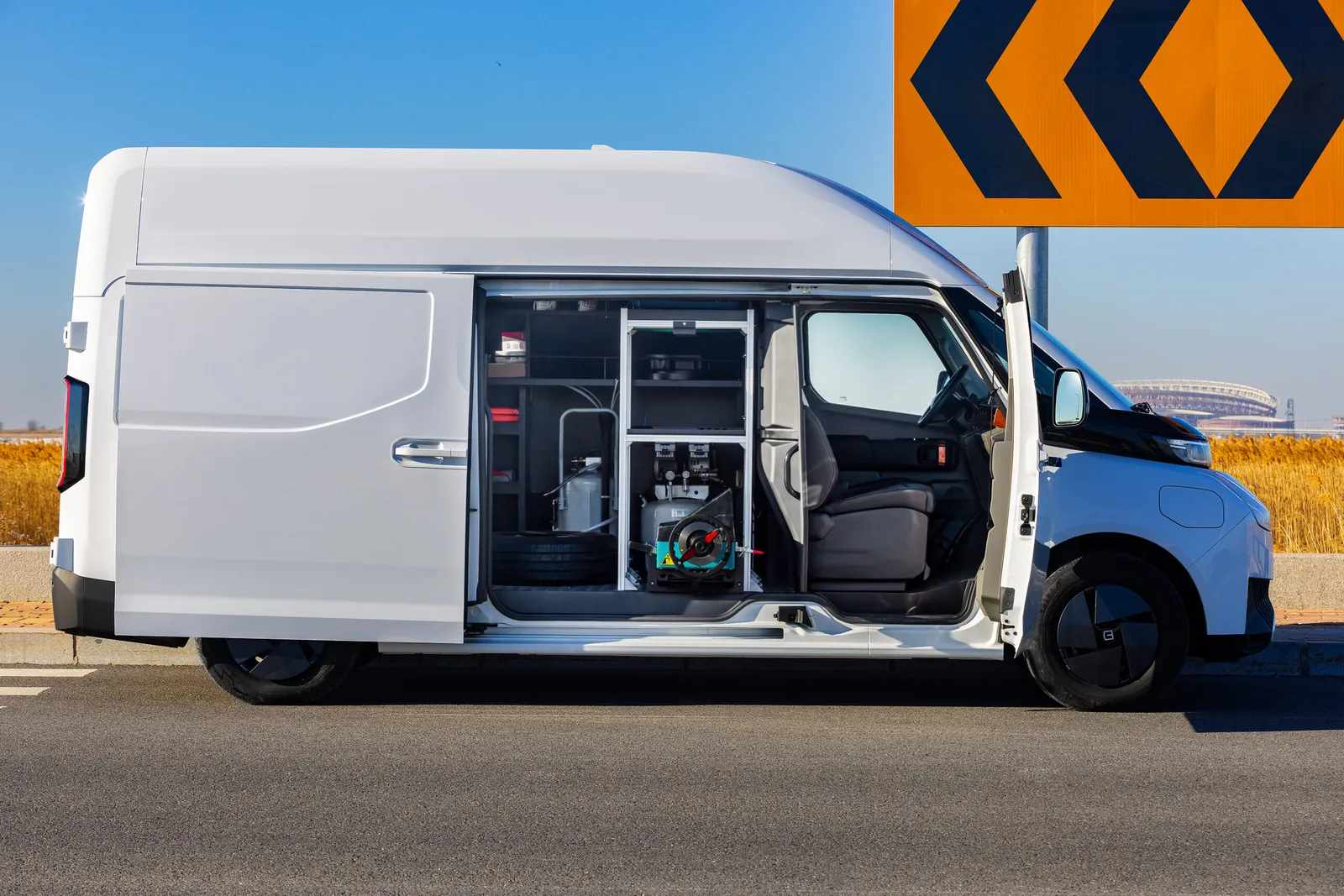
Geely’s Farizon SV to receive all-wheel drive and new batteries
In parallel with its sales and service structures, Farizon is expanding its vehicle portfolio. For the SV, the company has announced new batteries, advanced electric motors, and, for the first time, an all-wheel-drive variant. Farizon has not yet disclosed technical specifications or a launch date for the market introduction. The 4×4 drivetrain is intended to make the electric transporter more suitable for snow-rich regions, unpaved roads, and mountainous terrain.
Additional applications based on the SV are also planned in collaboration with European body manufacturers. Farizon mentions variants for passenger transport, refrigerated vehicles, and wheelchair-accessible conversions. AMF-Bruns, a company specialising in such vehicle conversions, is now part of the partner network.
Farizon is already leveraging the platform’s flexibility for further applications. The WeRide Robotaxi GXR, developed by the Chinese specialist WeRide, is also based on the SV. WeRide has ordered 2,000 units of this revised version, with production set to begin in the third quarter of 2026.
Farizon continues to position the V7E primarily for urban delivery traffic and last-mile logistics. At the IAA Transportation, the company also showcased the Homtruck for heavy long-haul transport. With this electric truck, Farizon is focusing not only on the drivetrain but also on designing the cab as a workspace, living area, and retreat for drivers.
Farizon is part of the Geely Group and aims to leverage its development, manufacturing, and supply chain expertise under the “One Geely” strategy. For the European market, the focus is now on building not only the vehicles but also the structures essential for fleet customers, such as service, financing, spare parts supply, and local operations.