
Geely aims for a 4-minute charging time. Sunwoda promises 10-97% charge in 9 minutes.
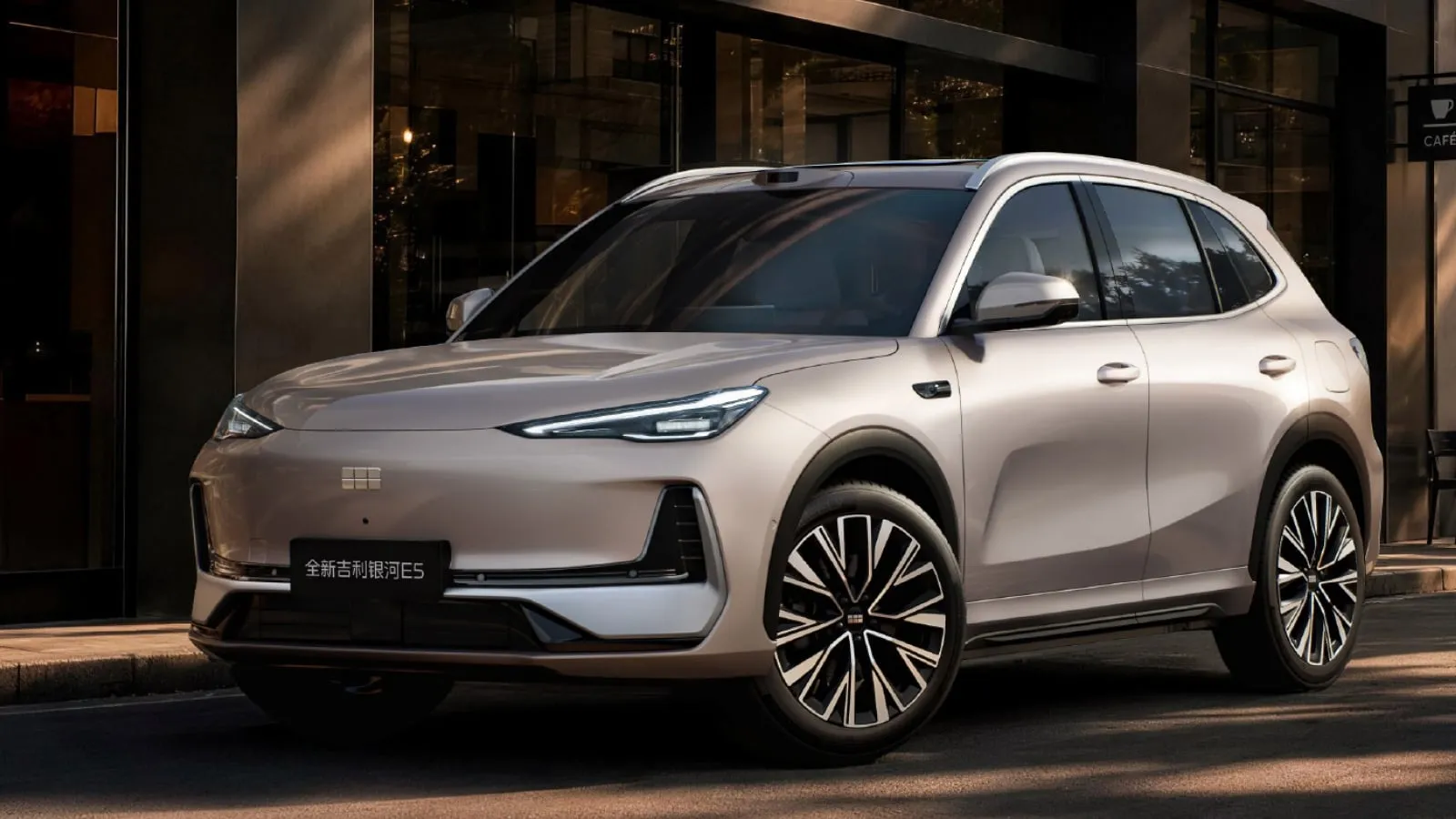
Geely will showcase a charging system with a capacity of up to 2.2 MW on September 23, 2026, which will debut alongside the refreshed Galaxy E5. A few days earlier, Sunwoda, a battery cell manufacturer, claimed it can charge LFP batteries from 10% to 97% in 9 minutes, even at -20 degrees Celsius.
Table of Contents
Show
Hide
The Chinese race toward megawatts is accelerating, but there are still several very costly steps between demonstrating the technology and achieving such charging speeds on the road.
Geely Galaxy E5 shifts to 800 V and rear-wheel drive
The refreshed Geely Galaxy E5 will feature an 800 V architecture, 6C charging, and a new AI-based battery management system. The manufacturer mentions a personalized strategy for each vehicle, depending on the battery’s condition, temperature, and current charge level.
The goal is simple: to absorb as much energy as possible without overheating the cells and reducing their lifespan. However, the word “AI” alone does not charge the battery any faster. The final outcome still depends on the chemistry of the cells, cooling systems, voltage, temperature, and the charger that can deliver the required power.
Geely claims a peak system power of 2.2 MW and talks about “four-minute fast charging.” The company has not yet specified what range of SoC this figure applies to or how many kilometers of range can be restored in four minutes. Without these details, it’s difficult to compare this claim with the results achieved by BYD Flash Charge, Zeekra, or brands using 800 V systems.
The Galaxy E5 will be the first car to feature this new technology. Compared to the current version, much more than just the charging port and electronics will change.
Specifications
Updated Geely Galaxy E5
Architecture
800 V
Powertrain
rear
Engine power
245 kW
Battery
LFP Aegis Short Blade
Battery capacity
61.52 or 70.01 kWh
CLTC range
550 or 635 km
Length
4,636 mm
Wheelbase
2,750 mm
Pilot assistance system
Qianli Haohan H5 with lidar
The engine has a maximum power of 245 kW, which is 85 kW more than the current Galaxy E5 with front-wheel drive and a 400 V system. The vehicle will be 21 mm longer and 19 mm wider, but the wheelbase remains unchanged.
Geely will add an active grille, a lidar on the roof, cameras on the front bumpers, and at the rear of the vehicle. The sliding handles will disappear, replaced by traditional mechanical grips, which could be good news for users in winter or after minor accidents.
The current version of the Galaxy E5 will remain in production as a cheaper option. This is a more sensible move than suddenly discontinuing the 400 V version, especially since 14,132 units were sold in China in August 2026. From January to August, 75,965 buyers acquired it there.
Sunwoda focuses on the LFP 15C battery
Sunwoda did not showcase the car itself, only the battery and charging technology. Its new LFP cells labeled 15C are designed to charge the battery from 10% to 70% in five minutes and from 10% to 97% in nine minutes.
The company’s materials also mention a range of around 100 km per minute of charging. This figure should be treated with caution. It is unclear for which vehicle, energy consumption level, and testing cycle this value was provided. The CLTC rated range can appear impressive, but in real European driving conditions, the actual result will be lower.
15C indicates a very high capacity of the cell to accept current. For batteries with a capacity of 70 kWh, this theoretical value would correspond to a power output of over 1 MW. In practice, the nominal power, the power delivered to the battery, and the instantaneous power of individual cells do not have to be identical.
Sunwoda claims that the battery maintains these parameters at room temperature, and at -20 degrees Celsius it should be able to absorb enough energy for the claimed 700 km range in 15 minutes. It is the winter performance claim that is most interesting. Fast charging a cold battery is one of the toughest challenges for cell chemistry and cooling systems.
The company also promises a warranty period of 10 years or 300,000 km, with no limit on the number of ultra-fast charging sessions. This is a strong guarantee, but so far there are no public data on the long-term performance of such cells in production vehicles.
Megawatt chargers still need to be installed along roads
Geely and Sunwoda represent two sides of the same issue. The first company is developing vehicles capable of handling extremely high power, while the second focuses on battery cells and energy infrastructure around charging stations. Sunwoda has announced an ecosystem that combines solar power, energy storage, and high-power chargers.
Without energy storage, megawatt chargers will be difficult to install in many locations. A charging station that can serve several vehicles with megawatt-level power would require a connection that isn’t available at regular stores or gas stations. Energy storage can reduce temporary grid strain, but it increases the overall cost of the investment.
China has an advantage in scale. The country’s plan calls for over 40 million charging points and around 300,000 high-power charging points by 2030. In Europe, standard DC charging stations still typically range from 150-400 kW, with 500 kW chargers being rare.
For drivers in Poland, these records won’t change today’s waiting time at chargers, but they show that Chinese brands are no longer competing solely on battery price and theoretical range. The question is whether manufacturers will show full charging curves and production-ready chargers, or just more power records on a slide?
LovEV Newsletter
Want more content like this?
Sign up — we’ll send you a weekly summary once the newsletter starts.