
Gasoline or electric car: we do the math over 5 years and the result isn’t what many expect
Purchasing an electric car still often requires an initial outlay that is higher than that of a comparable gasoline model. However, focusing solely on the purchase price provides an incomplete picture. Energy costs, maintenance, insurance, depreciation, and especially where the car is charged can completely change the overall cost.
In 2026, the situation has also changed compared to just a few years ago. The range of electric cars is much broader now, with models available around 25,000 euros, and rising fuel prices have once again highlighted one of its main advantages: operating costs can be significantly lower than those of a gasoline car. The European Commission also notes that lower energy and maintenance costs are among the key economic arguments in favor of this technology.
But there is an important condition. The savings are not the same for all drivers and depend heavily on how the car is used. A user who can charge at home regularly is in a very different situation from someone who relies on fast public chargers for almost all their trips.
Charging: The First Major Difference
The difference can be enormous over time. According to Roole Data’s 2026 figures, the average monthly energy cost for European drivers is around 39 euros for electric cars compared to 119 euros for gasoline cars.
And here lies one of the key nuances. To maximize this advantage, it’s necessary to be able to charge at home, at work, or at a location with reasonable prices. Installing a home charger has an initial cost, although in Spain there are various subsidies and deductions that can reduce the bill depending on one’s situation and current regulations.
According to operator TotalEnergies, the cost of a professional home installation can range from 1,300 to 1,800 euros. This figure is interesting because it shows that the subsequent savings must also offset an initial investment, which is not the case with a gasoline car.
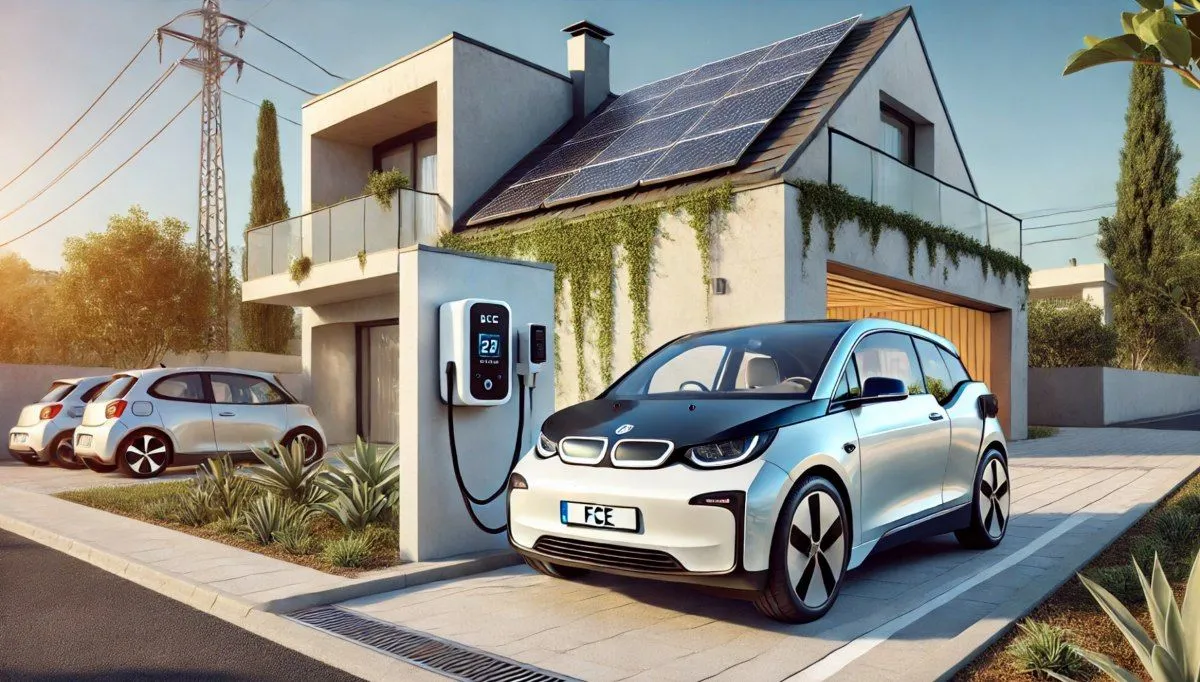
The problem arises when the car cannot be charged at home. At fast chargers on the road, prices can be several times higher than those for home charging, and in certain networks they can reach levels where the economic advantage over gasoline is significantly reduced. Home charging remains one of the most cost-effective options, while the price of public charging depends heavily on the network and the terms of the contract.
Therefore, for a driver who travels long distances and has a charger at home, the economic outcome is usually particularly favorable for electric cars. For someone living in an apartment without a charging spot and forced to use only public chargers, the answer is much less clear.
Maintenance also influences the balance

The second major area where electric cars have an advantage is maintenance. An electric motor has a much simpler mechanics system than a combustion engine, eliminating components such as the clutch, conventional transmission, timing belt, and regular oil changes along with related filters.
That doesn’t mean electric cars require no maintenance. It’s still necessary to check the tires, brakes, suspension, fluids, climate control, and other components, as well as the auxiliary battery. However, there are fewer mechanical parts that wear out, which ultimately translates to lower maintenance costs.
Roole Data’s figures are quite clear. Their analysis shows that the average annual maintenance cost for an electric car is 381 euros, compared to 535 euros for a conventional car, representing a difference of around 30%. ENGIE, on the other hand, estimates an annual cost of approximately 120 euros for an electric car and notes that inspections can be done, depending on the manufacturer, every 30,000 kilometers, whereas many gasoline cars require shorter intervals. The figures vary depending on the vehicle and maintenance program, but the trend remains the same.
Regenerative braking also works in favor of electric vehicles. By using the motor to recover energy and reduce reliance on conventional brakes, the brake pads can last much longer than in a gasoline car. This doesn’t mean they’re permanent, but under certain conditions they may need replacement far less frequently.
There is, however, a downside. Some repairs related to electronic systems, sensors, or certain high-voltage components can be expensive. Therefore, it’s incorrect to claim that any repair on an electric vehicle is cheaper. The advantage lies mainly in periodic maintenance and the fewer mechanical parts that wear out.
When everything is added up, the difference starts to become more significant. An analysis by UFC-Que Choisir on the total cost of ownership, which includes purchase price, depreciation, energy costs, insurance, and maintenance, already showed that electric cars could be more economical than gasoline cars over a longer usage period. In their study, for certain mid-size cars, the advantage emerged even when accounting for the higher initial price.
The key point is exactly this: an electric car doesn’t have to be the cheapest option on purchase day, but it can end up being so after several years.
Depreciation introduces another variable
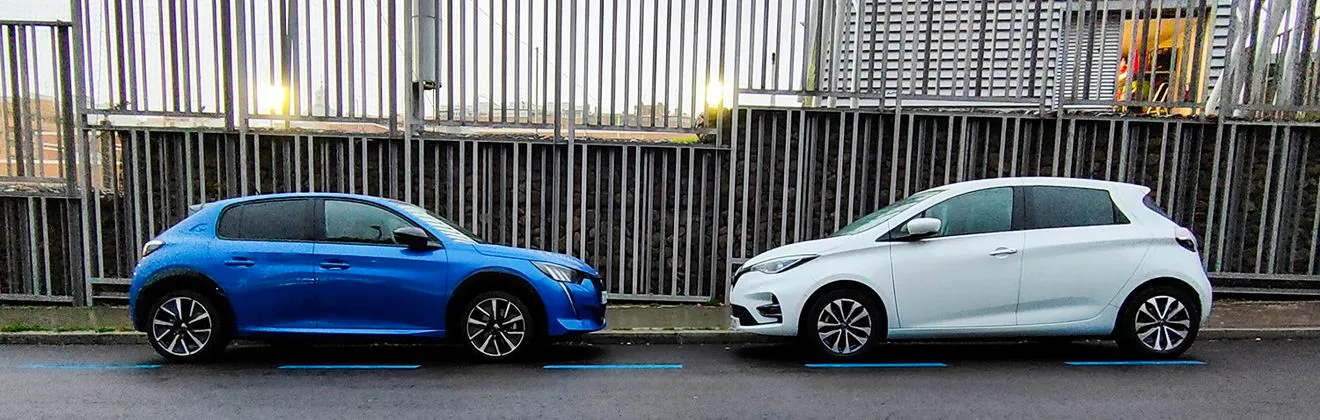
The comparison gets even more complicated here. Over the past few years, we’ve seen some electric cars experience particularly sharp depreciation, partly because manufacturers reduced prices on new models and because technology advanced rapidly.
However, the situation isn’t the same for all models. Data collected in 2026 shows huge differences among cars. For example, the Peugeot e-208 has shown significant depreciation after five years, while other models retain their value much better. The Dacia Spring, Tesla Model 3, and Volkswagen ID.3 are among the electric cars that have held up best in certain used car market analyses, though there are still important differences depending on the registration year and initial price.
Therefore, it also doesn’t seem correct to maintain the idea that all electric cars depreciate more than gasoline cars. The specific model, its range, battery condition, trends in new car prices, and demand for used cars weigh much more heavily than the technology alone.
Traffic restrictions can also work in favor of electric cars in large cities. An old gasoline car may lose its appeal as access restrictions to certain areas increase, while an electric car is exempt from most of these restrictions. It isn’t a decisive factor for all buyers, but it can still be important for long-term residual value.
And here lies a significant difference from what was the case a few years ago: the battery is no longer necessarily the biggest threat to resale value. Buyers pay attention to its condition and range, but the warranties offered by many manufacturers and the gradual improvement in durability have reduced some of the uncertainty.
Purchase prices may continue to fall
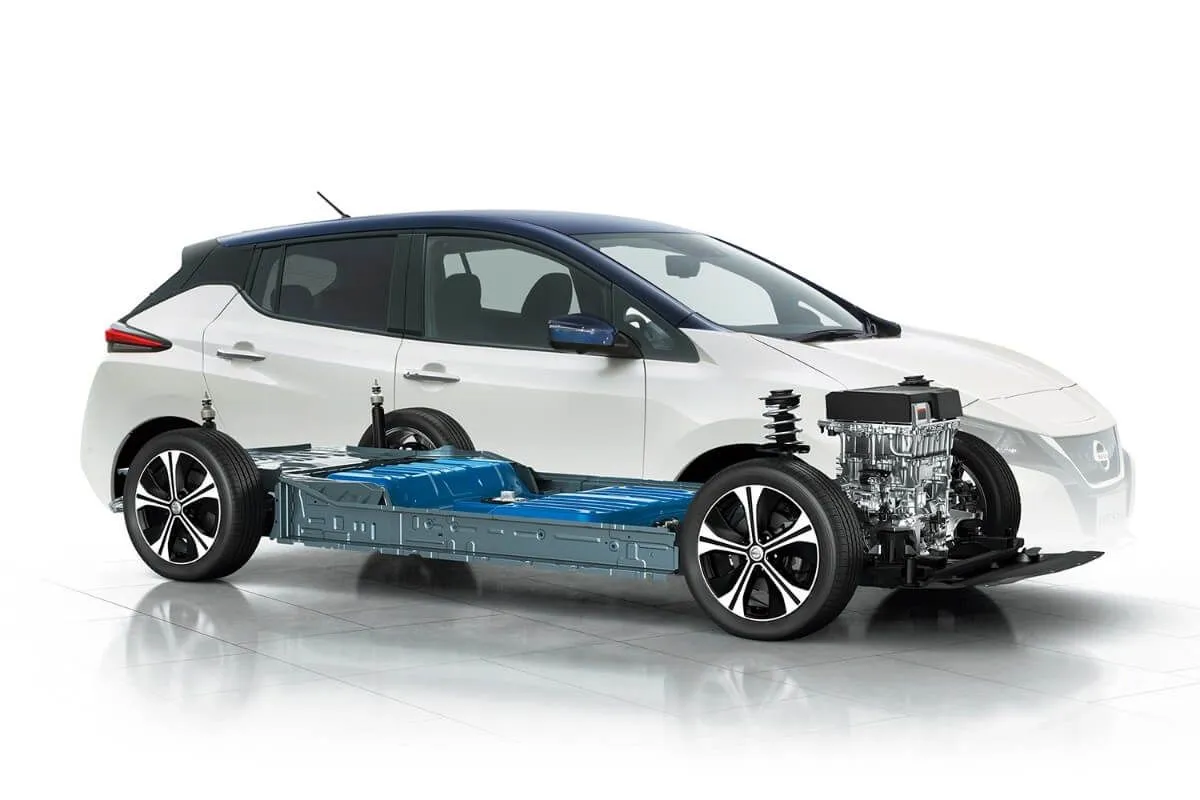
The other factor in this equation is the price of electric cars themselves. For years, the battery has been one of the main reasons these vehicles were more expensive than their gasoline equivalents. But its cost has dropped significantly.
Data collected by the European Commission’s Joint Research Centre shows a dramatic drop in battery costs since mid-last decade. Goldman Sachs maintains its forecast that the global average price could be around 80 dollars per kWh by 2026.
Part of this reduction comes from advancements in manufacturing technologies, and another part from the increasing use of chemicals like LFP, which enable cheaper battery production. China has made particularly rapid progress in this area and has managed to offer electric cars at prices that, in certain segments, already compete directly with gasoline models.
The consequence is significant for buyers. If battery costs continue to fall and manufacturers pass part of that reduction onto the final price, the economic barrier to entry could drop rapidly in the coming years.
In fact, the European Commission already notes an increasing supply of electric cars priced around 25,000 euros, while Goldman Sachs believes the decline in battery costs could gradually bring prices of electric cars and internal combustion engine models closer to each other without the need for subsidies.
This changes the overall picture. While a few years ago the higher purchase price had to be justified by subsequent savings on energy and maintenance, it will become increasingly common for that initial price difference to be much smaller.
Cost per 100 km, and after 5 years
Cost
Electric car home charging (16 kWh/100km)
Electric car public charging (16 kWh/100km)
Gasoline (7l/100km)
Diesel (6l/100km)
Cost
2.88 euros/100 km
8.00 euros/100 km
13.30 euros/100 km
10.80 euros/100 km
Annual cost
432 euros
1,200 euros
1,995 euros
1,620 euros
Cost after 5 years
2,160 euros
6,000 euros
9,975 euros
8,100 euros
Savings over gasoline after 5 years (15,000 km/year)
7,815 euros
3,975 euros
—
—
Savings over diesel after 5 years (15,000 km/year)
5,940 euros
2,100 euros
—
—
The result of the calculation over five years, or 60,000 km, shows that today, even without a garage space, we can spend less on average charging costs compared to a diesel or gasoline car. Of course, if we have a garage space and charger, along with the greater convenience of being able to stop and charge easily, we can achieve even lower costs and higher savings. In just five years, the savings will be between 6,000 and 8,000 euros. This is considering only the energy cost, not the lower maintenance expenses.
That’s why, to the question of whether an electric car is cheaper to operate than a fuel-powered one, the answer today is yes, even without a garage space.
