
FSD Supervised Teslas vs Xpeng NGP (VLA 2.0): The Same Roads in Amsterdam, Unbelievable Abilities [video]
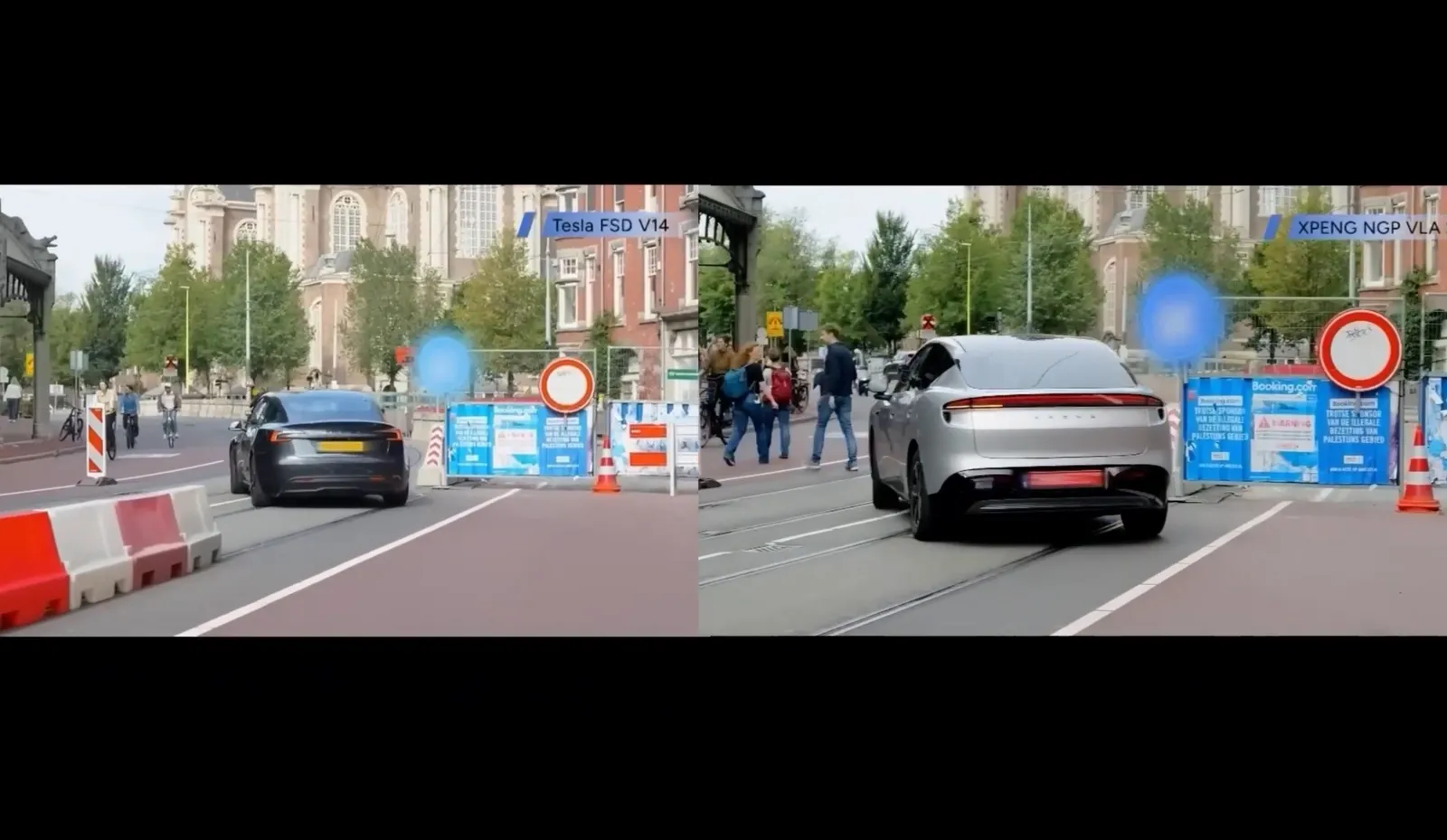
A number of influencers and automotive journalists were invited to Amsterdam, Netherlands, to experience the Navigation Guided Pilot (NGP) system in version VLA 2.0. This is Xpeng’s counterpart to Tesla’s FSD Supervised, which is already being gradually rolled out in China. The system has not been approved for use in Europe, and the guests observed it from the passenger seat of the Xpeng L03, a model that is also not yet available on the Old Continent.
NGP is the general umbrella term for the entire technology, while VLA stands for Vision-Language-Action, an AI system based on language. VLA operates according to the same principles as Tesla’s FSD, meaning it is aware of its surroundings, recognizes road signs, and does not require detailed maps—only navigation cues indicating where the destination is. According to Xpeng, VLA 2.0 has capabilities comparable to FSD Supervised, which is why it was invited to Amsterdam—though interestingly, the invitation came from China’s state news agency, Xinhua News Agency.

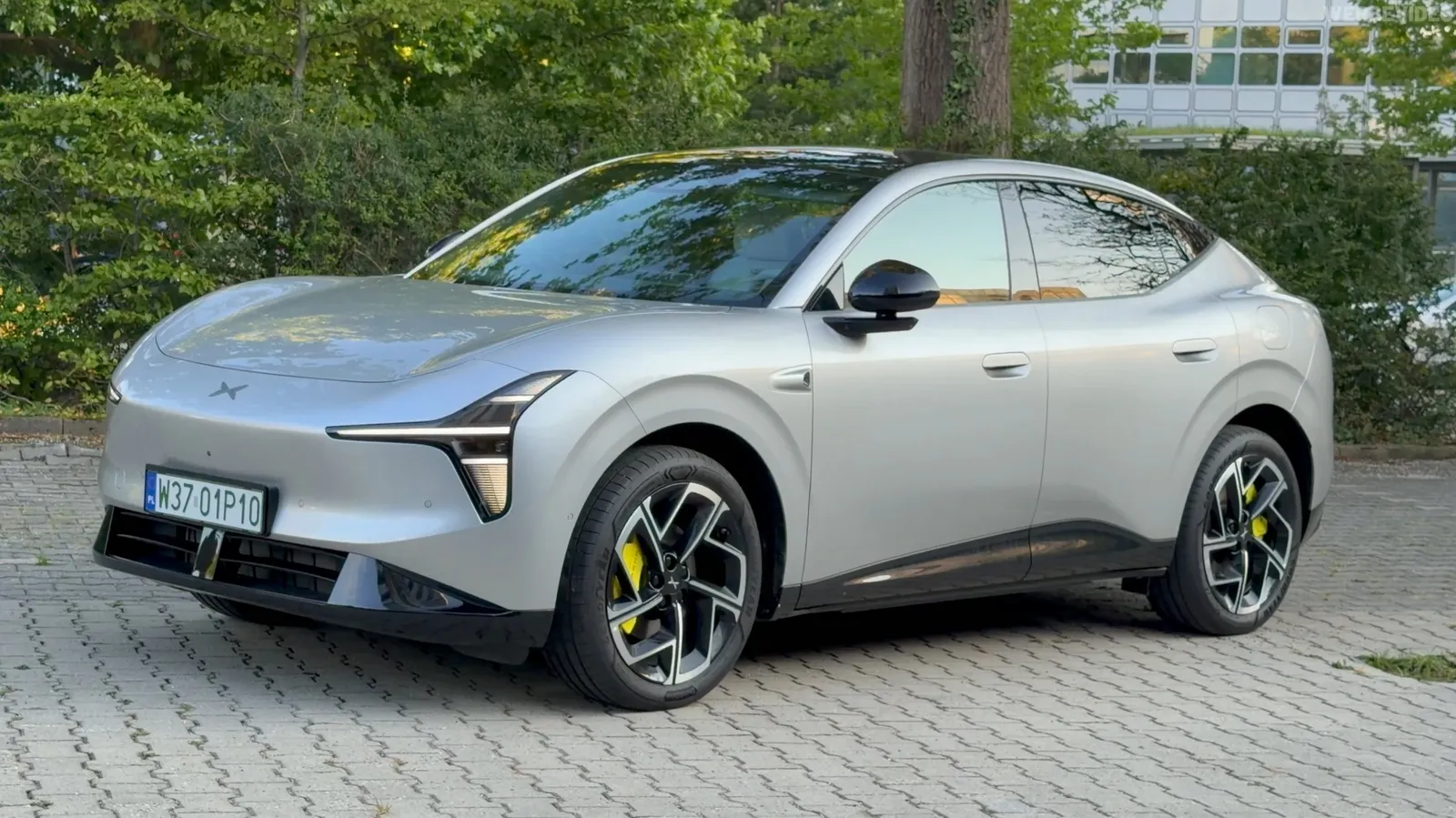
Influencers and journalists drove the Xpeng L03, which has Polish registration numbers (see first illustration below). For insurance and legal reasons, they sat in the passenger seat and thus evaluated the drives from an observer’s perspective (source). They traveled exactly the same route in a Tesla Model 3 with active FSD Supervised version 14.x as well. Essentially, everyone agrees that they are impressed by the capabilities and sophistication of VLA 2.0. The electronics would first analyze the situation before taking action. It sometimes hesitated, such as at yellow lights.
Tesla and Xpeng navigate a partially closed road (c) Efieber / X. The screenshot is from the video below, with German narration at the beginning and English commentary during the drive.
Both systems made mistakes. Tesla stopped in front of an open van and, for some reason, decided it needed to reverse to bypass it (illustration below) – it performed this maneuver on its own. Xpeng’s system required human driver intervention when an obstacle in the form of a parked car appeared on the road, blocking part of the lane with its headlights on. The supervisor also took control when the vehicle had to detour around road construction using the opposite lane.
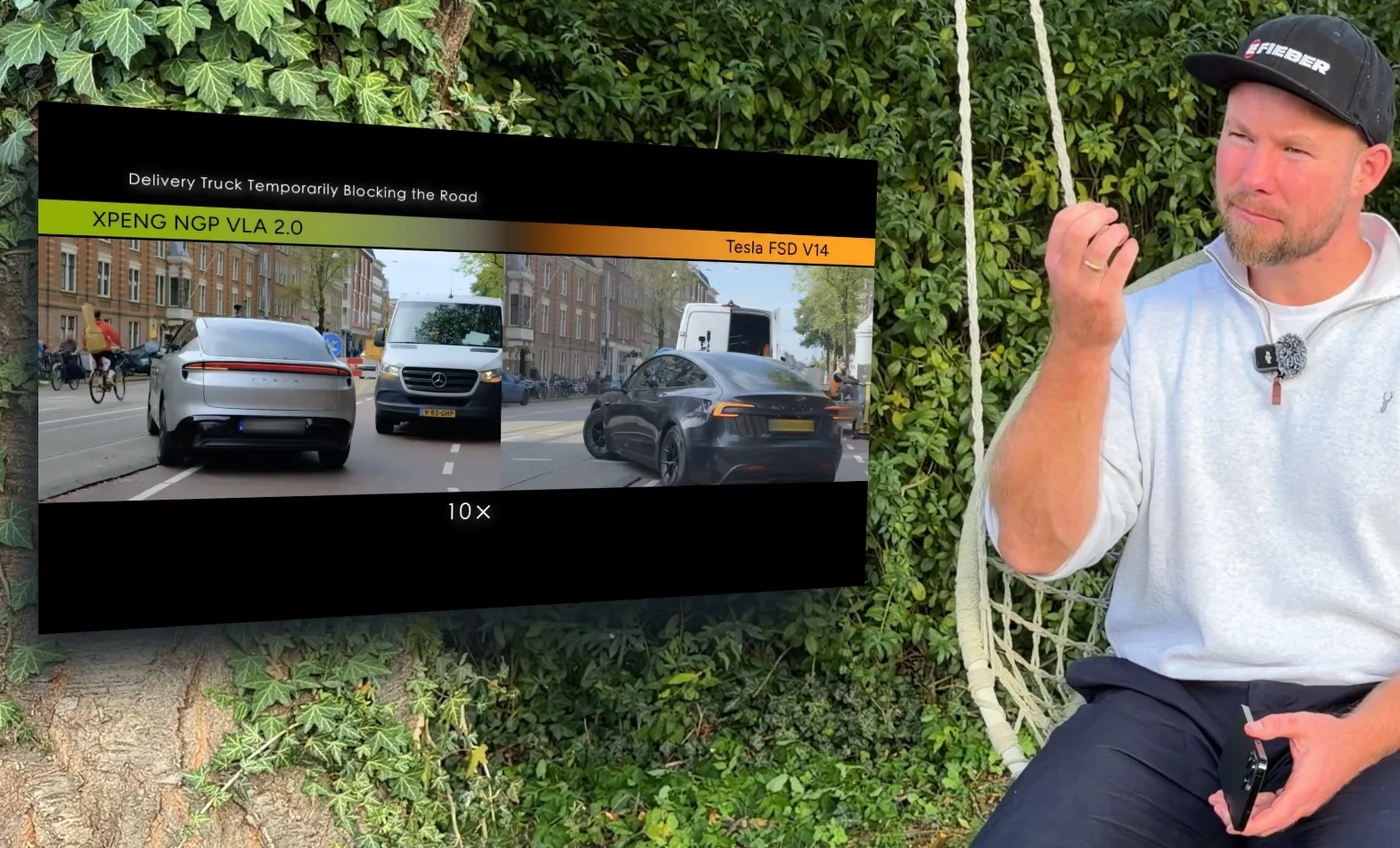
Now I can finally show you the whole story from Amsterdam.
I was invited by Xinhua News Agency, one of the world’s largest news agencies, to experience XPENG NGP with VLA 2.0 and Tesla FSD Supervised on real streets in Amsterdam.
And importantly:… pic.twitter.com/3QS1kRT1z4
— EFIEBER (@EFIEBER_ANDRE) September 28, 2026
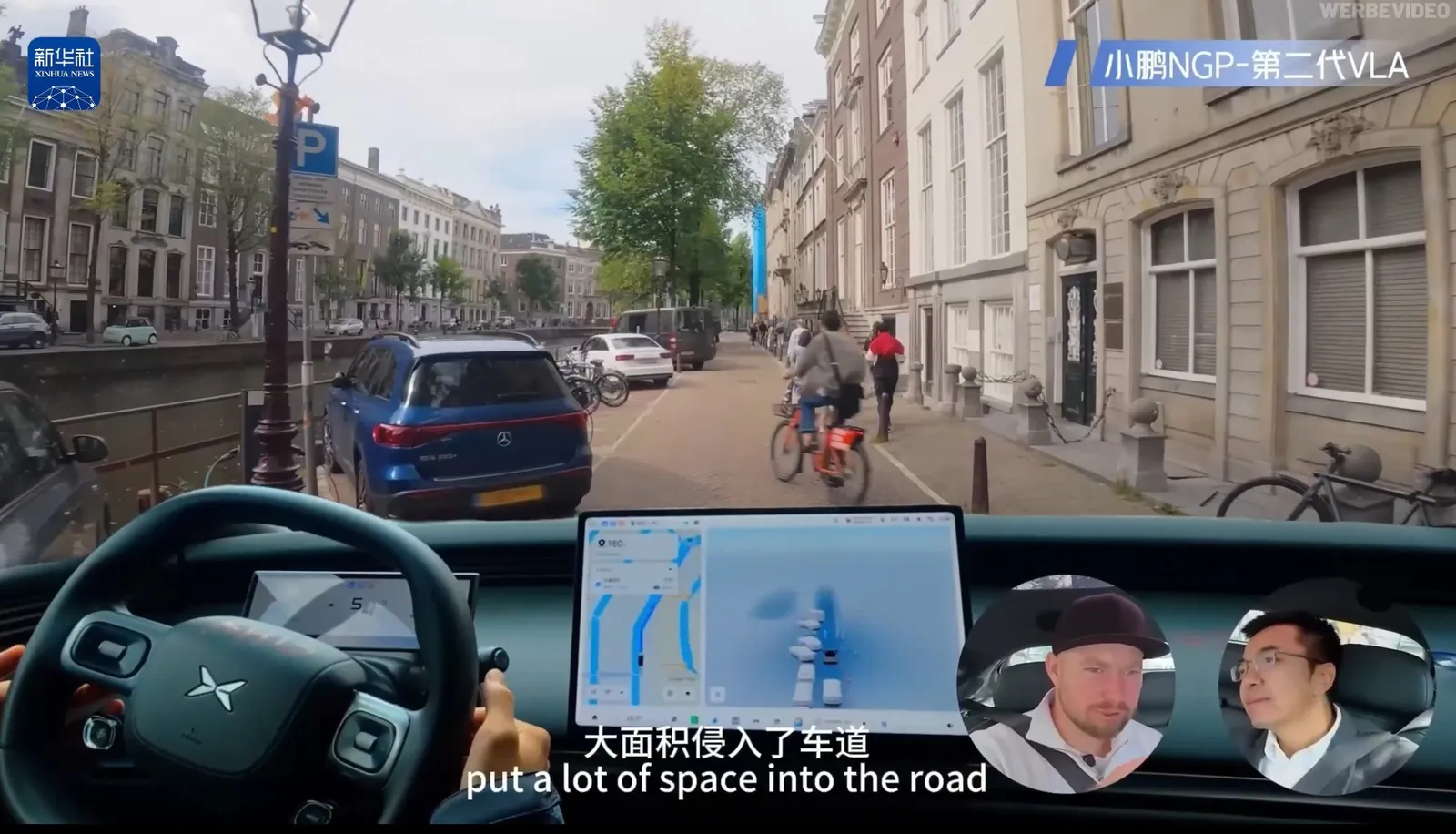
Both systems were very cautious and careful when cyclists or pedestrians were nearby. They drove smoothly, with no signs of slowness, although a representative from CleanTechnica noted that Xpeng VLA 2.0 reacted more slowly to other road users in heavy traffic [than a human would]. However, it did slow down before potholes and bumps, which resulted in greater driving comfort compared to Tesla. Xpeng plans to introduce this mechanism in Europe in 2027.
Article Rating
Readers' Ratings
[Total: 4 votes Average: 4.8]
Don’t miss new content — CLICK and FOLLOW Elektrowoz.pl on Google News. You might also be interested in the following ads:
