
Freenow and Apollo Go launch London robotaxi trial
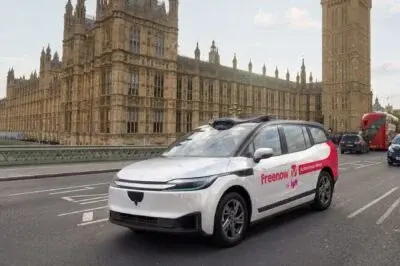
Freenow by Lyft and Baidu's autonomous driving unit Apollo Go have launched road tests of robotaxis in London. The trials mark the first concrete step in implementing the commercial robotaxi partnership the two companies announced for Europe in 2025.
The first road tests will take place in the London borough of Brent, where Apollo Go will deploy its sixth-generation RT6 robotaxis. The vehicles will initially operate on urban and suburban routes with safety drivers on board, paving the way for a planned commercial passenger service from 2027, subject to regulatory approval.
The initiative stems from a strategic partnership agreed last year to integrate Apollo Go’s autonomous driving technology into Freenow by Lyft’s platform across key European markets. While Apollo Go provides the technological foundation and the RT6 vehicles—specifically designed for ride-hailing—Freenow contributes its local market expertise and operational capabilities.
The project in the British capital benefits directly from recent test successes in Hong Kong, where Apollo Go received the first driverless test permit for right-hand-drive markets in July 2026.
“The arrival of Apollo Go vehicles in London marks a defining milestone in our global expansion,” said Nan Yang, Vice President of Baidu and General Manager of Overseas Business Unit, Intelligent Driving Group. “Testing our autonomous fleet in one of the world’s most iconic and complex urban environments validates our technology’s maturity and our commitment to this market.”
According to Baidu, the partnership combines AI-powered autonomous driving with local platform expertise to support the rollout.
In the UK, Apollo Go’s autonomous vehicles are set to operate alongside conventional taxis and private hire vehicles within the Freenow platform. The partners say this hybrid approach is intended to reduce waiting times and improve efficiency. According to a Censuswide survey commissioned by the companies, 58% of Londoners would be willing to try a robotaxi, rising to almost two-thirds among respondents under the age of 35.
Thomas Zimmermann, CEO of Freenow by Lyft, emphasised the integration into the existing industry: “As a platform with deep roots in the taxi industry, our priority is ensuring that autonomous technology supports the professional drivers who keep London moving. By integrating these purpose-built, autonomous vehicles from Baidu’s Apollo Go into the Freenow by Lyft ecosystem, we will give Londoners more sustainable choices to travel.“ The goal is to accelerate the shift towards shared mobility solutions.
Competitors poised to enter the market
In addition to Freenow by Lyft, several other companies have announced plans to launch robotaxi services in London and the UK in recent months, including Waymo, Uber, and Wayve. The UK has now established the legal framework, allowing operators to apply for the necessary operating licences since May.
Earlier this year, Freenow by Lyft announced plans to launch robotaxis in the German city of Hamburg, although it did not identify Apollo Go as its partner at the time. The company also stressed that autonomous vehicles would operate alongside conventional taxis.
prnewswire.com