
Fraunhofer ISE optimizes battery cells: More energy at the same weight
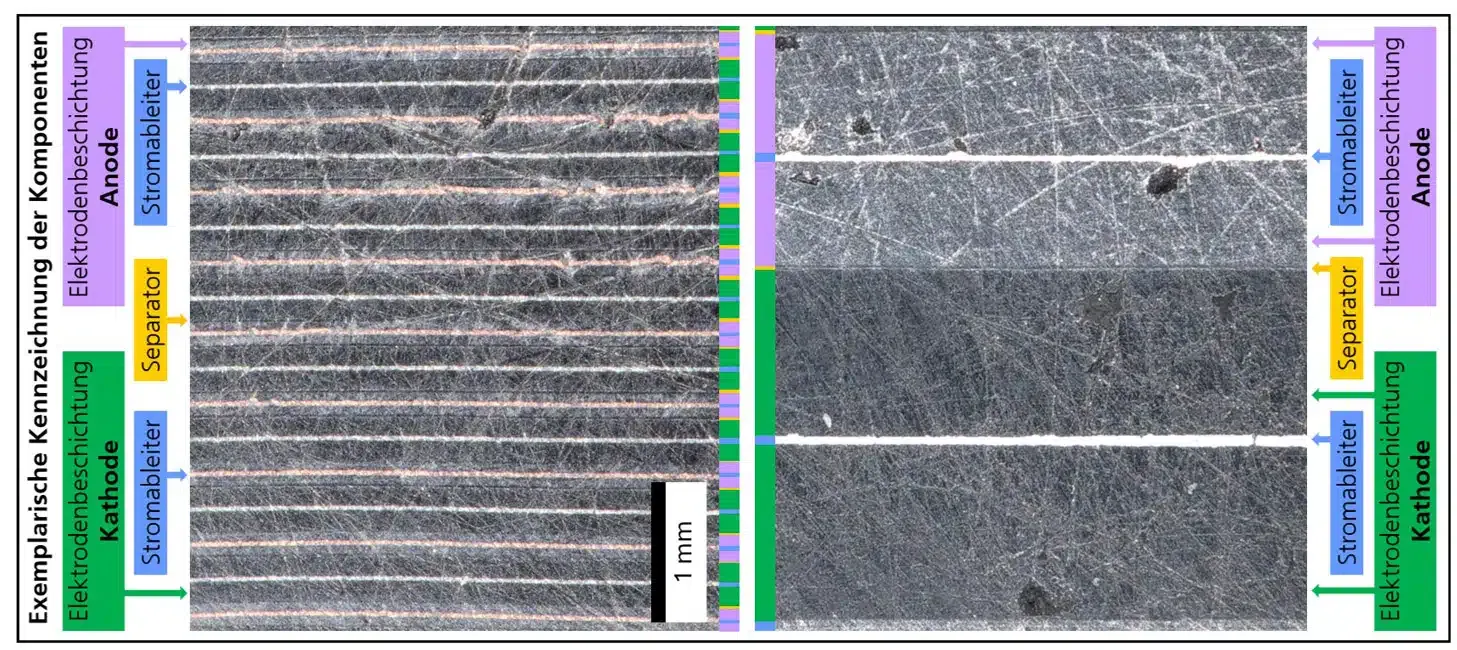
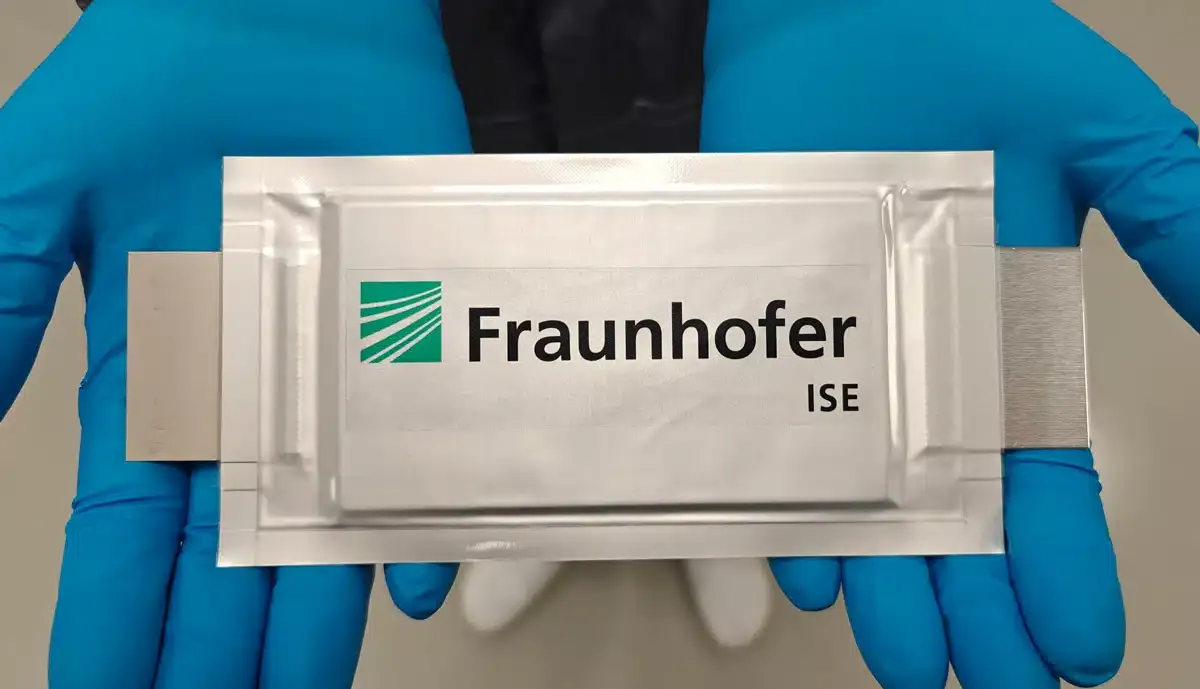
Image: Fraunhofer ISE
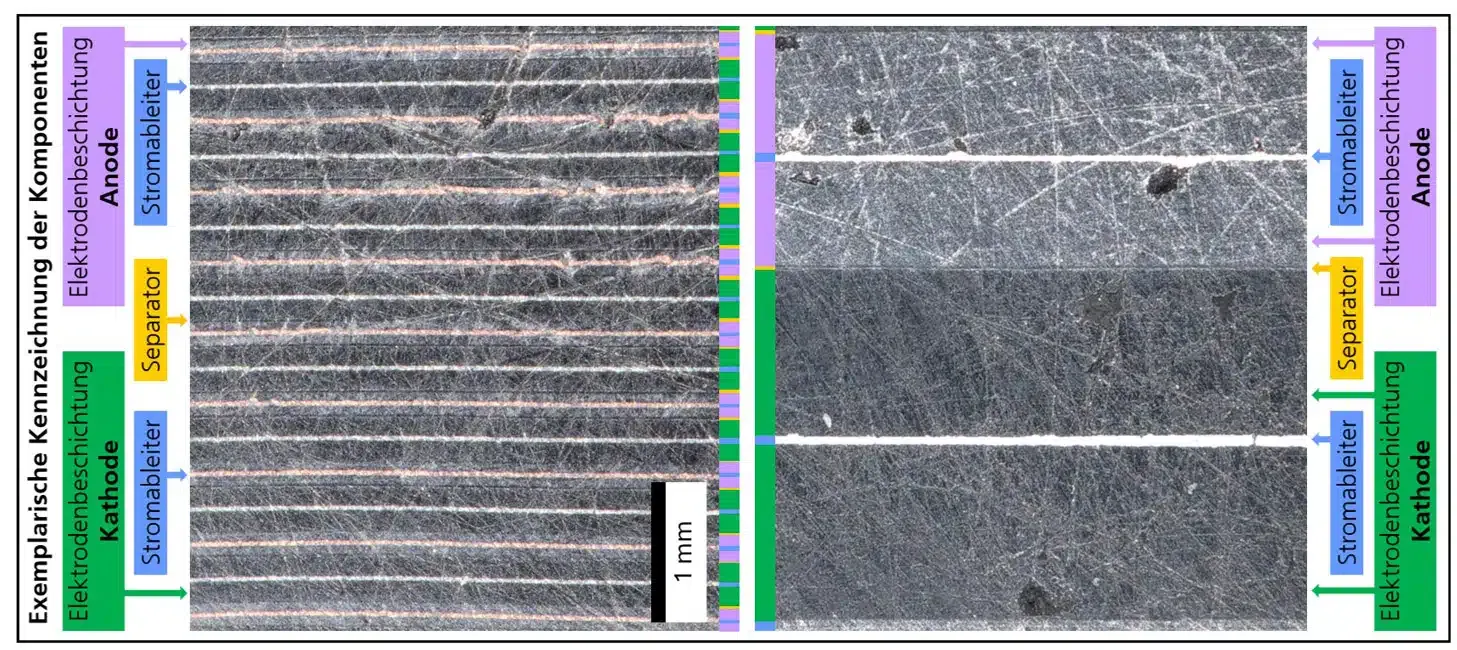
In collaboration with partners from research and industry, the Fraunhofer Institute for Solar Energy Systems ISE has modified the structure of battery electrodes in such a way that battery cells can store 10 to 15 percent more energy while maintaining the same weight. They achieved this by increasing the coating thickness of battery electrodes—such as those in lithium-ion batteries—by more than three times, which simultaneously reduced the number of current conductors within the battery cell.
According to a statement, the research team implemented the new electrode architecture in industry-like lithium-ion pouch cells. They also successfully applied this concept to zinc-ion and sodium-ion battery cells.
"Normally, the anode and cathode—the two electrodes of a battery cell—are made up of many thin layers alternating between electrode coatings and current conductors," explains Oliver Fitz, team leader for battery cell technology at Fraunhofer ISE. "We managed to increase the thickness of the electrode coatings from the usual 100 to 200 micrometers to up to 800 micrometers, thereby significantly reducing the number of current conductors needed. As a result, we have much more space for active material, which increases the energy density by 10 to 15 percent depending on the battery type and design."
The research team at Fraunhofer ISE first validated the new electrode architecture for zinc-ion, sodium-ion, and lithium-ion batteries experimentally using small battery cells in the lab. For lithium-ion batteries, they also produced prototypes of pouch battery cells with the newly developed electrode structure on a semi-automated production line in the modern clean room of the Fraunhofer ISE Battery Materials and Cell Production Lab. “This cell concept can be easily adapted to other battery chemistries as well,” adds Oliver Fitz.
The battery electrodes are free of PFAS and do not require toxic solvents in manufacturing. When developing the new cell architecture, future mass production was taken into account: According to the researchers, a potential electrode manufacturing line has significantly lower process complexity compared to current wet-coating facilities. This results in substantially lower investment costs. Operating costs are also reduced due to decreased space and energy requirements. This technology aims to enable small and medium-sized enterprises in particular to establish their own battery cell manufacturing facilities in Germany.
According to the project leaders, the results demonstrate a promising approach for the future industrialization of this innovative electrode and cell architecture. Helmut Hechinger GmbH & Co. KG supports the research consortium as an industry partner, contributing its expertise in manufacturing. Another project partner, the machinery manufacturer acp systems AG, is developing the equipment needed to produce the electrodes.
"In a climate-neutral energy system with the volatile energy sources of solar and wind, stationary battery storage is an essential component to cover peak electricity demand in the morning and evening," says Andreas Bett, head of the institute at Fraunhofer ISE. "For example, in California, battery storage already provides most of the electricity in the evening. Germany would do well to build up manufacturing capacity for the growing demand for batteries and thus create value within the country. We are very pleased if we can contribute to this."
The new electrode or cell structure was developed by the research team in the projects “VORAN – Innovative Sodium-Ion Batteries for Stationary and Mobile Applications” (running until June 2027), “INFAB – Zinc-Ion Batteries for Stationary Energy Storage – Manufacturing and Assembly” (completed), and “WinZIB2 – World-Ready, Innovative Zinc-Ion Battery System” (completed), in collaboration with partners acp systems AG, Helmut Hechinger GmbH & Co. KG, University of Stuttgart – Institute for Photovoltaics (ipv), and Karlsruhe Institute of Technology/Helmholtz Institute Ulm. The German Federal Ministry for Economic Affairs and Energy (BMWE) funded the research in the VORAN and INFAB projects, while the German Federal Ministry of Education and Research (BMBF) supported the WinZIB2 project.
Also interesting
About the author
Thomas Langenbucher is an expert in electromobility with professional experience in the automotive industry and finance sector. Since 2011, he has been covering electric vehicles, sustainable technologies, and mobility solutions for ecomento.de. Learn more.
Reader interactions