
Fraunhofer researchers aim to unlock the potential of lithium metal anodes
Scientists from two Fraunhofer institutes are exploring new approaches to improve the performance and lifespan of battery systems. One idea is to use lithium itself as an active anode material in lithium-metal anodes, thereby achieving a higher specific capacity for battery cells.
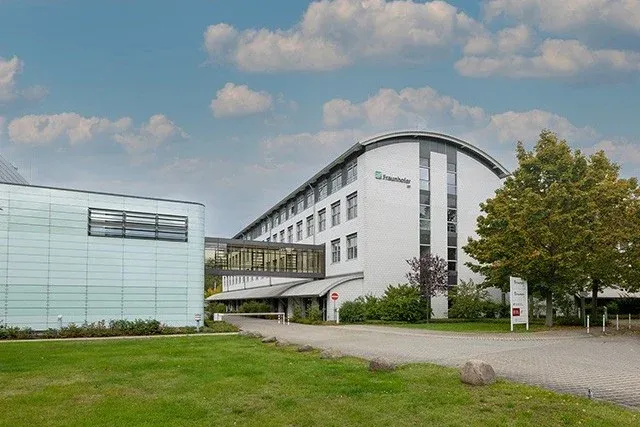
The location of Fraunhofer IST in Braunschweig.
Image: Fraunhofer IST
The Fraunhofer Institute for Layer and Surface Technology IST is collaborating with the Fraunhofer USA Center Midwest on the LIMAC project, which fully reads as “Amorphous Carbon Interlayers for Reliable Lithium-Metal Battery Cells.” The project has been underway since September 2026 and is expected to continue until August 2028.
As part of LIMAC, scientists are exploring new approaches to further improve batteries. They are focusing particularly on lithium-metal anodes, where the team sees potential for developing more durable battery cells, especially regarding the interface between the lithium-metal anode and the electrolyte. According to the researchers, the stability of this interface is crucial for creating more reliable and long-lasting battery cells.
To stabilize the interface, Fraunhofer experts are now using thin amorphous carbon layers, which are initially deposited on copper current collectors via an innovative laser-arc PVD process. “Subsequently, the coated materials are tested in battery cells and compared with reference cells,” explain the project initiators. This approach aims to determine which properties of the interlayers are crucial for achieving a stable interface in battery cells. It is clear that the stabilizer is intended to enable the lithium contained within the cell to function as an active anode material.
In addition to technical performance, the project also considers ecological aspects and the potential for future adaptation to larger cell formats. “On one hand, relevant material and energy flows as well as the environmental impact of this approach are to be examined using an ecological balance sheet, known as Life Cycle Assessment (LCA),” explains the team. “On the other hand, a concept for transferring the technology to larger pouch cells is to be developed simultaneously.” In this way, the project combines material development and cell research with ecological evaluation and initial considerations for future scaling.
The potential benefits for manufacturers are obvious: more powerful and durable lithium-metal batteries could reduce the weight of electric vehicles while maintaining high energy densities. However, LIMAC is still in the stage of basic research at present.