
Fraunhofer FFB develops tool for battery recycling
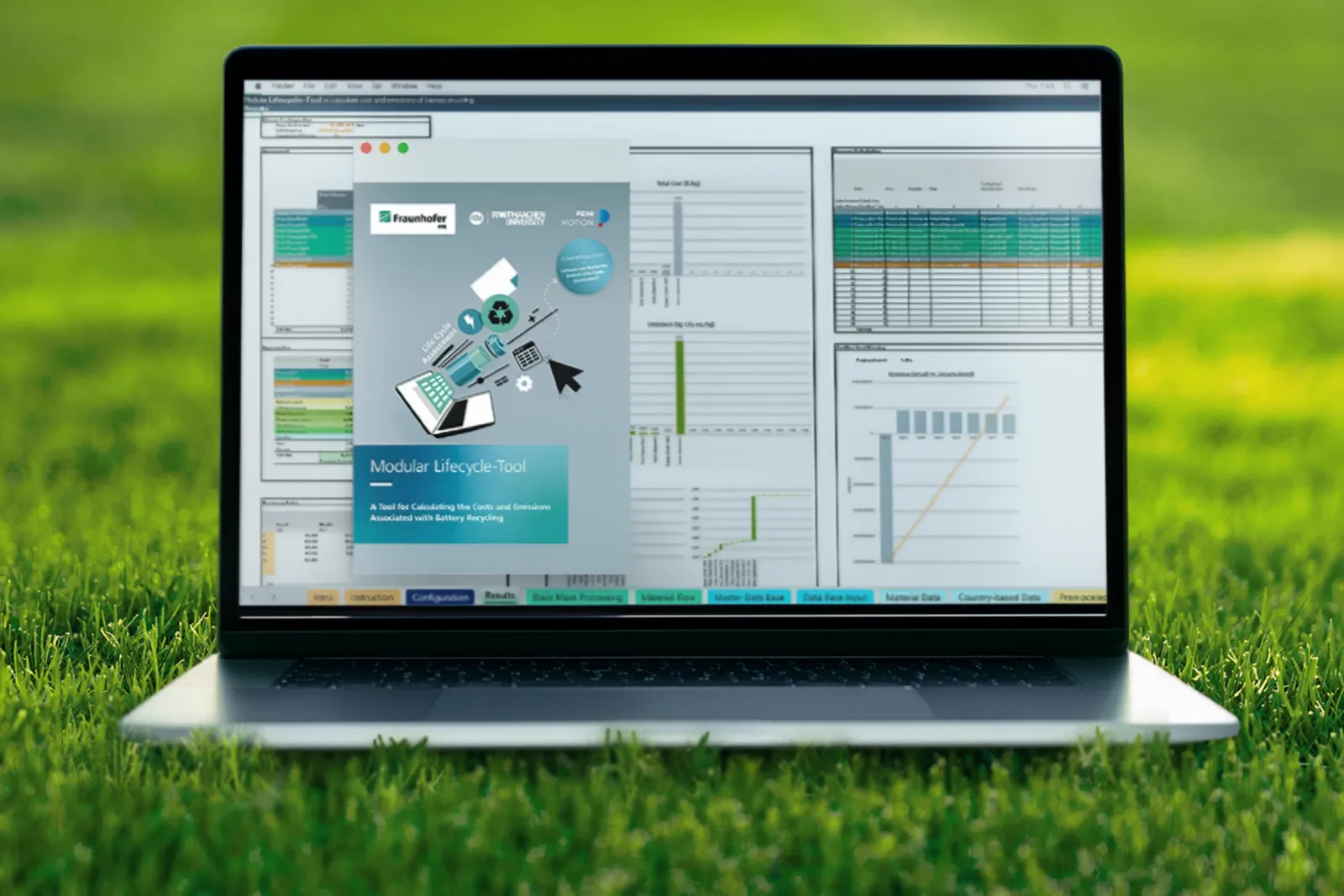
The Fraunhofer Institute for Research and Production of Battery Cells (FFB) and RWTH Aachen have developed an evaluation model for the recycling of lithium-ion batteries. This allows different recycling methods to be compared based on their costs and CO₂ emissions.
The model also takes into account regional electricity mixes and the utilization rate of recycling facilities.
Image: Fraunhofer FFB
The calculation model is intended to help recycling companies, technology providers, and battery manufacturers evaluate various recycling methods economically and environmentally on a unified basis.
The extent of the economic challenges in battery recycling was recently shown by a study within the EU research project Safeloop. According to it, recycling lithium-ion batteries in Europe currently results in an average loss of around 1.90 euros per kilogram of battery pack under the conditions examined. The researchers identified factors such as hazardous material transportation, disassembly, and uncertainties in material recovery as key cost drivers.
The new Fraunhofer model focuses on evaluating individual recycling processes. This is because the available methods differ not only in terms of energy consumption and recovery rates. Decisions made at early stages of the process also affect the quality of the recovered materials and the effort required in subsequent stages. To reflect these relationships, the tool divides the entire recycling chain into separate areas, process steps, and technologies using a modular approach. This allows, for example, different crushing methods to be compared and their impact on the further recycling process analyzed.
Fraunhofer model takes location and capacity into account
The tool is based on a database containing information about individual process steps. Users can set parameters such as material throughput and the composition of batteries to be recycled, and use this to create customized process chains.
The model tracks material flows throughout the entire recycling chain and links them to economic and environmental metrics. Factors considered include energy consumption, CO₂ emissions, operating and investment costs, as well as revenues from recovered raw materials. Waste disposal costs, regional electricity mix, labor costs, and plant utilization rates can also be included in the calculations.
If individual parameters such as throughput, separation efficiency, or recovery rate change, the tool shows the impact on subsequent process steps, costs, and emissions. This helps identify areas with high cost or emission intensity and allows for the exploration of various scenarios for the industrial implementation of battery recycling.
"With this tool, we aim to make different recycling concepts comparable on a common basis, thereby creating a solid foundation for technological and strategic decisions," explains Benedikt Gruber, a research associate at Fraunhofer FFB. The model can be used both to optimize existing recycling processes and to evaluate new technologies.
The Modular Lifecycle Tool was developed as part of a consortium study with partners from the recycling industry, plant construction, and consulting. In the future, the assessment framework is intended to be expanded to include additional battery chemistries, region-specific datasets, and regulatory scenarios.