
France became the first country in the world to build a large solar highway. Now we know why it wasn’t a good idea.
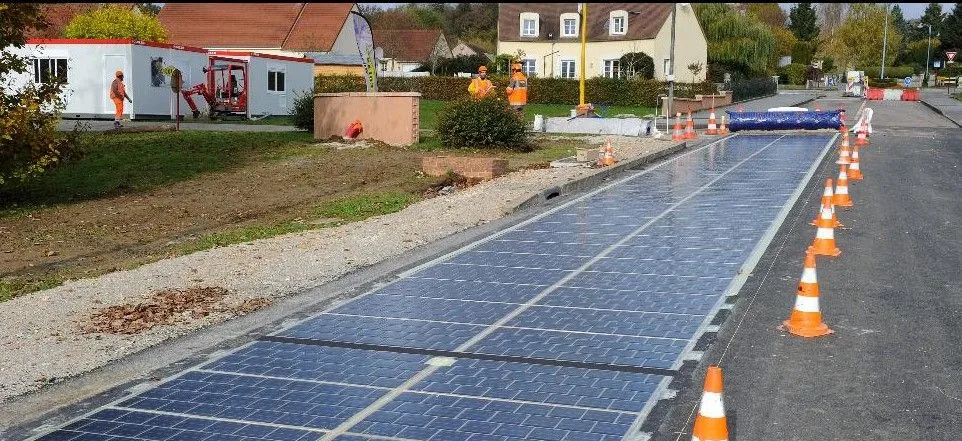
In 2016, France proposed an idea that seemed straight out of the future: turning a regular road into a massive surface capable of generating electricity. The Wattway project covered one kilometer of the D5 road in Tourouvre-au-Perche, Normandy, with about 2,800 square meters of solar panels. As expected, ten years later those panels were removed and the road reverted to its normal state.
In the minds of the promoters, the proposal sounded great. Instead of using rooftops, agricultural land, or new natural areas, it utilized an already built surface: the road itself. The initial goal was ambitious, with plans to extend the technology to cover 1,000 kilometers of solar roads in France. But reality proved much tougher: traffic and weather conditions showed that a road does not behave exactly like the roof of a house.
The installation was developed by the French company Colas in collaboration with France’s National Institute of Solar Energy after five years of research. The Wattway panels incorporated photovoltaic cells within a multilayered structure that was applied directly onto the asphalt. The company claimed they could withstand traffic from all types of vehicles, including trucks, while generating electricity that was then sent to the grid.
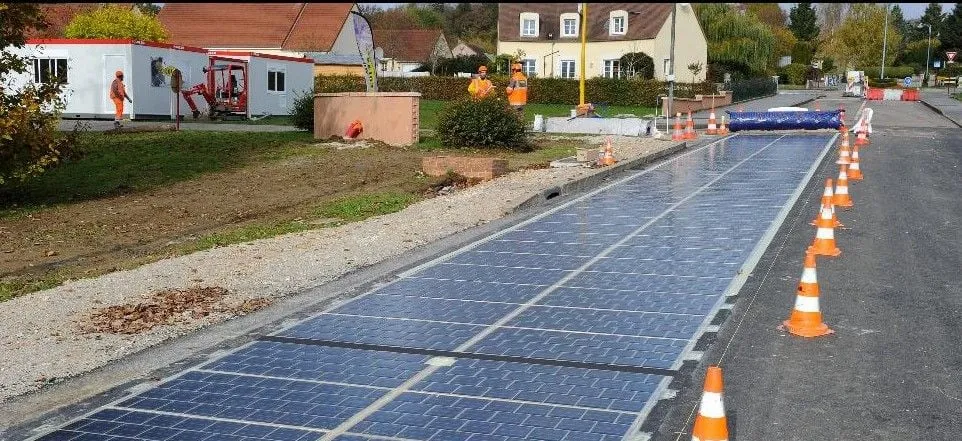
The road was officially opened on December 22, 2016, and featured 2,880 photovoltaic modules spread over approximately one kilometer. Colas initially estimated an annual production of around 280,000 kWh, equivalent to an average of about 767–800 kWh per day, with higher peaks during months with more solar radiation.
The problem was that the cost of this solution was far higher than that of a conventional solar installation. The project received about 5 million euros in public funding, a substantial amount for just one kilometer of road. Additionally, each square meter had to fulfill two functions that were incompatible in many aspects: capturing as much light as possible while simultaneously withstanding the constant passage of cars, trucks, and agricultural machinery.
Traffic eventually exposed the limitations
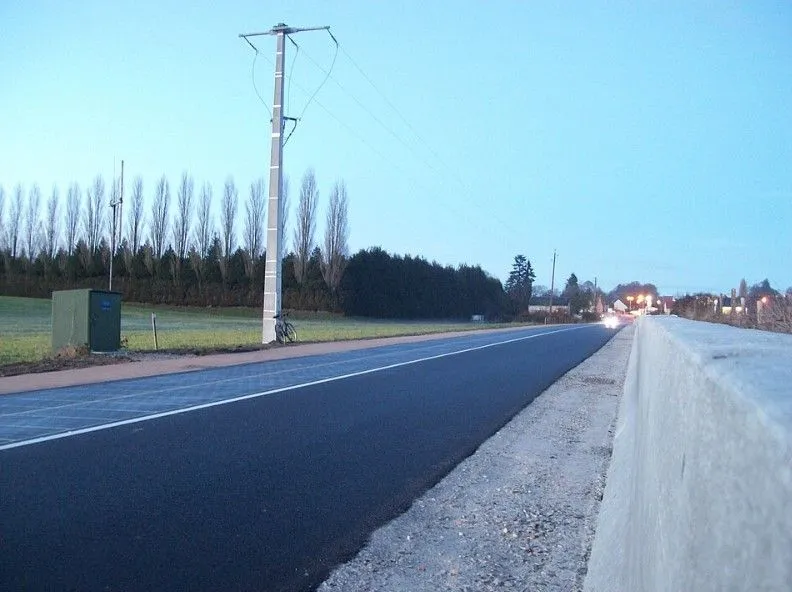
Problems arose much earlier than expected. The panels began to deteriorate, some detached from the asphalt, and the protective layer was damaged by use. Dirt, leaves, and dust also reduced the amount of light reaching the cells, while the horizontal orientation of the panels was less favorable than that of properly oriented and tilted solar installations.
This was compounded by a much more common problem: cars had to drive on top of the solar panels. The friction from tires, vibrations, the weight of vehicles, and temperature changes subjected the surface to conditions that a panel installed on a roof never has to endure. The noise generated by passing vehicles became another issue, forcing the speed limit to be reduced to 70 km/h.
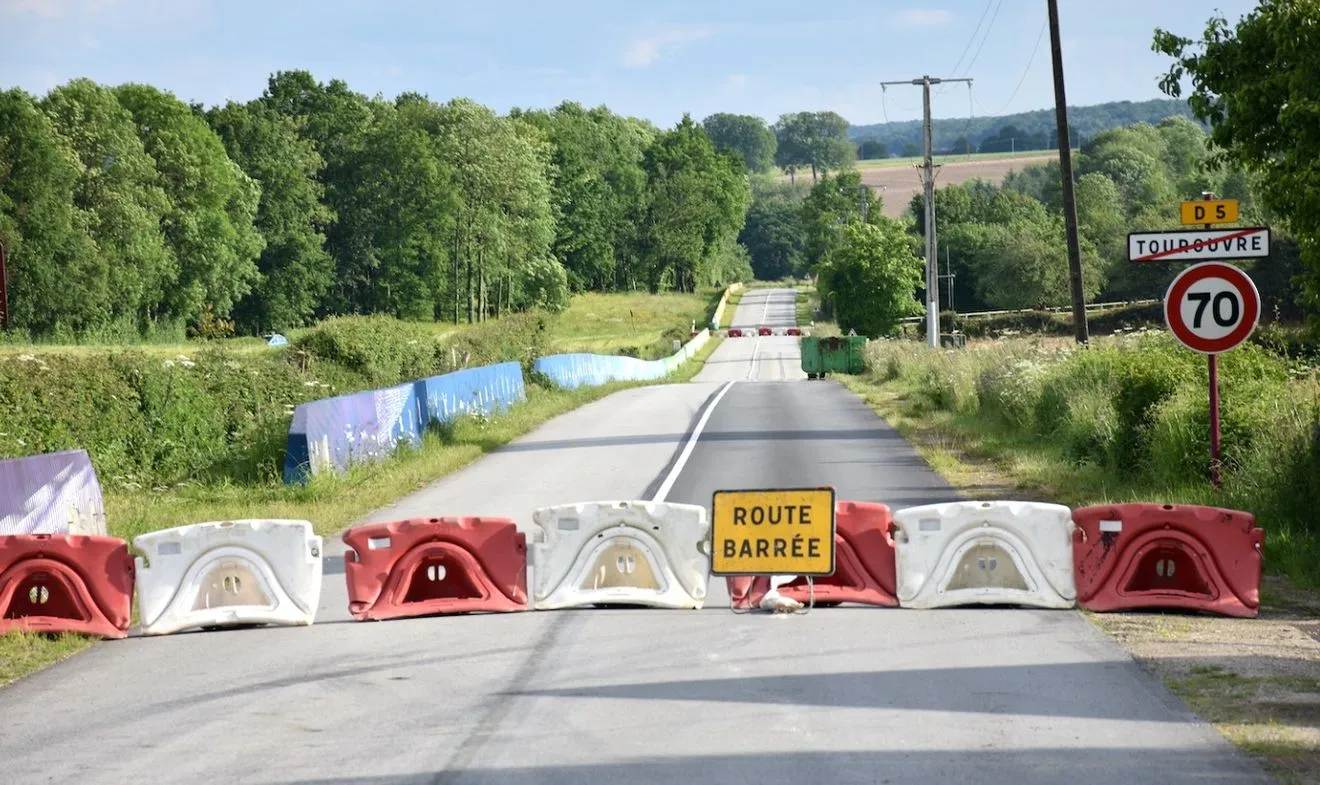
In less than three years, the first 100 meters had to be removed because the condition of the panels made repair impossible. The installation continued to evolve over the following years, with Colas using Tourouvre as a laboratory to test new generations of its technology, but the large-scale solar road project that was initially announced was never realized.
It also didn’t function as a power plant at the expected level. During its first full year of operation, the road generated 149,459 kWh, far less than initial projections. Production later dropped to 78,397 kWh in 2018 and around 37,900 kWh during the first half of 2019, according to data collected from project monitoring.
The income generated from selling electricity also failed to cover the enormous initial investment. While approximately 10,500 euros per year was projected, the actual income was around 4,550 euros in 2017 and barely 3,100 euros in 2018. The gap between the construction costs and the energy actually produced eventually became one of the main arguments against this type of infrastructure.
The experience also led to a rather simple conclusion: having thousands of kilometers of asphalt available does not mean that such surface is suitable for installing solar panels. A conventional installation can be oriented toward the sun, kept clean, and replaced relatively easily. A road, on the other hand, must be designed to withstand traffic, rain, dirt, changing temperatures, and continuous maintenance.
The experiment officially concluded in 2024. Demolition of the panels began on May 27, and the section was restored to become a regular road. The Orne Department itself confirmed that the experiment served as a testing ground for developing new solutions, while Wattway later argued that Tourouvre helped identify problems and drive technological advancements.
In fact, Wattway did not abandon photovoltaic technology for mobility surfaces, but it clearly shifted its focus. The company turned to applications with lower requirements, such as parking lots, sidewalks, cycling paths, and small modules capable of powering cameras, lighting, bus stops, or electric bike chargers.
The original idea wasn’t absurd: using existing infrastructure to generate electricity without occupying new land made sense. The problem lay in trying to turn a road under constant traffic into a giant solar plant. The experience at Tourouvre showed that producing electricity and handling heavy traffic are two very different tasks, and attempting to do both on the same surface can be prohibitively expensive.