
France begins producing the first solid-state batteries that Europe aims to use to compete with China
02/11/2026 22:00
Updated to
02/11/2026 22:00
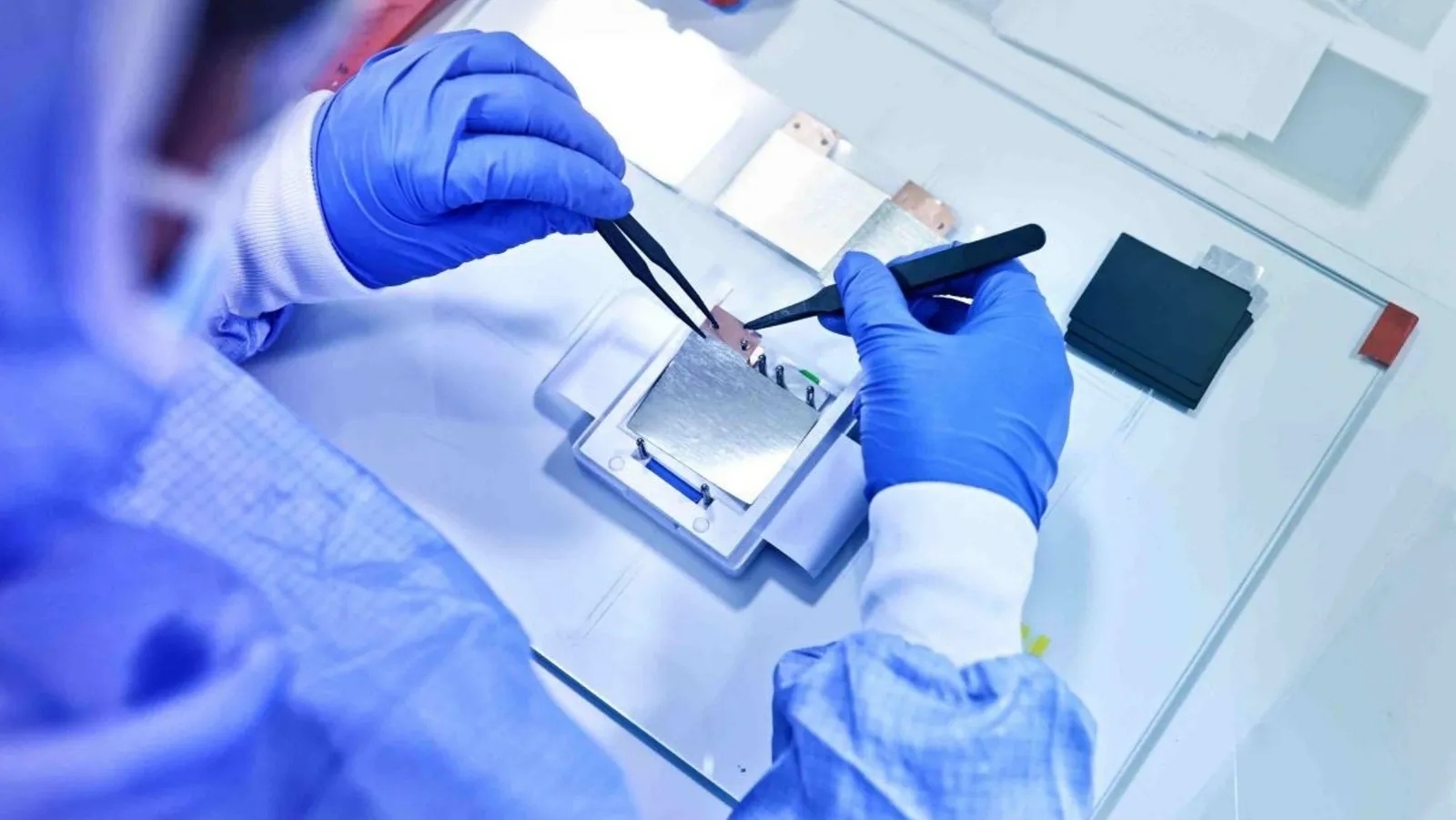
The first solid-state batteries made in France are now leaving a factory in Bordeaux, that of Saft, the battery manufacturer owned by the energy group TotalEnergies. The company has opened its new production lines there, making it the first manufacturer in the country and in the European Union capable of developing and producing solid electrolyte cells that combine sulfur and polymer technologies at room temperature.
We’re not talking about a laboratory prototype, but about factory production on European soil using a technology that has for years been presented as the next major breakthrough in solid-state batteries. Saft aims to turn years of research into industrial capacity and give Europe a stronger position in what it considers a strategic field. For now, however, its targets are aircraft and space, not cars.
A solid electrolyte instead of a liquid one
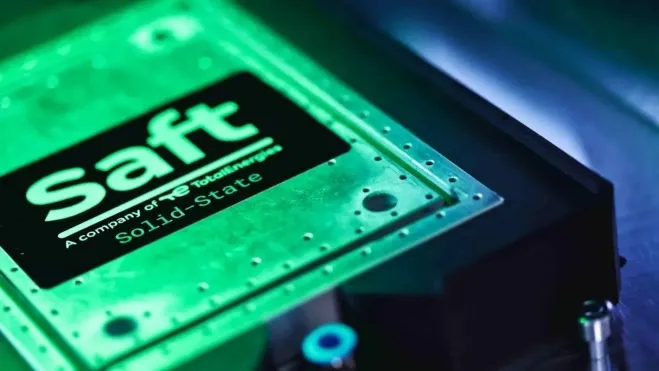
In a conventional lithium-ion battery, the electrolyte that separates the electrodes is liquid, whereas in solid-state batteries it is replaced by a solid material, which reduces the risk of fire and allows more energy to be stored in the same space. According to Saft, its cells achieve an energy density that is up to 50% higher than that of conventional lithium batteries, meaning they require less volume and less weight for the same capacity.
The company works with two types of electrolytes: sulfides and polymers, and combining both opens the door to very different applications. The fact that both can operate at room temperature is important, as some solid polymer batteries need to operate at higher temperatures, like the lithium metal polymer batteries used in some electric vehicles a few years ago, which now have little impact.
Dry electrodes to reduce pollution
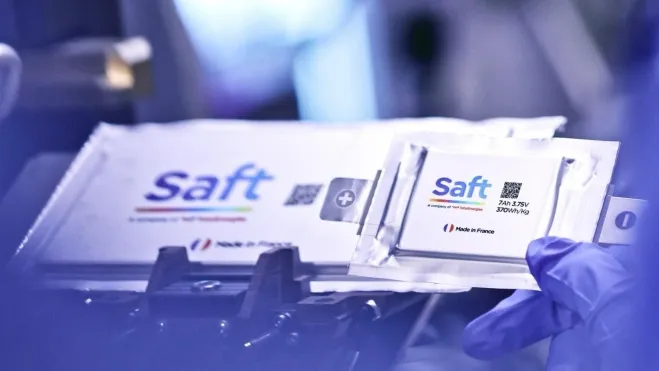
Saft has also changed its manufacturing process. The electrodes are produced using a dry method, without the solvents typically used, which the company claims reduces CO₂ emissions from this production stage by up to 40%. What it hasn’t disclosed is how many batteries can be produced on these lines or how much it costs to manufacture them.
First, to the skies
For now, the new batteries are designed for aviation and space, two sectors where every kilogram counts and safety cannot be compromised, so the combination of higher energy density and lower fire risk fits perfectly. Saft is already working with Safran, the French company specializing in aircraft engines and equipment, on storage systems for future electric and hybrid aircraft.
The first solid-state cells, manufactured on these same production lines in Bordeaux, have already been delivered to Safran, which is testing them primarily at its Niort facility before integrating them into future aircraft. Starting in 2027, the collaboration will expand to fully solid cells and battery systems.
What about electric cars?
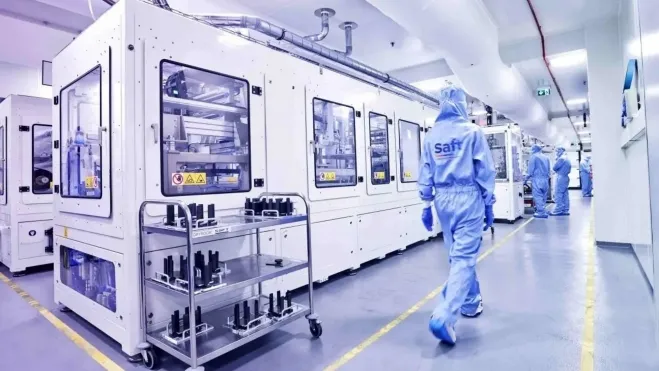
Solid-state technology is also a major focus in the automotive industry, as higher energy density would allow greater range with the same battery weight. However, scaling up production, ensuring long lifespan, and reducing costs remain challenges to overcome. Additionally, several manufacturers have warned that these batteries will be a niche product for highly demanding vehicles, while most applications are well served by lithium iron phosphate (LFP) and lithium ternary (NMC) batteries, which are now highly mature.
Still, Saft is already involved in the electric vehicle sector. The company, along with Stellantis and Mercedes-Benz, is part of Automotive Cells Company (ACC), the joint venture that produces cells for electric vehicles. ACC’s factory in Douvrin, in northern France, has just produced over five million cells, enough for around 40,000 cars, and its batteries are already used in models sold in Spain such as the Peugeot E-3008. China currently holds the advantage in developing new solid-state cells, with widespread use expected by 2030.