
Solar power and electric cars: how the sun truly charges the battery
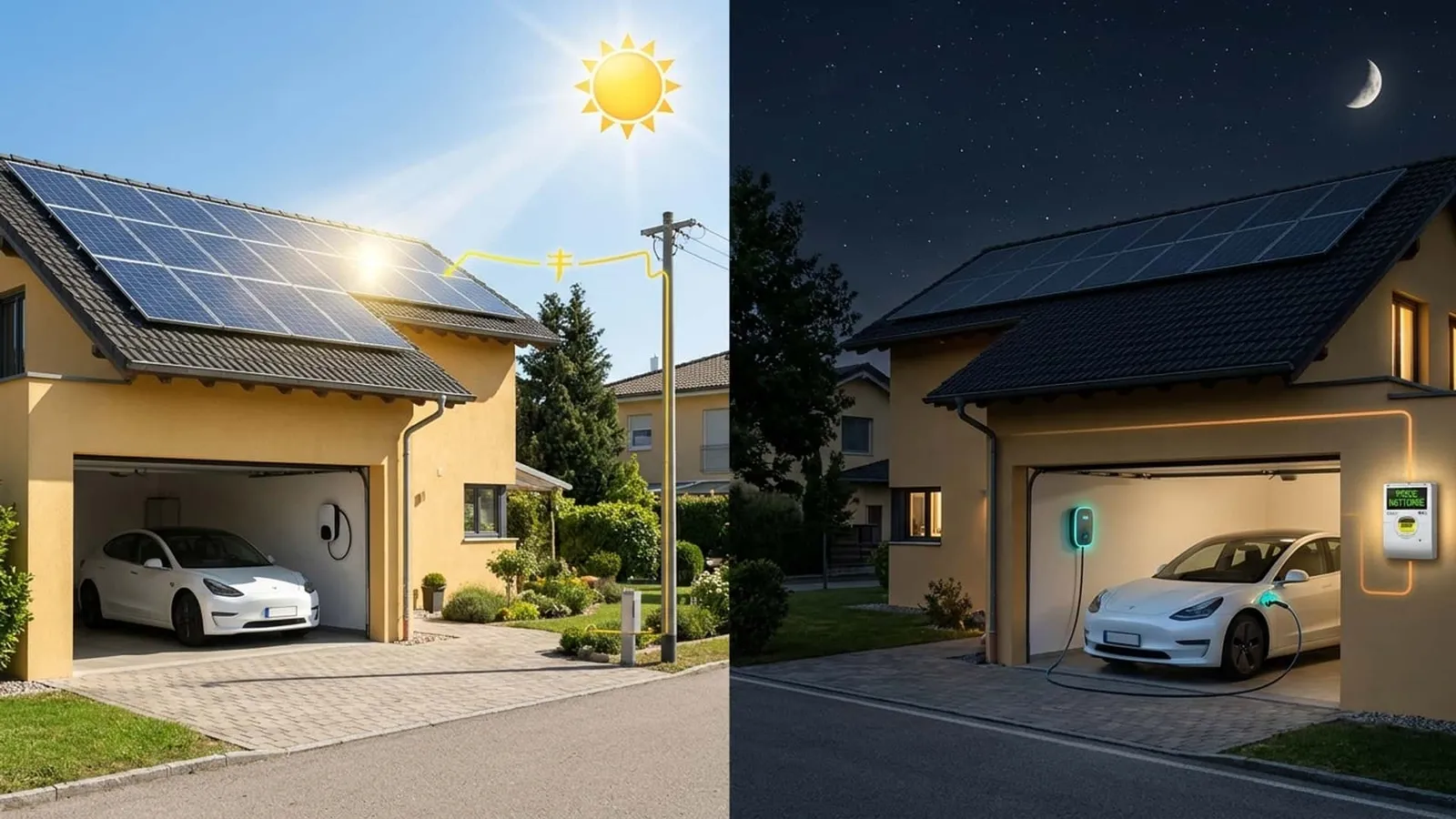
Those with solar panels on their roofs and electric cars in the garage often charge at night, when electricity costs less but there’s no sunlight. It’s almost a physical waste: the cheapest energy, that produced at noon, ends up being fed into the grid instead of going into the car’s battery.
Connecting photovoltaic systems to home charging requires a controller that communicates with the inverter, not just an extra cable. A study by ENEA, the National Agency for New Technologies, Energy, and Sustainable Economic Development, confirms that those with home charging stations use public charging stations much less than those without them.
How to Charge Using Panel Energy
The technical foundation is the smart wallbox. It communicates with the photovoltaic inverter and determines how much energy is generated at any given moment compared to what the house consumes. When there’s a surplus, it directs that energy to the car instead of sending it back to the grid at the sale price, which is usually lower than the savings achieved by using the energy locally.
The best time remains the midday hours when solar production is at its peak. The problem is that during those times, the car is often at work and not in the garage. This is why pairing it with energy storage becomes crucial: it allows the energy generated at noon to be used in the evening when the car is actually being charged.
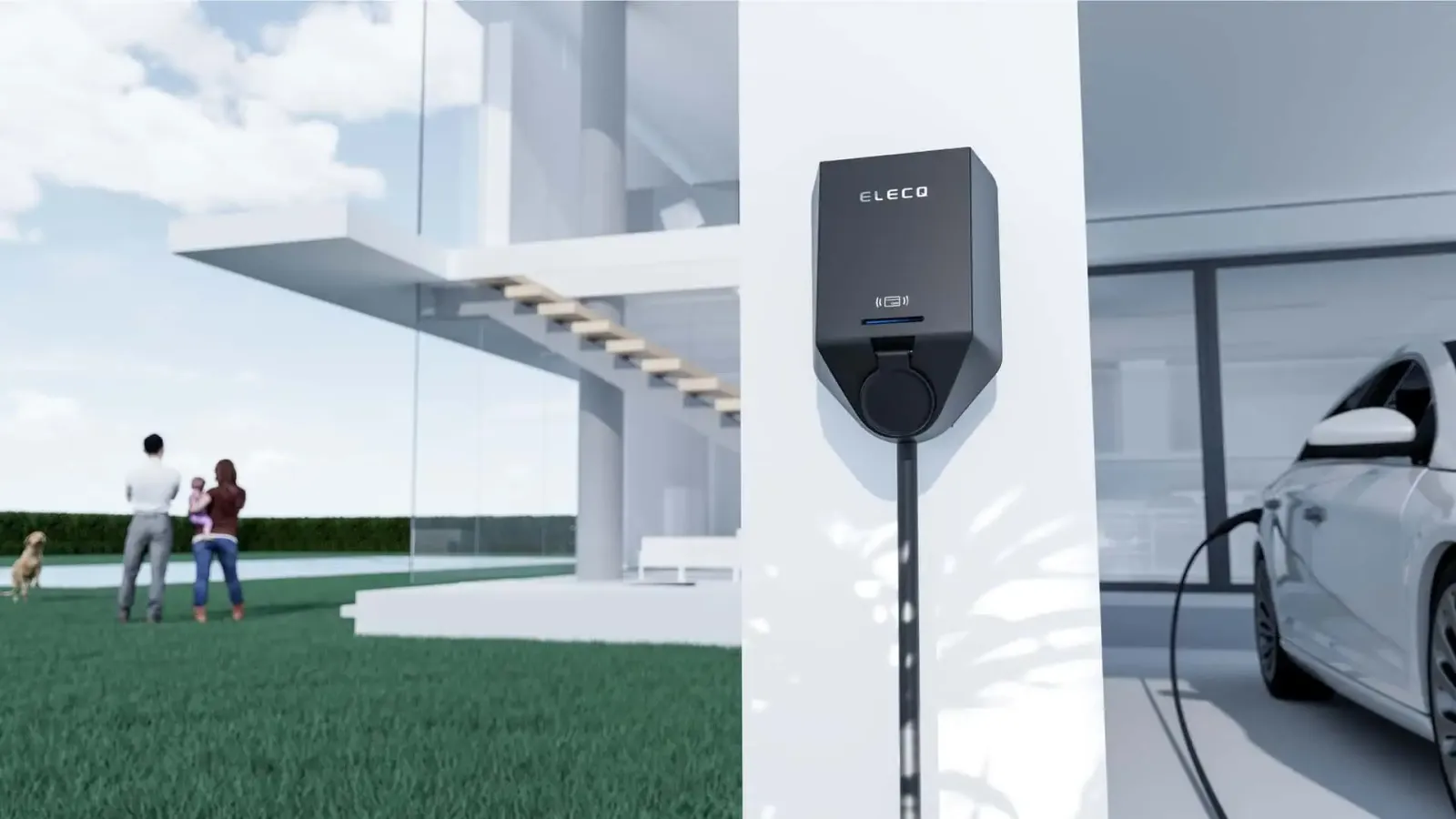
Wallbox and Elecq Charging Stations
Photo by: Elecq
ENEA’s analyses mainly describe the frequency of using public charging based on the availability of charging points at home or work, as well as the importance of household power capacity. The result is a pattern of long, spread-out charging sessions that tend to coincide with daylight hours or home energy storage, rather than rapid, concentrated charging.
Storage and smart management: when they’re truly needed
A battery storage system isn’t essential for those who charge their car only on weekends or work from home with the car parked during the day. In such cases, solar panels can already meet most of the required kWh without relying on the grid.
The battery storage becomes useful when the vehicle is kept outside during daylight hours. It stores the energy generated at noon and makes it available in the evening, without the need to purchase power from the grid. The savings increase as the vehicle travels more kilometers each week.
A point that needs clarification to avoid confusion: solar panels with battery storage are not automatically a backup system in case of a power outage. Inverters and systems specifically designed to operate off the grid are required, which is a different configuration from the standard setup used for daily self-consumption.
In terms of taxation, incentives remain linked to energy efficiency improvements in buildings. Article 119 of Decree-Law No. 34 of May 19, 2020, included the installation of photovoltaic systems, related energy storage systems, and charging infrastructure for electric vehicles among the projects eligible for incentives, offering enhanced deductions for expenses incurred up to June 30, 2022, under the Superbonus program.
Today, these projects primarily fall under regular programs such as Ecobonus and Bonus Casa, with adjusted rates for the 2025–2027 period and updated technical requirements. On September 23, 2026, ENEA published updates to thirteen operational guides on Ecobonus. These guides outline technical requirements, eligible expenses, and procedural steps, organizing the existing regulatory framework without introducing new incentives.

ENEA has published 13 updated guides to clarify requirements, eligible expenses, and obligations, without introducing new incentives
Photo by: Shutterstock
Those considering the investment can also look at more direct solutions, such as solar panels directly attached to vehicles or experimental solar charging systems built into cars. Though still niche, these represent the direction the industry is heading. Meanwhile, the roof-wallbox-battery combination remains the most practical way to turn sunlight into driving distance without incurring extra costs.
Read also