
Research success in cybersecurity for charging stations
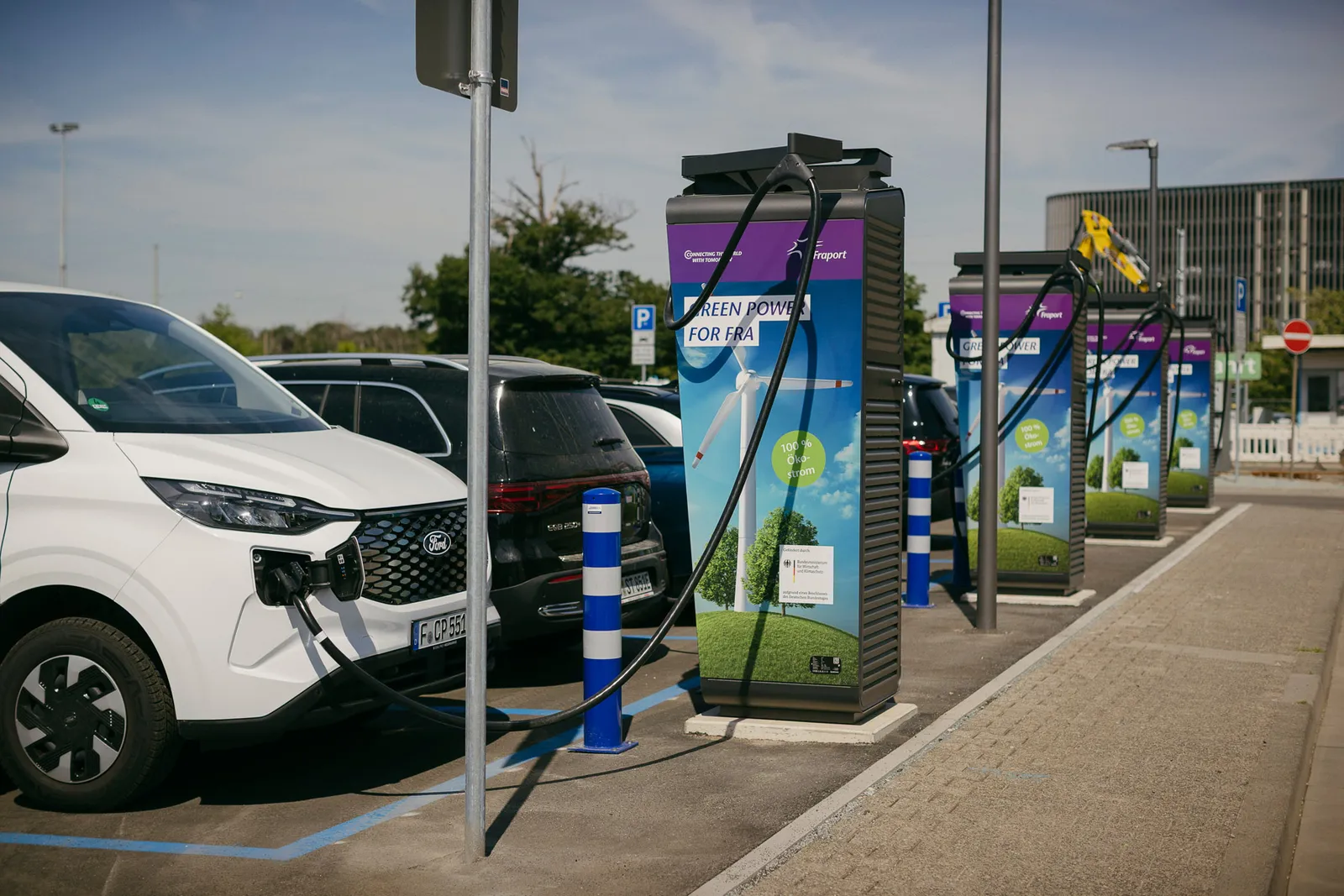
Hacker attacks on charging stations threaten not only the data of customers and companies but also the entire power grid. The practical results of the three-year research project ReSiLENT now show how charging infrastructure can be protected from digital threats.
Illustration
Image: Fraport
The progress of electric mobility depends not only on the development of charging infrastructure and driving range. Safety also must keep pace with the expanding industry. This applies to connected charging stations, their payment systems, and the power grid as well. Charging infrastructure is increasingly becoming a target for cyberattacks, which can lead to data theft, disruptions in charging station functionality, or disturbances in the power grid.
To minimize the threat of such attacks and make charging infrastructure more resilient, a consortium of researchers from Ostbayerische Technische Hochschule Regensburg, Asvin GmbH, and ChargeIQ GmbH came together to launch the ReSiLENT research project (Resilient and Secure Charging Infrastructure for Electric Vehicles). After three years, the project, funded by the German Federal Ministry of Economics and Energy, was successfully completed in 2026.
The Ostbayerische Technische Hochschule Regensburg took on the role of consortium leader for the scientific analysis of threat scenarios and the research of systems for preventing, detecting, and tracking cyber incidents. The Stuttgart-based IT security company Asvin GmbH developed the technical platform for data exchange and provided expertise in communication security and risk assessment. The software provider ChargeIQ GmbH from Leinfelden-Echterdingen was responsible for the practical integration of the developed components into the charging infrastructure.
The project yielded three key security mechanisms: First, the team developed an application for early detection of suspicious activities directly at charging stations. Second, a decentralized communication structure was created that enables reliable and scalable transmission of security-related information between charging points and operators in distributed systems. These two systems are supplemented by a central user interface through which operators, owners, and security officials receive specific warning messages and concrete action instructions based on their roles.
The testing was conducted directly in practice: chargeIQ integrated the security solutions into six charging stations and tested them under conditions resembling real-world operations. This field trial demonstrated that the new approaches can be seamlessly integrated into existing charging systems both technically and organizationally. The insights gained now serve as a foundation for further development of commercial products, additional research, and inclusion in international standardization processes.