
Researchers at TU Graz are drilling holes through the crystal lattice of lithium titanate
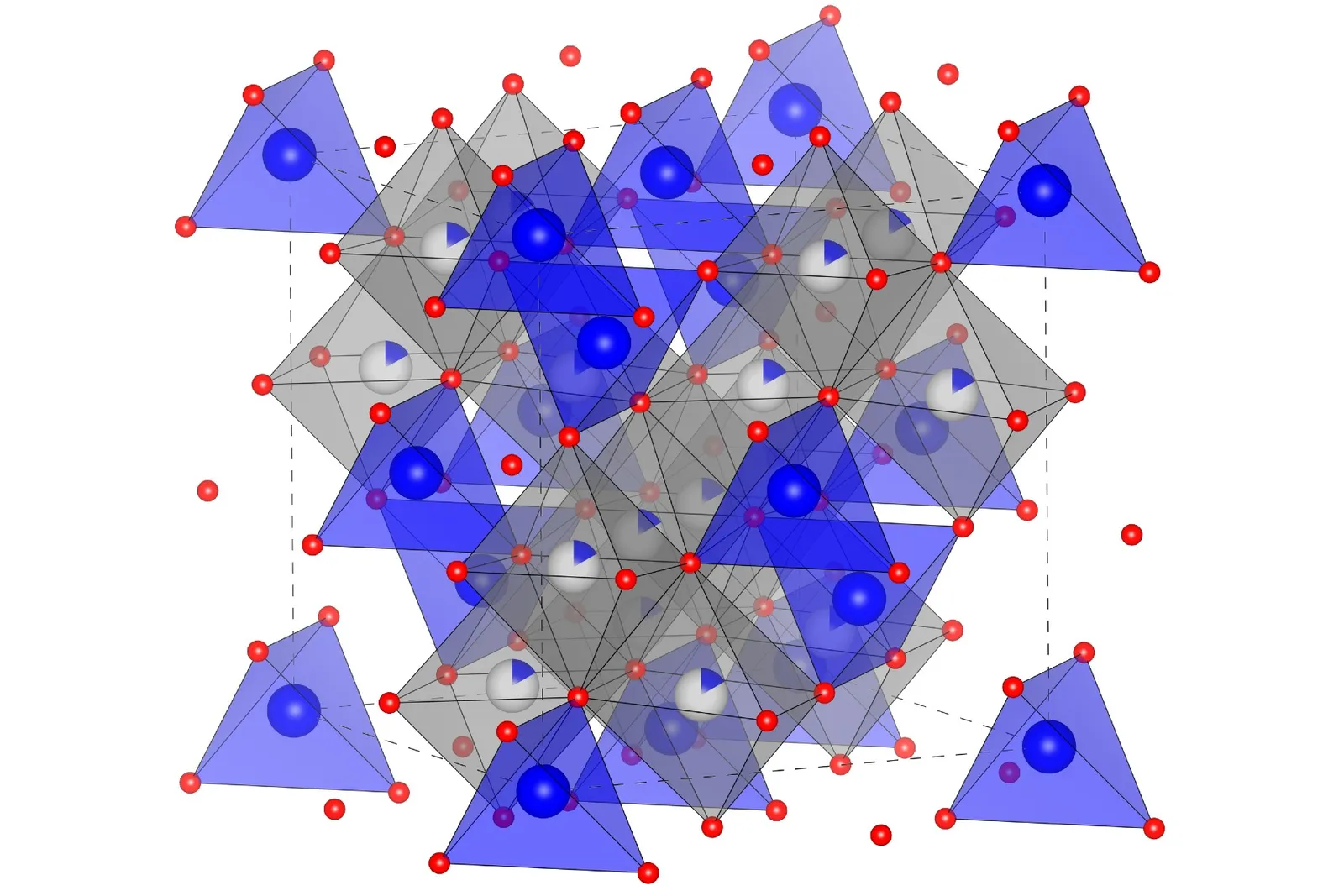
Researchers at TU Graz have found a way to significantly increase the ion conductivity of lithium titanate. In experiments, they demonstrated that deliberately created defects in the crystal lattice “activate a previously blocked pathway for lithium ions.” However, this is still considered basic fundamental research.
Lithium titanate (LTO) is a commonly used anode material for batteries alongside graphite. Yet in its untreated state, it conducts lithium ions poorly. Its high ion conductivity only develops when a battery is charged, as additional lithium ions and electrons are stored in the material.
The two researchers, Bernhard Gadermaier and Martin Wilkening from the Institute for Chemical Technology of Materials at TU Graz, have now succeeded in transforming pure (“non-lithiated”) LTO with its original composition of Li4Ti5O12 into a significantly better ion conductor through an entirely different approach: The duo claims to have intentionally created “holes” in the crystal lattice, known as oxygen vacancies. “When individual oxygen atoms are removed from the crystal lattice, these voids are created, which free up a path for ions that was previously blocked. This diffusion pathway is already predetermined in the material by the LTO structure, but it is only activated by the defect structure,” explains Wilkening. The results of this experimental study were published in the scientific journal “Science Advances.”
To create defects in LTO, the researchers heated lithium titanate in an oxygen-poor atmosphere to 300 degrees Celsius. “Through this gentle heating, individual oxygen atoms are removed from the crystal lattice,” continues Wilkening. “The resulting anionic vacancies in the crystal lattice have a direct impact on the movement of lithium cations, turning what was originally a poor ion conductor into one that is significantly better. The example of LTO clearly demonstrates the enormous influence of atomic defect structures on a material’s macroscopic properties.”
Complex experimental verification
The researchers were able to experimentally demonstrate the rapid ion conduction by combining conductivity spectroscopy with nuclear magnetic resonance spectroscopy (NMR). It was the NMR measurements that provided direct experimental evidence of the newly activated atomic diffusion pathway.
"Our experimental study clearly shows that the properties of a solid are determined not solely by its chemical composition, but to a significant extent also by its local defect structure and thermal history," summarizes Martin Wilkening. "We demonstrate how the mobility of small lithium cations can be selectively controlled using classical concepts from anionic defect chemistry."
The work is also a prime example of how purposeless fundamental research can yield new material functions, according to the researchers. Moreover, “targeted control of ionic conductivity through defect chemistry opens long-term prospects for ionotronic, memristive, and neuromorphic components in micro- and nanoelectronics.”