
Ford Transit City: Meet the electric van that hides its origins well at IAA 2026
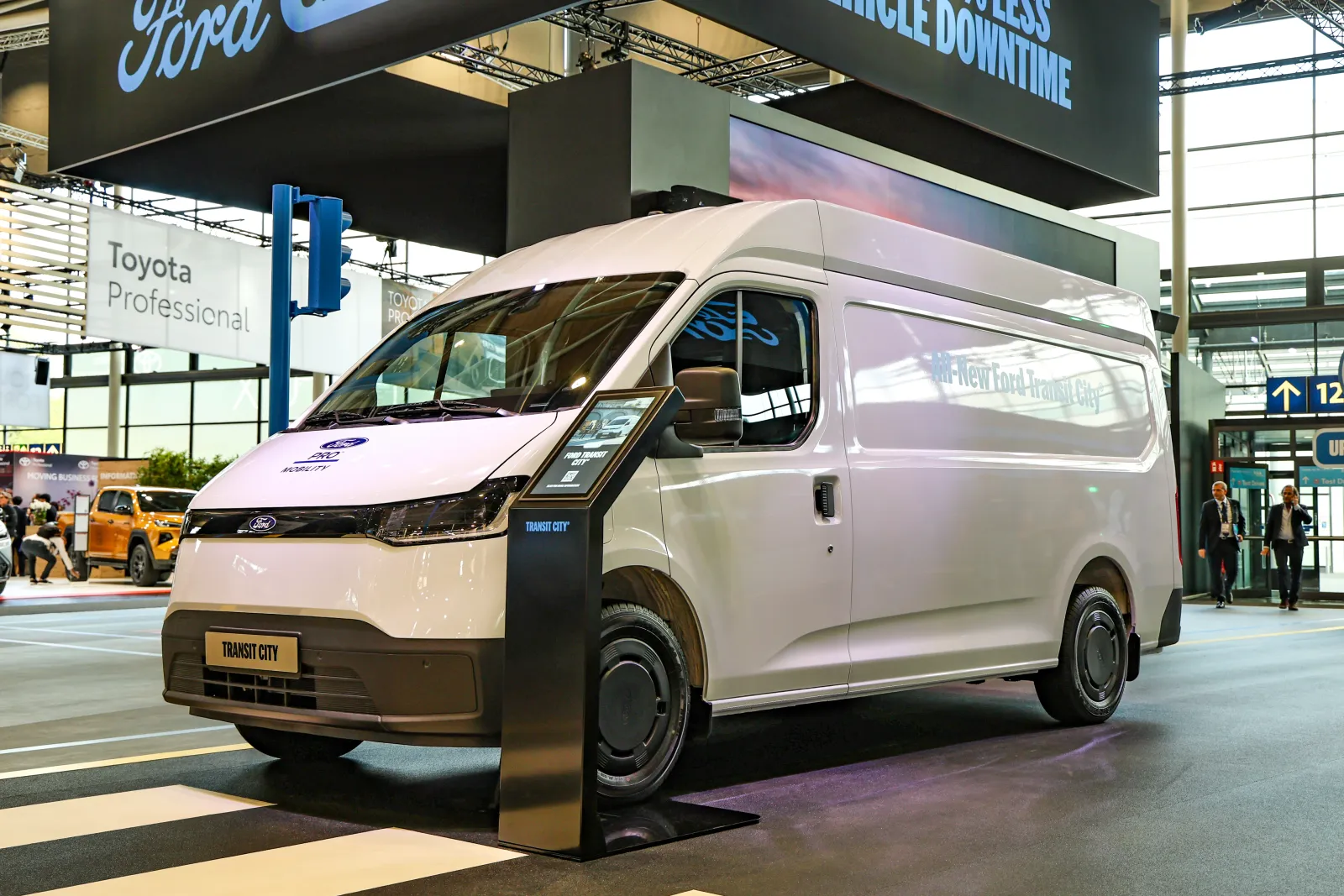
First unveiled to the European public at IAA 2026, the Ford Transit City expands the lineup with a simple and versatile approach. Developed in partnership with Jiangling Motors (JMC), it is designed exclusively for professional fleets. It was our first encounter with this electric van in Hanover.
Ford Transit City: Not Quite Like the Rest
With the Ford Transit City, the manufacturer’s Pro division enters a new segment in electric vans. This model fits between the Transit Courier and Transit Custom, clearly designed to meet urban needs. It targets last-mile deliveries, as well as craftsmen and fleets operating in low-emission areas. But behind its Ford badge lies a Chinese origin! The Transit City was developed by Jiangling Motors (JMC), a long-standing partner of Ford in which the American automaker holds about 30% ownership. The van is actually produced in China before being added to Ford Pro’s European lineup. This introduction comes with a rather unique positioning: in France, the Transit City is intended for businesses and professional fleets, rather than individual consumers. Ford is thus betting on a vehicle
It features a deliberately simplified configuration, with comprehensive equipment available as standard. 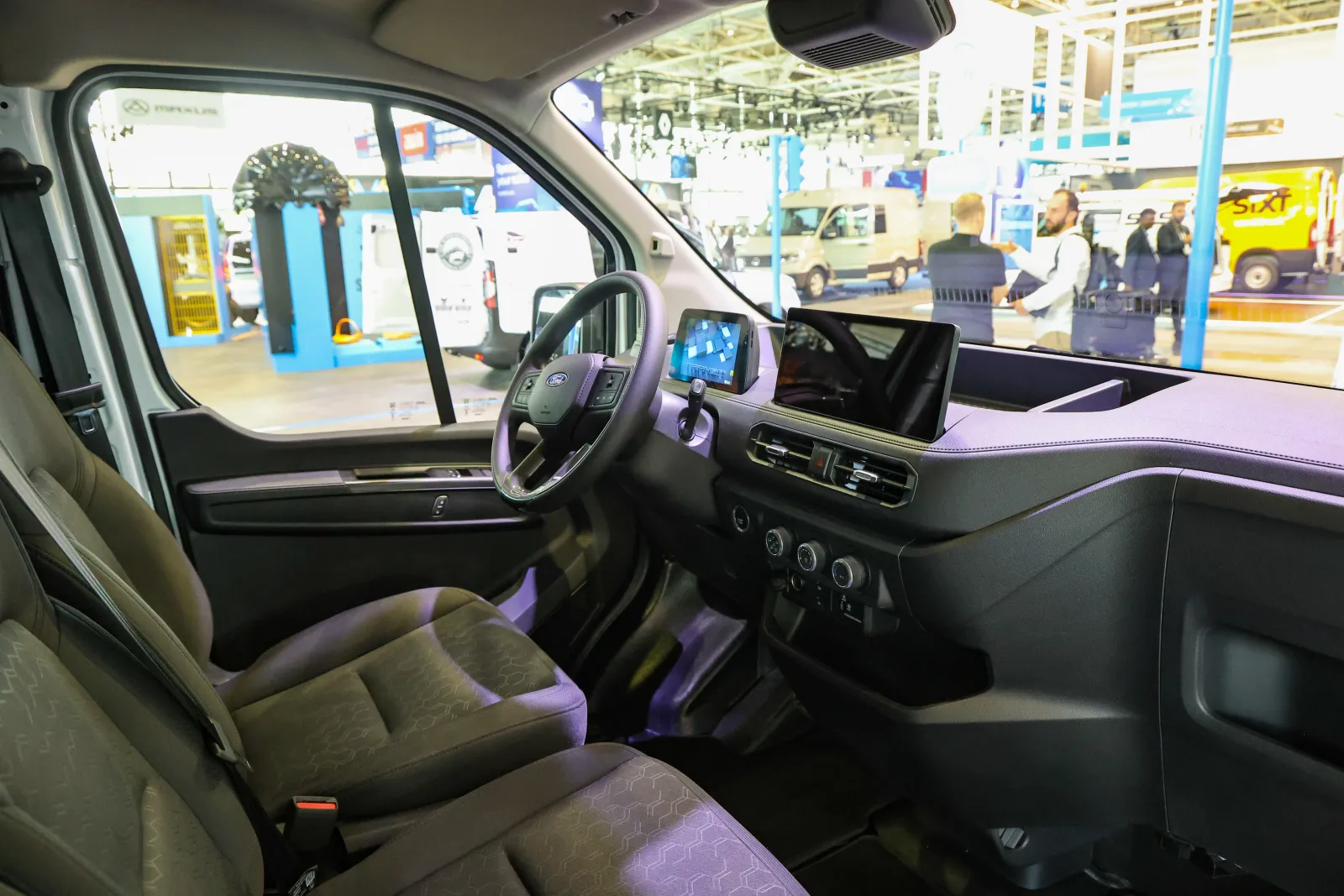
Aboard, we find among other things:
Rearview camera
Adaptive cruise control
Sign recognition
Front and rear radars
USB port
7-inch digital dashboard
12.3-inch multimedia screen
Heated driver’s seat
The more practical and useful features include pre-conditioning, a right-hand sliding door, 180° opening rear doors, and a two-seater bench seat on the passenger side. Efficiency is also a key consideration. Ford estimates that 90% of electric vans in this segment cover less than 110 kilometers per day. Therefore, the Ford Transit City opts for a battery of moderate size rather than a large capacity pack designed for long distances.
Also read
Just introduced, already awarded… the new Renault Trafic electric named Van of the Year 2027
A simple electric van available in several configurations
The Ford Transit City features a front-wheel-drive architecture, with an electric motor mounted on the front axle. It generates 110 kW / 150 horsepower, tuned to “prioritize agility in urban environments.” The One Pedal Drive system also allows energy recovery during deceleration. There are three configuration options available: the L1H1 for the compact version, with 6.4 m³ of cargo space and a payload capacity of up to 1,085 kg. Despite its compact size, it can carry three euro pallets. The L2H2 significantly increases capacity, offering 8.5 m³ of space and a maximum payload of 1,275 kg. Its loading length exceeds 3 meters, greatly expanding its utility options.
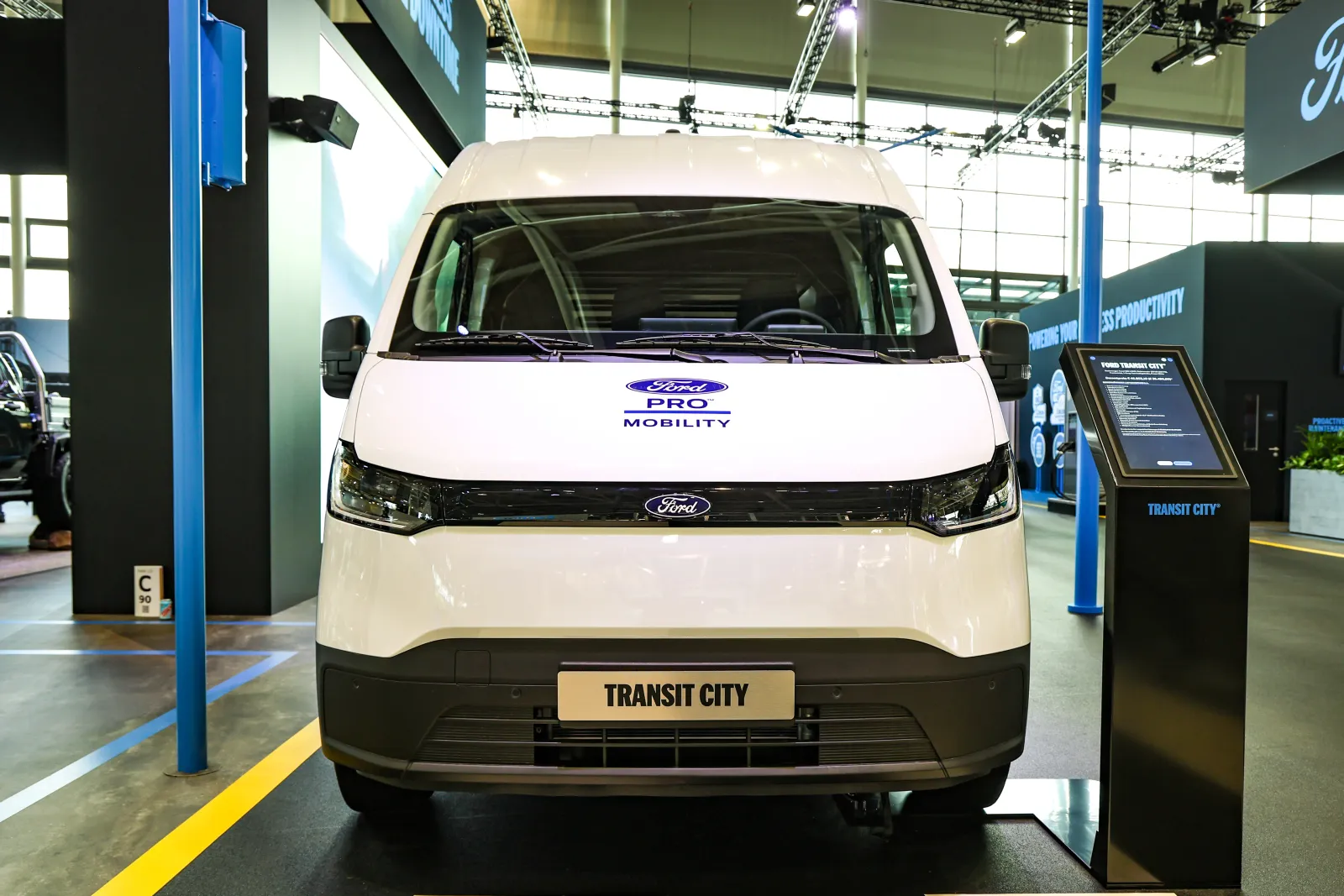
Finally, the chassis-cab design is one of the model’s distinctive features. A variant was planned early in development to simplify work for bodybuilders, featuring optimized frames, standardized mounting points, and predefined drilling areas. As a result, Ford Pro has over 200 certified customizers in Europe. In Hanover, Ford showcased a large-volume van, a platform with ramps, and a sheet-metal version equipped with shelves. A refrigerated vehicle was also on display, previewing a future electric solution designed for auxiliary equipment. Inside, the Ford Transit City adopts a fairly functional layout with the aforementioned features, rather than a “desirable” interior design.
56 kWh LFP and up to 254 km
The Ford Transit City is equipped with a 56 kWh LFP battery, chosen for its balance of cost, weight, durability, and range. Ford claims up to 254 km according to its WLTP testing cycle, a figure designed primarily for daily urban commuting. Fast charging can reach 87 kW in direct current, with an average power of 67 kW. It takes approximately 33 minutes to charge from 10% to 80%, and 10 minutes at a fast charger can provide “up to 50 km of range” under certain conditions. With alternating current, the 11 kW charger takes about 4 hours and 30 minutes to charge from 10% to 80%.
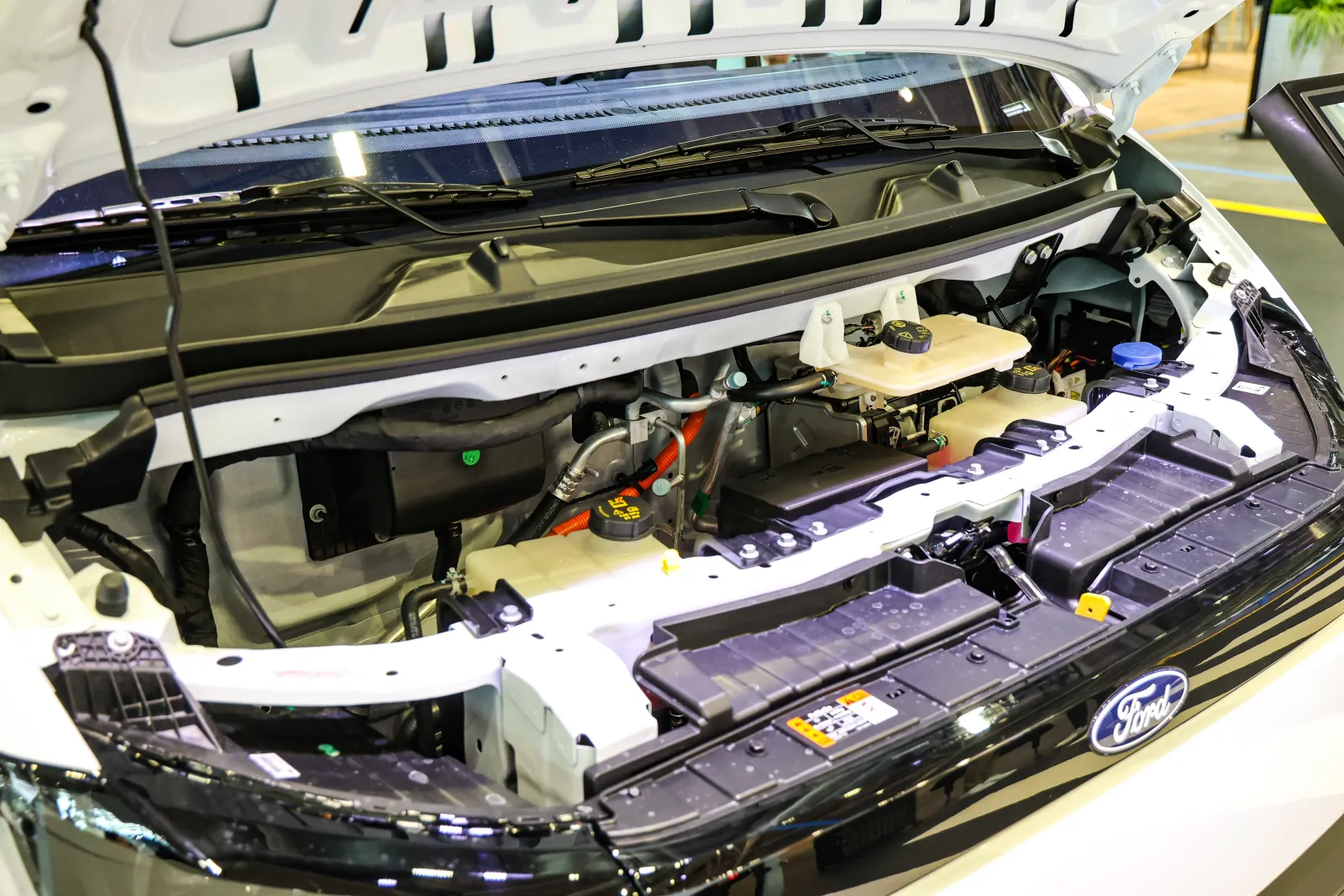
In conclusion, Ford is also working on applications that require power directly on board. The chassis-cab model will receive a 3 kW ePTO in 2027, powered by the main battery. It will be able to operate a refrigeration unit, a dump bed, a tailgate, or even a high-pressure pump. This solution was initially demonstrated in Hanover through the refrigeration concept developed with Lecapitaine. Rather than using a separate auxiliary battery, the equipment draws power directly from the 56 kWh capacity of the Ford Transit City. With this approach, Ford aims to turn the Transit City less into a long-distance traveler and more into a true urban work vehicle. Its compact battery, various body styles, and conversion options are designed primarily to enable fleets—only fleets—to have an electric vehicle suited to their daily routes.