
Corporate fleets: These Volkswagen ID.Buzz vehicles earn money by feeding their energy back into the grid
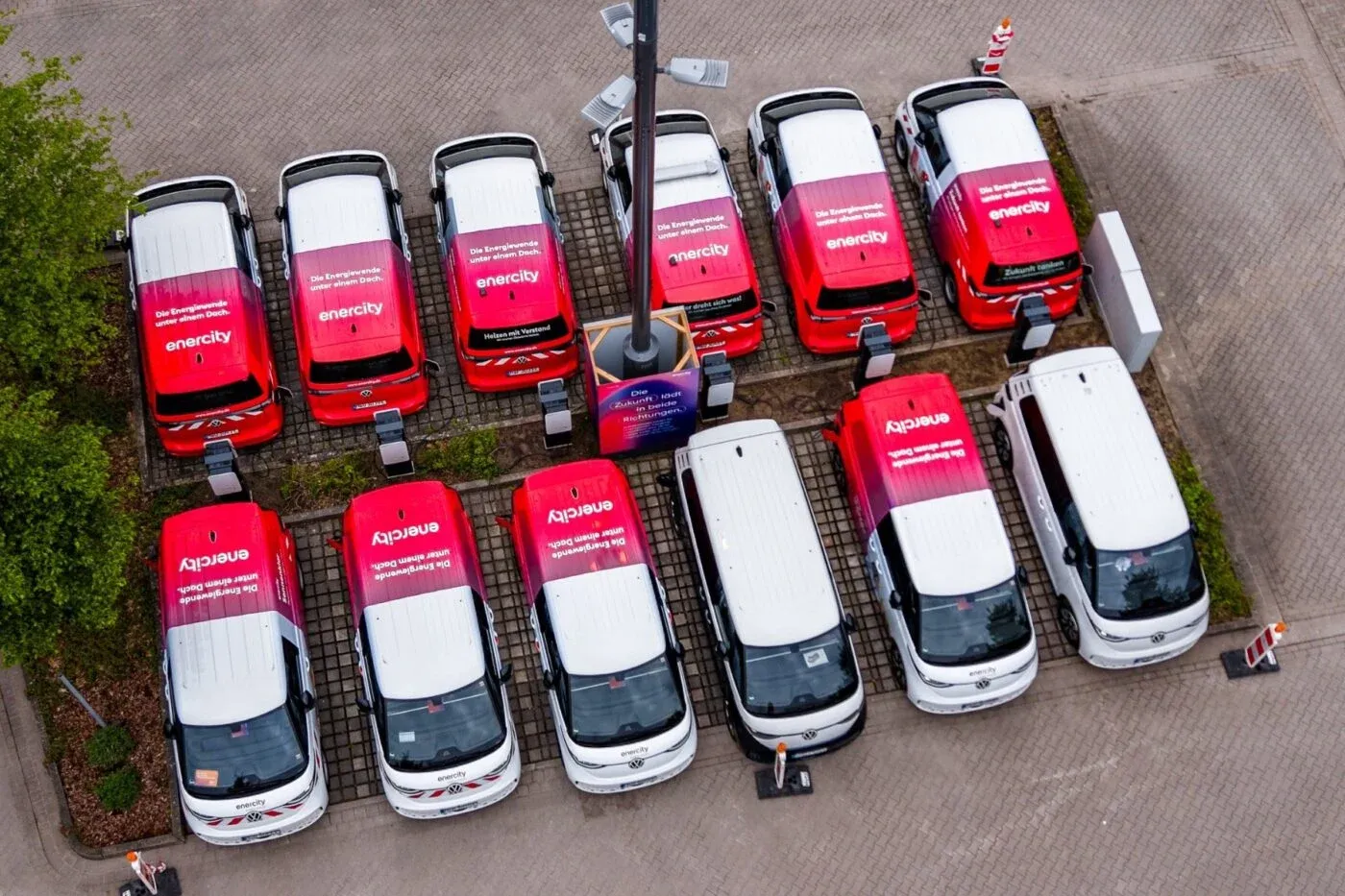
V2G (Vehicle-to-Grid) is truly moving beyond the demonstration phase. In Germany, company Enercity uses twelve Volkswagen ID.Buzz vehicles from its own fleet to store electricity and then feed it back into the grid when it’s advantageous. This experiment has already enabled the sale of energy on the market and generated initial revenue.
Not everyone knows this, but electric cars can have a second function when they are parked. Thanks to their batteries, they can help power the electrical grid. This promise is made possible by Vehicle-to-Grid technology (V2G), though it remains little widespread in Europe. In Germany, Enercity and Volkswagen have just taken an interesting step forward.
Twelve Volkswagen ID.Buzz Vehicles Tested
Since last year, the German energy provider Enercity has been experimenting with two-way charging using twelve Volkswagen ID.Buzz vehicles from its own fleet. When connected, these vans can not only recharge themselves but also feed some of the electricity stored in their batteries back into the grid.
Also Read
Electric vehicles: Does two-way charging affect battery wear? We have the answer!
When operated together, the twelve vehicles function as a single storage unit. Enercity states that they collectively possess a capacity of over 0.1 MW, which is the threshold required for such capacity to be sold in the electricity market. It is actually the aggregation of the entire fleet that makes this operation feasible.
V2G is already generating revenue
After several months, Enercity carried out its first real commercial operation this summer. The electricity stored in the batteries of vehicles was resold on the market. The revenues remain very modest for now, amounting to just a few hundred euros, but the value of this test lies elsewhere: demonstrating that vehicles used daily can also serve as energy storage.
Technology is no longer the main obstacle
According to Enercity, the main barriers to large-scale deployment are no longer cars or charging stations. The challenges lie primarily in measuring electricity, billing for it, and distinguishing between energy consumed and that temporarily stored before being sent back to the grid. More than 700 German grid operators will need to adapt their systems accordingly.
For large corporate fleets, where vehicles are often plugged in for several hours a day or even all night long, the potential is enormous. The challenge remains in turning these experiments into offerings that are simple and profitable enough for users. And there’s still some work to be done in that area!