
Flash Charging is arriving in the Netherlands: 70 ultra-fast charging stations available for all EVs
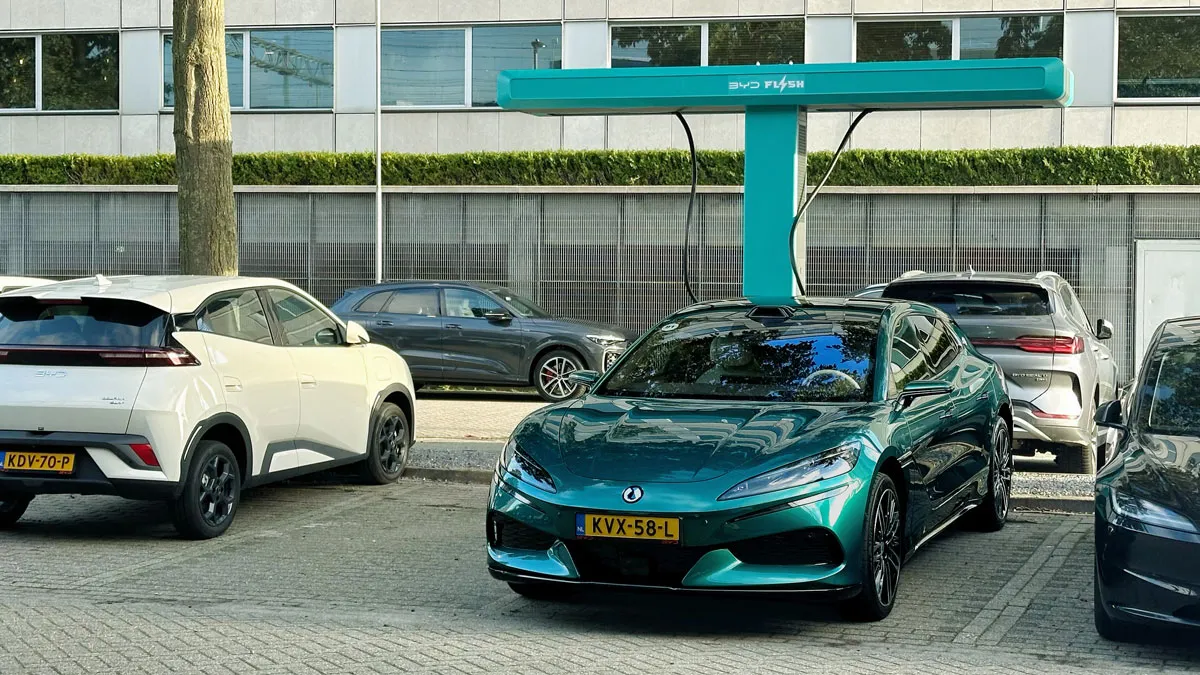
Flash Charging is coming to the Netherlands. BYD plans to install 70 ultra-fast charging stations by the end of 2027, accessible to all EVs with a CCS2 connector. During a demonstration in Hoofddorp, we saw a Denza Z9GT go from 10% to 97% charged in just nine minutes. The first station will open at the end of October.
Nine minutes to charge — we saw it happen
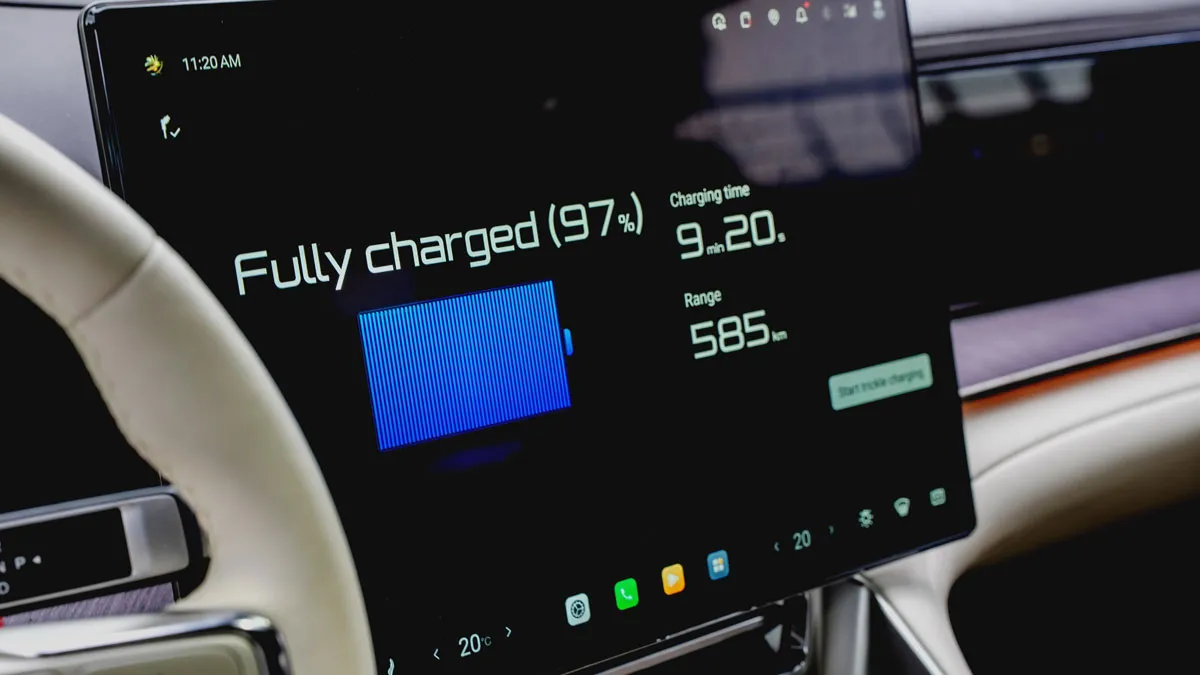
During BYD’s presentation in Hoofddorp, we witnessed a demonstration of the new Flash Charging technology. A Denza Z9GT was connected to the specially developed charging station, and its battery charge level rose extremely quickly. Within nine minutes, its massive 122.5 kWh battery pack was charged to 97 percent. Converted to the stated battery capacity, this means over 106 kWh of energy was delivered in just nine minutes. This is a performance we have not yet seen in any production car in the Netherlands.
BYD summarizes this technology with the slogan “Ready in 5, Full in 9, Cold add 3.” A suitable car can be charged from 10 to 70 percent in five minutes and reach 97 percent after nine minutes. According to BYD, even at -30 degrees Celsius, it only takes twelve minutes to charge from 20 to 97 percent. Of course, we were not able to test this last point ourselves.
Why Flash Charging is So Much Faster
In DC fast charging, it’s not just about the maximum charging power, but especially how long a vehicle can maintain that power. Many electric cars only reach their rated peak power for a limited portion of the charging session. After that, the power decreases as the battery pack fills up. This difference becomes quite significant above 80 percent.
Take the Porsche Taycan, for example. It can reach up to 320 kW at a suitable fast charger and, according to Porsche, maintain over 300 kW for up to five minutes. It takes about eighteen minutes to charge from 10 percent to 80 percent. After that, the charging power continues to decline.
In Flash Charging, the power levels are much higher. The Chinese version of this charging setup can deliver a peak power of up to 1,500 kW. More importantly, the Denza Z9GT maintains exceptionally fast charging even at higher charge percentages. The average power between 10% and 70%, calculated based on the specified battery capacity, is approximately 880 kW. Even between 70% and 97%, it can theoretically reach an average of nearly 500 kW.
Even with Flash Charging, the power output decreases, but this reduction has a much less significant impact on the overall charging time. While many EVs slow down significantly once they reach over 80 percent charge, the Denza continues to absorb large amounts of energy. For comparison, BYD states in its presentation that 25 to 45 minutes is the typical charging time with high-power DC fast chargers. This is a general estimate, as the actual charging time varies greatly depending on the vehicle and charging scenario.
Second-generation Blade Battery and smart energy storage
The most significant technical advancement lies in the second generation Blade Battery. This LFP battery pack can handle significantly higher charging capacities thanks to improved cell technology and temperature control. The vehicle’s 1,000V architecture enables the transfer of large amounts of energy in a short time.
The charging station is also unique. BYD uses local energy storage as a buffer, which is gradually charged from the power grid and provides the necessary high power during charging sessions. This means a station does not need to have direct access to a power connection of over one megawatt. This can be a major advantage, especially in the Netherlands, where grid congestion makes it difficult to install fast chargers.
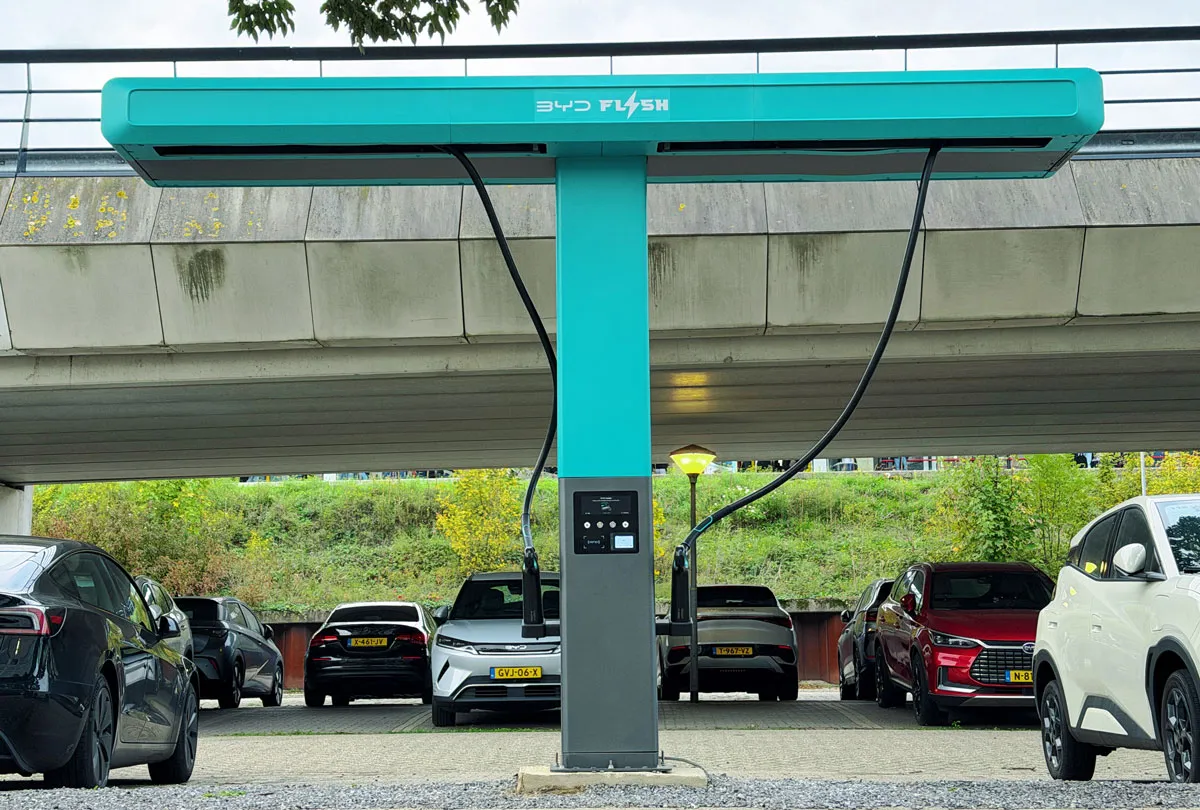
The charging cable is also attached to a T-shaped structure above the parking lot, so it doesn’t drag on the ground and is easier to handle on both sides of the car.
70 Flash Chargers for the Netherlands
BYD aims to quickly deploy this new technology. By the end of October, the first Flash Charging station in the Netherlands will open at BYD’s headquarters in Hoofddorp. By the end of 2027, there should be 70 such stations in the Netherlands, with 160 charging points planned for the Benelux region. Across Europe, BYD targets around 3,000 locations.
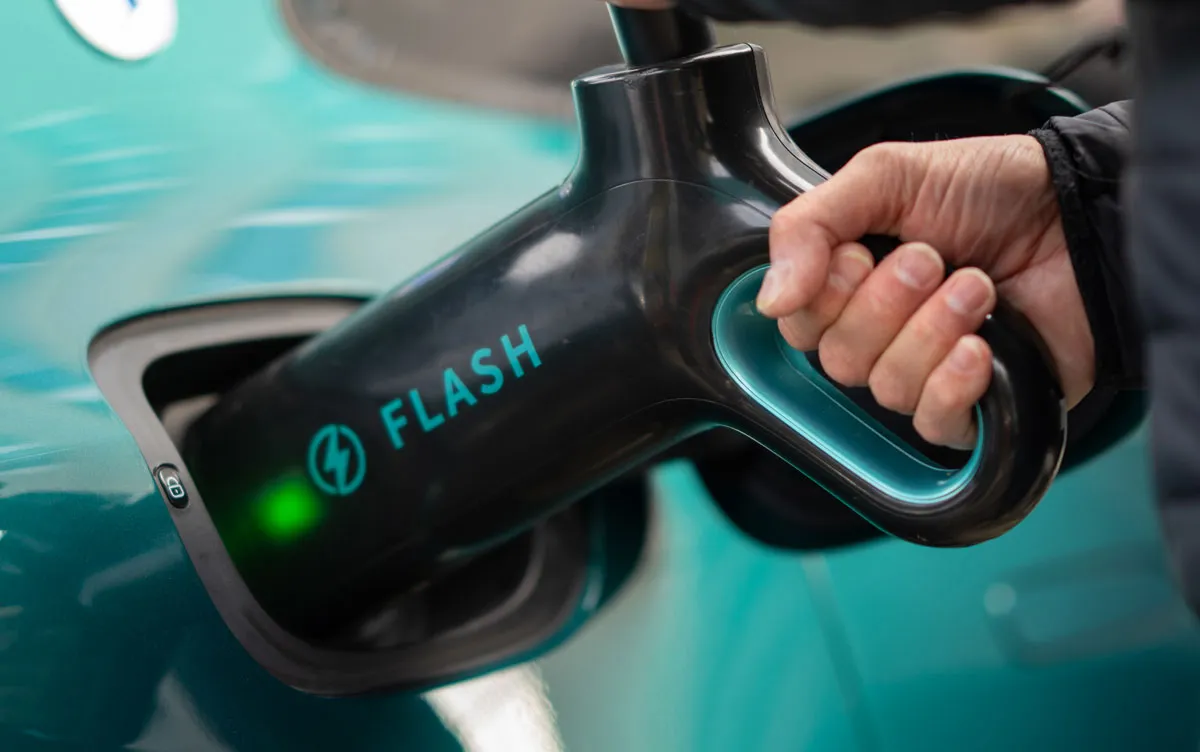
The stations will be accessible to all electric vehicles with a CCS2 connector, regardless of brand. However, that doesn’t mean every EV will be able to charge almost fully in nine minutes. The battery pack itself must be suitable for that. Other vehicles can still charge, but they are limited by their own maximum charging capacity.
Will Flash Charging be much more expensive?
With such extreme charging capacities, one would expect Flash Charging to be significantly more expensive than regular DC fast charging. But BYD has instead announced competitive, dynamic kWh rates. This is made possible in part by the integrated energy storage. The charging stations can gradually store electricity and release it at high power levels during charging. As a result, they rely less on costly heavy grid connections and can handle electricity costs more flexibly.
BYD aims to make Flash Charging not only faster but also financially attractive. An exact Dutch kWh rate has not been specified yet, but the intention is clear: faster charging does not necessarily have to be much more expensive. How competitive the rates actually are will have to be proven in practice.
Denza Z9GT starting at €117,190 in the Netherlands
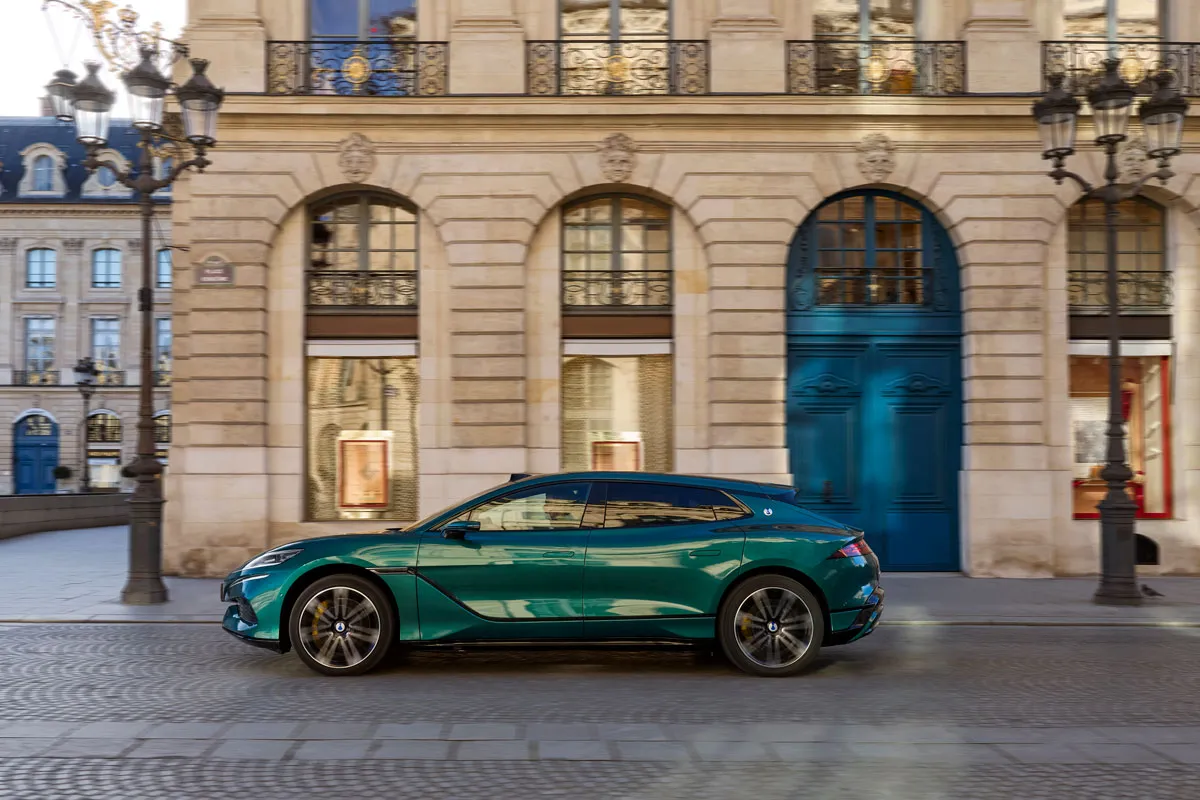
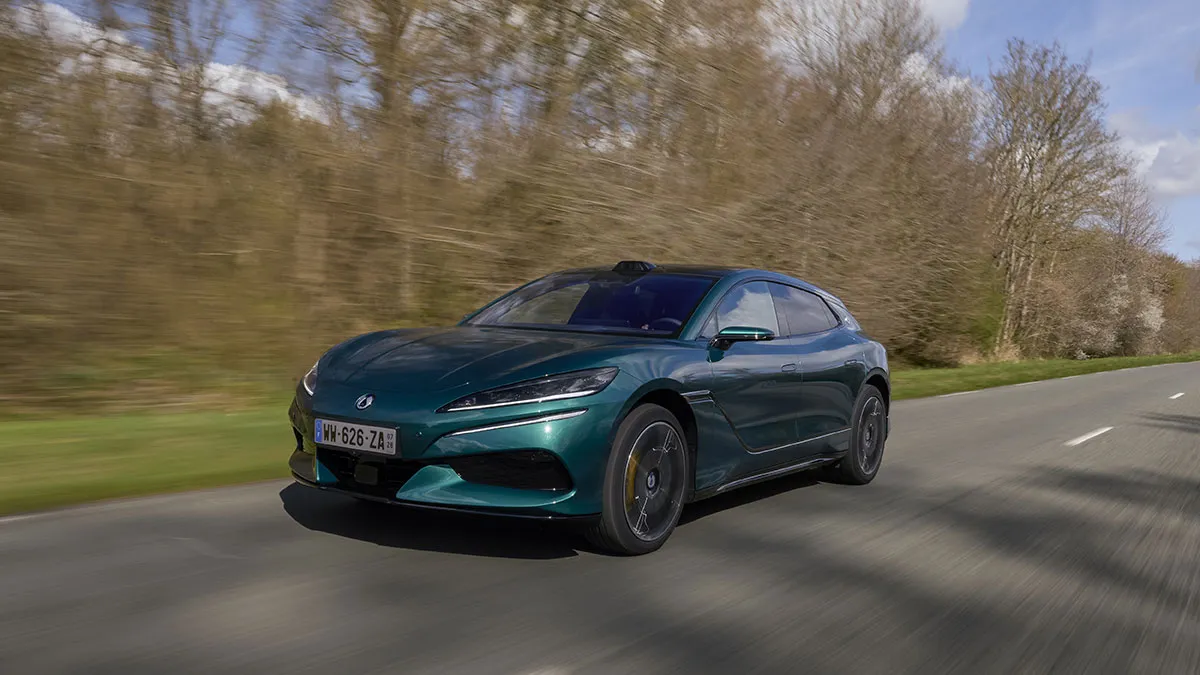
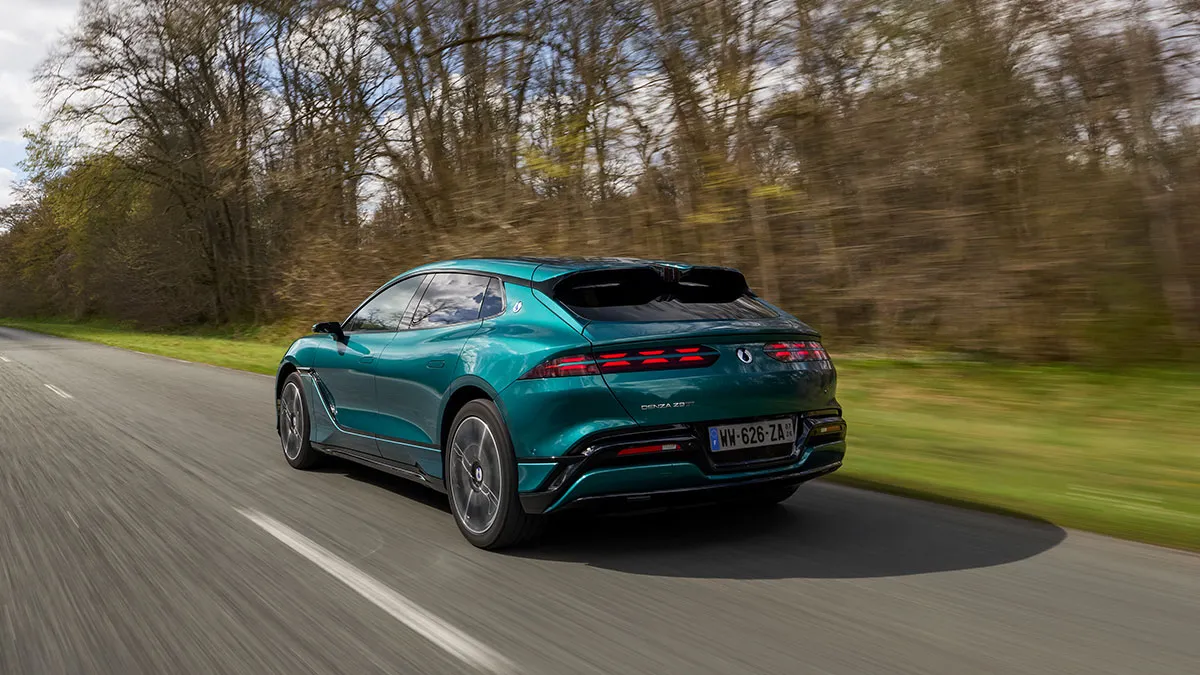
With Flash Charging, BYD also officially introduces its luxury brand Denza in the Netherlands. The Z9GT is the first model, equipped with three electric motors that together deliver 1,156 horsepower. The battery pack has a capacity of 122.49 kWh, providing a WLTP range of 600 kilometers. The starting price in the Netherlands is €117,190.
Notably, the Z9GT can also charge extremely fast using existing DC fast chargers. During the presentation, BYD showed measurement results from a charging session at Fastned Aalscholver, where a charging power of around 565 kW was achieved. In eight minutes and 25 seconds, the charge percentage increased from 26% to 86%. Even at 91%, after nine minutes and 20 seconds, a charging power of about 422 kW was still being delivered. This demonstrates that the new Blade Battery can maintain exceptionally high charging powers even without a dedicated Flash Charger.
We first got to know the Denza Z9GT during an extensive test drive in Italy. The electric supercar Denza Z and the plug-in hybrid BAO 5 will follow later. The first sales location in the Netherlands will be in Rotterdam.
The speed has been proven, now the network needs to be as well
What we saw in Hoofddorp is impressive. Especially because BYD demonstrates that high peak power is of little use if it drops significantly again just a few minutes later. The combination of the new Blade Battery and Flash Charging makes the final stage of a charging session exceptionally fast.
The technology works, as we saw for ourselves. With 70 planned charging stations in the Netherlands and another 300 in the UK, the ambitions are huge. Now it’s up to BYD to deliver on the network and the promised competitive pricing. Only when these charging speeds are available at sufficient locations will Flash Charging truly become interesting for EV drivers.
Text: Marc Verweij