
First look at Tesla Cybercab’s steering: a Cybertruck wheel bolted on
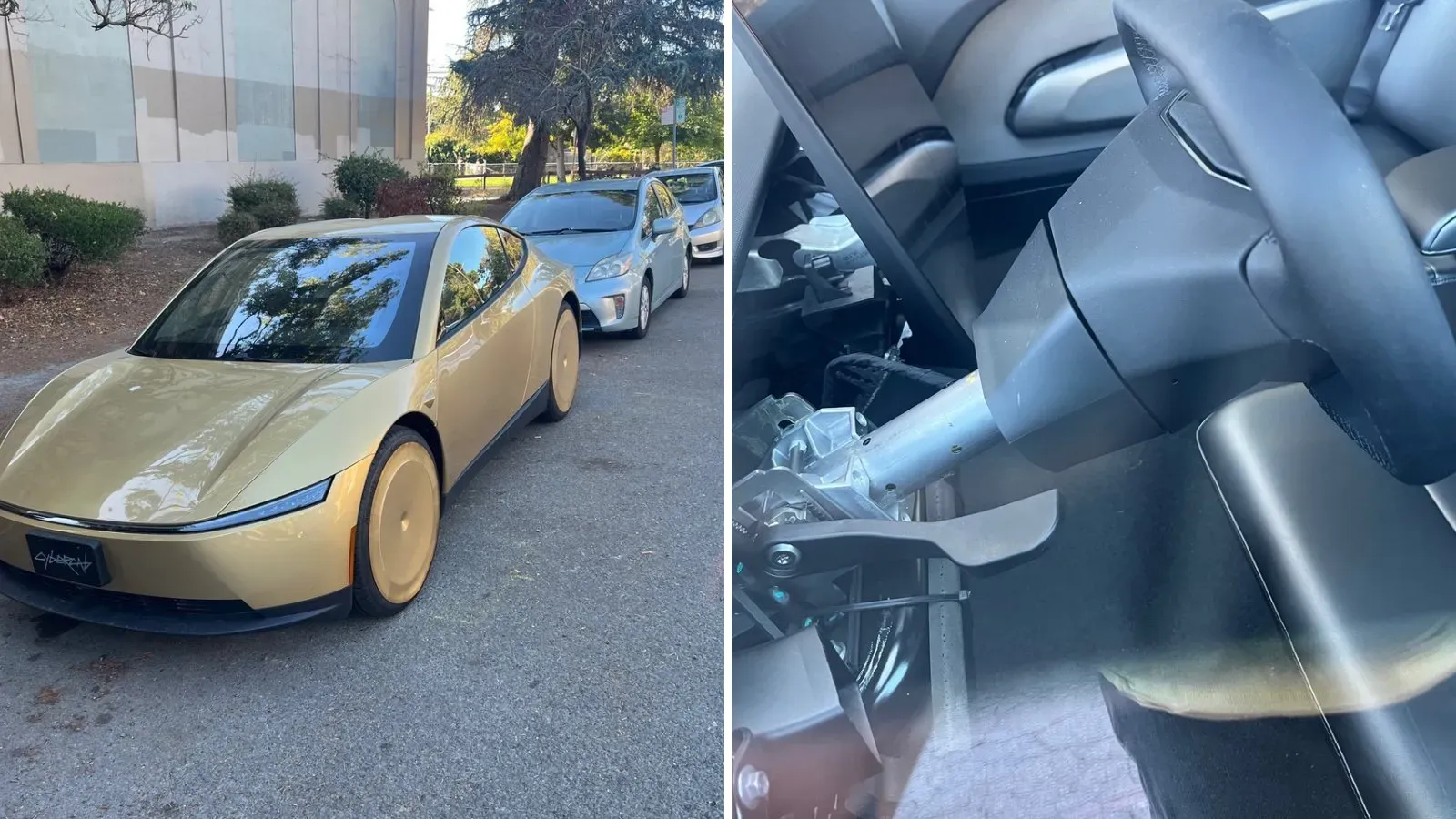
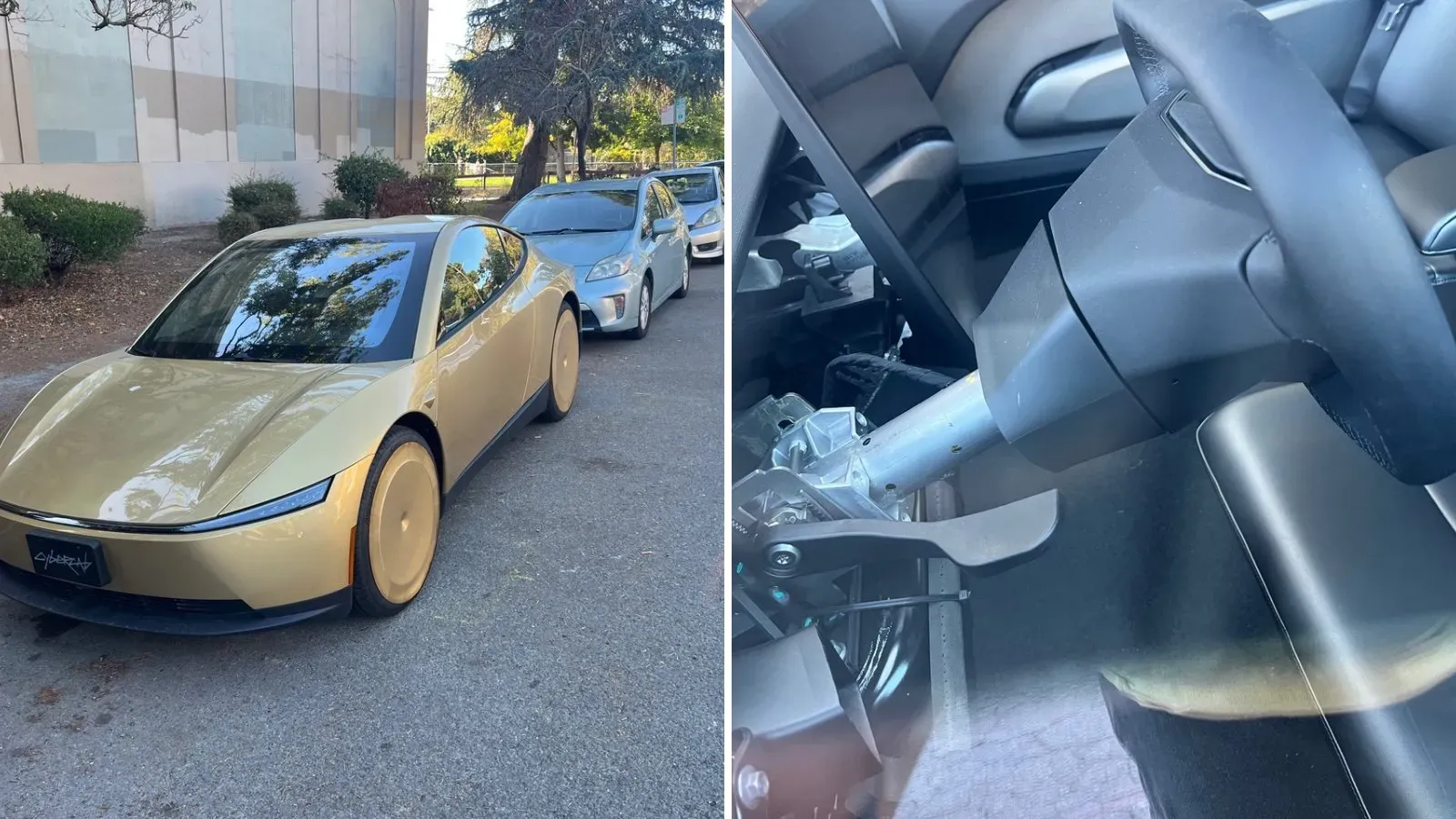
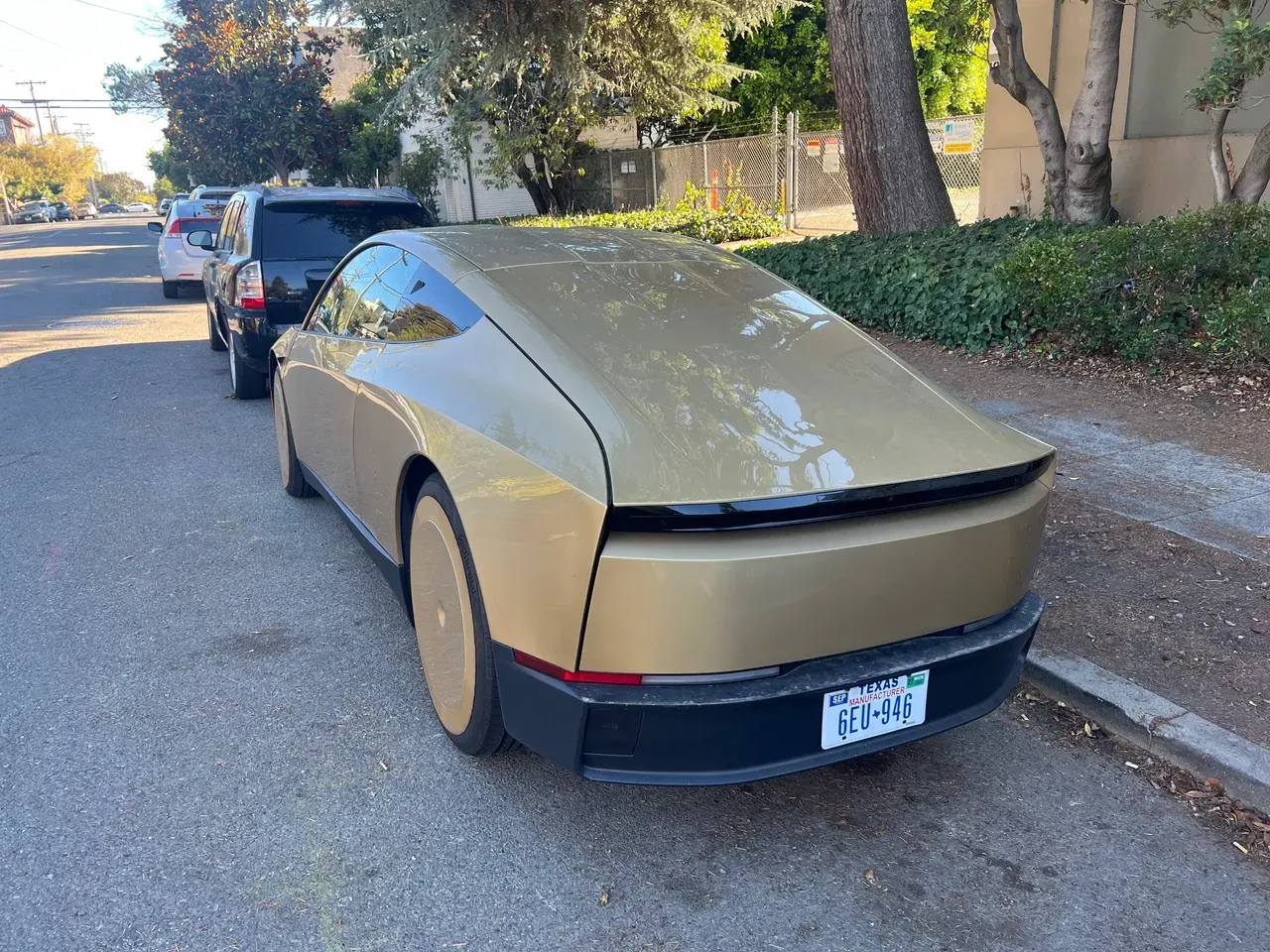
A pre-production Tesla Cybercab was spotted parked on a street in Berkeley, California, and it gives us the clearest look yet at how Tesla puts a steering wheel into a car it designed to have none.
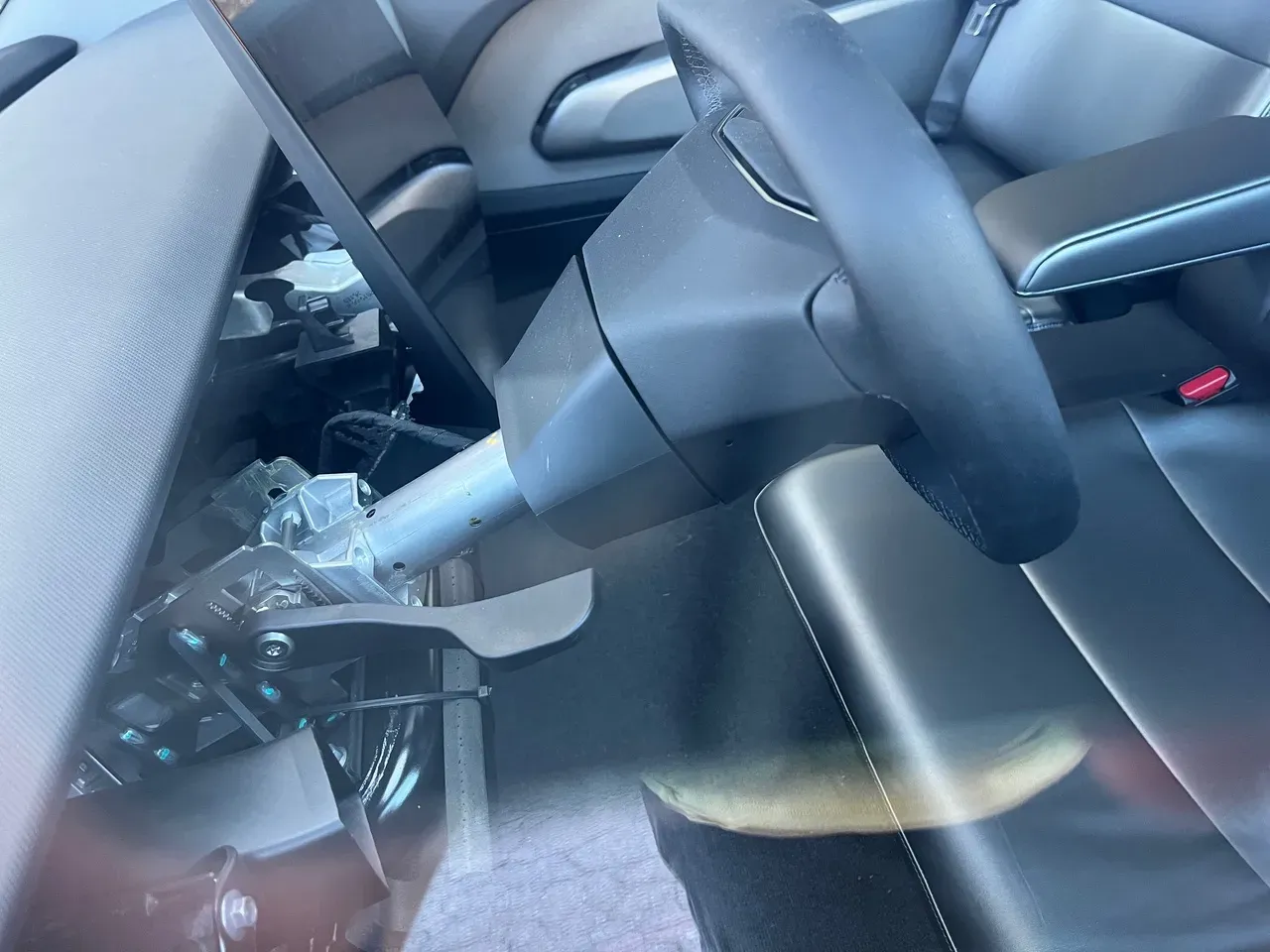
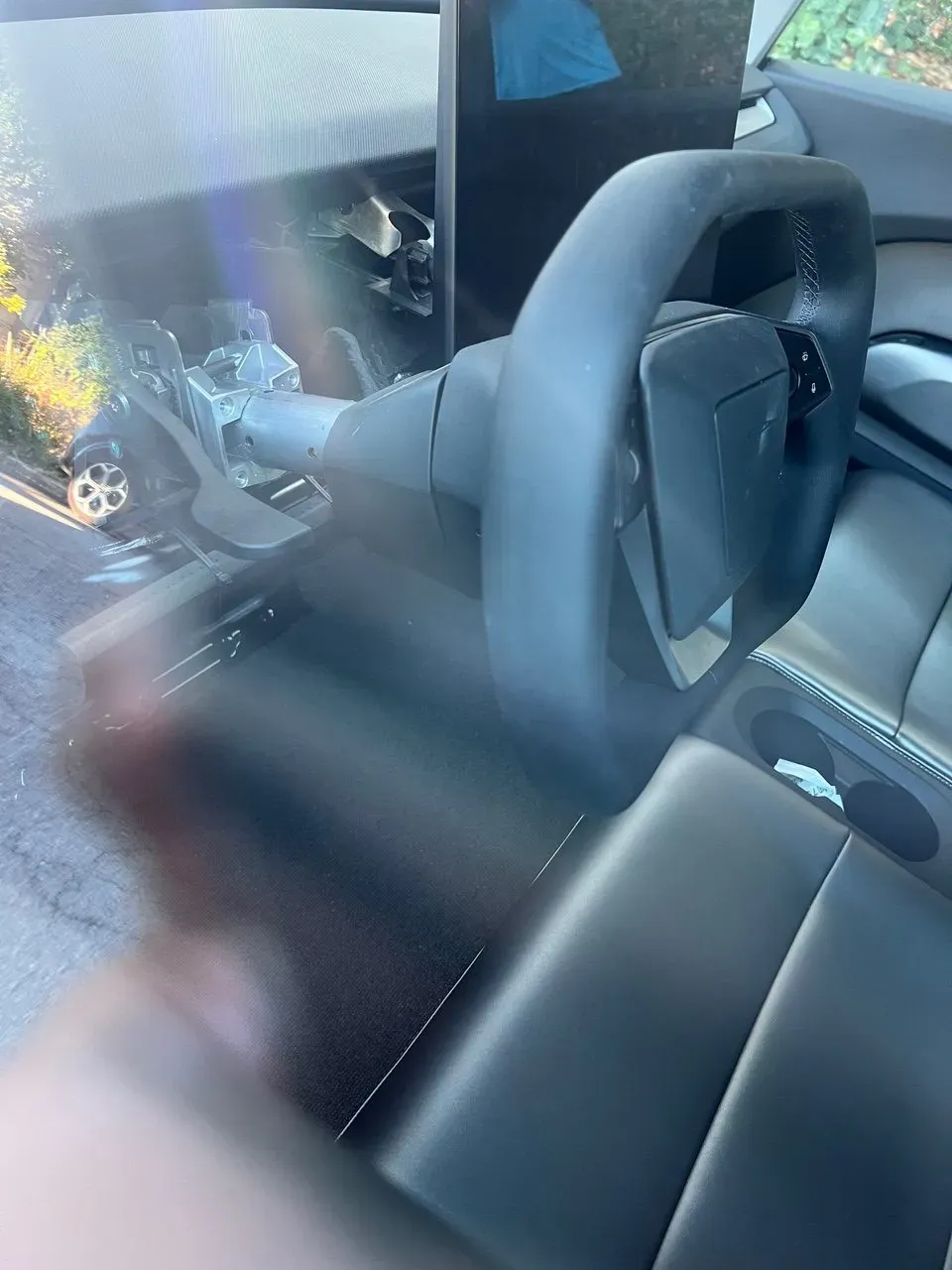
The photos, shared with Electrek by reader Adam Machacek, show a Cybertruck steering wheel mounted on an exposed steering column that has been bolted into the two-seat robotaxi.
A car built with no wheel, driving on a borrowed one
Tesla unveiled the Cybercab in October 2024 as a purpose-built robotaxi with no steering wheel, no pedals, and no mirrors. That is the whole pitch. It is a two-seater meant to drive itself and nothing else, and Tesla says it will cost less than $30,000.
The company started rolling steering-wheel-less units off the line at Giga Texas earlier this year, and we have been tracking the strange spectacle of Tesla mass-producing a car it cannot yet sell or drive itself at scale outside of small geo-fenced areas.
But the vehicles Tesla is actually testing on public roads are a different story. An engineering mule needs a human behind the wheel, so Tesla adds one. We have seen Cybercab prototypes running around Austin with steering wheels before. We just had not seen the hardware this clearly.
What is in the photos
The wheel itself is the squared-off unit from the Cybertruck. Behind it, the interior panels are off, and you can see the steering column running down to a fabricated mount with what looks like an adjustable rail, the kind of temporary rig you use to test-drive a car that has no factory provision for a driver.
The car wears a Texas manufacturer plate and a “CYBERCAB” vanity plate up front. It is finished in the gold-ish wrap Tesla has used on other test units. And it is small. Machacek, who saw it in person, said the compact, city-friendly proportions stood out.
“This was my first time seeing this car and I was pleasantly surprised about its overall compact size and city-friendly proportions,” he told Electrek. “One can not stop thinking this was originally meant to be the ‘cheap’ Tesla.”
That reaction tracks. The Cybercab rides on the same next-generation platform Tesla once talked about for its $25,000 car before that project morphed into a robotaxi.
Why the steering rig matters
Tesla’s public position is that the production Cybercab will not have controls at all. To move one without a wheel or pedals, Tesla hid a virtual joystick in the touchscreen that lets a person drag it around a depot with a finger.
A test mule collecting data on public roads is a different job. That car needs a real driver with real controls, which is why Tesla grafts a Cybertruck wheel and a column onto it. Regulations for testing autonomous prototypes on public roads generally require a human able to take over, and Tesla is still nowhere near removing that human at scale.
Electrek’s Take
These photos are genuinely the best view of the Cybercab’s steering connection we have seen. Credit to Adam for sending them.
But it also captures the whole contradiction of this program in one image. Tesla is building a car whose entire reason to exist is that it drives itself, and the version out doing the actual driving has a Cybertruck steering wheel bolted to a temporary rig. The production cars coming off the line in Texas cannot be sold or deployed at scale, and the test cars still need a person holding a wheel that is not supposed to exist.
None of that is unusual for an engineering prototype. Every automaker runs mules with makeshift hardware. The difference is that Tesla sold the Cybercab as a finished idea two years ago and is now mass-producing it before the software that justifies it exists.