
Fiat Koala: Electric city car based on 2CV platform pegged for 2028 launch
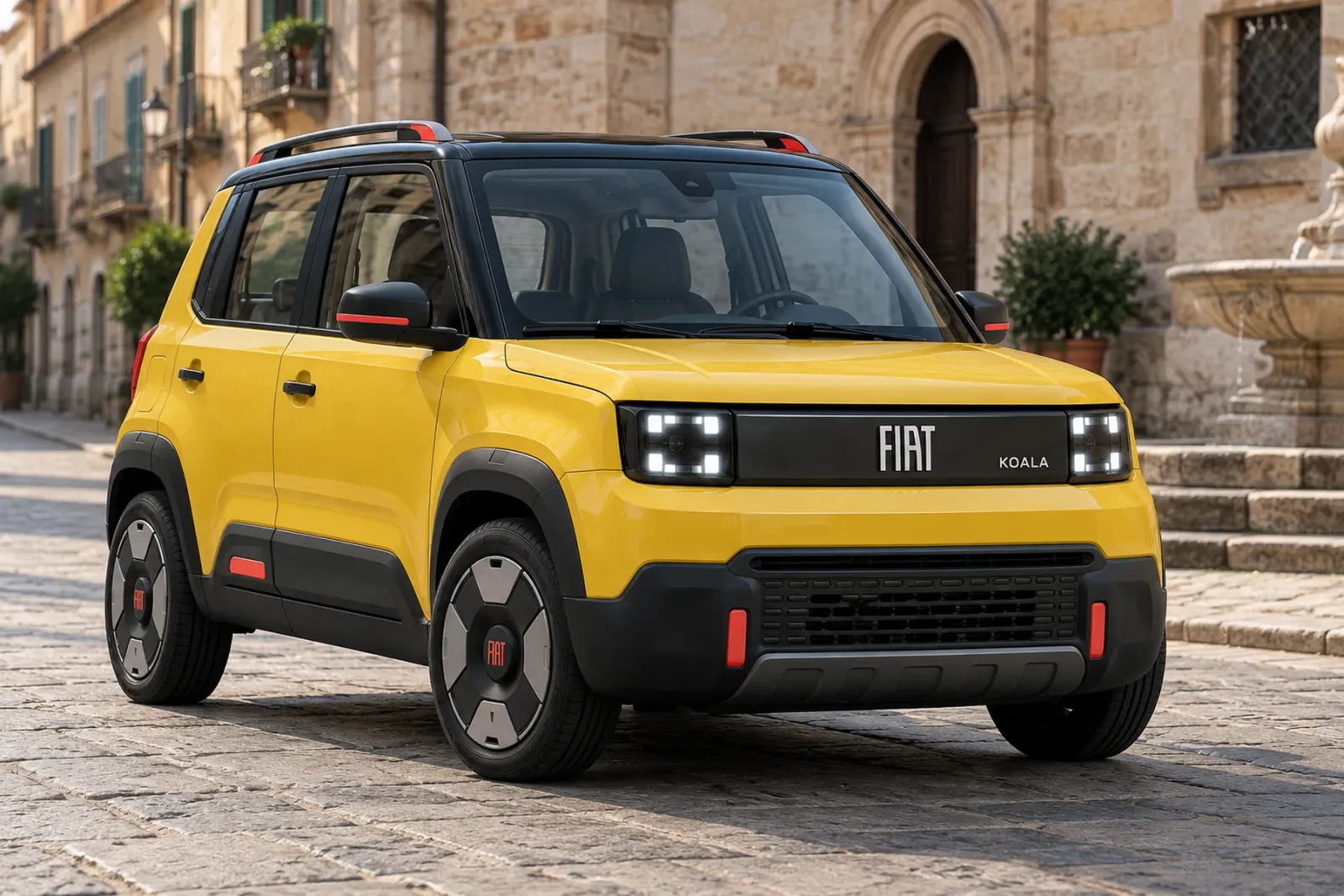
Fiat has selected the name "Koala" for a new electric city car which shares a platform with the new Citroën 2CV and is expected to hit the market in 2028. According to the brand's design chief, it is as sophisticated as the Citroën concept. However, Fiat still did not showcase it in Paris.
At the Paris Motor Show, the spotlight was on Citroën, where the new 2CV concept was unveiled: 3.76 metres long, weighing around one tonne in production, and priced at around €15,000 for its 2028 launch. Fiat, however, kept a low profile, even though the Italians are preparing a sister model. “We are working on a few cars based on the E-car platform. We are preparing a small car which will be based on the 2CV, and it’s going to be a ‘wow’,” Arnaud Belloni told Autocar. Belloni is the new CEO of Fiat, Abarth, and Lancia, succeeding Olivier François.
Design chief François Leboine added that Fiat’s first E-Car is “as ready as the 2CV is”. However, the Paris motor show was “not the right moment” to reveal it. Autocar suspects that Fiat did not want to steal the limelight from its French sister brand at its home show. After the Grande Panda and the Grizzly SUV, Leboine is now prioritising the small car offering. “We are redoing the bottom part of our range,” he said. “It is Pandina today but also 500. The maturity of the 2CV [concept] is evident, and we will follow exactly the same maturity. We will show it at a good moment.”
Panda, Grizzly or Koala?
The new Fiat belongs to the Panda family but does not necessarily have to be called Panda. “Koala now belongs to Fiat,” said Belloni. “We have a Koala, a Panda, and a Grizzly.” Fiat has trademarked the name and is sticking with bear-themed names, even though the koala is zoologically a marsupial. The only bear name Fiat cannot use, as Belloni pointed out, is Kodiak, because Škoda uses it for its large SUV.
Prior to this, ‘Pandina’ had been circulating as a potential name for a new electric car. At the end of 2023, it was reported that Fiat’s electric city car would be called Pandina. At the beginning of 2024, Fiat then unveiled five studies for its electric future, led by a “Mega-Panda,” which entered production as the “Grande Panda.” Since 2024, the old internal combustion engine Panda, which has been sold in Europe for around 15 years, has officially been called Pandina.
The combustion-engine Panda survives – for now
The new Koala has a solid reason for its own name: it clearly separates the electric car from the combustion-engine model. The latter is the best-selling car in Italy and will continue to be produced at the Pomigliano d’Arco plant near Naples until at least 2027. Fiat has committed to continuing to offer an affordable petrol model. Therefore, the Koala will not immediately replace the Pandina but will initially be offered as an additional model in a different class.
This aligns with what Fiat’s European chief, Gaetano Thorel, told Autocar earlier this year: “I need to find a proper answer for my Panda population. We need to find a multi-energy solution.” However, the new platform does not actually offer this choice, as Stellantis is focusing exclusively on electric powertrains for its upcoming small cars. At Fiat, the choice arises from offering two models side by side.
What Lies Behind the E-Car Platform
The platform targets a potential new vehicle class proposed by Stellantis and Renault in July 2025 and adopted by the European Commission in its automotive package in December 2025. M1E-class electric cars must not exceed 4.20 metres in length and must be built in Europe. In CO₂ fleet calculations, they are to count as 1.3 vehicles, thus having a stronger impact on a manufacturer’s average than a conventional electric car. However, the regulations have not yet been finalised. The model for this is Japan’s Kei cars, which account for around 40 per cent of the market there.
Stellantis intends to adapt the platform to different body styles and brand characteristics. According to Italian magazine Quattroruote, the Koala will likely be shorter than four metres and weigh around one tonne, like the 2CV. Both models are to be built together in Pomigliano, where Stellantis will launch its E-Car project in 2028.
Small batteries = lower price?
Neither Fiat nor Citroën has released official technical specifications. However, batteries with a capacity of around 25 to 35 kilowatt-hours are realistic. These could provide a WLTP range of approximately 200 to 300 kilometres. Lithium iron phosphate (LFP) is considered the likely cell chemistry. These batteries are cheaper and more durable than nickel-based cells but store less energy per kilogram. For pure city cars, power outputs of 29 to 37 kW are under discussion, while more versatile variants could range from 44 to 66 kW. Fiat has not yet confirmed any of these figures.
The low weight is the real lever for the price. A lightweight car requires less energy per kilometre, meaning a smaller battery can achieve the same everyday range. The battery is the most expensive component of an electric car. An entry price of around €15,000 has been rumoured, which would match that of the 2CV.
No retro car
When it comes to design, Belloni promises “a very different approach, not neo-retro”. Nevertheless, Panda elements are to be expected. A hint of this comes from an E-Car design competition Fiat held this year among Italian students. The public chose the ‘Ippo’ design, a boxy small car with references to both old and new Pandas. Belloni hinted that Fiat could adopt details from it, as well as from the other finalists: Lumo, Su Misura, and Fizz. Fiat has since showcased Ippo in strategy presentations alongside Multiplina and Grizzly. Seven of the students were offered positions in the design studio, four of whom remain.
In Paris, Fiat was not empty-handed. The brand presented the Multiplay concept, a mix of pick-up, SUV, and van in the size of the Grizzly, as well as a near-production version of the Multiplina. The four-seat light vehicle in the L7e class reinterprets the 600 Multipla and is set to enter production in 2028.