
Fastned sees a significant increase in revenue, but its debt levels are also rising.
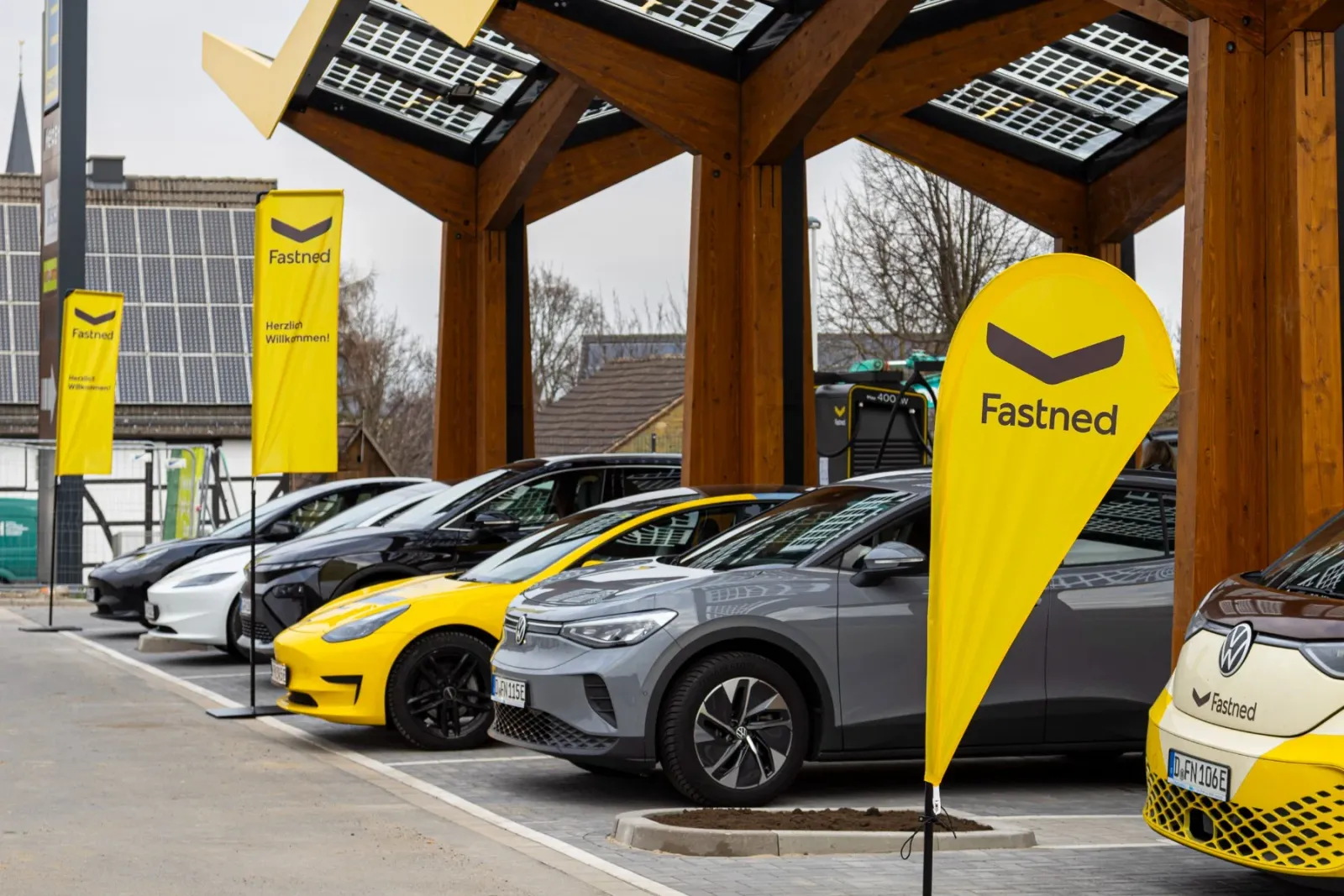
Dutch fast-charging provider Fastned maintained its rapid expansion pace in the first half of 2026. As a result, the number of locations, the amount of electricity sold, and consequently revenue all increased significantly. However, this growth comes with high liabilities that now exceed half a billion euros.
Let’s be honest: Although charge point operators like Fastned regularly celebrate significant revenue growth, this expansion has so far come at a high cost for almost all of them, requiring substantial investments in new locations. However, only a few of these charging providers are publicly listed and thus forced to make their data public like Fastned does.
The financial figures for the first half of 2026 released by this Dutch CPO once again illustrate, and exemplify for the entire industry, that charging providers must invest enormous amounts of money, often still incur substantial losses at present, and that the CPO business remains a bet on the future. In other words, the rapidly increasing number of electric vehicles in the European market will require charging stations to be much more fully utilized in the future.
To be specific: Fastned managed to increase the number of charging sessions in the first half of 2026 to 4.1 million, a 34 percent increase. The amount of electricity sold rose by 38 percent to 112.3 GWh. As a result, revenue from charging operations increased by 40 percent year-on-year to 75.1 million euros. Fastned was able to boost its gross profit from charging operations by 61 percent in the first half of 2026 to 66 million euros, while the gross profit per kWh increased by 17 percent. However, “gross profit” sounds more positive than it actually is, as it essentially only means that Fastned can resell the electricity purchased at wholesale or generated through its own solar panels to electric vehicle owners at a significant markup. Other costs are ignored in this calculation.
Next, operating, sales, and administrative expenses must be deducted from this amount, resulting in the operational EBITDA. This figure has more than doubled to 37.4 million euros, up from 17.9 million euros in the first half of 2025. However, interest, taxes, and depreciation are not yet included in this amount.
On a net basis, Fastned still recorded a loss of 13.0 million euros, though this was better than the 18.3 million euros lost in the same period last year. Notably, total liabilities increased significantly from 409.8 million euros (as of 12/31/2025) to 514.6 million euros by 6/30/2026 — meaning Fastned now carries a debt load of over half a billion euros.
The high expansion rate — the number of operating charging stations rose from 28 to 434 sites in the first six months of the year — requires significant funding, as evidenced by Fastned’s regular issuance of new bonds and its current borrowing of around 337 million euros from private investors. These were recently financed at an interest rate of 6 percent. In addition, bank loans contribute to raising the total liabilities to 514.6 million euros.
As mentioned earlier, Fastned is heavily investing in building new locations – in addition to the already opened charging parks, nearly 300 more are either planned or under construction, with the goal of raising the total number of charging parks to 723 in the future. As a result, capital expenditure (CapEx) rose to 44.7 million euros in the first half of 2026 (compared to 41.0 million euros in the previous year). Additionally, “network expansion costs” increased by 40 percent to 22.9 million euros. These refer to the internal and external costs associated with expanding the charging network, such as staffing costs for the expansion and development team, site selection, feasibility studies, planning and engineering services, approval processes, and IT software development.