
Pre-sales for the Fangchengbao Formula S begin at 230,000 RMB. BYD is targeting the Xiaomi SU7.
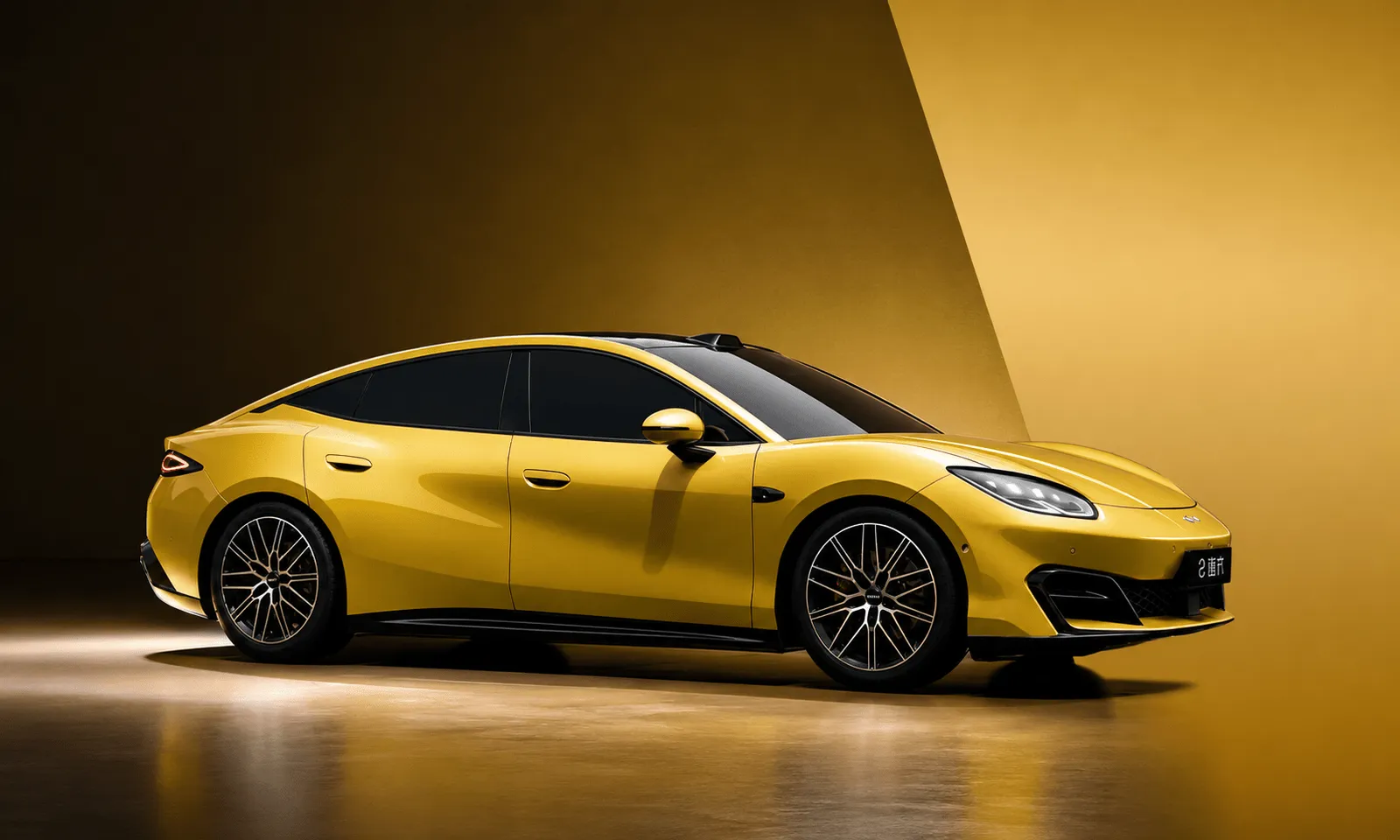
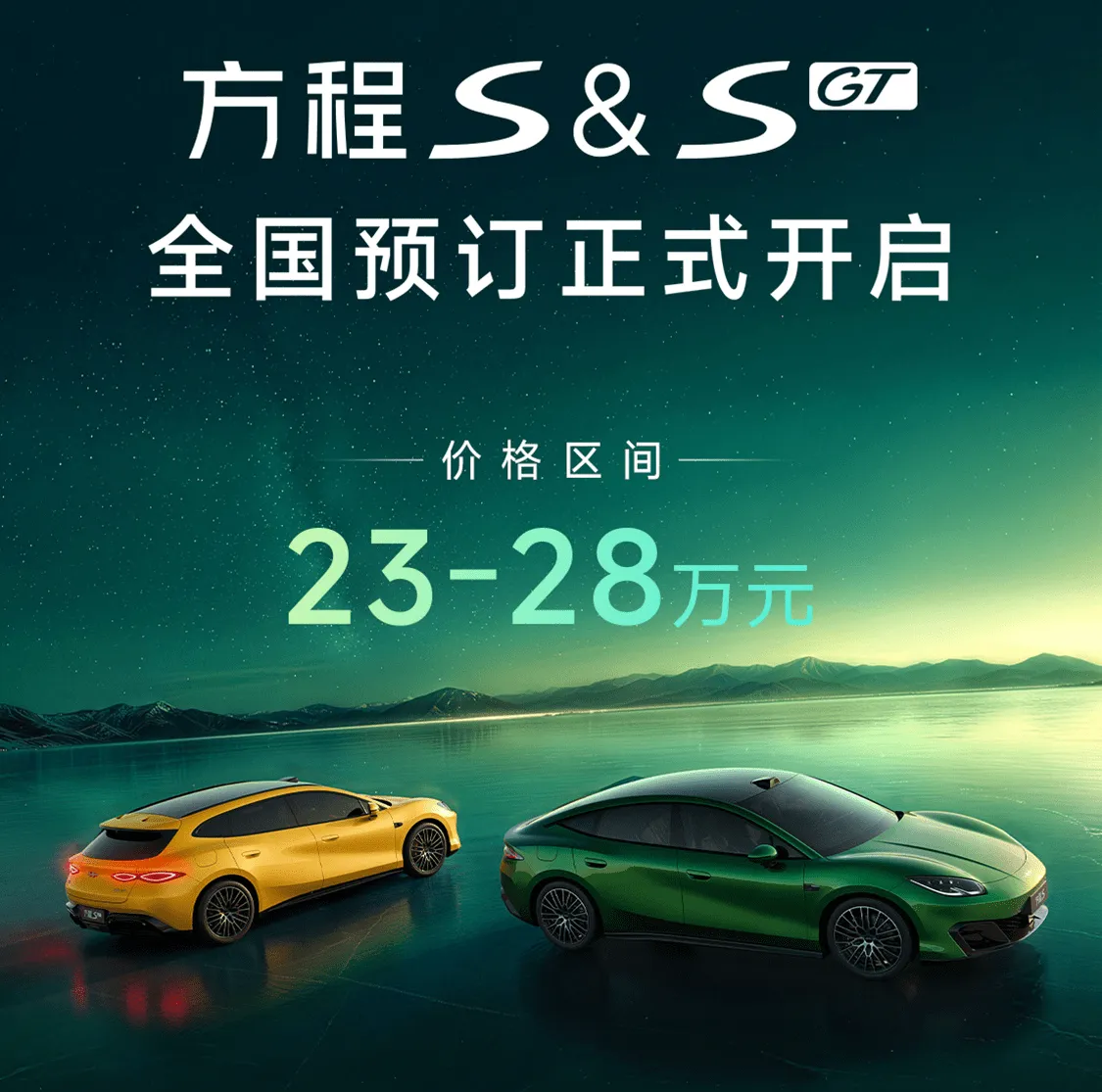
Fangchengbao, a brand owned by BYD, has launched pre-sales in China for the Formula S and Formula S GT models at prices ranging from 230,000 to 280,000 yuan, which is approximately $33,800 to $41,600. The vehicles were showcased in more detail at the Chengdu auto show on August 21, 2026, with market launch and first deliveries set to begin in early September.
Table of Contents
Show
Hide
What’s interesting is this: BYD no longer tries to pretend that a sports electric car has to cost half a million yuan. It is targeting the same market segment where Xiaomi SU7 has already achieved significant sales volume.
BYD enters a segment already driven by Xiaomi
Formula S is Fangchengbao’s third product line. The manufacturer describes it as a series of “customized sedans for every scenario,” but in simpler terms, it’s about a larger, impressive electric car focused on style, performance, and interior technology — not just for comfortable family transportation.
This is a clear response to the success of Xiaomi’s SU7. Launched in March 2024 at a price starting from 219,900 RMB, it showed competitors that in the around 200,000 yuan price range, it’s possible to sell not only “practical” sedans but also vehicles built around branding, performance, and electronics. According to data from the briefing, SU7 sold nearly 140,000 units in 2024, rising to around 258,000 units in 2025.
BYD saw what everyone else did. Customers in this segment no longer just want range and a soft suspension. They want cars that look good, drive well, and offer more than just a large screen in the center.
SAIC is also entering this niche with its Z7 and Z7T models. The sedan costs 219,800–299,800 RMB, while the shooting brake costs 229,800–309,800 RMB. Importantly, this isn’t just a theoretical niche. The SAIC Z7 sold 6,296 units in June and 6,225 units in July, with the Z7T adding to this total, resulting in nearly 10,000 units sold per month for two consecutive months. This shows that demand for “sportsy” electric cars at this price point is real.
Two body styles, one goal
The Formula S features a classic, three-box body style. The Formula S GT adopts a shooting brake design, which is something between a station wagon and a more practical lifestyle vehicle. This setup is well-known from the Chinese market: a sedan for those who want to look “more normal,” and a GT variant for younger customers who prefer a more distinctive silhouette without sacrificing cargo space.
The wheelbase in both models is 2,960 mm. The Formula S itself measures 5,060 mm in length, 1,967 mm in width, and 1,483 mm in height. The Formula S GT has a length of either 5,025 mm or 5,095 mm, depending on the body style version.
It is no longer a competitor to compact cars. In terms of size, it now belongs to the larger category, closer to large electric liftbacks and sedans rather than purely urban vehicles.
Stylistically, BYD focuses on a low, wide profile. At the front, it features a closed fascia, polygonal headlights, and a wide lower air intake. At the back, there are tinted lights, a subtle ducktail, and a diffuser. This design language sounds familiar because the entire segment uses similar aesthetics today. The differences lie in the details and driving experience.
Power of up to 490 kW and range of 900 km CLTC
The offering includes rear-wheel drive and all-wheel drive options. In the RWD versions, the engine delivers 245 kW or 300 kW. The AWD variants come with a 190 kW front motor and a 300 kW rear motor, resulting in a total system power of 490 kW.
Paper-wise, this seems quite impressive. Especially if the final price indeed stays close to the lower end of the pre-sale range.
The power is provided by the second generation of BYD Blade Battery. The specifications listed include two LFP packs with capacities of 76,744 kWh and 92,093 kWh. The claimed range according to China’s CLTC standard ranges from 730, 750, 770, 830, or 900 kilometers depending on the version.
Here’s one caveat. A 900-kilometer CLTC range sounds great on paper, but for a European reader it remains a laboratory figure. Once converted to WLTP standards and then adjusted for actual highway driving, the numbers become much less impressive. It can still be very good, just without any magic.
The manufacturer also promises Flash Charging technology, but there are no specific details on charging speeds provided in this material. So far, we know that fast charging will be one of the selling points, but it’s not yet possible to accurately determine whether it matches industry leaders or is just a catchy label.
Top-Tier Suspension and a Standard Cabin
The suspension is where things get more interesting. The Formula S and S GT come equipped with the DiSus-M system, which is BYD’s intelligent magnetorheological suspension. The front features a dual-shock absorber setup, while the rear uses a multi-shock absorber suspension. BYD previously promoted this same suspension solution heavily for the Denza Z, especially in terms of performance on the Nürburgring.
Does this guarantee excellent handling? Not necessarily. But at least behind the promise of “sportiness” is more than just the Sport mode in the menu.
Inside, BYD doesn’t try to reinvent the wheel. There’s a central “floating” screen, along with two physical knobs beneath it, a multifunctional steering wheel with buttons, and a gear shift lever near the steering column. It’s good that some physical controls were retained. In a car meant to be driver-friendly, this makes sense.
The cabin uses the Smart Ecosystem 2.0 system, which relies on three open interfaces: pin, magnetic, and threaded. BYD aims to develop add-ons and accessories for various applications through this approach. The idea is interesting, though it currently resembles more of a platform for expansion than a feature that customers will pay extra for out of enthusiasm alone.
In addition, there’s the God’s Eye B driver assistance system. This is a crucial factor in China, where ADAS packages are increasingly as important as power or screens. The question is how well this system performs in practice. The name is purely marketing-oriented, so road tests will be more important than a display at a booth.
The price seems aggressive, and the final pricing could drop even further
BYD sent its strongest signal through the price. The range of 230,000–280,000 RMB turned out to be lower than earlier market estimates of 250,000–300,000 RMB. This lowers the entry barrier and immediately puts the Formula S in close competition with the Xiaomi SU7 and SAIC Z7.
The Xiaomi SU7 starts at 219,900 RMB, the Pro version costs 249,900 RMB, and the Max version is priced at 303,900 RMB. In practice, the Fangchengbao fits right between Xiaomi’s base and mid-tier models, aiming to sell customers a more “technical” BYD with a robust chassis and Blade battery.
Moreover, the quoted amount is only for the pre-sale phase. The final price at market launch could drop even further. If that happens, the price and product competition in this market segment will become even more intense.
For Europe and Poland, this is for now more of a signal than something concrete. There are no reports of a launch in our market, but the direction is clear: Chinese brands have stopped competing solely on price. Now they try to combine performance, software, and price at a level that makes it increasingly difficult for European manufacturers to compete.
BYD didn’t create a new category here. It simply saw that Xiaomi had already set the rules of the game and entered the same arena with a larger production scale. What do you think? If such a Formula S model were introduced to Europe, would a sedan have better chances or would the Formula S GT be favored?