
Europe misses out on billion-euro battery cell profits
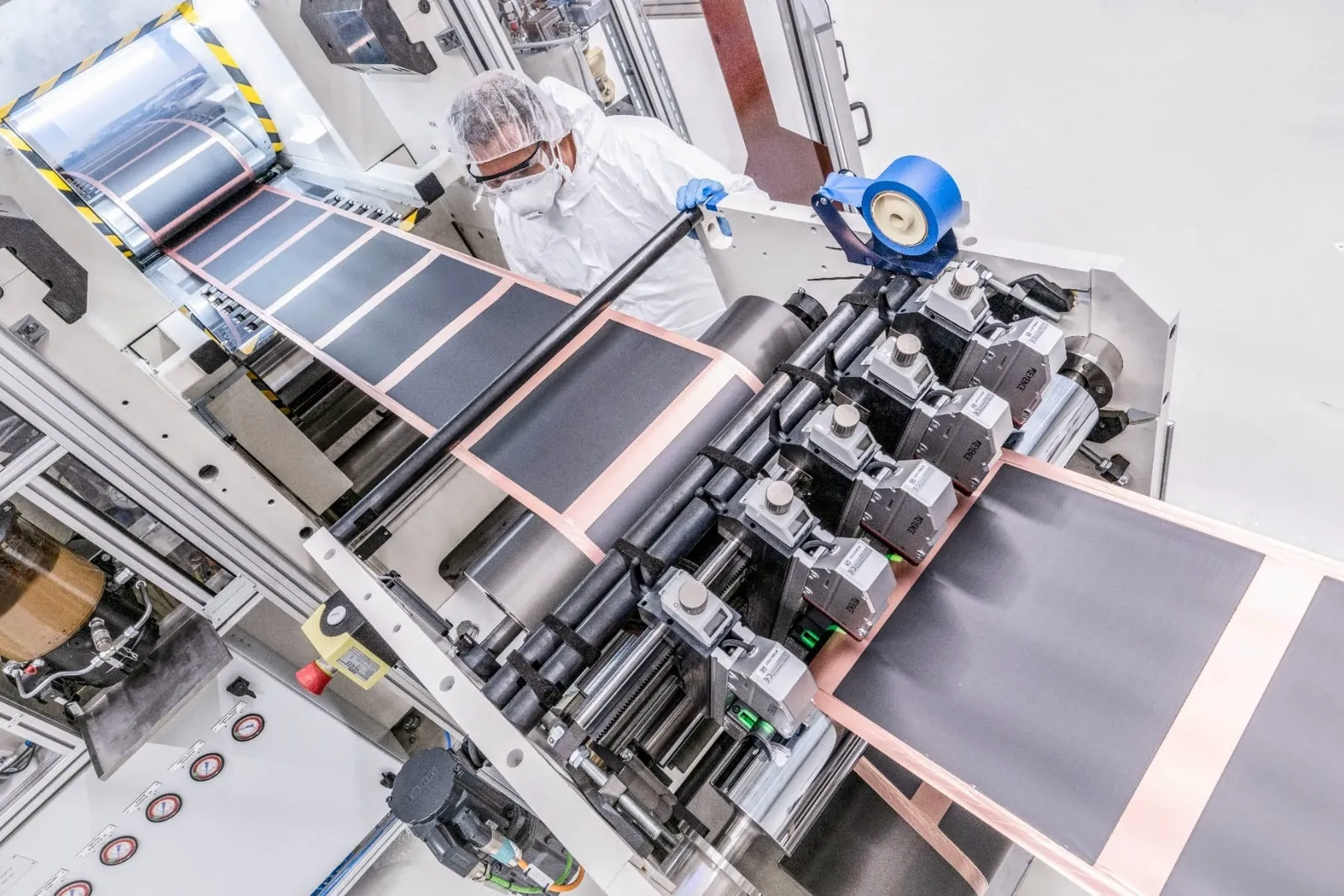
Europe's dependence on Asian - particularly Chinese - battery cell manufacturers like CATL continued to deepen in 2025. 77 per cent of EV battery were produced in Asia, up from 70 per cent in 2024. Many of the cells produced in Europe also come from Asian companies.
A recent Deloitte study reveals that European companies in the automotive and battery sectors are missing out on billions in revenue due to Asian dominance in the battery value chain. Specifically, European battery companies could lose out on profits totalling €10.5 billion over the next four years if they do not produce the battery cells required for EVs manufactured in Europe themselves. According to Deloitte: when accounting for imported precursors, production facilities, and skilled workers dispatched from Asia – on which the European battery industry relies – the lost value added could even reach €100 to €150 billion by 2030.
Some European corporations have considered large-scale investments in battery cell production in recent years but have often hesitated. For instance, Bosch CEO Stefan Hartung admitted in January in an interview with Zeit: “The risk was simply too great: to play a relevant role, we would have had to invest double-digit billions. And we have seen how some promising European projects have unfortunately failed spectacularly.” This likely refers, among others, to the bankruptcy of the Swedish company Northvolt, in which VW and BMW had placed their bets.
Meanwhile, the European Union has recognised the importance of battery cell production for traction batteries in European-made EVs and has just published a call for funding under its ‘Battery Booster‘ initiative. This programme aims to provide interest-free loans to support the scaling-up of cell factories. The projects most likely to benefit are those by ACC (a joint venture by Stellantis, Mercedes-Benz, and TotalEnergies), Verkor (backed by Renault, among others), and PowerCo (part of the VW Group). If these cell factories succeed in ramping up production, a battery cell industry under European ownership could finally emerge.
While cell factories already exist in Europe, most are under Asian ownership, such as the plant operated by the Chinese company CATL in Arnstadt near Erfurt. The Deloitte study notes that while Europe accounts for 13 per cent of global cell factory market share, 98 per cent of its production capacity was controlled by Asian manufacturers in 2025.
Harald Proff, Global Automotive Sector Leader at Deloitte, explains why it is crucial for European companies to strengthen their position in the battery value chain: “Batteries determine the range, performance, and price of an electric vehicle. If European manufacturers are not competitive in this area, sales will come under even greater pressure. The industry and policymakers must now work together to reduce dependence, particularly on China.”
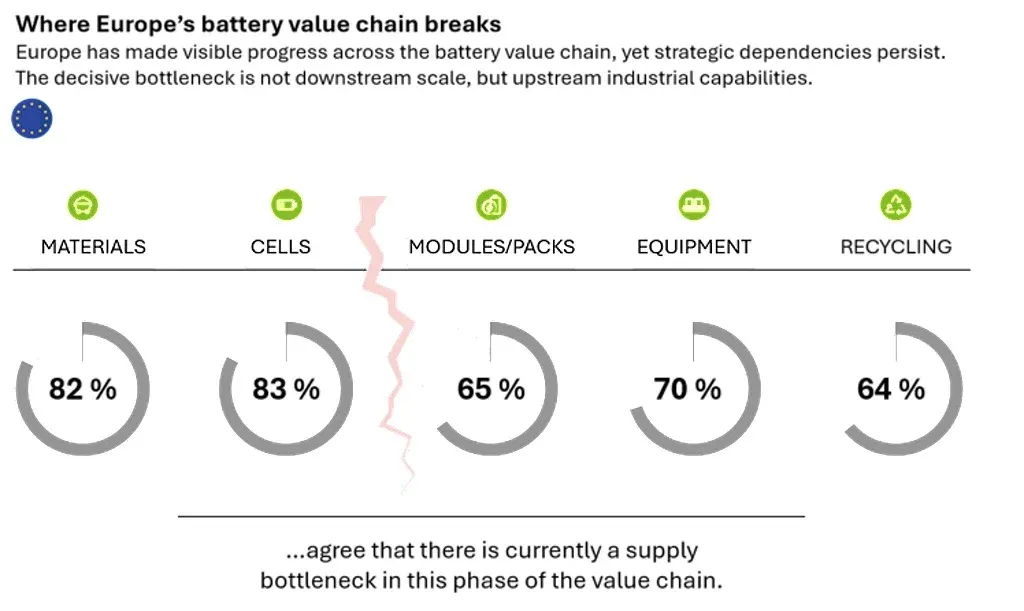
According to Deloitte, the majority of battery value added is generated during material extraction and processing (50 to 60 per cent) and cell production (15 to 30 per cent). These stages significantly influence the economic viability and stability of downstream processes. However, European battery companies are currently not sufficiently positioned in these areas: for 83 per cent of the surveyed companies, producing cell components is a key challenge, followed by material extraction and processing (82 per cent).
Nevertheless, there are now promising projects in Germany and Europe for material extraction and processing, such as the planned lithium extraction in the Upper Rhine Valley and processing in Frankfurt-Höchst by Vulcan Energy, starting in 2028.