
Europe’s truck manufacturers call for a revision of the 2030 CO2 timeline
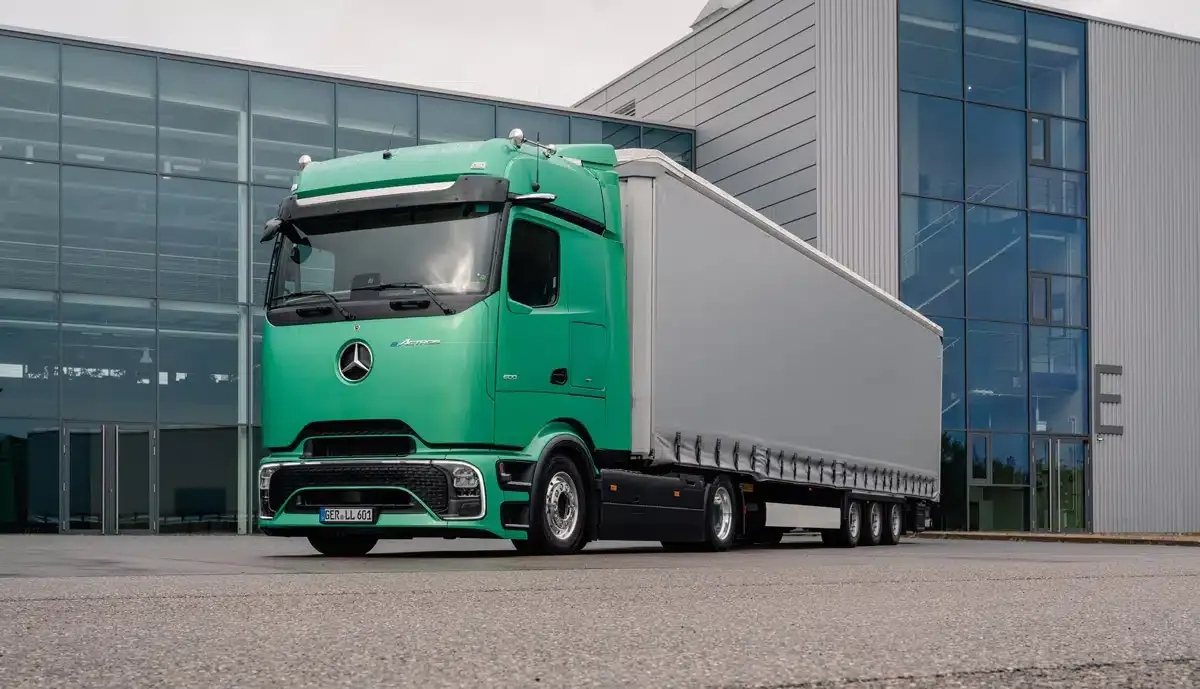
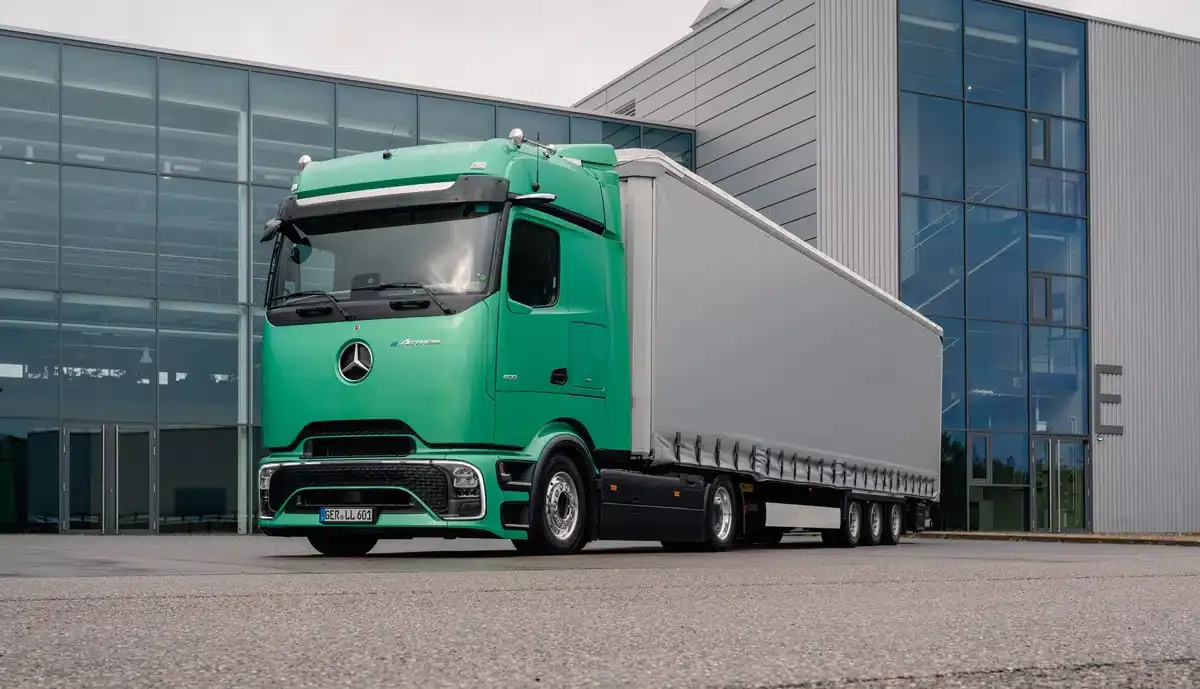
Image: Daimler Truck
The leaders of the seven leading European truck and bus manufacturers believe that the introduction of zero-emission heavy commercial vehicles is being hindered by delayed regulatory frameworks. They urge European and national policymakers to close this gap and adjust the timeline for CO2 targets by 2030.
In a statement, commercial vehicle manufacturers continue to support the EU’s CO2 reduction targets. After years of investment, a wide range of competitive zero-emission vehicles is now available for all major application areas. However, the conditions required by transport companies for widespread and competitive use of these vehicles are at least three years behind and are not advancing fast enough.
The share of zero-emission vehicles in new heavy truck registrations in Europe is currently 2.4 percent. In Poland, Spain, and Italy it is well below one percent, at 4.3 percent in Germany, and at 2.4 percent in France. There are 45 months left before the strict EU CO2 targets for 2030 take effect. Factors cited as essential for transport companies to make the switch include charging infrastructure and network access, energy costs, CO2-based road tolls, and a supportive political framework. “Most of the conditions that determine whether operators can make the transition must be created by other stakeholders than manufacturers,” say the seven companies.
Karin Rådström, CEO of Daimler Truck and chairperson of the commercial vehicle committee at the European industry association ACEA, said: “We are fully committed to sustainable transportation – the investments have been made, and a wide range of CO2-free vehicles are now available. But making them economically viable on a large scale also depends on the broader ecosystem, which is clearly lagging behind and not developing fast enough. This means two things: we need to significantly strengthen the necessary frameworks quickly, and we must urge the EU to extend the deadline for meeting the 2030 targets by three years to avoid penalties for manufacturers.”
Manufacturers see responsibility and control as incompatible: they would face heavy financial penalties if their new fleets fail to meet CO2 targets, yet achieving these goals depends on decisions made throughout the entire value chain. If market penetration remains too low to fulfill obligations by 2030, penalties will not lead to more zero-emission trucks on the roads. Instead, billions of euros will be diverted from the technologies and production capacity needed for the transition, weakening European manufacturers in an increasingly competitive global market.
The companies cite faster expansion of charging and hydrogen infrastructure as well as quicker access to grid connections as key prerequisites. Across Europe, there are currently fewer than 2000 public charging stations suitable for trucks, while at least another 700 are needed each month. Additionally, there are less than a dozen hydrogen refueling stations in operation, and grid connections for new charging sites could take several years to be established.
A coherent political framework is also required in all member states. Carbon-based road use fees have only been effectively implemented in four member states, and necessary changes to weight and size regulations have not yet been approved. The EU’s second emissions trading system, ETS2, has been postponed to 2028; according to manufacturers, revenues from it and road use fees should be reinvested in infrastructure and the introduction of zero-emission vehicles.
Also interesting
About the author
Thomas Langenbucher is an expert in electromobility with experience in the automotive industry and finance sector. Since 2011, he has been covering electric vehicles, sustainable technologies, and mobility solutions for ecomento.de. Learn more.
Reader interactions