
Europe becoming increasingly electric, Italy growing more isolated
Europe becoming increasingly electric, while Italy remains isolated in its reliance on traditional engines. This is confirmed by August’s sales data.
Europe becoming increasingly electric: 29.2% share (compared to 6.4% for us)
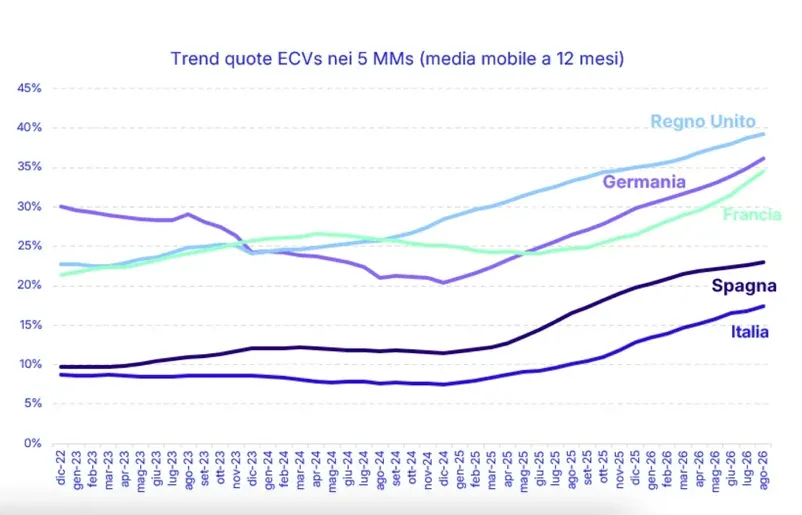
As every month, we find ourselves wondering why electric vehicles are not gaining traction only in Italy. The numbers are striking. In August, EVs accounted for 29.2% of the market in Europe, but without Italy’s drag on average figures, that percentage would already be above 30%. Here, only 4,486 battery-powered cars were sold in August, out of a total of 243,207 across the continent (+52.2%). The market share remains at 6.4%, far behind other major markets. The United Kingdom has a share of 30.4%, France at 38.3%, Germany at 32.4%, and Spain at 13.4%. Even looking at data from the first 8 months of the year, the trend remains unchanged. Italy’s share of electric vehicles is 8.1% (thanks to lingering incentives), France at 29.9%, Germany at 26.2%, the United Kingdom at 25.6%, and Spain at 10.2%. Plug-in hybrids are more popular here, with their share rising to 12.0% in August. The United Kingdom has a share of 14.5%, France at 6.2%, Germany at
Italy at 12.0% and Spain at 14.3%.Fusilli: high energy costs and low wages here
So here we are again, trying to understand why Italians simply don’t like electric cars. Former Renault Italia’s top executive Raffaele Fusilli conducted an analysis on LinkedIn, listing 4 reasons (see also the video below). “1) Charging. 100 kilometers of driving at fast chargers costs about 16 euros in Italy, compared to 10 in France and Spain. With gasoline? Around 13 euros. 2) Charging stations. Only 30% of Italian homes have a private garage; in Rome, it’s 25%. Without home charging, the advantages disappear. 3) Salaries. From 2010 to 2025, Italy’s real wages dropped by 4%, while the OECD average rose by 8%. How can people afford more expensive cars with lower purchasing power? 4) Residual value. After 3 years, an electric car retains about 50% of its original price; a gasoline car keeps about 65%. The conclusion? No advertising campaign can create charging stations, raise salaries, or lower energy costs.
a. To sell electric vehicles, they need to be made accessible.”There’s more: electric vehicles have become cost-effective today
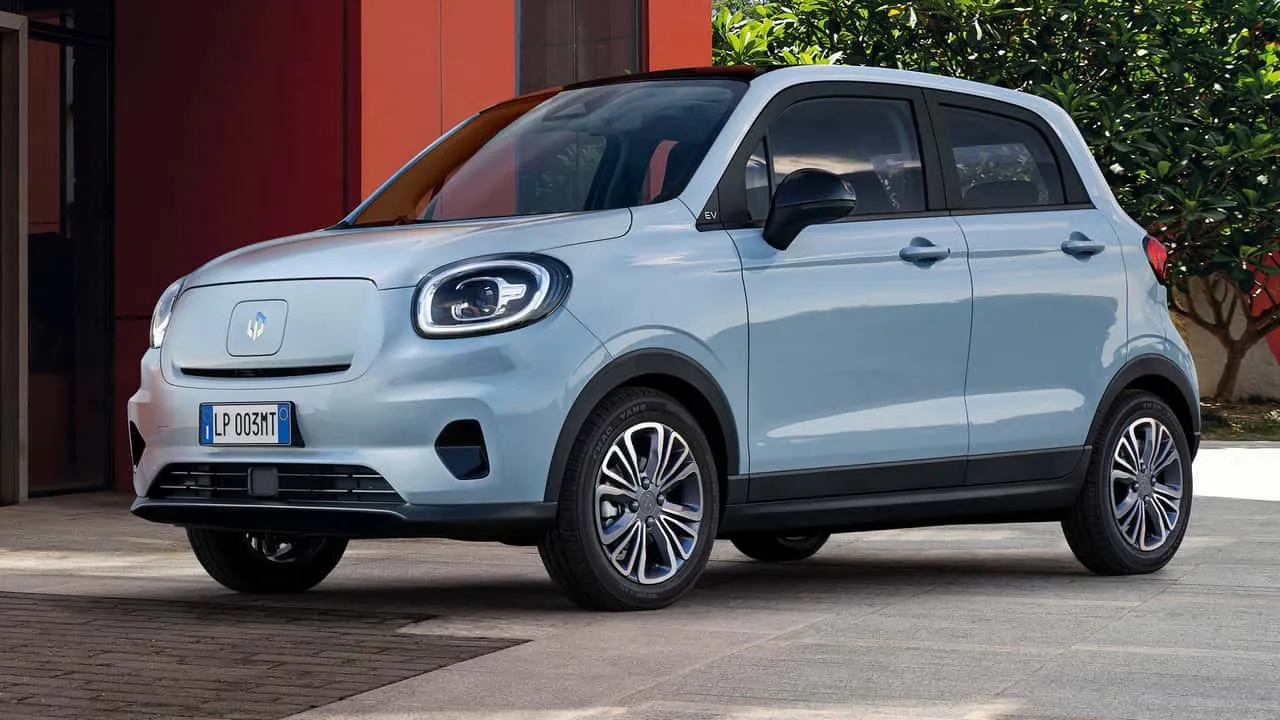
An interesting explanation, but one that doesn’t fully convince us. With gasoline at 2.155 and diesel at 2.345, public charging has become affordable here too, though it remains more expensive than in France and Spain. There are now electric models like the Leapmotor T03 that cost as much as a conventional city car, just over 15,000 euros. It’s true that used electric vehicles have lower value and depreciate more quickly. But it’s also true that maintenance costs are much lower for electric cars, with only a minimal number of repairs required. The real obstacle is Italians’ deep-seated distrust of anything new, fueled by a political class that always looks back at the past. We’re the country where color TV arrived 10 years after the rest of Europe. And let’s not forget there’s a very strong oil lobby that can influence politics and public opinion.
It publishes all significant decisions.TAG: Europe becoming more electric
Previous Article
Belluno, when climate revisionism arrives in schools
Next Article
Eni and Enel revitalize charging subscription services